
There is something almost indescribable about standing at the center of American history. If you are searching for things to do in Washington DC, prepare yourself for a city that punches far above its weight — a compact, walkable, endlessly fascinating capital where monuments rise from the morning mist, world-class museums open their doors for free, and the neighborhoods buzz with the kind of authentic energy that no travel brochure can fully capture. Whether you are planning a weekend escape or a week-long deep dive, Washington DC rewards every type of traveler — history buffs, foodies, art lovers, architecture nerds, and families traveling with curious kids who are ready to discover America’s story firsthand.
Washington DC is not just a political capital. It is a living museum, a cultural powerhouse, and one of the most walkable cities in the United States. From the marble grandeur of the National Mall to the cobblestone charm of Georgetown’s waterfront, the washington dc attractions here span centuries of human ambition, creativity, and sacrifice. This guide covers everything you need to know — the iconic landmarks, the hidden gems, the best washington dc tours, seasonal tips, and practical advice to help you make the most of every moment in this extraordinary city.
Table of Contents
The National Mall: Where American History Comes Alive
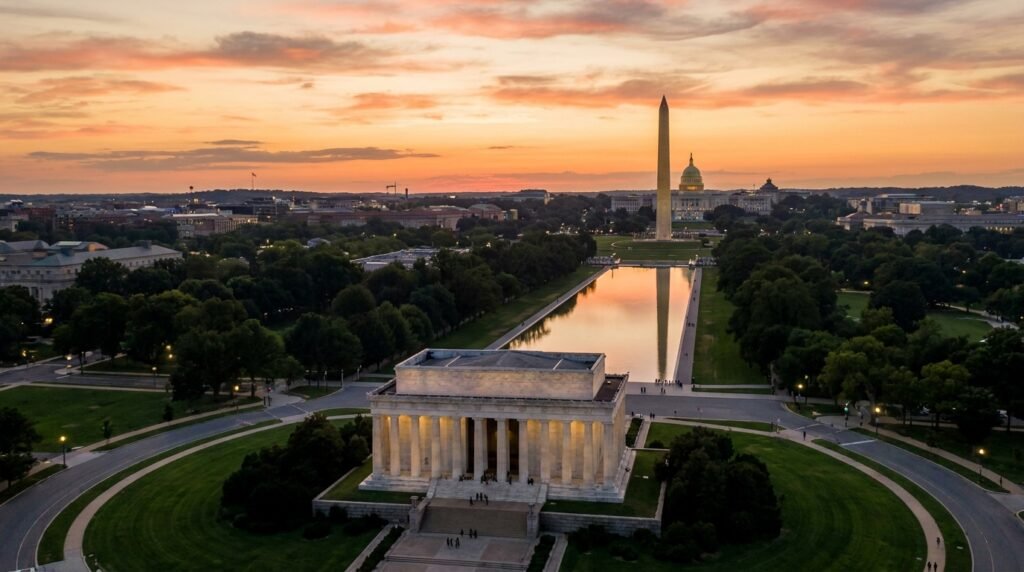
No list of things to do in Washington DC would be complete without starting at the National Mall. Stretching nearly two miles from the Lincoln Memorial to the U.S. Capitol Building, this grassy corridor is the symbolic heart of the nation. Walk it on a clear morning before the tour groups arrive, and you will understand why so many visitors say it left them unexpectedly emotional.
The Lincoln Memorial is not merely a statue. Standing at its base and gazing up at that immense seated figure — 175 tons of Georgia marble — you feel the full weight of what Lincoln represented. The inscriptions of the Gettysburg Address and the Second Inaugural Address are carved into the interior walls, and reading them in context, in that space, hits differently than reading them in a classroom.
The Vietnam Veterans Memorial, designed by Maya Lin, remains one of the most powerful washington dc attractions in the entire city. Two hundred and fifty feet of black granite, polished to a mirror finish, reflect the faces of visitors back at themselves as they trace the names of 58,000 fallen soldiers. It is utterly silent in the way only the truly meaningful can be.
The Washington Monument, the World War II Memorial, the Korean War Veterans Memorial, and the Martin Luther King Jr. Memorial all cluster along the Mall within comfortable walking distance. Plan at least half a day here, wear comfortable shoes, and bring water — especially if you are visiting between May and September when the heat radiates off the stone paths. The washington dc tours that focus specifically on the Mall’s monuments are well worth booking if you want expert historical context woven into your visit.
Secure your spot and book your National Mall Monument Tour experience today.
Smithsonian Museums: The World’s Greatest Free Museum Complex
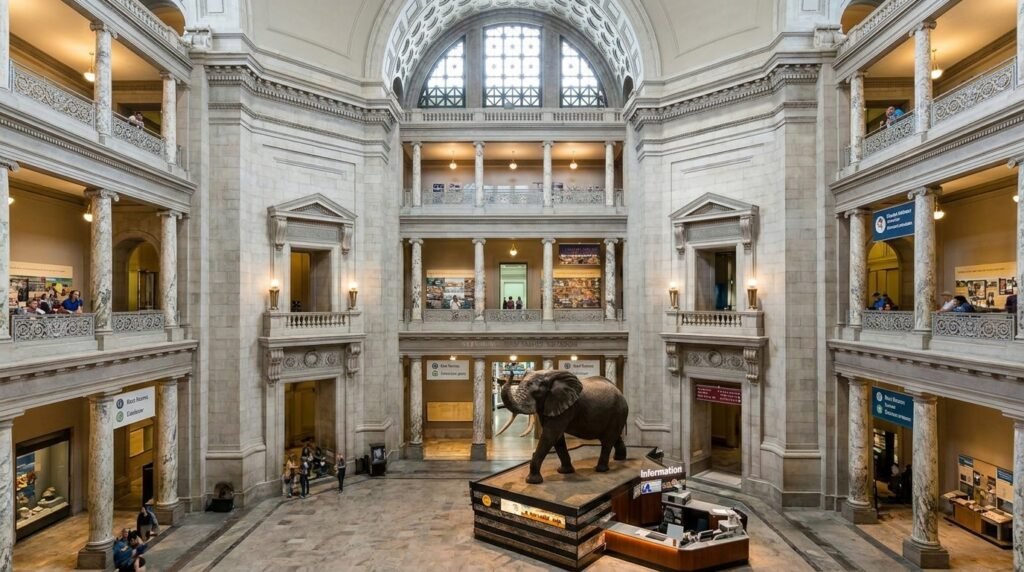
One of the most remarkable facts about places to visit in washington dc is that the Smithsonian Institution’s nineteen museums and galleries are entirely free to enter. This is not a marketing gimmick — you can spend a full week in Washington and not pay a single admission fee to some of the best cultural institutions on the planet.
The National Museum of Natural History alone deserves an entire day. The Hope Diamond sits in a darkened room under careful lighting, glowing with a blue-violet fire that has captivated collectors, kings, and criminals for centuries. The ocean hall, the human origins exhibit, and the butterfly pavilion (the only ticketed attraction in the building) are all worth your time.
The National Museum of African American History and Culture, which opened in 2016, has quickly become one of the most visited washington dc attractions in the country. Its architecture alone — a bronze-latticed tower rising from the Mall — is striking. Inside, the exhibits trace the full arc of the African American experience, from the brutality of slavery through the Civil Rights Movement and into contemporary culture. Time-entry passes are required; book weeks in advance.
The National Air and Space Museum thrills visitors of every age with its collection of actual spacecraft, including the Wright Brothers’ Flyer, Charles Lindbergh’s Spirit of St. Louis, and a genuine lunar module. The washington dc activities centered around the Smithsonian museums are endlessly varied — from curator-led talks and film screenings to hands-on science demonstrations. Do not just walk through these buildings. Engage with them.
Secure your spot and book your Smithsonian Museum Tour experience today.
The U.S. Capitol and Congressional Tours
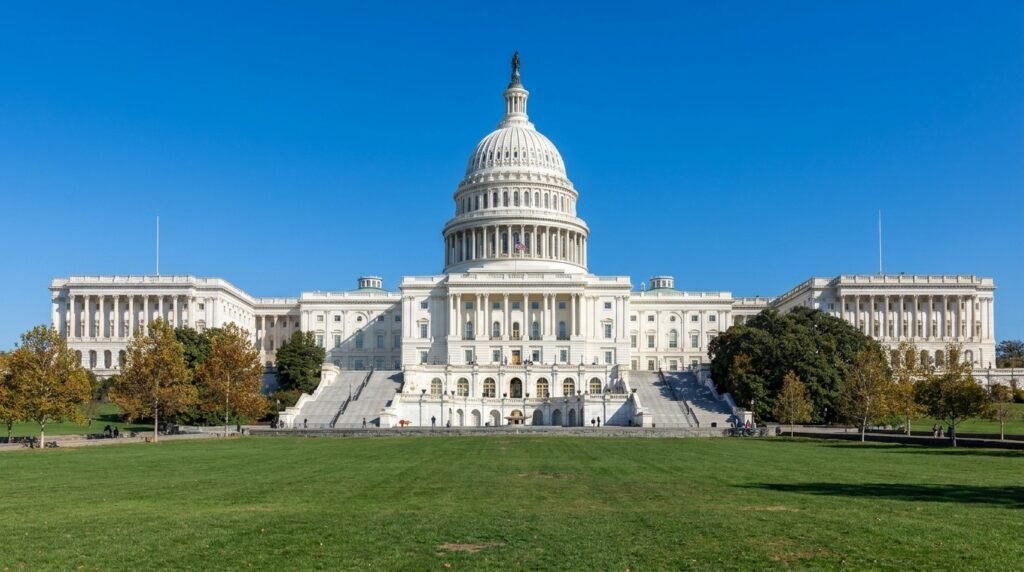
Among all the things to do in Washington DC, visiting the U.S. Capitol is perhaps the most civically significant. The building that houses Congress is open to visitors through the Capitol Visitor Center, located underground beneath the East Plaza. Guided tours walk you through the Rotunda — where the 4,664-square-foot fresco ‘The Apotheosis of Washington’ floats above your head in the dome — through Statuary Hall, and past the old Supreme Court Chamber.
Book your free tickets through your Congressional representative’s office well in advance (weeks, sometimes months ahead during peak season). The experience of standing inside this building — watching the actual machinery of American democracy operate around you — is unlike any other in the country.
The Capitol grounds, designed by Frederick Law Olmsted (the same landscape architect behind Central Park), are beautiful to walk through even if you cannot get inside. The cherry blossoms that bloom here each spring rival those along the Tidal Basin. This is one of the places to visit in washington dc that never gets old, no matter how many times you return.
Secure your spot and book your U.S. Capitol Guided Tour experience today.
Georgetown: History, Shopping, and Waterfront Dining
Georgetown predates Washington DC itself — it was a thriving tobacco port before the capital was even planned. Today it is one of the most charming places to visit in washington dc, a neighborhood of Federal-style townhouses, cobblestone side streets, high-end boutiques, and one of the most walkable waterfront areas on the East Coast.
Wisconsin Avenue and M Street are Georgetown’s main commercial arteries, lined with everything from independent bookshops to flagship stores. But the real Georgetown is found in the quieter residential blocks — brick sidewalks heaved up by ancient tree roots, window boxes overflowing with geraniums, and the occasional glimpse of a walled garden through an iron gate.
The Georgetown Waterfront Park offers stunning views across the Potomac to Virginia, and the Georgetown branch of the Capital Crescent Trail connects cyclists and walkers to Maryland. The Washington Harbour complex at the water’s edge is a great place to stop for a meal — the outdoor patios fill up fast on warm evenings, and the views of the river at sunset are genuinely spectacular. The washington dc tours that combine Georgetown history with a waterfront walk are among the most popular in the city, and for good reason.
Secure your spot and book your Georgetown Walking Tour experience today.
The White House and Presidential History
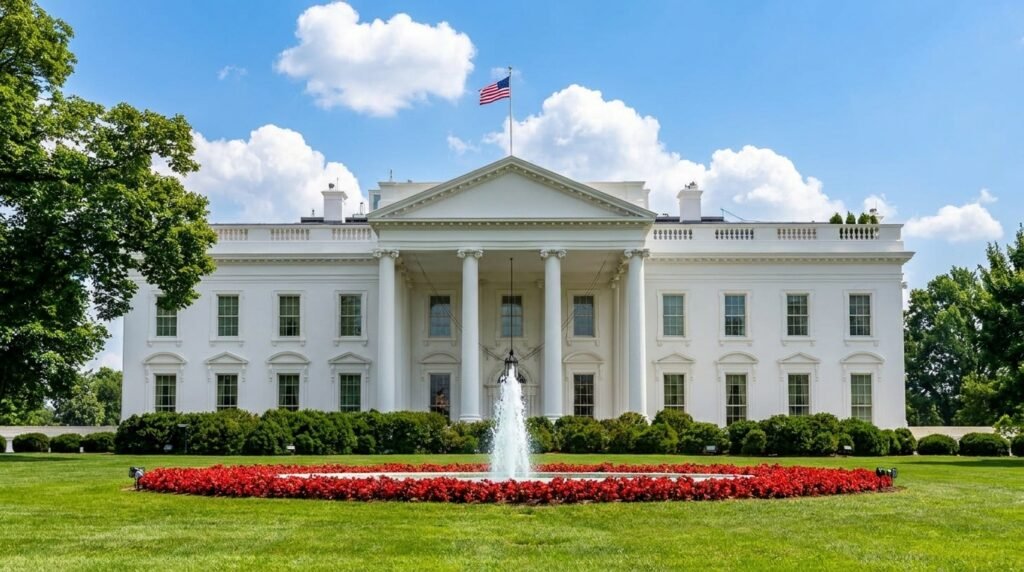
The White House is one of those washington dc attractions that works on multiple levels. Even if you cannot get inside — public tours require a request through your Member of Congress submitted weeks in advance — simply standing at the North Portico fence on Pennsylvania Avenue and looking at that familiar facade has a quiet power to it. The building is smaller than most people expect from television, and all the more impressive for it.
The White House Visitor Center, located in the Department of Commerce building nearby, is free and genuinely well-done. Exhibits trace the history of the mansion, its renovations, its famous residents, and its role in American life. The period rooms — replicated with meticulous historical accuracy — give you a sense of what it would actually feel like to work and live in that building.
Lafayette Square, directly across Pennsylvania Avenue, has been the site of protests, celebrations, and vigils for over two centuries. It is one of the most historically layered things to do in washington dc adjacent areas, with statues of foreign-born Revolutionary War heroes — Rochambeau, Kosciuszko, von Steuben, Lafayette himself — standing guard at the corners.
Secure your spot and book your White House Area History Tour experience today.
Washington DC Food Scene: Beyond the Monument Trail
The washington dc activities that involve food have exploded in quality and variety over the past decade. Washington is no longer a city where you eat well only at expense-account restaurants near K Street. The food scene is genuinely exciting now, spanning everything from James Beard Award-winning tasting menus to legendary carry-out joints that have been feeding the city’s working neighborhoods for generations.
The Eastern Market, operating continuously since 1873, is one of the best places to visit in washington dc for a weekend morning. The indoor market is flanked by weekend farmers’ markets and craft vendors, and the food stalls serve everything from fresh-shucked oysters to steaming blueberry pancakes the size of dinner plates. Arrive early — it fills up fast on Saturday mornings.
The neighborhoods of Shaw and U Street have become the city’s dining heartland, with restaurants reflecting Washington’s deep roots in African American culinary tradition alongside newer arrivals from Ethiopia, El Salvador, Vietnam, and beyond. The washington dc tours focused on food — from U Street food walks to Capitol Hill culinary tours — offer an excellent way to eat your way through the city’s history and culture simultaneously.
Blagden Alley in Shaw is a hidden courtyard that has transformed into one of the most interesting dining clusters in the city, with restaurants tucked into former carriage houses and alley facades. Finding it feels like discovering a secret — which is exactly the point.
Secure your spot and book your Washington DC Food Tour experience today.
The Kennedy Center: World-Class Performing Arts
The John F. Kennedy Center for the Performing Arts is one of those washington dc attractions that even locals sometimes overlook in favor of the more photogenic monuments. That is a mistake. The Center presents over 2,000 performances annually across its multiple stages — opera, ballet, symphony, Broadway productions, jazz, and experimental work — and its free Millennium Stage program offers a live performance every single day at 6 PM, open to anyone who walks in.
The building’s terraces offer some of the most dramatic views of the Potomac River in the city, particularly at dusk when the Virginia skyline turns gold and the river glitters below. The Hall of Nations, lined with flags from every country with diplomatic relations with the United States, is a grand space worth walking through even if you are not attending a performance.
Book tickets in advance for major productions — the Kennedy Center’s programming calendar fills quickly, and popular shows sell out weeks ahead. The washington dc tours that include a behind-the-scenes look at the Kennedy Center are offered on a daily basis and give fascinating insight into how a performing arts complex of this scale actually operates.
Rock Creek Park: Washington’s Wild Heart
One of the most underrated things to do in washington dc is exploring Rock Creek Park, a 1,800-acre urban forest that runs like a green spine through the northwest quadrant of the city. This is where Washington residents go to escape — runners pounding the trails at dawn, cyclists navigating the wooded paths, families picnicking by the creek on Sunday afternoons.
The park contains the National Zoo (also free), Civil War-era fortifications along Fort Circle Parks, a working 19th-century grist mill, a planetarium, and miles of hiking trails ranging from gentle waterside walks to rocky climbs with genuine elevation change. The washington dc activities available here are surprisingly diverse — horseback riding is available, tennis courts are bookable, and the nature center runs excellent programming for children.
Pierce Mill, a restored 1820s grist mill near Tilden Street, is one of the most atmospheric places to visit in washington dc that most tourists never find. On the right morning, with mist rising off the creek and woodpeckers hammering in the canopy overhead, you could almost forget you are in the middle of a major American city.
Arlington National Cemetery: Sacred Ground Across the River
Just across Memorial Bridge from the Lincoln Memorial, Arlington National Cemetery is one of the most sobering and essential washington dc attractions in the greater metropolitan area. More than 400,000 veterans and their dependents are buried here on 639 acres of rolling Virginia hillside, beneath white marble markers that stretch to the horizon in every direction.
The Tomb of the Unknown Soldier, guarded twenty-four hours a day, seven days a week, in all weather, by specially trained U.S. Army sentinels, is one of the most moving sights in the entire region. The Changing of the Guard ceremony takes place every hour on the hour from April through September (every two hours in the off-season) and draws respectful crowds. You can hear a pin drop.
The Kennedy family graves, including the eternal flame at President Kennedy’s burial site, and the gravesite of Robert F. Kennedy nearby, draw visitors who want to connect with a pivotal moment in American history. The washington dc tours that include Arlington Cemetery typically cross the Potomac by foot over Memorial Bridge — a walk that feels genuinely ceremonial — and pair the cemetery visit with the monuments along the Mall’s western end.
Secure your spot and book your Arlington National Cemetery Tour experience today.
Washington DC Neighborhoods: Beyond the Tourist Trail
The best washington dc activities often happen outside the monument corridor entirely. Washington’s neighborhoods are distinct, richly layered, and deeply worth exploring on foot.
Dupont Circle — bookshops, embassies, great coffee shops, and the Phillips Collection, one of America’s finest private art museums, housed in a Georgian mansion where the rooms themselves are part of the experience.
Adams Morgan — the most eclectic neighborhood in the city, famous for its 18th Street restaurant and bar strip, its weekend flea market at Meridian Hill Park, and its genuinely diverse, unpretentious energy.
Capitol Hill — beyond the famous buildings, this is a genuine residential neighborhood of Victorian row houses, the legendary Eastern Market, and Barracks Row’s strip of excellent independent restaurants.
The Wharf — Washington’s newest waterfront development along the Southwest waterfront is one of the most dramatic transformations in the city’s recent history, with concert venues, fish markets, waterfront restaurants, and marina access to the Potomac.
These neighborhoods are among the best places to visit in washington dc for travelers who want to experience the city as a living place rather than just a collection of monuments. Allow at least one full day to wander without an agenda.
Washington DC Boat Tours and the Potomac River
The Potomac River is one of the great underutilized assets of Washington, and the washington dc tours that take to the water offer a completely different perspective on the city’s famous skyline. Seeing the Kennedy Center, the Washington Monument, and the Jefferson Memorial from the river — particularly at dusk or during the cherry blossom season — is genuinely unforgettable.
Several operators run sightseeing cruises from the Georgetown waterfront and from the Wharf on the Southwest side. Dinner cruises, lunch cruises, and narrated history tours all operate from spring through fall. For a more active experience, kayak and canoe rentals are available through several outfitters near the Thompson Boat Center and Key Bridge.
The C&O Canal, running parallel to the Potomac through Georgetown and extending 184.5 miles to Cumberland, Maryland, offers some of the most beautiful flat-water paddling in the mid-Atlantic region. The washington dc activities available on and along the canal — from canal boat rides in summer to hiking and cycling the towpath — are a welcome contrast to the marble-and-monument side of the city.
Best Washington DC Tours: What to Book in Advance
The range of washington dc tours available to visitors has expanded dramatically in recent years. Beyond the standard bus tour around the monuments, you can now find highly specialized experiences run by former government officials, professional historians, culinary experts, and neighborhood insiders. Here are the categories worth knowing:
- Evening Monument Tours: The monuments are significantly more atmospheric after dark, when they are illuminated against the night sky. Several operators run evening tours that hit the major sites between sunset and midnight.
- Food and Drink Tours: Covering everything from the history of Washington’s Ethiopian restaurant community to the craft brewery scene that has taken over several former industrial neighborhoods.
- Political History Tours: Covering Watergate, the Cold War, spy history, and the intelligence community — Washington has more layers of political intrigue than almost any city on earth, and knowledgeable guides bring it alive.
- Architecture Tours: Washington is a city of extraordinary architecture, from Pierre Charles L’Enfant’s original grid plan to the Brutalist government buildings of the 1960s to the recent wave of contemporary museum architecture.
- Ghost Tours: Washington has more than its share of documented hauntings, and the evening ghost tours through Capitol Hill and the Old City are excellent fun regardless of your position on the paranormal.
Booking washington dc tours in advance is strongly recommended for any visit between March and October, when demand is highest. Many popular tours sell out days or weeks ahead, particularly during cherry blossom season in late March and early April.
Secure your spot and book your Washington DC Tour experience today.
Practical Travel Tips for Washington DC
When to Visit: The most popular times are spring (cherry blossom season, late March to mid-April) and fall (September to November, when the crowds thin and the weather is perfect). Summer brings intense heat and humidity along with the largest crowds. Winter is underrated — cold but manageable, with far fewer tourists and excellent museum-going conditions.
Getting Around: Washington’s Metro system is clean, efficient, and well-designed. The system connects all major washington dc attractions to the rail network. Download the SmarTrip app before you arrive. Biking is excellent throughout the city — the Capital Bikeshare system has hundreds of stations, and dedicated bike lanes serve most major routes.
Where to Stay: The best neighborhoods for accommodation depend on your priorities. Capitol Hill puts you close to the Mall and Eastern Market. Dupont Circle is central and walkable. Georgetown is charming but slightly removed from the Metro. The Wharf offers the city’s newest hotel options with waterfront access.
Budget: Washington is genuinely one of the most budget-friendly major cities in the U.S. for cultural tourism. All nineteen Smithsonian museums are free. All national monuments and memorials are free. Many of the best washington dc activities — walking neighborhoods, exploring parks, attending the Kennedy Center’s free Millennium Stage — cost nothing at all.
Explore More U.S. Cities Worth Visiting
Washington DC sits at the heart of the East Coast, making it an ideal base for exploring neighboring cities. If your travels take you further afield, here are some excellent resources for planning your next American city adventure:
Things to Do in Arlington Texas | Things to Do in Kansas City | Things to Do in Boston
Things to Do in Philadelphia | Things to Do in New York | Things to Do in Miami
Things to Do in Houston | Things to Do in Atlanta | Things to Do in Dallas
Things to Do in Los Angeles | Things to Do in Las Vegas | things to do in san diego | things to do in Chicago
Frequently Asked Questions: Things to Do in Washington DC
What are the best free things to do in Washington DC?
Washington offers an extraordinary range of free washington dc activities. All nineteen Smithsonian museums (including the National Museum of Natural History, the National Air and Space Museum, and the National Museum of African American History and Culture) are free. All monuments on the National Mall are free. The Kennedy Center’s Millennium Stage offers free live performances every day at 6 PM. Rock Creek Park and the National Zoo are free. The U.S. National Arboretum is free. Washington is one of the most generous cities in the country for free cultural experiences.
How many days do you need to see Washington DC?
A minimum of three days is recommended to cover the essential things to do in washington dc — the National Mall monuments, two or three Smithsonian museums, Georgetown, and a neighborhood exploration. Five to seven days allows you to go deeper, including the Kennedy Center, Rock Creek Park, Arlington Cemetery, day trips to Mount Vernon or Annapolis, and a fuller exploration of the city’s food scene. Many visitors return multiple times and still find new places to visit in washington dc they have not yet explored.
What is the best time of year to visit Washington DC?
Spring and fall are the best seasons for washington dc tours and sightseeing. Cherry blossom season (typically late March to mid-April) is Washington at its most beautiful, though hotels book up months in advance and the Tidal Basin gets genuinely crowded. Fall (September through November) offers perfect walking weather, the summer crowds have thinned, and the museums are more comfortable to navigate. Winter is underrated for museum-heavy visits; summer is viable but requires heat management and early-morning starts.
Is Washington DC safe for tourists?
The tourist areas of Washington DC — the National Mall, Georgetown, Dupont Circle, Capitol Hill, Adams Morgan — are all very safe and well-policed. Like any major city, Washington has neighborhoods that require more situational awareness, but the areas most relevant to washington dc attractions and standard visitor itineraries are consistently rated among the safest in the country. Common-sense urban travel precautions apply.
What are the must-see Washington DC attractions for first-time visitors?
For first-time visitors, the essential washington dc attractions are: the Lincoln Memorial and Vietnam Veterans Memorial at dawn or dusk, the National Museum of Natural History, the National Museum of African American History and Culture (book passes in advance), the U.S. Capitol tour (request through your representative weeks ahead), Georgetown’s waterfront and historic streets, the White House exterior and Visitor Center, and at least one evening monument walk. These experiences represent the irreducible core of what makes Washington DC one of the great destination cities in the world.
Final Thoughts: Washington DC Is Worth Every Moment
There are cities you visit, and there are cities that visit you — that burrow under your skin and leave you thinking about them long after you have returned home. Washington DC is firmly in the second category. The sheer density of history, culture, architecture, and natural beauty packed into this compact, walkable city is staggering. And the fact that so much of it is freely accessible makes it uniquely democratic in a way that seems entirely appropriate for the capital of a democracy.
Whether you are here for the monuments, the museums, the food, the washington dc tours, or simply to understand the country a little better, you will find Washington meets you where you are. It asks nothing of you except your attention, and in return it offers everything.
The things to do in washington dc are inexhaustible. The washington dc attractions will keep drawing you back. The places to visit in washington dc will surprise you every time. Book your trip, pack your most comfortable walking shoes, and come ready to be moved.
Secure your spot and book your Washington DC experience today.
Reviews
There are no reviews yet. Be the first one to write one.