
When you first step off the train and look up at those canyon walls of steel and glass, you understand immediately why things to do in Chicago can keep a curious traveler busy for a week — and still leave them with a list. Chicago is not a city that trickles. It pours. Twenty-eight miles of lakefront, 77 distinct neighborhoods, a food scene that doesn’t bow to any other American city, and a skyline so dramatic it genuinely makes people gasp. Voted the “Best Big City in America” eight consecutive years by Condé Nast Traveler, Chicago has spent decades earning that title honestly. This guide isn’t a highlight reel of obvious stops. It’s the real thing — an honest, layered, locally-informed look at the chicago attractions, neighborhoods, food, music, and outdoor spaces that make this city feel like nothing else on earth. Whether it’s your first visit or your fifth, you’ll leave with more on your list than when you arrived.
Table of Contents
Getting Here Without Getting Ripped Off: Honest Logistics First
Before you even think about the chicago activities waiting for you, let’s talk logistics — because a bad arrival can derail the whole trip.
The Airport Secret Nobody Tells You
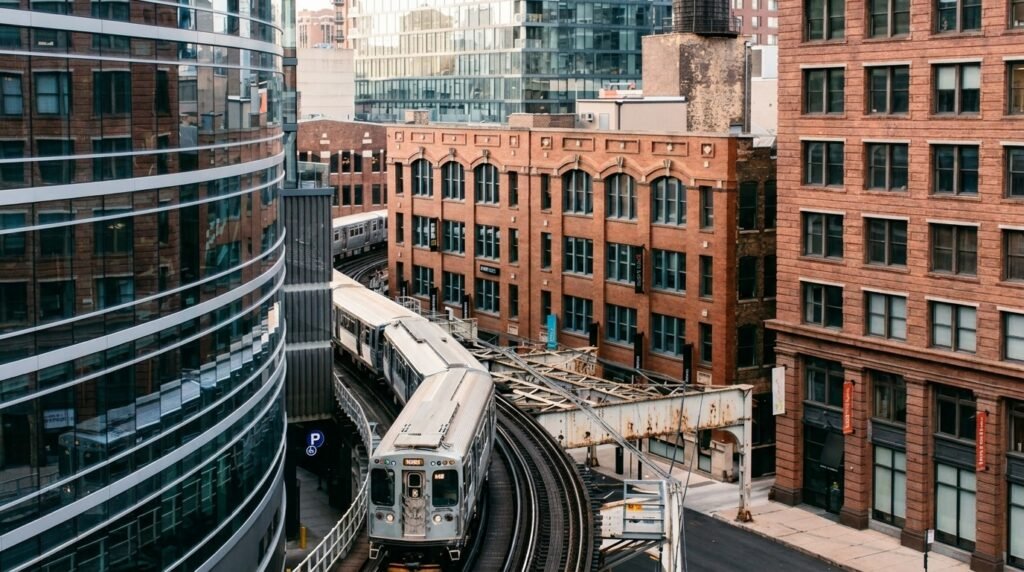
O’Hare and Midway are both well-connected to the city by the CTA rail system, and this is genuinely the best way to arrive. The Blue Line from O’Hare runs directly to the Loop for $5. The Orange Line from Midway does the same. Compare that to $50–$70 for a rideshare during surge hours, and the math is obvious. The trains are clean, frequent, and — during rush hour — often faster than a car stuck on the Kennedy Expressway.
If You’re Driving
Just don’t, if you can avoid it. Chicago’s street parking is a minefield of permit zones and tow-away hours. If a car is truly necessary, download SpotHero before you leave home. Reserve a spot in advance and you’ll save significantly over walking up to a downtown garage.
The Budget Hack That Actually Works
The Chicago CityPass is one of the few tourist bundles in any major American city that’s genuinely worth the money. It covers entry to the Skydeck, Shedd Aquarium, Field Museum, and more — saving up to 48% on combined admission. For families especially, this pays for itself on day one.
When to Go
Summer is the obvious peak — festivals, beaches, outdoor dining, rooftop bars. But here’s a local truth: Chicago in early October is spectacular. The crowds thin, the hotel rates drop, the lakefront turns golden, and the city feels like it belongs to you. Winter has its own fierce beauty, and hotel prices hit their lowest. Pack the right coat and you’ll be fine.
Planning a road trip across America? Pair Chicago with some other incredible urban destinations — check out Things to Do in Boston for a classic East Coast counterpart to the Midwest’s best city.
The Skyline Circuit: Iconic Chicago Attractions Done Right
Every great Chicago itinerary starts with the skyline. These are the chicago attractions that define the city’s image — but how you experience them matters enormously.
The Bean at Dawn (Not at Noon)
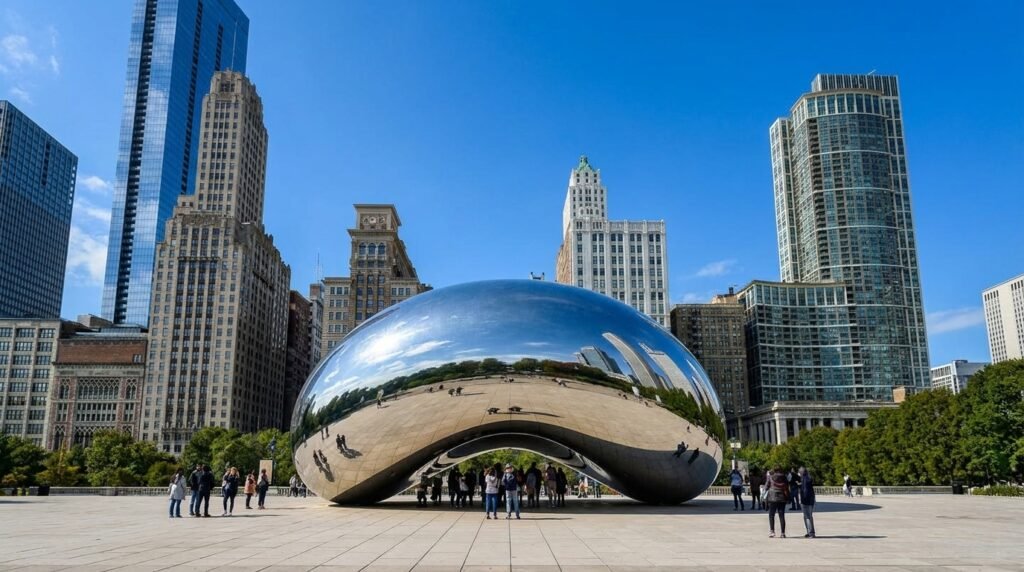
Cloud Gate — the massive mirrored ellipse in Millennium Park that everyone calls “The Bean” — is genuinely one of the most photographed sculptures in the world. The problem is that most people see it surrounded by hundreds of other tourists holding up their phones. Go at dawn. Seriously. The park opens early, the light is extraordinary, and you’ll have the thing almost to yourself. The way Chicago’s skyline reflects across that curved surface at sunrise is something you won’t forget.
Skydeck Chicago vs. 360 Chicago: An Honest Battle
Both observation decks are worth visiting. They offer different experiences.
- Skydeck (Willis Tower): At 1,353 feet, it’s the highest publicly accessible point in the Western Hemisphere. “The Ledge” — glass boxes that extend out from the 103rd floor — is either thrilling or terrifying depending on your relationship with heights. The city view looking south and west is unmatched.
- 360 Chicago (John Hancock Center): Lower at 1,000 feet, but arguably better views of the Magnificent Mile, Lake Michigan, and the North Side neighborhoods. The “TILT” experience — where the windows literally tilt outward at 30 degrees — is genuinely stomach-dropping. The rooftop bar here is also excellent.
If you can only do one: Skydeck for the height record. 360 Chicago for the overall experience. Get your Skip-the-line Ticket for Skydeck Willis Tower or 360 Chicago Tilt Experience.
The Architecture River Cruise: The #1 Chicago Tours, Justified
Of all the chicago tours available in the city, the Architecture River Cruise is consistently — and correctly — rated number one. Chicago is the birthplace of the modern skyscraper, and these chicago tours explain exactly why. The 1871 Great Fire destroyed most of the city, and what rose from the ashes was something the world had never seen: steel-frame construction, curtain-wall facades, buildings that reached for the sky rather than spreading across the ground.
The Chicago Architecture Center runs excellent versions of these chicago tours, and knowledgeable guides turn what could be a simple boat ride into a genuine education. Booking in advance during summer is non-negotiable — these chicago tours sell out days ahead. For evening departures, the skyline reflections on the river are absolutely cinematic.
Book the #1 Rated Chicago Architecture River Cruise here (Best Seller)
If you’re comparing major American city experiences, Things to Do in New York offers a fascinating contrast — two great cities, two completely different energies.
The Museum Campus: World-Class and Worth Every Minute
Chicago’s Museum Campus, sitting on the lakefront just south of downtown, is one of the great concentrations of cultural institutions anywhere in the world. These chicago attractions reward slow, deliberate visits — not rushed walk-throughs.
The Art Institute of Chicago
This is one of the finest art museums in the United States, and it’s not close. Home to Georges Seurat’s A Sunday on La Grande Jatte, Edward Hopper’s Nighthawks, and Grant Wood’s American Gothic, the Art Institute holds the kind of paintings you’ve seen reproduced a thousand times but need to see in person to actually understand. The Impressionist collection is extraordinary. So is the architectural fragment collection on the lower level, which most visitors completely miss.
Budget half a day minimum. The café inside is genuinely good.
Shedd Aquarium
Families consistently rank Shedd among the best chicago activities available in the city, and for good reason. The beluga whale habitat alone is worth the price of admission. The dolphin and whale shows are polished and entertaining. What sets Shedd apart from typical aquariums is the quality of the environments — the animals visibly thrive here, and the exhibits are thoughtfully designed.
Field Museum: Home of SUE
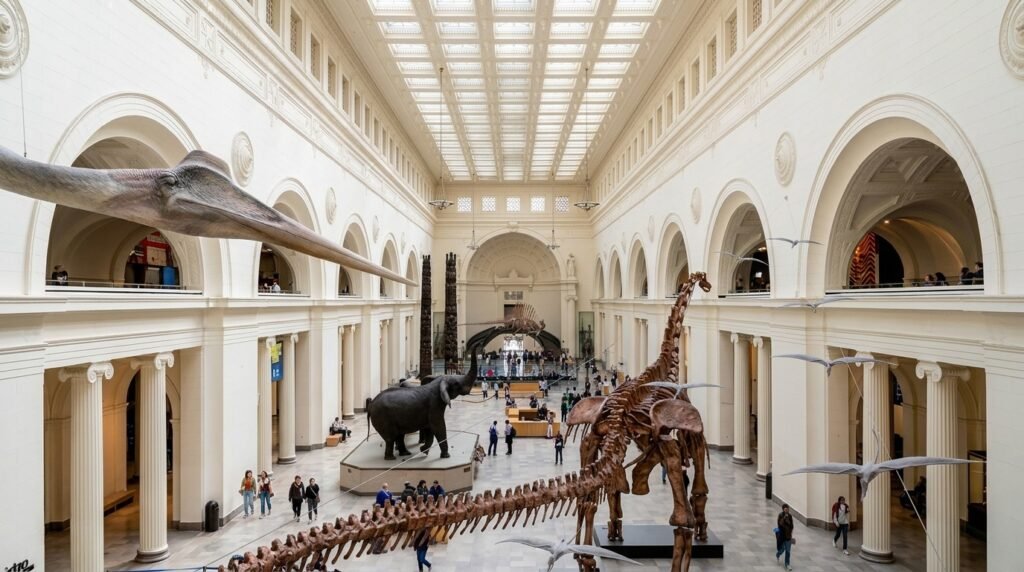
“SUE” — the most complete Tyrannosaurus Rex skeleton ever discovered — lives in the Field Museum’s main hall, and the sheer scale of the creature stops you cold the moment you walk in. The museum also holds one of the finest Egyptology collections in the world, plus exhibits on gems, ancient Americas, and Pacific cultures. It’s genuinely vast. Give it a full day.
Adler Planetarium
Often overlooked in favor of its larger neighbors, the Adler is worth your time for two reasons: the genuine quality of its shows and programming, and the fact that its lakefront terrace offers the single best panoramic view of the Chicago skyline anywhere in the city. Walk out to the point at golden hour and you’ll understand why photographers make special trips just for that spot.
Museum of Science and Industry
Located in Hyde Park rather than the Museum Campus, MSI demands its own expedition. The German U-505 submarine — captured during World War II and now permanently housed inside the museum — is one of the most remarkable artifacts you’ll encounter anywhere. The coal mine replica, the weather gallery, and the working model railroad are all genuinely excellent. This is one of those places to visit in chicago that locals bring out-of-town guests to every single time.
Save up to 48% on museum entries with the Chicago CityPASS or book individual Field Museum tickets here.
Those interested in great museums on the East Coast should look at Things to Do in Philadelphia — a city with a similarly deep cultural infrastructure.
Neighborhood Chronicles: The Real Chicago Lives Here
The Loop is where Chicago works. The neighborhoods are where Chicago lives. The best things to do in Chicago are often found by simply walking into a neighborhood with no plan and letting it unfold.
Wicker Park & Logan Square
These adjacent northwest-side neighborhoods are the creative heart of modern Chicago. Wicker Park’s Milwaukee Avenue corridor is lined with vintage clothing stores, independent record shops, and restaurants that rotate constantly as new chefs take chances. Dove’s Luncheonette — a narrow, dimly lit spot playing soul 45s and serving Tex-Mex brunch — is one of the most beloved neighborhood restaurants in the city.
The 606 (Bloomingdale Trail) is an elevated park built on a former rail line, threading through Wicker Park, Bucktown, and Logan Square. It’s two miles of community garden plots, public art installations, and views of rooftops and water towers that feel uniquely Chicago. Come on a weekend morning and you’ll see the neighborhood in its natural state — dog walkers, cyclists, families, and coffee in hand.
West Loop & Fulton Market
A former meatpacking district transformed into the city’s undisputed foodie capital, the West Loop is where Chicago’s best chefs have staked their claims. The neighborhood’s restaurant row on Randolph Street includes some of the finest dining experiences in the Midwest. On weekend mornings, the Green City Market — the city’s best farmers’ market — operates nearby in Lincoln Park.
Pilsen
Pilsen is one of the most visually striking neighborhoods in Chicago, its buildings covered in murals telling stories of the Mexican-American community that has defined this southwest-side enclave for generations. The National Museum of Mexican Art here is free and genuinely world-class. For food, skip the obvious spots and walk into a neighborhood grocery store — the tacos at the steam table in the back will cost you $3 and rearrange your understanding of what a taco can be.
Uptown
Uptown is Chicago in concentrated form: architecturally stunning, culturally diverse, historically layered. The Green Mill Jazz Club on Broadway is one of the great American jazz venues — a 1907 institution where Al Capone kept a private booth and where the Sunday night Uptown Poetry Slam has been running since 1986. Come on a Tuesday for live jazz, order a drink, and let the music do its work.
For more inspiration on great American cities with distinct neighborhood cultures, explore Things to Do in Houston.

The Honest Foodie Guide: Deep Dish, Michelin Stars, and Hidden Gems
Food is not just one of the chicago activities here — it’s a civic religion.
The Great Pizza Debate, Settled (Sort Of)
Chicago’s pizza culture is more complex than the “deep dish” shorthand suggests. There are actually three distinct styles:
- Deep Dish (Lou Malnati’s): The buttery, high-sided pie most visitors picture. Rich, filling, and absolutely worth having once. Lou Malnati’s on Wells Street in River North is the consensus classic.
- Stuffed Pizza (Giordano’s): Even thicker than deep dish, with a full crust layer on top trapping cheese and fillings inside. A different animal entirely, and polarizing even among locals.
- Tavern-Style Thin Crust: Cut in squares (the “party cut”), cracker-crisp, and what most Chicago locals actually eat most of the time. Try Vito & Nick’s on the South Side for the authentic tavern experience.
Michelin-Starred Excellence
Chicago has more Michelin-starred restaurants than almost any other American city outside New York. Smyth in the West Loop holds three stars — a remarkable achievement — with a tasting menu that changes constantly and reflects the seasons with rare precision. Kasama in Ukrainian Village holds one star and is the world’s first Filipino restaurant to receive a Michelin star, serving extraordinary weekend brunch and an intimate tasting menu in the evenings.
The Rules You Need to Know
Two Chicago food laws are non-negotiable among locals:
- No ketchup on a hot dog. The Chicago-style hot dog — Vienna Beef, yellow mustard, white onion, relish, tomato, sport peppers, celery salt, poppy seed bun — does not include ketchup. This is not a preference. It is law.
- The brownie was invented in Chicago. The Palmer House Hilton claims its pastry chef created the brownie in 1893 for the World’s Columbian Exposition. The recipe is still on the menu. Order one.
Want to try them all? Join this Chicago Favorites Food Tour: Pizza, Hot Dogs, and Chocolate.
Hidden Culinary Gems
- Calumet Fisheries (Southeast Side): A tiny smoky shack on the Calumet River where they’ve been smoking fish since 1948. The smoked shrimp and chubs are extraordinary. It’s a 30-minute drive from downtown but worth every minute.
- Oasis Café (Streeterville): An unpretentious Mediterranean gem hidden on a lower level, beloved by regulars for its falafel, lamb dishes, and neighborhood-diner energy despite being steps from the Magnificent Mile.
Compare Chicago’s food scene with another great American culinary city — Things to Do in Miami for a look at what the South is doing with food right now.
Outdoor Bliss: The Lakefront and Green Spaces
People who haven’t been to Chicago are always surprised. They expect a purely urban landscape and instead find one of the most beautiful urban waterfronts in the world. The best chicago activities in summer happen outside.
The Lakefront Trail
Eighteen uninterrupted miles of paved trail running along Lake Michigan’s edge, connecting neighborhoods from Edgewater in the north to South Shore in the south. Cyclists, runners, rollerbladers, and walkers share the path. The views — blue water to your right, skyline to your left — are stunning throughout. Rent a Divvy bike and ride a section on a clear day. This is one of those places to visit in chicago that genuinely changes how you see the city.
North Avenue Beach
Chicago has 26 official beaches. North Avenue Beach is the local favorite, and for good reason: it sits directly beneath the skyline’s most dramatic stretch, the sand is wide and clean, the volleyball nets are always full, and the beach house (shaped like a steamship) has a rooftop bar. Come on a weekday if you can — weekends are a scene.
Maggie Daley Park
Connected to Millennium Park by a pedestrian bridge, Maggie Daley Park is one of the most thoughtfully designed urban parks in the country. The climbing structures (specifically designed for older kids, with genuine challenge levels) are unlike anything you’ll find elsewhere. The mini-golf course winds through whimsical urban landscapes. In winter, a free skating ribbon winds through the park.
Kayaking the Chicago River
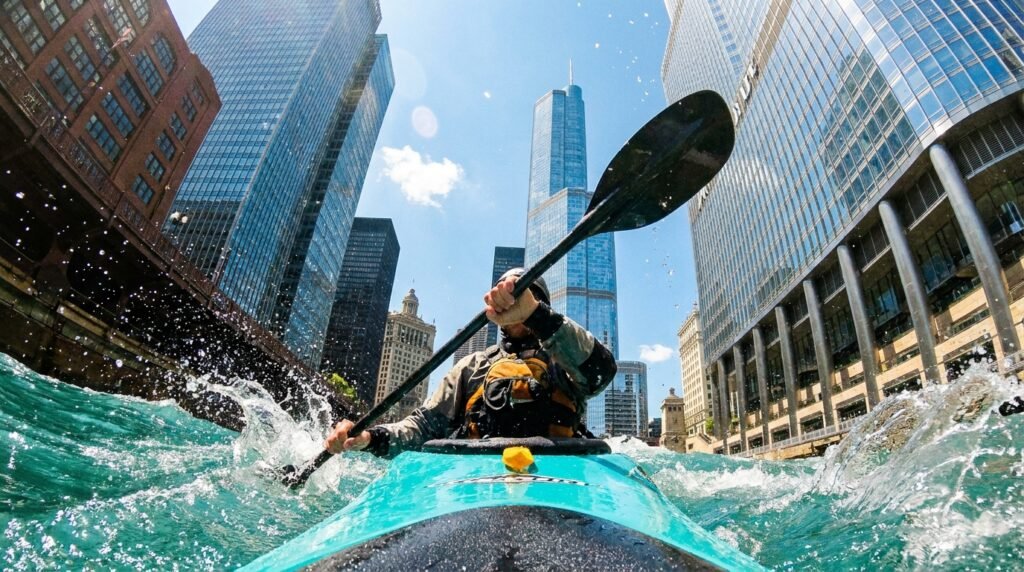
One of the best chicago tours available is also one of the most unexpected: paddling the Chicago River through the downtown canyon. Urban Kayaks runs guided tours that take you under the bridges and past the bases of skyscrapers at water level. The perspective from a kayak looking up at 40-story towers is surreal and absolutely worth doing. Book the architecture-focused paddle for the best experience.
Book your Chicago River Guided Kayak Tour for a unique perspective.
For another city with exceptional outdoor experiences, read about Things to Do in Atlanta.
Hidden Gems: The Chicago Attractions Most Tourists Never Find
The best chicago attractions aren’t always on the official list. These are the ones that locals mention quietly, like they’re sharing a secret.
The Pedway
Chicago’s downtown Pedway is a network of underground tunnels and enclosed bridges connecting more than 40 blocks of the Loop. In February, when wind chills hit -20°F, it’s not just convenient — it’s survival infrastructure. But even in good weather, the Pedway offers a strange, slightly surreal alternative Chicago: food stalls, art installations, commuters, and tourists all sharing fluorescent-lit corridors beneath the city streets. Walk it at least once.
Institute for the Study of Ancient Cultures (University of Chicago)
Tucked into the University of Chicago’s Gothic campus in Hyde Park, this museum holds one of the finest collections of ancient Egyptian, Mesopotamian, and Near Eastern artifacts in the Western Hemisphere. Admission is free. The galleries are rarely crowded. The quality of the objects is extraordinary. This is one of those places to visit in chicago that specialists know and everyone else misses.
The Vanderpoel Collection (Beverly Neighborhood)
The Beverly Arts Center on the South Side houses the Vanderpoel Art Collection — a remarkable gathering of 19th-century academic works assembled in a neighborhood fieldhouse that most Chicagoans have never visited. Free admission. The South Side neighborhood around it, Beverly/Morgan Park, is also one of the most architecturally distinctive residential areas in the city.
International Museum of Surgical Science
Housed in a lakefront mansion on the Gold Coast, this four-story museum traces the history of surgery from ancient times to the present. Antique surgical instruments, wax anatomy figures, a recreated 1900s operating theater, and an iron lung collection make this one of the most genuinely strange and fascinating chicago attractions in existence. It’s simultaneously educational and deeply unsettling. Ideal for curious minds.
Those who love uncovering lesser-known gems should also explore Things to Do in Dallas for a different flavor of hidden American experiences.
Nightlife, Sports, and the Soul of the City After Dark
Chicago after dark is not a footnote to the day — it’s the main event for a significant portion of the city’s most essential chicago activities.
Jazz and Blues: The Living History
Chicago is one of the birthplaces of electric blues. Muddy Waters, Howlin’ Wolf, and Buddy Guy himself transformed this city into the epicenter of an American art form. Buddy Guy’s Legends on Wabash Avenue is the most famous venue — a listening room with strong drinks and nightly live blues. Buddy himself still plays occasional residencies in January.
For jazz, the Jazz Showcase in the South Loop is the serious room: world-class musicians, excellent acoustics, a no-chatter-during-performance policy, and a history dating to 1947. Both venues are essential Chicago experiences.
Second City: Where Comedy Was Born
The Second City comedy theater on North Wells Street has trained more major comedy talent than any institution in history. Tina Fey, Bill Murray, John Belushi, Stephen Colbert, Amy Poehler — the list goes on. The main stage revue runs nightly, and the e.t.c. stage upstairs often features even more experimental work. Come for the late-night free improv sets after the main show. They’re unscripted, unpredictable, and often extraordinary.
Wrigley Field: The Experience Beyond Baseball
You don’t have to care about baseball to love Wrigley Field. Built in 1914 and barely modified since, it’s one of the last old-school ballparks in America — hand-operated scoreboard, ivy-covered outfield walls, and seats close enough that you can see the players’ expressions. The Wrigleyville neighborhood surrounding it turns game days into a street festival. Go for the atmosphere even if the Cubs are in a losing streak.
Navy Pier Fireworks
Every Wednesday and Saturday night throughout summer, Navy Pier launches free fireworks shows over Lake Michigan. The best viewing spots are actually away from the pier — the Lakefront Trail near Ohio Street Beach gives you the fireworks on one side and the lit-up skyline on the other. It doesn’t cost a thing.
For comparison, Things to Do in Los Angeles shows how the West Coast does nightlife and entertainment in a completely different key.
Beyond City Limits: Metra Day Trips Worth Taking
Some of the finest places to visit in chicago are technically not in Chicago at all.
Oak Park: The Frank Lloyd Wright Pilgrimage
Fifteen minutes from downtown on the Green Line, Oak Park contains the highest concentration of Frank Lloyd Wright-designed buildings in the world. The Frank Lloyd Wright Home and Studio (where he worked from 1889 to 1909) offers guided tours, and the surrounding blocks contain dozens of Prairie-style homes you can walk past on a self-guided tour. The Unity Temple, also in Oak Park, is a UNESCO World Heritage Site and one of Wright’s most important public buildings.
Take a guided Frank Lloyd Wright Architecture Tour to Oak Park from downtown.
Indiana Dunes National Park
Two hours by South Shore Line commuter rail, the Indiana Dunes on Lake Michigan’s southern shore offer something genuinely surprising: 15,000 acres of national parkland with substantial sand dunes, quiet beach stretches, wetlands, and forest — all within the greater Chicago metropolitan area. The dunes themselves reach 200 feet in places. It’s one of the best and least-expected places to visit in chicago region, perfect for a day when you need to escape the concrete entirely.
Woodstock, Illinois: Groundhog Day Country
Metra’s Union Pacific Northwest line connects Chicago to Woodstock, the small-town Illinois square that doubled as Punxsutawney, Pennsylvania in Harold Ramis’s Groundhog Day. The town leans into it with plaques marking filming locations, and the downtown square itself is charming and well-preserved. A good half-day excursion for film lovers.
If day trips appeal to you, Things to Do in Las Vegas is another destination with excellent access to nearby natural wonders worth exploring.
Practical FAQ: The Questions Every Chicago Visitor Asks
How many days do I need in Chicago?
Three days covers the highlights. Five days lets you go deeper into neighborhoods and museums. A week gives you space to slow down, eat well, and feel like you actually know the city. Most visitors wish they’d stayed longer.
Is Chicago safe for tourists?
Like any major American city, Chicago is not uniformly safe in every neighborhood. The tourist-facing areas — the Loop, River North, Lincoln Park, Wicker Park, Wrigleyville, the Museum Campus — are busy, well-policed, and comfortable at most hours. Use the same awareness you’d bring to any large city. Check neighborhood-specific guidance before exploring less-familiar areas independently.
What are the best chicago tours for first-timers?
Start with the Architecture River Cruise. Then consider a chicago tours option focused on food — several excellent culinary chicago tours run through neighborhoods like Pilsen, the West Loop, and Wicker Park. Walking chicago tours of the Loop’s historic architecture are also highly rated and give context that self-guided exploring can’t fully provide. Themed chicago tours covering gangster history, ghost legends, and neighborhood deep-dives offer entertaining alternatives for return visitors.
What chicago activities are free?
Quite a few of the best chicago activities cost nothing. Millennium Park is entirely free. The Lakefront Trail is free. The Chicago Cultural Center (with its stunning Tiffany glass domes) is free. The Smart Museum at the University of Chicago is free. The weekly Pilsen mural walks are self-guided and free. The Newberry Library’s research collections and rotating exhibitions are free. Chicago rewards visitors who look beyond ticketed chicago attractions.
What’s the best neighborhood to stay in?
River North or the Loop for first-timers — central, walkable, close to major chicago attractions. Lincoln Park for a more residential feel. Wicker Park or Logan Square for those who want neighborhood character over convenience. The Gold Coast for waterfront access and proximity to the Magnificent Mile.
Final Thoughts: The Spirit of Big Shoulders
Carl Sandburg called Chicago the “City of Big Shoulders” in 1914, and the phrase still fits. There’s a directness to this place, a lack of pretension, a willingness to be exactly what it is without apology. The architecture is extraordinary because people here actually built things. The food is exceptional because cooks here care about flavor over fashion. The music is foundational because Chicago took what it felt and turned it into something the whole world eventually sang.
The things to do in Chicago are numerous enough to fill a book. The chicago tours can take you deep into architecture, history, food, music, and neighborhoods you’d never find alone. The chicago activities — from lakefront kayaking to improv comedy to blues clubs — cover every mood and every budget. The chicago attractions range from the globally famous Bean to the completely obscure Surgical Museum. The places to visit in chicago include both the iconic and the intensely local.
Plan your chicago tours early during peak festival season — summer weekends fill up fast for both accommodations and the best-rated experiences. Book your restaurant reservations before you arrive. And build in at least one unplanned afternoon, because the best version of Chicago is often the one you stumble into.
Before you finalize your American city tour, be sure to explore what other great destinations have to offer. Check out Things to Do in Arlington Texas for a look at one of Texas’s most exciting cities, Things to Do in Kansas City for BBQ and jazz in the heartland, and things to do in san diego for a Pacific Coast adventure that couldn’t be more different from a Chicago winter.
One trip is never enough. That’s not a line — it’s simply true.
Reviews
There are no reviews yet. Be the first one to write one.