
Things to do in Monterrey will surprise you in ways that no glossy brochure ever prepares you for. I say that not as a marketing line, but as someone who landed at General Mariano Escobedo International Airport with a half-baked itinerary and left ten days later with a city permanently tattooed on my sense of adventure. Monterrey is loud, proud, industrial, and impossibly beautiful — a place where the jagged spine of the Sierra Madre Oriental barrels right into the city’s edge, and where a glass of mezcal beside a roaring wood fire feels like the most natural thing in the world.
Most travelers flying into Mexico default to the coasts — the turquoise predictability of Cancún, the colonial perfection of Oaxaca. Monterrey sits in the north and rarely makes those shortlists. That is precisely why it should be on yours. This is not a guide full of soft edges. It is a genuine account of what the city delivers, what it does not, and how to make the most of every hour you spend in one of the most underrated places to visit in mexico destinations on the continent. If you have already explored the things to do in Mexico City, Monterrey is the logical next chapter — grittier, faster, and wilder around the edges.
Table of Contents
First Impressions: A City That Does Not Apologize
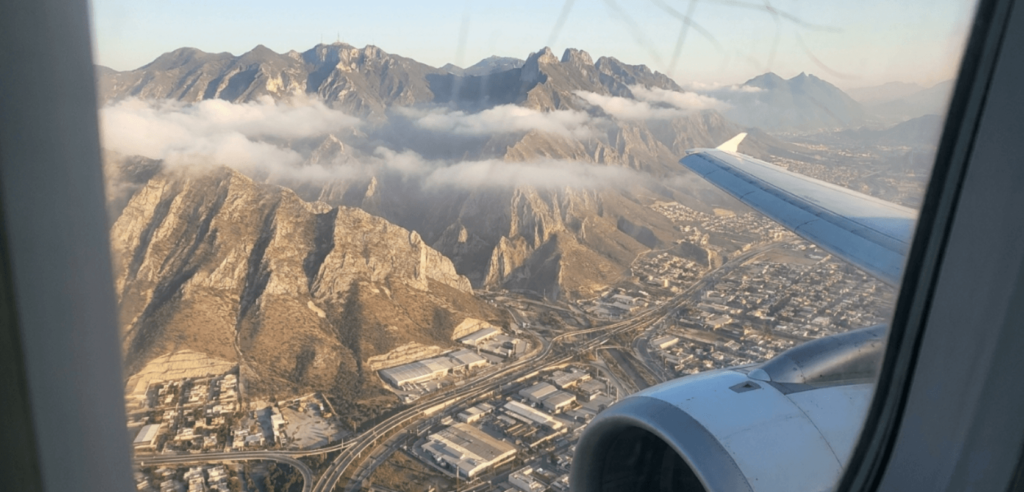
Arriving by air gives you the best possible opening frame. The mountains appear before the runway does — enormous limestone ridges stacked against the sky like a fortress wall built by geology rather than man. Then the city spills out below: highways, overpasses, steel and glass towers, and tucked between them, the warm terracotta rooftops of the Barrio Antiguo. This contrast — raw industrial muscle sitting beside colonial gentleness — defines everything about Monterrey.
The things to do in Monterrey begin before you even unpack your bag, because the city announces itself aggressively from the moment you step outside. Heat in summer is not a metaphor; it is a physical wall. Plan your visit between October and March if you value your sanity. I went in November and the weather was close to perfect — warm afternoons, cool evenings, and a clarity to the mountain air that made every lookout point worth the climb.
The Barrio Antiguo: Where the City’s Heartbeat Is Loudest
Every list of things to do in Monterrey starts here, and for once, the consensus is right. The Barrio Antiguo is Monterrey’s historic neighborhood, and it earns every superlative thrown at it. Walking down Calle Morelos on a weekday morning — before the Sunday crowds arrive — feels like finding a secret. Indie bookshops spill paperbacks onto the pavement. Coffee places like Libros Café y Detalles pull you in with the smell of freshly ground beans and the visual noise of art prints covering every wall.
On Sundays, the Corredor del Arte takes over the streets entirely. Local artisans spread handmade jewelry, vintage vinyl records, and regional crafts across the cobblestones. If you are booking Monterrey tours, several operators run free or low-cost guided walks through the neighborhood — a worthy investment because the backstory of every alley and doorway makes the visual experience ten times richer.
At night, the Barrio transforms. Café Iguana is the kind of rock venue that smells like forty years of good decisions. Its rooftop bar overlooks the old quarter with a view that costs you nothing beyond the price of a cold beer. For something more intimate, Vini the Bar operates with the quiet confidence of a great speakeasy — low lighting, excellent natural wine, and a portobello tiradito that I still think about unprompted. If underground electronic music is your thing, TOPAZdeluxe runs a tight ship; just be aware they use a preloaded card system for drinks, which throws off first-timers.
The Macroplaza: Civic Space Done Right
The Macroplaza is one of the world’s largest urban squares — 100 acres of public space that the city has deliberately kept free of commercial clutter. Standing at its southern edge looking north, the scale of it hits you slowly. The Palacio de Gobierno anchors one end with its Corinthian columns and its Winged Victory statue; the Metropolitan Cathedral anchors another with its baroque facade and mismatched neoclassical bell tower (they ran out of budget mid-build, which I find quietly charming).
The Faro del Comercio stands 230 feet tall in vivid red brick. At night, it fires a green laser beam across the valley — one of those civic gestures that seems absurd on paper but is completely wonderful in person. The things to do in Monterrey in this central zone extend into the museums that flank the plaza, particularly the Museo de Historia Mexicana and the adjacent Museo del Noreste (MUNE), which are connected by a glass bridge and give you the most thorough account of northern Mexico’s relationship with Texas and the broader borderlands history.
Paseo Santa Lucía: The Riverwalk That Actually Delivers
I was skeptical of the Paseo Santa Lucía before I walked it. Man-made riwalks tend toward the artificially cheerful — too many chain restaurants, too little character. Santa Lucía proved me wrong. This 1.5-mile turquoise channel stretches from the historic center to Parque Fundidora, passing 25 different fountains and a rotating collection of public sculptures. The highlight is La Lagartera, a high-relief piece depicting lizards, fish, and frogs that manages to be both strange and completely at home in its setting.
Monterrey tours that include a boat ride along the riverwalk are common and genuinely enjoyable, especially at dusk when the warm lighting transforms the water into something almost cinematic. Walking the full length takes about 35 minutes at an easy pace, and the path is wide enough that cyclists and pedestrians coexist without tension. It is one of those urban design projects that makes you think better of city planners in general.
Parque Fundidora: Industrial Heritage as Living Museum
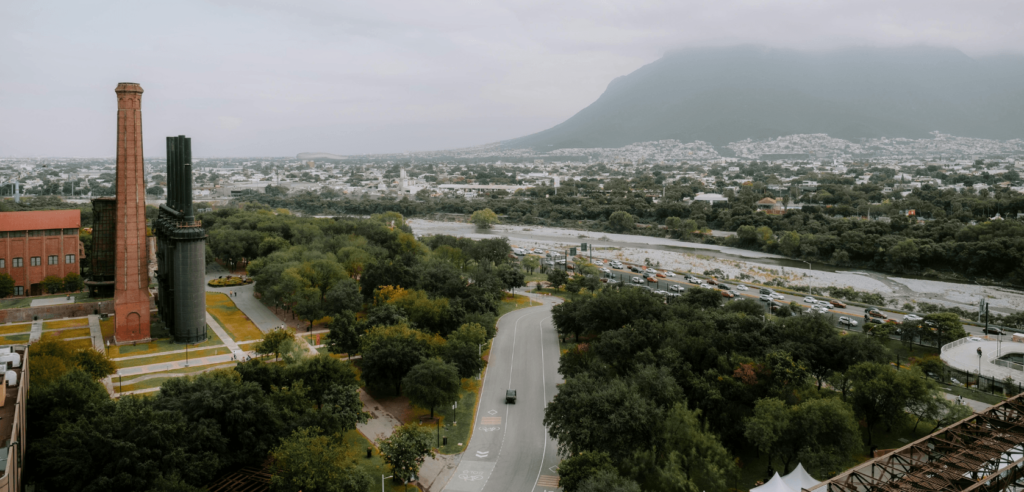
The things to do in Monterrey inside Parque Fundidora alone could fill an entire day. This 280-acre park was built on the bones of a former steel and iron foundry, and unlike many industrial heritage sites that strip away all the machinery and replace it with sanitized lawns, Fundidora kept the skeleton. Giant furnaces and blast towers rise above the cycling paths like post-industrial sculpture. It is honest about what this land was and what it cost the workers who operated it.
The Museo del Acero Horno3 is the park’s centerpiece — a former blast furnace converted into an interactive science and technology museum. Climbing to the top of the furnace offers one of the best unrestricted panoramic views over the city, and on a clear day you can trace the full ridgeline of the Sierra Madre with your eyes. Families will find the Parque Plaza Sesamo within Fundidora to be a solid half-day in itself, with Sesame Street theming, waterpark zones, and enough structured activities to keep kids fully occupied.
Food: The Honest Account of Eating in Monterrey
No treatment of the things to do in Monterrey is complete without a blunt conversation about the food. This city is carnivore territory. If you do not eat meat, you will survive — but you will be swimming upstream constantly. The regional identity is built around cabrito (roasted baby goat), and eating it at El Rey del Cabrito is less a restaurant visit and more a civic ritual. The meat is slow-roasted over wood fires using a recipe the kitchen has been running for decades. The atmosphere is unapologetically cowboy, and the portions are genuinely enormous.
For something at the opposite end of the spectrum, Pangea holds its Michelin recognition with considerable grace. Chef Guillermo González Beristáin runs a kitchen that treats Mexican ingredients as fine art without becoming precious about it. Book well in advance; the restaurant fills up quickly, and walk-ins are essentially a myth. For everyday eating — the kind of meal that reminds you why street food is the backbone of Mexico tours — Taquería Orinoco is the answer. Their chicharrón tacos on flour tortillas are the kind of thing you order once and then quietly order again before the first round is finished.
These culinary experiences collectively explain why Monterrey appears on food-focused mexico tours with increasing frequency. The city does not imitate the food traditions of Mexico City or the Pacific coast; it has its own deeply rooted, meat-forward, wood-fire identity that deserves recognition on its own terms. Speaking of which, if you are planning a broader culinary exploration of the country, the Things to Do in Guadalajara offers a fascinating parallel food culture in the west — birria country versus cabrito country, essentially.
Nature and Adventure: The Mountains Are Not a Backdrop
The outdoor options among things to do in Monterrey are the aspect of the city that most visitors discover only after they have already booked — which means they often do not leave enough time for them. Do not make that mistake.
Chipinque Ecological Park
The Chipinque Ecological Park sits within 20 minutes of the city center and offers over 37 miles of well-maintained trails through pine and oak forest. The entry-level loops are manageable for anyone in average fitness and reward you with views over the metropolitan valley. The more demanding routes climb toward the Copete de Águilas at 2,200 meters — a serious commitment that earns serious payoff. Most of the dedicated Monterrey tours for hikers use Chipinque as their base.
Cerro de la Silla
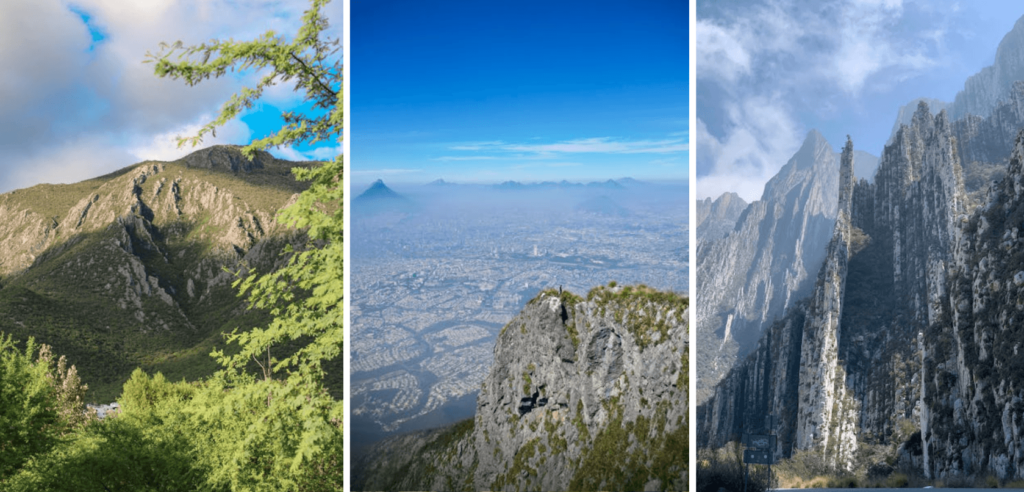
If you want to understand why Monterrey people carry a specific kind of local pride, climb the Cerro de la Silla. The saddle-shaped mountain is the city’s visual icon — it appears on everything from murals to beer bottles — and the trail to its lookout platform is steep, rocky, and completely worth it. Many Monterrey tours that focus on hiking include a dawn start here to catch the city waking up below. The light in the early morning turns the limestone pink before shifting to pale gold, and for a brief window, the whole valley looks like it was staged for a photograph.
La Huasteca Canyon and Grutas de García
For rock climbers, La Huasteca Canyon is a near-mythical destination — nearly 500 acres of jagged limestone formations that attract serious climbers from across the country and beyond. Even if you are not climbing, the visual drama of the canyon walls is staggering, and mountain biking trails weave through the area with enough variety to keep cyclists occupied for a full day. As one of the most visually striking places to visit in mexico options in the north, La Huasteca punches well above its weight.
The Grutas de García require a day-trip commitment — they sit about an hour northwest of the city — but the journey is part of the experience. A cable car carries you up the Sierra del Fraile before depositing you at the cave entrance, where 16 chambers of 50-million-year-old limestone formations wait in near-total silence. The formation known locally as the Christmas Tree is genuinely impressive, and the overall sense of scale inside the caves is the kind of thing that recalibrates your understanding of geological time. Many mexico tours that work the northern corridor include the Grutas as a half-day excursion.
Culture and Art: Monterrey Beyond the Postcard
The Museum of Contemporary Art of Monterrey (MARCO) is one of the genuinely world-class cultural institutions in Mexico. Ricardo Legorreta designed the building in characteristic pink with a central courtyard that manages to feel both monumental and intimate simultaneously. The permanent and rotating collections connect northern Mexican artists with the international stage in a way that resists the capital-centric bias that often shapes how Mexican art gets discussed globally.
MARCO is consistently highlighted as one of the premier places to visit in mexico experiences for anyone who takes contemporary art seriously. The museum’s restaurant serves a fine-dining menu that draws on Mexican haute cuisine — a worthwhile lunch stop even if you are visiting primarily for the exhibitions. Monterrey tours with a cultural focus almost always include MARCO as a centerpiece, and the neighborhood around the museum has a pleasant afternoon energy that rewards wandering.
Day Trips: Getting Out of the City
The things to do in Monterrey extend well beyond the city limits, and the surrounding region rewards those willing to spend a few hours in a car or on an organized excursion.
The Pueblo Mágico of Santiago, 45 minutes south, operates at an entirely different speed from the metropolitan rush. Its shaded central plaza and the artisan corridor in Los Cavazos — where families sell handmade sweets and rustic furniture from workshop-fronts — offer a quiet counterpoint to the city’s intensity. The Cola de Caballo waterfall sits nearby: an 82-foot cascade that fans out into a shaded gorge with a cold-water pool at its base. Most Monterrey tours combine Santiago with the waterfall and a stop at the La Boca Dam, a reservoir that hosts catamaran parties on weekends.
These day-trip options make Monterrey a natural hub for exploring the broader north — and when you consider how well the region pairs with other places to visit in mexico destinations, the case for spending a full week in this corner of the country becomes very easy to make.
A Soccer Match: Non-Negotiable
If there is one experience among things to do in Monterrey that you absolutely cannot skip if timing allows, it is attending a football match. The city is split between two fiercely competing clubs: Rayados, who play in a modern stadium in the southeast, and Tigres, who pack their university-adjacent ground with some of the loudest, most committed supporters in Mexican football. The atmosphere in both stadiums is genuinely electric — not performed passion, but the real thing. Many mexico tours that spend time in the north time their visit specifically around a match. Book tickets early and arrive with enough time to absorb the pre-game street energy, which is almost as entertaining as the ninety minutes inside.
The Mirador del Obispado: Saving the Best View for Last
Among all the viewpoints and lookouts available among things to do in Monterrey, the Mirador del Obispado holds a specific authority. Perched on one of the highest hills inside the city boundary, it delivers a genuine 360-degree panorama of the entire metropolitan valley and the Sierra Madre ridgeline. One of Mexico’s largest monumental flags flies from a 328-foot mast on the hilltop, and the wind that carries it tends to cool things down even on warm afternoons.
Below the mirador sits the Palacio del Obispado, a yellow 18th-century palace that now operates as a regional history museum. The building is beautiful from the outside, and the exhibits inside give useful context for understanding the city’s relationship with the broader political history of northern Mexico. Sunset from this hill is, without exaggeration, one of the most photogenic moments available to any visitor — the sky turns through orange and pink while the city lights begin to flicker on below, and the mountains go dark at the edges first before losing their outline entirely.
Practical Realities: What the Travel Blogs Gloss Over
Honest Monterrey tours content requires honesty about the practical side of visiting, and there are a few things worth knowing before you arrive.
Getting around: Uber and Didi are reliable, affordable, and genuinely the best way to move between neighborhoods. The catch is that neither app can legally pick you up at the airport terminal. On arrival, use the official airport taxi service — it is regulated, metered, and not dramatically expensive. Once inside the city, ride-sharing is seamless.
Safety: Monterrey has a reputation that its reality does not fully support. The city’s crime statistics are actually better than many other major Mexican cities, and the tourist zones — San Pedro, Fundidora, and Barrio Antiguo — are well-lit, well-traveled, and generally relaxed. Standard urban common sense applies: use ride-sharing at night, avoid poorly lit side streets in unfamiliar areas, and keep your phone in your pocket on public transit. Anyone evaluating Monterrey against other places to visit in mexico options purely on safety grounds is working with outdated information.
Language: Business districts and luxury hotels have solid English coverage. In markets, taco spots, and smaller neighborhood shops, Spanish is essential. Basic phrases will carry you far — locals respond warmly to the effort, even when the grammar is catastrophic. Tipping sits at 10–15% for sit-down meals and is expected at most bars.
Timing: October through March. Summer heat in Monterrey regularly exceeds 100°F, and while the city does not stop functioning, your enjoyment of outdoor activities will be significantly compromised. Mexico tours that include Monterrey almost always position it as a late-autumn or winter destination for good reason.
How Monterrey Compares to Other Mexican Cities
The natural question, when assessing any destination, is where it sits relative to alternatives. Among the things to do in Monterrey, the outdoor adventure offering is arguably unmatched by any other major Mexican city — the proximity of world-class hiking, climbing, and caving to an international airport and a full urban infrastructure is rare. Mexico City has more museums and more history; Guadalajara has a stronger craft beer and music scene; the coastal cities have the obvious marine access. But Monterrey has the mountains, and the mountains change everything.
The Monterrey tours market reflects this — the city is marketed to adventure travelers and business visitors in roughly equal measure, with a cultural strand that has grown significantly as MARCO and the broader arts scene have matured. As a stand-alone destination, it works for a minimum of four or five days. As part of a broader northern Mexico circuit, it works as the anchor point from which day trips radiate in every direction.
Mexico tours that skip Monterrey are leaving a significant gap in their understanding of what the country contains. This is not a beach substitute or a consolation prize for travelers who missed out on other regions. It is a distinct destination with a distinct identity — industrial, ambitious, outdoor-obsessed, and quietly proud — that rewards visitors who approach it with an open mind and a good pair of walking shoes.
Final Thoughts: Why Monterrey Stays With You
The things to do in Monterrey that stay with me longest are not the obvious ones. Not the mountains, though the mountains are spectacular. Not the Macroplaza, though the civic scale of it is genuinely impressive. What stays is the texture of the place — the smell of wood smoke from a cabrito grill at noon, the sound of a Rayados or Tigres crowd building before kickoff, the specific quality of light on limestone at dusk when the whole Sierra Madre turns amber for twenty minutes before going dark.
These are the things that Monterrey tours can point you toward but cannot replicate in advance. They are the residue of a city that has been building its own identity for a very long time, largely outside the gaze of international travel media, and that has consequently developed something more authentic than most destinations ever manage.
Among all the places to visit in mexico, Monterrey is the one that asks the most of you and gives the most back. It is not arranged for your comfort. It does not bend toward your expectations. It simply exists, enormous and complex and genuinely extraordinary, at the foot of the mountains it was named for. Go there. Dig into it. You will not leave the same traveler who arrived.
Reviews
There are no reviews yet. Be the first one to write one.