
The moment I stepped off the plane into that thin, high-altitude air — 2,240 meters above sea level — Mexico City stopped being a destination on a map and became something I felt in my chest. Not just from the altitude. From the noise, the color, the smell of charcoal and roasting chilies drifting through the arrivals hall. I had read every blog post, every Reddit thread, every glossy magazine spread before I arrived. None of it fully prepared me.
That is exactly why I wrote this guide.
The things to do in mexico city are so wildly varied, so layered with history and flavor and contradiction, that most travel content either scratches the surface or overwhelms you with bullet points. What I want to give you instead is the honest version — the version that tells you what lines are worth standing in, what “tourist traps” are actually worth your time, and what nobody tells you until it’s too late.
I’ve spent months here across multiple visits, joined a dozen different mexico city tours ranging from archaeology walks to midnight street food crawls, and made all the classic tourist mistakes so you don’t have to. The result is this guide — comprehensive, chronological, and brutally honest.
Whether you’re planning your first visit or your fifth, whether you’re booking back-to-back mexico tours or winging it solo on a tight budget, let this be the guide you actually trust.
Table of Contents
The Historical Heart: Centro Histórico and the Zócalo
Let’s start where the city itself started: the Zócalo.
Standing in the middle of this enormous public square — one of the largest in the entire world — you get this strange, disorienting feeling of time collapsing. Directly in front of you is the Metropolitan Cathedral, a massive colonial structure that took nearly 250 years to build. To your right is the National Palace, where Diego Rivera’s sweeping murals cover entire walls with the story of Mexican civilization. And beneath your feet, beneath all of it, the bones of Tenochtitlan, the ancient Aztec capital that once stood here before the Spanish arrived and literally built their city on top of it.
The Templo Mayor makes this visible. These open-air ruins, excavated right in the middle of a modern city block, have yielded over 7,000 objects — gold pieces, ceremonial masks, sculptures — many of which are displayed in the attached museum. As far as the things to do in mexico city go, this one punches harder than people expect. Allow two hours minimum.
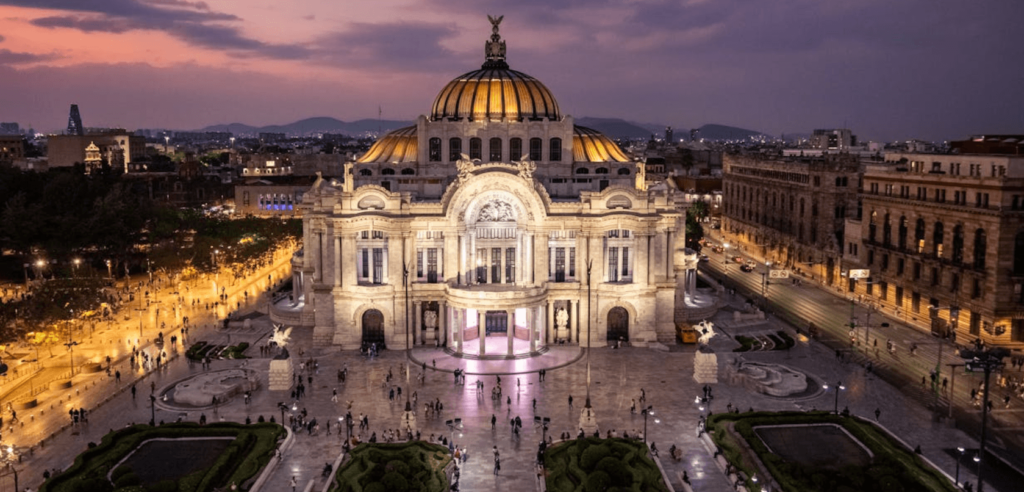
A few blocks away, the Palacio de Bellas Artes stands like a fever dream in white marble and golden domes. Inside: more Rivera murals, plus works by Orozco and Siqueiros. The honest tip that locals will give you? Head to the coffee shop on the top floor of the old Sears building directly across the street. It costs you nothing but a cup of coffee, and the view of the palace is the best photography angle in the neighborhood.
The Palacio Postal nearby is another one of those places that quietly blows your mind — a fully functioning post office with marble floors, brass railings, and golden filigree that looks more like an opera house than a government building. Walk through it, even if just for five minutes.
For context that goes beyond what a sign can tell you, mexico city tours focused on colonial history are genuinely worth it here. The story of how Aztec temple stones were repurposed to build the Spanish cathedral isn’t something you piece together on your own. A good guide makes the whole neighborhood come alive. This is one of the things to do in mexico city that earns a disproportionate amount of the experience you came here for — and it costs almost nothing beyond your time and curiosity.
The Green Heart: Chapultepec Park and Its Museums
On your second day, go to Chapultepec. Just go.
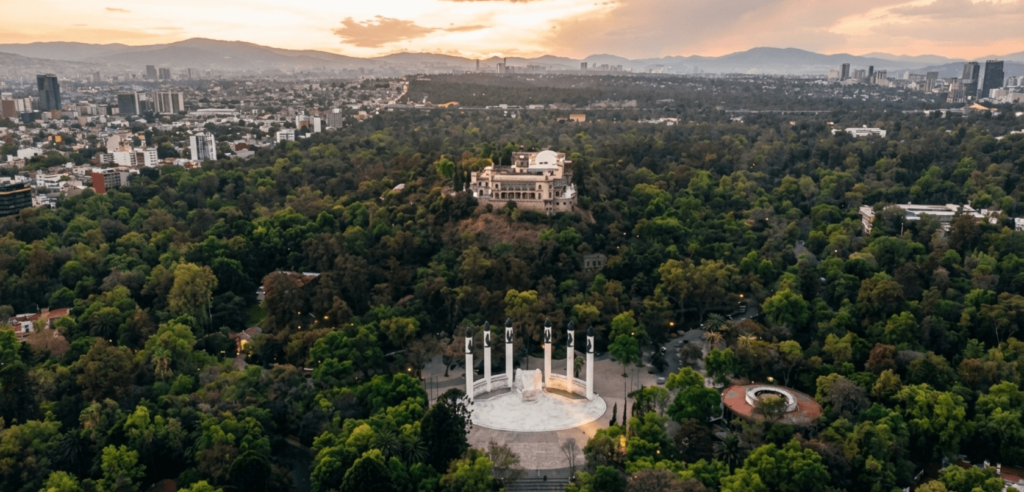
Spanning more than 680 hectares, this park is the breathing room of a city of 22 million people. It contains forests, lakes, multiple world-class museums, a zoo, and a castle perched on a hill with views that stretch across the entire urban sprawl. As far as things to do in mexico city with a full day to spare, nothing matches the density of meaningful experiences in this one park.
The Chapultepec Castle is the anchor. Built in the 18th century, it is the only castle in Latin America that has served as a genuine royal residence. Walk through the rooms of Emperor Maximilian and Empress Carlota. Stand on the terrace and look out over the Paseo de la Reforma cutting through the city below. It is one of those views that recalibrates your sense of scale.
Below the castle sits the National Museum of Anthropology — and I will say this plainly: if you visit only one museum in your entire life, make it this one. The 20-ton Aztec Sun Stone. The reconstruction of Pakal’s tomb. Hall after hall of artifacts from Olmec, Maya, Mixtec, and Zapotec civilizations, each more extraordinary than the last. Plan for at least four hours and bring water.
The Frida Kahlo painting most people don’t know is here: The Two Fridas hangs in the Museum of Modern Art, also inside Chapultepec. Most visitors chase the Blue House in Coyoacán and miss this entirely. Don’t be most visitors.
Several mexico city tours offer half-day or full-day Chapultepec itineraries that move you efficiently between the castle, the anthropology museum, the modern art museum, and the Rufino Tamayo Museum. If navigating between these independently sounds overwhelming, joining one of these mexico tours is a smart call — especially on your first visit. It remains one of the most rewarding things to do in mexico city regardless of how many times you return.
The Pyramid Experience: Teotihuacán
Here is the thing about Teotihuacán that the postcards don’t capture: the silence.
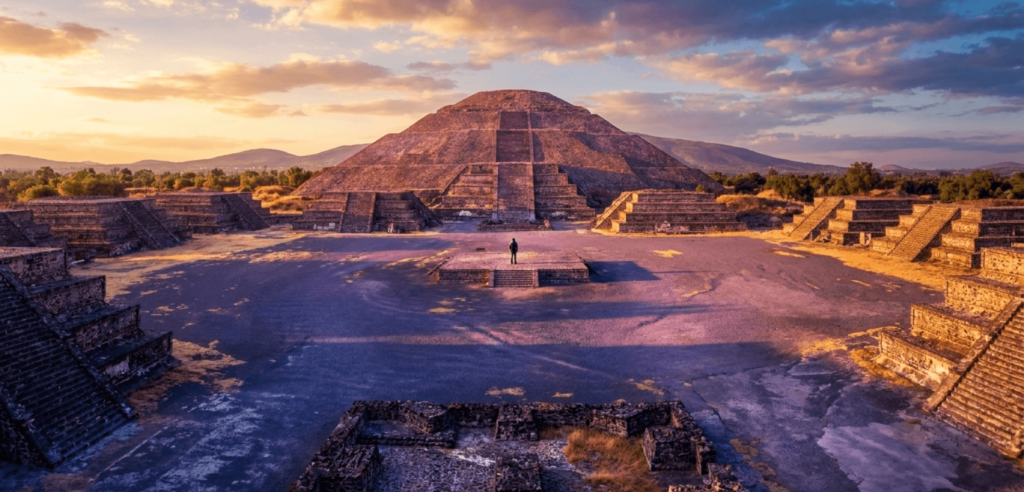
Not total silence — there are always other visitors, vendors, distant voices carried on the wind. But when you stand at the base of the Pyramid of the Sun and look down the length of the Avenue of the Dead, the scale of what the ancient people built here creates a quiet that is almost physical. This was the largest pre-Columbian city in Mexico, with a population that may have reached 200,000 at its peak around 1,400 years ago. Nobody knows exactly who built it. Nobody knows for certain why it was abandoned. It just stands there, patient and enormous, waiting for you to reckon with it.
Getting here is straightforward. The most affordable way is a public bus from Terminal del Norte — the trip takes about an hour and costs almost nothing. But if you want deeper context, professional mexico city tours that include round-trip transport and a licensed guide are worth the cost. A good guide will explain the spiritual geometry of the site, the significance of Quetzalcóatl the feathered serpent whose likeness covers the third great pyramid here, and the faded murals like the Mural del Puma that still retain traces of their original pigment. Among all the mexico tours operating out of the capital, Teotihuacán day trips consistently receive the highest traveler satisfaction scores — and it’s not hard to understand why.
One honest update for 2026: climbing the pyramids is no longer permitted. This is actually a good policy — the preservation of these structures depends on it — but if you were dreaming of standing at the summit of the Pyramid of the Sun, update that expectation before you arrive.
For a bucket-list upgrade, some mexico tours offer hot air balloon rides at sunrise over the pyramids. You drift above the site in the early light before crowds arrive, the pyramids emerging from morning mist below you. It is the kind of experience that earns its price tag completely.
After the site, many visitors eat at La Gruta — a restaurant built inside a volcanic cave near Gate 5. The food is solid, the atmosphere is extraordinary, and it is a fitting way to end a morning among ancient wonders.
Teotihuacán alone is reason enough to put Mexico City on your travel list. Check out the Best Places to Visit in Mexico for a broader look at how this site fits into the country’s spectacular landscape of archaeological and natural wonders.
The Village Within the City: Coyoacán
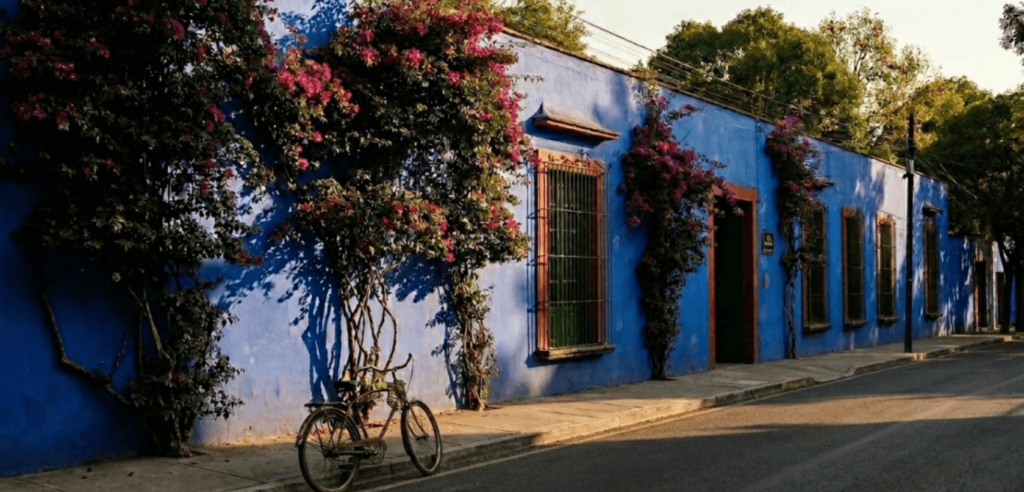
There is a neighborhood in the south of Mexico City that seems to exist in a different time entirely. Cobblestone streets, low colonial buildings painted in ochres and terracottas, plazas with fountains and old men playing chess, markets that smell of fried dough and fresh flowers. This is Coyoacán, and an afternoon here is one of the most restorative things to do in mexico city.
The draw that puts Coyoacán on every itinerary is the Frida Kahlo Museum, the famous Casa Azul (Blue House). This is the home where Frida was born, where she lived and painted, where she and Diego Rivera fought and loved and separated and reunited. Her wheelchair is still in the bedroom. Her corsets hang in the studio. Her collection of folk art crowds the shelves. It is intimate and melancholy and completely worth the visit.
The non-negotiable honest advice: book tickets at least a week in advance, ideally two. Walk-ins are almost never available. The museum enforces strict capacity limits, and there is no workaround.
A short walk away, the Leon Trotsky Museum occupies the fortified house where the Russian revolutionary lived in exile until his assassination in 1940. The bullet holes in the study walls from a failed assassination attempt are still visible. History lives in this neighborhood.
For Diego Rivera enthusiasts, the Museo Anahuacalli sits further south — a dramatic black volcanic stone building, part Aztec temple, part personal vision, housing Rivera’s private collection of more than 2,000 pre-Hispanic pieces. Most mexico city tours that cover Coyoacán include Anahuacalli as part of a “Frida and Diego” themed day, which is one of the most coherent and satisfying single-day mexico tours in the city. Among all the things to do in mexico city, this particular combination of Frida’s legacy, Diego’s obsessions, and Coyoacán’s village atmosphere makes for a genuinely complete and emotionally resonant day.
Floating on Ancient Waters: Xochimilco
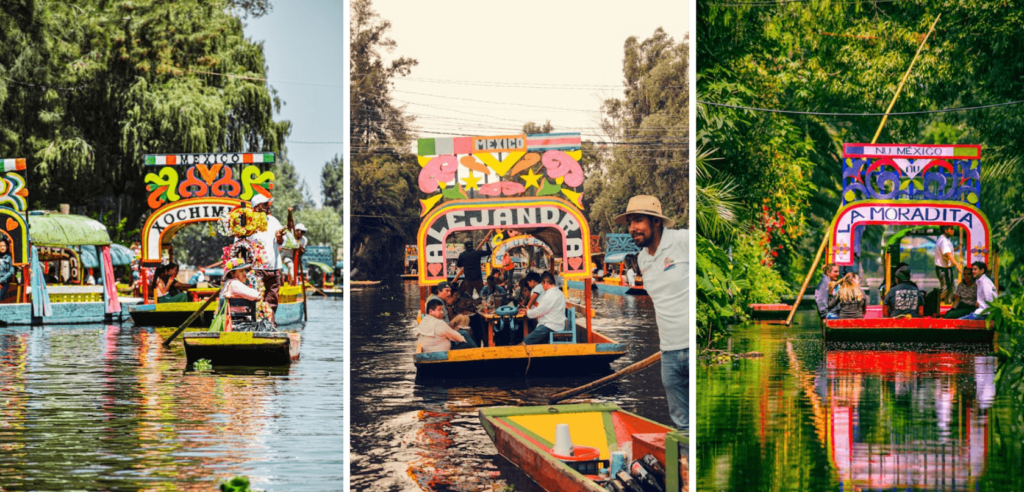
On Saturday afternoon in Xochimilco, a mariachi band floated past on a flower-covered boat, mid-song, while a family next to us passed around tamales and a woman in the bow of their trajinera danced alone with her eyes closed. It was joyful and absurd and genuinely one of the most Mexican things I have ever witnessed.
The trajineras — brightly painted wooden boats — travel through a network of ancient canals that are the remnants of the Aztec agricultural system of chinampas, artificial floating islands still farmed today. This is one of those things to do in mexico city that sounds like a gimmick on paper and becomes a memory you keep for decades.
The honest logistics: the price per boat is fixed at 600 MXN per hour. Do not let the “runners” at the landing docks quote you anything different. Alcohol is now officially regulated — one bottle of spirits or three beers per person. The rules are enforced. Plan accordingly.
If the party atmosphere isn’t your preference, several eco-focused mexico city tours offer quieter canal routes deeper into the protected ecological reserve. These tours visit traditional chinampa farms and introduce you to conservation efforts around the axolotl, the extraordinary salamander native exclusively to these waters and now critically endangered. Both versions of Xochimilco are valid. Both are worthwhile.
The Food: An Honest Reckoning
You will eat extraordinarily well in Mexico City. This is not a travel writer’s exaggeration. This is a city with Michelin-starred restaurants, hundreds of beloved neighborhood taquerías, world-class markets, and a street food culture so deeply embedded in daily life that choosing between things to do in mexico city and things to eat in mexico city becomes a false distinction — eating is doing. It is also, genuinely, one of the most compelling things to do in mexico city for first-time visitors who arrive expecting tacos and leave converted into lifelong devotees of Mexican gastronomy.
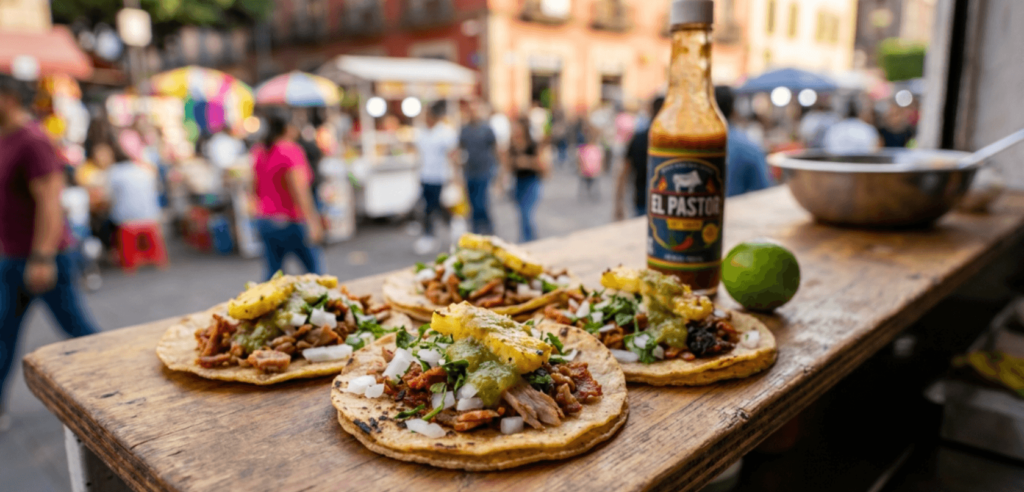
For the iconic street experience, find a busy taquería serving tacos al pastor — pork marinated in dried chili, slow-cooked on a vertical spit, shaved thin, served with pineapple and cilantro. The best ones are always the ones with the longest lines of locals.
Taquería El Califa de León in the Cuauhtémoc neighborhood made history as the first taco stand in the world to receive a Michelin star. They serve four types of tacos. You eat standing on the sidewalk. It costs almost nothing. It is perfect.
For a seated meal with serious ambition, Rosetta in Roma Norte — helmed by Chef Elena Reygadas — does things with Mexican and Italian ingredients that feel genuinely original. Across the street, the Panadería Rosetta sells guava rolls that will ruin all other pastries for you permanently.
Contramar remains a local institution for seafood — specifically the tuna tostadas and the pescado a la talla, a whole fish painted red and green and grilled over charcoal.
Food-focused mexico tours are among the smartest investments a first-time visitor can make. A good food guide will take you through Mercado de San Juan — where vendors sell artisanal cheeses, exotic fruits, Japanese ingredients, and edible insects — and into hidden pulquerías where fermented agave sap is served cold from clay vessels. These mexico city tours turn eating into education, and for many travelers they end up being the most memorable mexico tours of their entire trip.
The Hidden Layer: Modern and Off-Beat Experiences
Once you have covered the landmarks, Mexico City has a second layer waiting.
The CableBús is one of the great urban surprises — a gondola-style cable car that runs over the rooftops of the Iztapalapa district. It costs the same as a metro ride. From above, you see colorful murals painted on rooftops, visible only from the air, and the mountains ringing the city on clear days. As unexpected things to do in mexico city go, this is near the top of the list.
The UNAM Campus is a UNESCO World Heritage Site most tourists skip entirely. The Central Library is wrapped in a monumental mosaic mural by Juan O’Gorman — millions of colored stones from across Mexico depicting the entire arc of Mexican history. Walk the campus on a weekday; it feels like a small city within the city.
For nightlife, the speakeasy scene is thriving. Handshake Speakeasy in the Juárez neighborhood is consistently ranked among the best bars in the world. The entrance is unmarked. The cocktails are extraordinary. Reservations are essential.
On Sunday mornings, the Paseo de la Reforma closes to cars. Thousands of cyclists, runners, and families take over the grand boulevard. Some mexico city tours offer guided bike rides during these hours, moving past the Angel of Independence monument and other landmarks with the road entirely to themselves. It is a rare, gentle version of a city that rarely slows down — and one of those things to do in mexico city that feels like a gift the city gives you for showing up on the right day.
Planning Around 2026: The World Cup Factor
If your visit falls in June or July 2026, understand that the city will be transformed. The Estadio Azteca — the legendary stadium that has hosted two World Cup finals — is one of the host venues for the 2026 FIFA World Cup. Hotel prices will be at historic highs. Restaurants will be booked weeks out. Mexico city tours, airport transfers, and day trips to Teotihuacán will need to be secured well in advance — the demand for mexico tours during this period is projected to break all previous records.
If you’re visiting during this period specifically for football, plan every detail now. If you’re trying to avoid the crowds, target late 2026 or early 2027 instead.
Other major seasonal events worth knowing: Día de Muertos in early November transforms cemeteries and public spaces into extraordinary altars of marigolds and candlelight. The Formula 1 Mexican Grand Prix in late October draws massive international crowds. Both are spectacular. Both require advanced planning.
The Honest Practical Section
Altitude: Take it seriously on day one. Mexico City sits at 2,240 meters. Headaches, fatigue, and shortness of breath are common in the first 24 hours. Hydrate aggressively. Avoid alcohol on arrival night.
Safety: Most of the city’s popular neighborhoods — Roma, Condesa, Polanco, Coyoacán, Centro — are safe for visitors exercising normal urban caution. Use Uber or DiDi rather than hailing taxis on the street. Keep phones in pockets in crowded metro stations.
Money: Mexican Pesos are essential. ATMs connected to major banks (Banamex, BBVA, Santander) are reliable. Cards work in restaurants and hotels; cash is mandatory for street food, markets, metro rides, and site admissions including Teotihuacán.
Transport: The Metro costs 5 pesos per ride — one of the great bargains of modern urban travel. An Integrated Mobility Card covers Metro, MetroBús, and EcoBici. Avoid rush hour if you have any flexibility.
For the first few days, joining organized mexico tours can ease the learning curve considerably. Multiple travelers find that two or three guided mexico city tours give them enough orientation to navigate independently for the rest of the trip. It is also worth noting that the best mexico city tours are available in English, Spanish, French, and increasingly in other languages — the city’s tourism infrastructure has matured considerably in recent years.
The Honest Conclusion
Three days in Mexico City will get you through the essential landmarks. Five to seven days will let you actually feel the city — its tempo, its neighborhoods, its particular way of folding grandeur and chaos and warmth into a single afternoon. Seven days with a mix of self-guided wandering and professional mexico tours is, in my experience, the formula that produces the richest experience.
The things to do in mexico city that will stay with you longest are often not the ones you planned. The conversation with a stranger at a market stall. The mural you found on a side street. The moment the lights came on over the Zócalo at dusk and the entire square filled with people who had nowhere specific to be. These are the things to do in mexico city that no itinerary can schedule for you — but a little slowness, a little willingness to be surprised, makes them almost inevitable.
From the summit of the Torre Latinoamericana to the archaeological depths of the Templo Mayor, from the canals of Xochimilco to the silent weight of Teotihuacán at dawn — this is a city that gives back exactly as much as you bring to it.
Pack comfortable shoes. Bring cash. Arrive hungry. And if you want a broader sense of where Mexico City fits within one of the world’s most extraordinary countries, start with the Best Places to Visit in Mexico — because once this city gets into you, the rest of Mexico starts calling too.
The only real problem with the things to do in mexico city is that there are always more of them than any single trip can hold. That is, of course, exactly the point.
Reviews
There are no reviews yet. Be the first one to write one.