
There is a moment — somewhere between your first sip of smoky mezcal in an Oaxacan market and the sight of a jade-green cenote glittering in the afternoon sun — when Mexico stops being a destination and starts being a feeling. I know this because I lived it. After spending the better part of a year weaving through this country’s highways, colonial alleyways, and jungle footpaths, I can tell you with complete confidence: the places to visit in Mexico will shatter every preconceived notion you arrived with, and replace them with memories you will carry for the rest of your life.
This is not a sanitized travel brochure. This is the guide I wish I had before I landed — honest, story-driven, and built on real experience. Whether you are planning your very first trip or returning for another chapter, here are the 35 best places to visit in Mexico in 2026, organized by region, paired with practical advice, and layered with the kind of local knowledge that no algorithm can replicate.
Table of Contents
Before You Go: Planning Essentials
Smart travel begins before you board the plane. For flights, Skyscanner consistently delivers the best price comparisons, while Booking.com and Hostelworld cover the full spectrum from five-star resorts to sociable budget hostels. When it comes to organized experiences, platforms like GetYourGuide and Viator are invaluable for booking verified mexico tours with covered transportation and reliable operators. If you want the freedom of self-guided exploration, DiscoverCars offers competitive rental rates — just remember to stick to toll roads (marked “Cuota”) and avoid driving after dark outside of urban centers.
The best time to visit most places to visit in Mexico falls between November and April, during the dry season. Budget travelers will find genuinely great hotel deals between July and September, though humidity climbs and afternoon showers are routine in many regions.
Mexico City and the Central Highlands
Mexico City (CDMX) — The Sinking Megalopolis That Refuses to Stand Still
I remember stepping out of the airport in Mexico City for the first time and being immediately overwhelmed — not by chaos, but by sheer, glorious scale. This is the largest city in North America, a metropolis of 22 million souls built directly on top of the ruins of the Aztec capital Tenochtitlán, which itself sits on a drained lakebed that is still, slowly, swallowing the city whole. The buildings tilt. The streets shift. And somehow, the whole magnificent place just keeps humming.
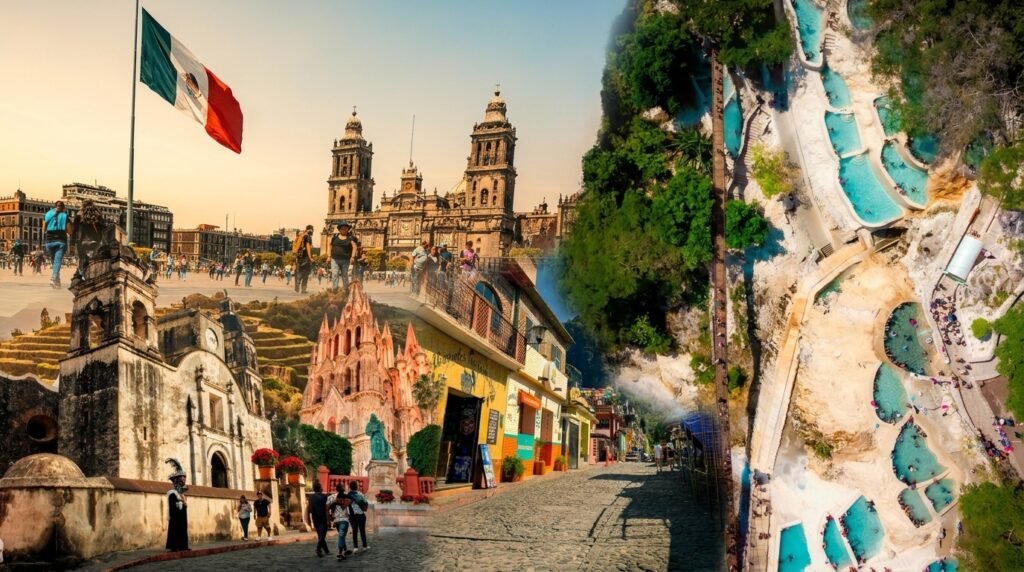
A 4-day itinerary is ideal for first-timers. Begin in the Centro Histórico, a UNESCO World Heritage site where the vast Zócalo plaza is framed by the enormous Metropolitan Cathedral — a building that took 250 years to complete and is visibly sinking on one side. The National Palace, right on the plaza, houses Diego Rivera’s breathtaking murals depicting Mexico’s entire history across a single sweeping staircase.
On Day 2, dedicate your morning to Chapultepec Park — twice the footprint of New York’s Central Park — and its world-class National Museum of Anthropology, home to the legendary Aztec Sun Stone. Book mexico city tours with skip-the-line access here; the queues can be brutal on weekends. Dedicated mexico city tours that focus on the museum’s Aztec and Mayan collections are especially worthwhile if archaeology is your passion.
The afternoon belongs to the leafy, café-lined streets of Roma and Condesa, the city’s most livable neighborhoods, full of art deco architecture and some of the best brunch spots in Latin America. This is also a great time to explore the many things to do in Mexico City that don’t make the standard tourist checklist — like the hidden murals in Colonia Doctores or the weekend antique markets in La Lagunilla.
Day 3 is for the south. Coyoacán, the birthplace of Frida Kahlo, is one of the most atmospheric neighborhoods in the entire country. Her home, the iconic Casa Azul, must be booked in advance, but standing in the rooms where she painted, suffered, and loved is genuinely moving. Many mexico city tours bundle Casa Azul with a guided walk through the Coyoacán market and the nearby plaza, making for a rich, unhurried afternoon. Combine the evening with a trajinera ride through the ancient floating gardens of Xochimilco, where mariachi bands serenade you from neighboring boats and the whole canal system feels like a fever dream you never want to wake from. Several highly rated mexico city tours combine both stops in a single day.
Day 4 demands a full excursion to Teotihuacán. Standing at the base of the Pyramid of the Sun — the third-largest pyramid on Earth — and then climbing its 248 steps to look out over the Avenue of the Dead is one of those experiences that reorganizes something inside you. For the truly adventurous, some mexico city tours offer sunrise hot air balloon flights directly above the archaeological site, drifting silently over a civilization that vanished more than a thousand years ago. Beyond the pyramids, mexico city tours also commonly include stops at the nearby obsidian workshops and the Teotihuacán murals at the Palace of the Jaguars.
Tepoztlán — The Mystical Mountain Town
Just 80 kilometers south of the capital, Tepoztlán sits in a dramatic valley ringed by volcanic cliffs. On weekends, the market fills with artisan crafts and street food. The real reward is the 45-minute hike up to the pre-Hispanic pyramid perched on the clifftop above town, where the views are genuinely jaw-dropping. Specialized mexico city tours can take you here as a half-day or full-day excursion.
Taxco — The Silver Capital
Taxco is built on a steep hillside in the state of Guerrero and seems to defy gravity. Its whitewashed colonial buildings, narrow cobblestone alleys, and the extraordinary baroque Santa Prisca Cathedral make it one of the most photogenic places to visit in Mexico. Come for the silver jewelry — the town has been a silversmithing hub since the 18th century — and stay for the atmosphere.
San Miguel de Allende — Where Art Meets Architecture
San Miguel de Allende consistently tops global rankings of the world’s most beautiful cities, and after walking its cobblestone streets at golden hour, you will understand why. The neo-Gothic pink spires of the Parroquia de San Miguel Arcángel rise against the blue sky like something out of a fairytale. The city draws artists, writers, and expats from around the world, and its culinary scene reflects that cosmopolitan energy. This is one of the most serene and safe places to visit in Mexico, ideal for solo travelers and couples alike.
Guanajuato — The Colorful Ravine City
Guanajuato is the city that inspired Pixar’s Coco, and standing on the Pípila monument looking down over its cascade of tangerine, violet, and cobalt buildings tumbling into the ravine below, the connection is obvious. The city also has one of the world’s most unusual road systems — an entire underground tunnel network built through old river channels that allows traffic to pass beneath the historic center. Do not miss the Callejón del Beso (Alley of the Kiss), the famous alleyway so narrow that the balconies nearly touch.
Tequila Town, Jalisco — The Birthplace of Mexico’s Spirit
The town of Tequila sits in the middle of blue agave fields that roll across the red volcanic landscape like a sea in slow motion. The “Tequila Train” — an atmospheric heritage rail journey from Guadalajara — is among the most enjoyable and distinctive mexico tours in the country, complete with onboard entertainment, distillery visits, and tastings that leave you smiling all the way home.
Grutas de Tolantongo — The Hidden Hot Springs
Tucked into a canyon in the state of Hidalgo, the Grutas de Tolantongo offers a series of thermal pools and caves fed by warm mineral-rich water. It is a spectacular, relatively undiscovered gem — though visit on a weekday to avoid the crowds of Mexico City residents who descend on weekends.
Valle de Bravo — The Monarch Butterfly Migration
Between November and March, the forests above Valle de Bravo in Michoacán fill with an estimated 140 million monarch butterflies returning from their annual migration. Standing in the trees as millions of orange wings flutter in the diffuse light is one of the most otherworldly natural spectacles on Earth — and it is one of the great gift experiences that the places to visit in Mexico offer.
The Yucatán Peninsula
Cancún — The Gateway to Everything
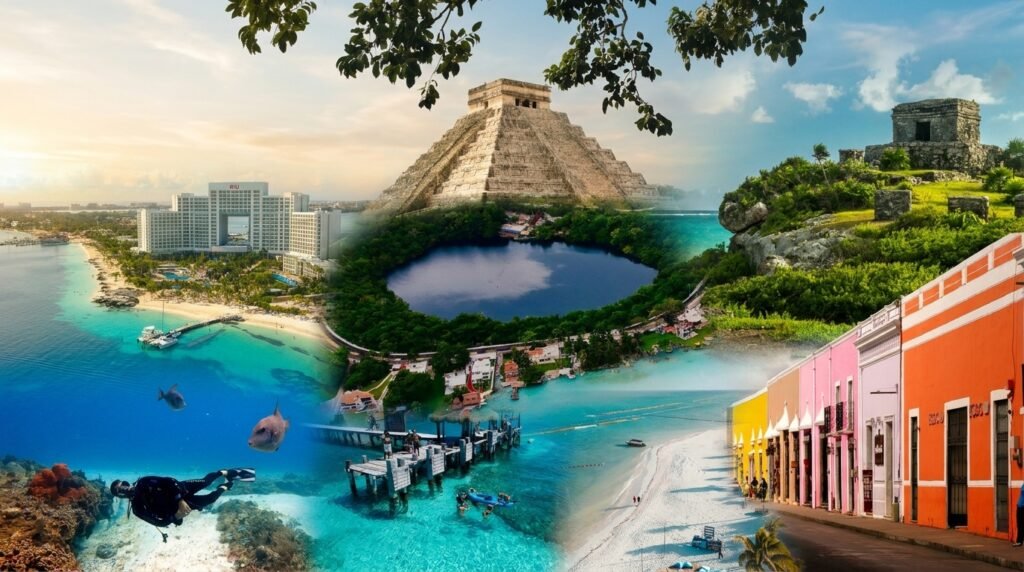
Cancún began as a deserted sandbar in the 1970s. Today it is one of the world’s most visited resort cities, and for good reason: the beaches are legitimately extraordinary. The Hotel Zone is well-patrolled by dedicated tourist police, making it one of the most statistically safe places to visit in Mexico for first-time international travelers. From here, a vast network of mexico tours fans out across the peninsula — to ruins, cenotes, biosphere reserves, and beyond.
Chichén Itzá — One of the Seven Wonders
El Castillo, the stepped pyramid at the heart of Chichén Itzá, is perhaps the most recognized structure in the Western Hemisphere. Arrive early — the site opens at 8 a.m. — because by 10 a.m. the crowds become genuinely overwhelming. Many mexico city tours (and Cancún-based tours) include round-trip transport and a knowledgeable guide who can explain the extraordinary astronomical precision built into every inch of the architecture.
Tulum — Cliffs, Ruins, and Cenotes
Tulum is one of the most photographed places to visit in Mexico, and in person the clifftop ruins overlooking the Caribbean Sea look almost exactly as spectacular as they do in the photographs. Fair warning: the town itself has become expensive, with luxury “wellness” branding driving up prices across the board. Budget travelers may find neighboring Playa del Carmen or Felipe Carrillo Puerto more accommodating. That said, the nearby cenotes — particularly Gran Cenote and Dos Ojos — are absolutely worth the trip.
Bacalar — The Lagoon of Seven Colors
Near the Belize border, the freshwater lagoon of Bacalar is tinted seven distinct shades of blue and green by variations in depth and sediment. Kayaking out onto it at sunrise, when the water is glass-still and the light turns everything amber and gold, is one of those moments that redefines your understanding of the word “beautiful.” This remains one of the most underrated places to visit in Mexico relative to what it offers.
Isla Holbox — The Car-Free Paradise
Holbox (pronounced “Hol-bosh”) is a tiny island off the northern tip of the Yucatán where no cars are allowed. The only transport is golf cart, bicycle, or bare feet. Between June and September, you can swim alongside whale sharks in the warm shallow water just offshore — an experience offered by numerous responsible mexico tours departing from the island.
Las Coloradas — The Pink Lakes
The Yucatán’s salt evaporation ponds near Las Coloradas glow in shades of deep rose and coral, caused by algae and brine shrimp. The color is most saturated in the afternoon light. Many mexico tours combine a stop here with a visit to the lesser-known but beautifully preserved ruins of Ek Balam.
Cozumel — World-Class Diving
Cozumel sits within the Mesoamerican Barrier Reef, the second-largest coral reef system in the world. The visibility underwater can reach 30 meters, and the marine life is extraordinary. It is consistently ranked among the top five diving destinations on the planet and is one of the places to visit in Mexico that rewards travelers who go beneath the surface.
Playa del Carmen — The Social Hub of the Riviera Maya
Quinta Avenida (5th Avenue) in Playa del Carmen is one of the great pedestrian streets of the Americas — lined with restaurants, boutiques, and street performers from morning to midnight. It serves as an excellent base for day mexico tours to the surrounding region and tends to be more affordable than Tulum while offering equally good beach access.
Valladolid — The Quiet Colonial Gem of the Yucatán
Valladolid is often passed through on the way to Chichén Itzá, but it deserves its own stay. The cenote at Zací sits right in the middle of town; the main plaza is quiet, pastel-painted, and genuinely lovely; and the food — particularly the cochinita pibil — rivals anything you will find in the coastal resorts.
The South — Oaxaca and Chiapas
Oaxaca City — Mexico’s Culinary Capital
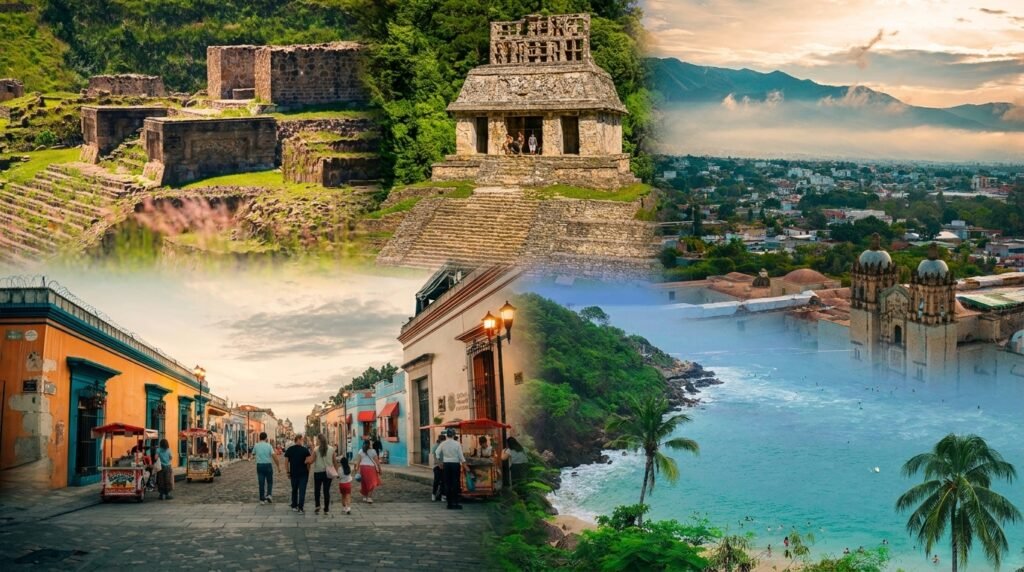
If you care about food at all, Oaxaca belongs near the top of your list of places to visit in Mexico. The city is home to seven distinct varieties of mole, world-class mezcal distilled from more than 30 varieties of agave, tlayudas the size of small wheels, and a pre-Hispanic cacao drink called tejate that tastes like nothing else on earth. A dedicated street food tour here is not optional — it is the whole point. The markets, particularly Mercado Benito Juárez and Mercado 20 de Noviembre, are sensory overloads in the best possible way.
Monte Albán — Zapotec Civilization at Its Peak
Perched on a leveled mountaintop above the Oaxaca Valley, Monte Albán was once the thriving capital of the Zapotec civilization. The views alone are worth the 20-minute drive from the city, and the ruins themselves — particularly the Observatory building — reveal a sophisticated understanding of astronomy that continues to astonish researchers. Guided mexico tours from Oaxaca City include transport and typically cost very little.
Puerto Escondido — Mexico’s Surf Capital
Puerto Escondido on the Oaxacan coast attracts serious surfers from around the world to the massive, thundering barrels of Playa Zicatela — one of the most powerful beach breaks in North America. But the town also has a genuinely bohemian and welcoming energy that makes it one of the most enjoyable places to visit in Mexico for travelers who want authenticity over resort polish, at a fraction of Tulum’s prices.
San José del Pacifico — Wellness in the Clouds
Sitting at nearly 2,800 meters in the Sierra Sur mountains, San José del Pacifico is perpetually wreathed in mist and known throughout Mexico for its temazcal (traditional sweat lodge) ceremonies and profound sense of quiet. It is a slow-travel destination that rewards patience.
San Cristóbal de las Casas, Chiapas — Cool Highlands, Colonial Beauty
San Cristóbal sits at 2,200 meters in the Chiapan highlands, where the air is cool, the architecture is Spanish colonial, and the indigenous Tzotzil and Tzeltal cultures are very much alive in the surrounding villages. It is the perfect base for mexico tours to the cascading turquoise waterfalls of Agua Azul and the extraordinary jungle-embedded ruins of Palenque, where pyramid temples emerge from the rainforest canopy like something out of a myth.
Palenque — Pyramids in the Jungle
Palenque is one of the most dramatically situated ruins in all of Mesoamerica. The temples rise directly out of dense rainforest, and the sound of howler monkeys echoes through the site at dawn. The Tomb of Pakal, discovered beneath the Temple of the Inscriptions, revealed a sarcophagus lid so intricate and beautiful that it permanently altered how historians understood Mayan civilization.
Baja California and the North
Cabo San Lucas — Pacific Energy and Whale Watching
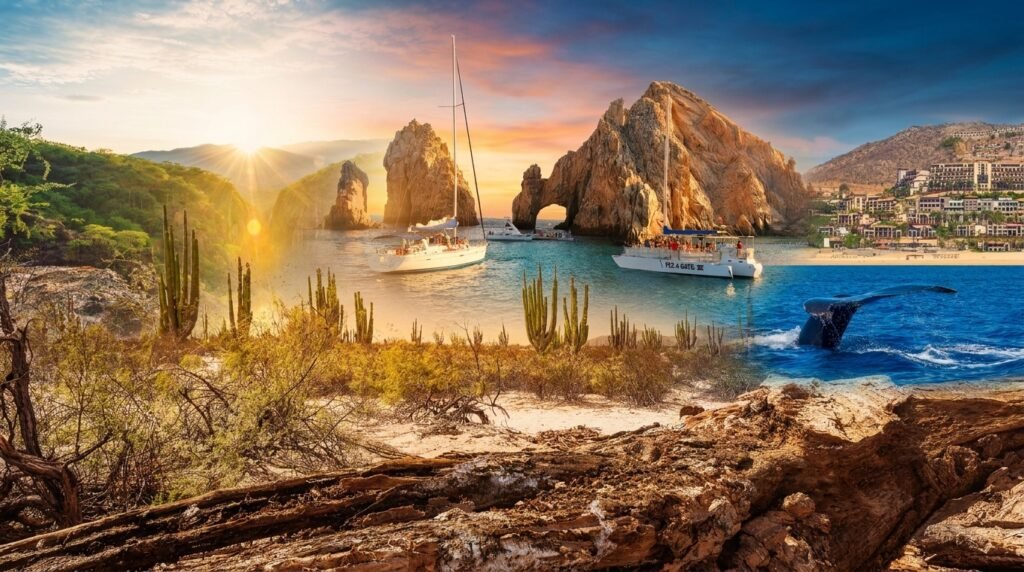
Cabo sits at the very tip of the Baja California Peninsula, where the Pacific Ocean and the Sea of Cortez collide at a famous granite arch called El Arco. Between December and March, Magdalena Bay becomes one of the world’s premier whale watching destinations, where grey whales return to give birth in protected lagoons. These mexico tours offer close encounters with creatures that will swim directly beneath your boat out of apparent curiosity.
The Copper Canyon (Barrancas del Cobre) — Bigger Than the Grand Canyon
Few travelers outside Mexico know that the Copper Canyon system in Chihuahua is actually deeper and more extensive than the Grand Canyon in Arizona. The best way to experience it is aboard the El Chepe train — one of the world’s most scenic rail journeys — which crosses 39 bridges and passes through 86 tunnels on its route between Los Mochis and Chihuahua City. It is an extraordinary feat of engineering and one of the most distinctive places to visit in Mexico for travelers seeking something truly off the beaten path.
San Luis Potosí — Desert, Culture, and Surreal Landscapes
The state of San Luis Potosí contains the Real de Catorce ghost town, accessible only through a 2.3-kilometer hand-carved tunnel; the alien landscape of the Wirikuta desert; and the beautiful colonial city center of San Luis Potosí itself. This is one of the most rewarding places to visit in Mexico for travelers willing to venture beyond the tourist trail.
Practical Safety and Solo Travel Advice
Safety is the question I get asked most frequently about the places to visit in Mexico, and I want to address it with the honesty this topic deserves. Tourist zones throughout the country — the Yucatán Peninsula, the Hotel Zone in Cancún, central Oaxaca, San Miguel de Allende, and the Coyoacán neighborhood of Mexico City — are heavily patrolled and statistically safe for international travelers. Millions of solo travelers visit each year without incident.
That said, standard urban precautions always apply: use registered taxis or app-based ride sharing (Uber operates widely in major cities), avoid poorly lit areas late at night, keep copies of your documents separate from the originals, and trust your instincts. For female solo travelers specifically, neighborhoods like central Playa del Carmen, downtown Oaxaca, and the Roma Norte area of Mexico City have active social scenes and are generally considered safe and welcoming.
For those who prefer structure, booking mexico city tours or regional mexico tours through verified platforms like Viator or GetYourGuide provides an additional layer of security through reviewed operators, covered transportation, and professional local guides.
A Final Word: Why Mexico in 2026?
The places to visit in Mexico have never been more accessible or more vibrant. New direct flight routes are opening across North America and Europe. Infrastructure in the Yucatán continues to develop with the Tren Maya rail project connecting destinations across the peninsula. And the cultural moment — in food, in art, in music — is extraordinary.
Mexico welcomed me with a generosity that still catches in my throat when I think about it. The family who invited me to share their lunch at a roadside comedor in Oaxaca. The elderly man in Guanajuato who spent twenty minutes explaining the symbolism in a church mural I would never have understood alone. The sunrise over Teotihuacán, when the sky turned pink and purple and the pyramids went completely dark against it.
These are the things that no booking platform can promise you. But they are what wait for you, in the places to visit in Mexico, if you show up with curiosity and respect.
Book your mexico city tours. Reserve your spot on the best mexico tours the country has to offer. And go. ¡Feliz viaje!
Planning your trip? Don’t miss our companion guide on the things to do in Mexico City for a deeper dive into the capital’s neighborhoods, museums, and hidden gems.
Reviews
There are no reviews yet. Be the first one to write one.