
There is a particular kind of morning that belongs only to Honolulu. The trade winds roll off the Koolau Range before the city fully wakes, carrying the faint sweetness of plumeria down from the hillsides and across the still-quiet streets of Waikiki. If you stand at the edge of the water at that hour — shoes off, toes in the damp sand — you feel it immediately: the sense that this island holds more than any single trip can contain. The best things to do in Honolulu are rarely the ones you plan for. They are the ones you stumble into — the local fish counter where the uncle behind the glass knows every fisherman by name, the hula dancer whose hands tell a story older than the United States itself, the volcanic summit that makes you feel, however briefly, like you are standing on the roof of the world. This guide exists to help you find all of it: the iconic, the overlooked, and the quietly unforgettable. From the most celebrated honolulu attractions to the hidden corners that reward the genuinely curious, every traveler deserves a version of this city that feels like it was made for them. The places to visit in honolulu span volcanic peaks, royal throne rooms, and reef-protected bays — and what ties them together is the spirit of aloha, which is less a greeting than a philosophy of welcome, generosity, and presence.
Table of Contents
The Peaks of Oahu: Where the Island Speaks Loudest
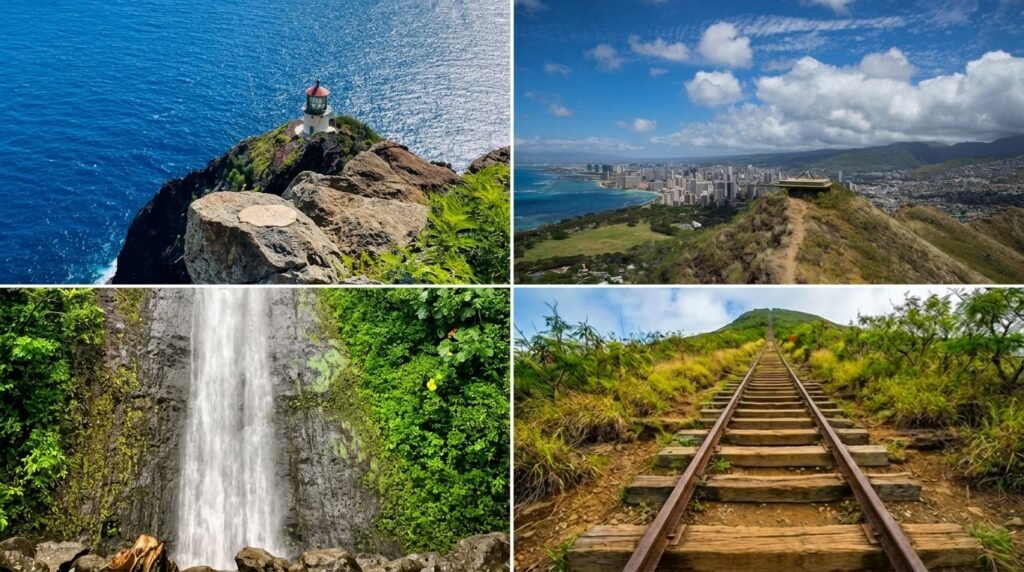
Every conversation about hawaii attractions honolulu begins and ends at Diamond Head State Monument. And rightly so — among all the honolulu attractions that define this city’s identity, none is more immediately recognizable or more consistently rewarding. It is the silhouette on every postcard, the crater on every map — and yet, standing inside it for the first time, something shifts. The trail is less than a mile long, but it climbs through a series of tunnels and switchbacks left behind by the U.S. military in the early twentieth century. When you emerge at the summit lookout, the Pacific stretches to the edge of the visible world, and the curved spine of Waikiki lies below like a postcard you are finally inside of. Arrive before 7:00 AM and the crater is nearly empty. Arrive at noon and it belongs to the world. The choice is yours, but the mountain rewards the early riser.
A honolulu city tour of the island’s natural terrain cannot stop at Diamond Head alone. A few miles east, Manoa Falls offers something entirely different — a lush, dripping canopy of bamboo and African tulip trees that opens suddenly into a gorge where a 150-foot waterfall drops in a single silver curtain. This is the trail that stood in for the jungle of Isla Nublar in Jurassic Park, and walking it, you understand why. The foliage is dense enough to muffle the city entirely. It rains often here, which keeps the path muddy and the ferns impossibly green. Swimming in the pool beneath the falls is discouraged due to bacterial risks, but standing in the mist with your head tilted back is entirely free.
For those who want to test something deeper in themselves, the Koko Crater Railway Trail is waiting. Over 1,000 original military railway ties climb the outer wall of the crater at a grade that makes even seasoned hikers pause. There are no switchbacks, no gentle curves — only a relentless vertical ascent that burns through the legs and lungs and deposits you, gasping, at a summit overlooking the southeastern coastline in a panorama of blue-green water and black lava. It is one of the most punishing places to visit in honolulu, and also one of the most honest. The mountain does not pretend to be easy. Neither should your travel.
The Makapu’u Point Lighthouse Trail offers a more forgiving alternative — a paved 2-mile loop that curls around the eastern edge of the island where, from December through May, humpback whales breach just offshore. Watching a forty-ton animal launch itself out of the Pacific from a cliffside trail is the sort of moment that reorganizes your understanding of scale. Many honolulu tours include this stretch of coastline for exactly that reason. In fact, choosing honolulu tours that combine Makapu’u with Koko Crater and Hanauma Bay in a single eastern loop is one of the most efficient ways to explore this dramatic corner of the island.
Most of these trails require no booking — but the guided versions are genuinely worth it. A local expert who knows the history of Diamond Head’s military tunnels or the ecology of Manoa Valley transforms a good hike into an unforgettable one. Browse top-rated guided hiking tours on Oahu →
A Walk Through History: The Stories Honolulu Carries
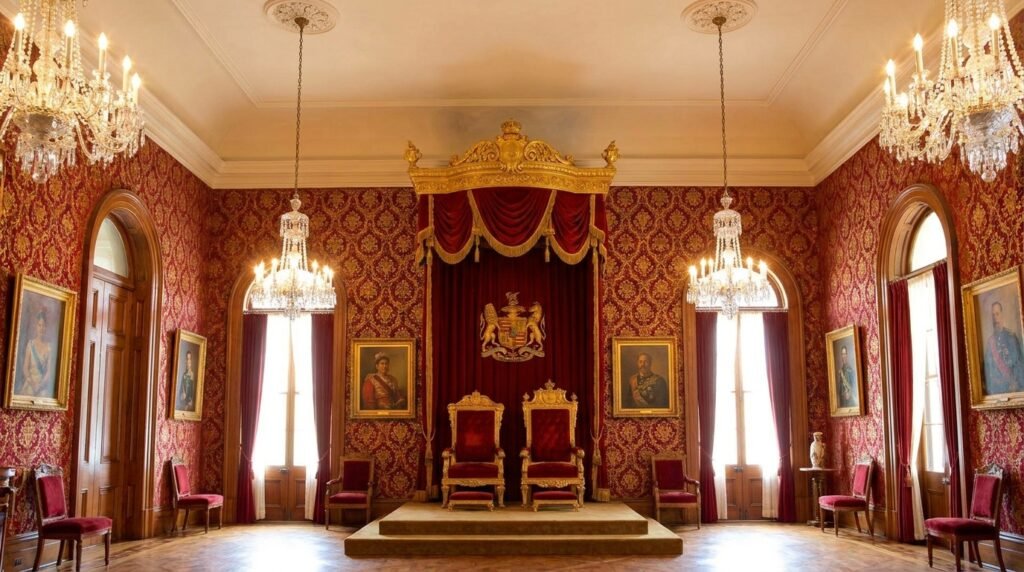
To walk through Iolani Palace is to move through a grief that Hawaii has never entirely set down. Built in 1882 by King Kalākaua as a symbol of Hawaiian sovereignty and modernity, the palace was fitted with electricity and telephone lines before the White House had either. It is the only official royal palace on American soil, and it remains one of the most significant hawaii attractions honolulu has preserved. Queen Liliʻuokalani, the last Hawaiian monarch, was imprisoned in her own bedroom on the second floor after the illegal overthrow of the Hawaiian Kingdom in 1893. The room has been kept as it was. The embroidery she stitched during her captivity is still there. You do not leave Iolani Palace without feeling the weight of what was taken here.
A honolulu city tour of the historical district should include the Bernice Pauahi Bishop Museum, a short drive away in the Kalihi neighborhood. Founded in 1889, it houses the world’s largest collection of Hawaiian and Pacific cultural artifacts — royal feather cloaks, ancient navigation charts, volcanic rock tools, and a planetarium that recreates the ancient Polynesian art of wayfinding by stars. Among the hawaii attractions honolulu offers for cultural depth, the Bishop Museum stands apart from any other institution on the island. The navigators who first settled these islands crossed 2,500 miles of open ocean without instruments, guided only by the stars, the swells, and the behavior of birds. The museum tells that story with the reverence it deserves, and it qualifies without question as one of the essential places to visit in honolulu for anyone with even a passing interest in human history.
Pearl Harbor demands its own half-day, and possibly its own emotional preparation. The Pearl Harbor National Memorial is one of the most visited places to visit in honolulu, and it earns that distinction through the weight of what it holds. The USS Arizona Memorial floats directly above the sunken hull of the battleship, where 1,177 crewmen remain entombed. Oil still seeps to the surface in slow, iridescent ribbons — what witnesses call the “tears of the Arizona.” The 30-minute historical film that precedes the ferry ride to the memorial is understated and precise. Book your tickets well in advance; they are free but limited. Many honolulu tours combine Pearl Harbor with a visit to the USS Missouri, where Japan’s surrender was signed in 1945, creating a single itinerary that spans the arc of World War II in the Pacific from its opening wound to its closing chapter. Among all the hawaii attractions honolulu preserves in the name of remembrance, Pearl Harbor is the one that most directly asks something of its visitors — not just attention, but conscience.
The Soul of the Streets: Chinatown and the Living City
Chinatown in Honolulu is one of the oldest in the United States, and it remains one of the most alive. This is not a preserved, sanitized version of the past — it is a working neighborhood where fishmongers stack iced trays of opakapaka and ahi before sunrise, where the steam from dim sum kitchens rises in the morning air, and where art galleries and cocktail bars have opened in the same blocks where taro merchants once traded. A self-guided honolulu city tour through Chinatown is one of the best things to do in Honolulu for travelers who want to feel the pulse of the real city rather than its curated surface. It is also one of those honolulu attractions that rewards repeat visits — the neighborhood evolves seasonally, and the people who populate it change the energy of its streets in ways no guidebook fully captures.
Start at the Oahu Market, where vendors have sold live chickens and exotic produce since 1904. Walk north toward Char Hung Sut on North Pauahi Street, a family-run shop that has been making manapua — the Hawaiian adaptation of the Cantonese baozi — since 1945. The baked char siu variety, soft and faintly sweet with roasted pork, is worth arriving early for, because the best ones sell out by mid-morning. Inside the Maunakea Marketplace, the food stalls carry the full breadth of the Pacific Rim: Filipino pancit, Vietnamese pho, Thai curries, Korean bibimbap. Eat slowly. Eat often. This is not a stop — it is a destination.
A broader honolulu city tour of the city’s commercial culture should include Ala Moana Center, the largest open-air shopping mall in the United States, with over 350 stores spread across a breezy, palm-lined campus that almost disguises itself as a park. Any well-designed honolulu city tour of central Oahu will route through here not necessarily to shop, but to observe: the demographic mix, the food court vendors, the local families who treat Ala Moana as an extension of their living rooms. Directly across Ala Moana Boulevard lies Ala Moana Beach Park, a local favorite that most visitors overlook in favor of Waikiki. The water here is protected by a reef and a breakwater, making it one of the calmest and clearest honolulu attractions for lap swimmers and families. At the western tip of the park, Magic Island juts into the ocean with a small beach and a lagoon that catches the sunset in a way that turns the water the color of overripe mango. A slow, unscheduled honolulu city tour that ends here — with a cold drink, bare feet on the grass, and the sun going down over the harbor — is one of the genuinely free and genuinely magnificent things to do in honolulu that no one will put on a list but everyone who has done it will remember.
For something even more off the tourist map, set your alarm for 5:30 AM and drive to Pier 38 for the Honolulu Fish Auction. Running since 1952, this is one of the only places in the United States where you can watch a live tuna auction conducted in the traditional Japanese style, with fish laid out on the dock and buyers moving quickly through the rows. It is free to observe and runs roughly between 6:00 and 8:00 AM. It is also one of the few authentic, unperformed honolulu attractions left — a piece of the city’s working identity that has nothing to prove to anyone.
If you want the full Chinatown food story — the history behind the vendors, the dishes you would never order without someone pointing you toward them — a guided food walk is the smartest two hours you can spend in the neighborhood. Book a Honolulu food tour with a local guide →
Sun, Sand, and the Marine World Beneath It
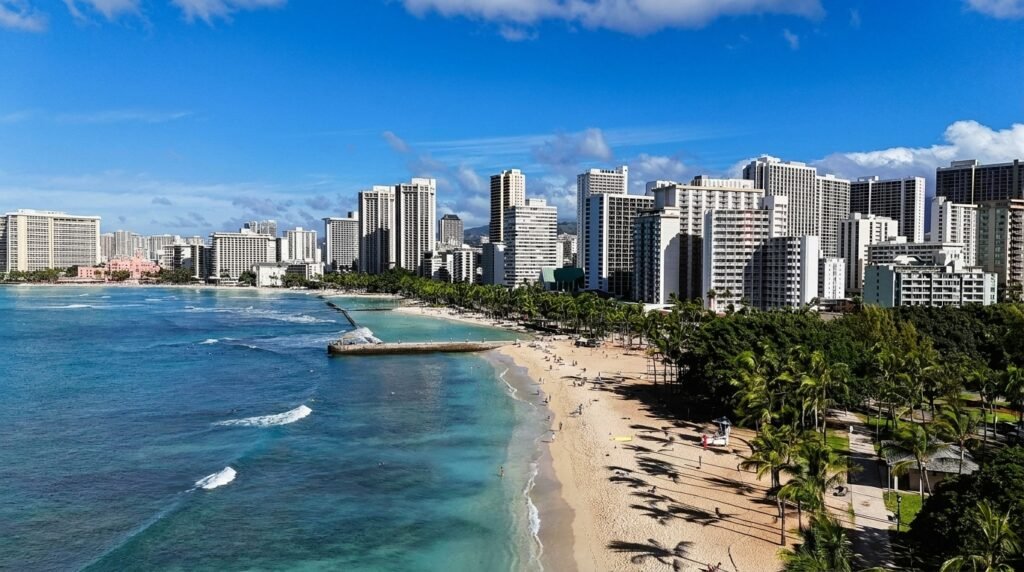
No honest account of hawaii attractions honolulu would skip Waikiki Beach, even knowing how much has already been written about it. The two miles of sand fronting the main hotel strip remain one of the most technically perfect beginner surf breaks on earth — warm, consistent, forgiving — and the surf schools that line the beach have been putting first-timers on boards since Duke Kahanamoku first demonstrated the sport to mainland America in the early twentieth century. On Tuesday and Friday evenings, the Kūhiō Beach Hula Mound hosts free hula and Hawaiian music performances at sunset. Bring a blanket and nothing else. The show is not trying to sell you anything. This free cultural offering is a reminder that the best honolulu attractions are not always the ones that cost money, and that the honolulu tours worth taking most seriously are the ones that bring you into the living culture rather than past it.
For snorkeling, however, the serious honolulu tours head east to Hanauma Bay Nature Preserve. Among all the hawaii attractions honolulu offers for ocean lovers, Hanauma Bay is the one most likely to produce the sensation of weightlessness — the feeling of hovering above a living city of coral and fish that makes the human world feel very far away. Formed inside the collapsed crater of an ancient shield volcano, the bay is a federally protected marine sanctuary where over 400 species of fish navigate the coral formations in water clear enough to read through. In 2026, the reserve requires advance reservations for entry, and the bay is closed on Mondays and Tuesdays for reef restoration — a policy that has measurably improved coral health since its implementation. The mandatory environmental orientation video, which plays before visitors enter the water, is not a formality; it contains specific guidance that will make your visit both better and less damaging to the ecosystem.
If you are willing to drive thirty minutes east and then navigate the narrow residential streets of Kailua, Lanikai Beach rewards the effort with what many locals quietly consider the most beautiful sand on the island. The beach is narrow and the parking is genuinely difficult — street spots only, and they fill early — but the water is shallow, warm, and the color of a glacier, and the two small Mokulua Islands sit offshore like a painter’s invention. Kayaking out to the islands is one of the finest places to visit in honolulu for anyone willing to work slightly harder than the average beach day requires. It is also one of those honolulu attractions that functions best as a secret — shared among people who have done their research and are willing to forgo the convenience of Waikiki for the reward of somewhere that feels genuinely undiscovered.
On the North Shore, a 45-minute drive from downtown, the beach towns of Haleiwa and Sunset Beach offer a different kind of honolulu attractions — one built around professional surfing culture, shrimp trucks, and the winter swells that bring the world’s best surfers to compete at the Eddie Aikau Invitational and the Vans Triple Crown. The shrimp trucks parked along Kamehameha Highway — Giovanni’s most famously — represent some of the best hawaii attractions honolulu day-trippers tend to underestimate: a paper plate of garlic butter shrimp eaten at a picnic table under a palm tree, with the sound of waves in the distance. In summer, the same breaks that produce 30-foot faces in December become gentle, swimmable bays. Timing, as with most things in Honolulu, is everything.
The Table: Food as Cultural Geography
Food is the most honest map of any city, and Honolulu’s table is extraordinarily honest. A proper honolulu city tour of the food landscape should begin with the plate lunch — a local institution that traces its origins to the plantation camps of the nineteenth century, where Japanese, Filipino, Korean, and Chinese laborers ate together and shared their food traditions across cultural lines. The classic plate lunch is two scoops of white rice, one scoop of macaroni salad, and a protein — most authentically kalbi short ribs, chicken katsu, or loco moco, which is a hamburger patty over rice covered in brown gravy and fried eggs. It is not subtle. It is not trying to be. Among all the things to do in Honolulu that connect you to the city’s immigrant history, eating a plate lunch at a roadside counter is the most direct and the most delicious.
For traditional Hawaiian food — the kind eaten at family luau rather than resort luau — the place to go is Helena’s Hawaiian Food in Kalihi, a James Beard Award winner that has been serving pipikaula (dried beef), laulau (pork and butterfish wrapped in taro leaves), and kulolo (a dense coconut and taro pudding) since 1946. Some of the best honolulu tours focused on food culture include Helena’s as a stop specifically because it represents the most authentic version of Hawaiian cooking available to the public. People’s Cafe in Chinatown serves a similar menu in a smaller, more chaotic space. Neither restaurant courts tourists particularly hard, which is precisely why you should go.
Poke — the Hawaiian preparation of raw, marinated fish — has traveled far enough from its origins to have become unrecognizable in most of its mainland iterations. In Honolulu, it is made with fish that came out of the water that morning, seasoned with Hawaiian sea salt, limu seaweed, and inamona (roasted kukui nut). The best versions are not found in poke bowl restaurants but in the refrigerated cases of supermarkets like Foodland and Times, where local families buy it by the pound for dinner. This is one of the things to do in honolulu that requires no reservation, no tour guide, and no planning — just a willingness to eat like a local.
The coffee culture here is anchored by the Kona coast on the Big Island, but Honolulu’s cafes — especially those in the Kaimuki neighborhood along Waialae Avenue — serve it with the same seriousness you would find in Portland or Melbourne. Diamond Head Market and Grill, near the base of the crater, sells blueberry scones that have developed a small cult following among people who hike Diamond Head early and stop for breakfast on the way back down.
Moving Through the City: Practical Intelligence for 2026
Navigating the major honolulu attractions is more manageable than the island’s reputation for traffic suggests, provided you plan around it. The public bus system — known simply as TheBus — covers most of the major destinations reliably and cheaply, including Pearl Harbor, Hanauma Bay, and the Ala Moana Center. For places to visit in honolulu that sit off the main corridors — the North Shore, Lanikai, the Koko Crater trailhead — a rental car gives you the flexibility that the bus cannot. Book it early; rates climb sharply as arrival dates approach. It is also worth noting that many of the most rewarding places to visit in honolulu on the windward and North Shore sides of the island require you to cross a mountain range, which means a drive through one of several dramatic tunnels or switchback roads — each of which is, itself, a small attraction.
Sun and hydration are not optional considerations here — they are logistics. The UV index in Honolulu routinely reaches the “extreme” category by mid-morning, and the trade winds provide enough cooling effect that you may not notice you are burning until the damage is done. Carry water, apply reef-safe sunscreen before you leave the hotel, and schedule your honolulu tours and hikes for the early morning hours when the light is better anyway. Planning a smart honolulu city tour of any duration — whether a single day or a full week — means building the sun into your schedule as a variable, not an afterthought. The most experienced honolulu city tour planners build in an afternoon break between 11:00 AM and 2:00 PM, using that window for lunch, a museum visit, or an air-conditioned gallery in the arts district, then heading back outdoors when the light becomes golden and the heat begins to ease.
For minor medical concerns — coral scrapes, sun exhaustion, jellyfish stings — Doctors of Waikiki operates a walk-in urgent care clinic daily until 9:30 PM on Kalakaua Avenue. It is the kind of resource that good travel requires knowing about and hoping never to use.
A Final Note: The Pace the Island Asks For
The most common mistake made by visitors working through their list of honolulu attractions is moving too fast. Honolulu rewards a different pace than most cities — one that allows for the detour, the second helping, the conversation with the man at the fish counter who grew up on this island and remembers when the reef at Hanauma Bay was twice as rich as it is today. The places to visit in honolulu that will stay with you longest are rarely the ones marked on the map. They are the ones that happen in the space between the marked ones.
Book your Pearl Harbor tickets and your Hanauma Bay reservation early. Wake up for Diamond Head before the heat arrives. Eat the plate lunch at a plastic table with no view. Take a honolulu city tour led by a Native Hawaiian guide who can tell you what the land was called before the street names arrived. Seek out honolulu tours that go deeper than the surface — operators who walk you through taro patches, teach you the names of the stars used for navigation, or take you to fishponds that have been tended continuously for over a thousand years. These are the hawaii attractions honolulu rarely advertises, but which form the most lasting part of what people carry home with them. And when the last honolulu tours of the day have ended and the sky goes orange over Magic Island, find a place on the grass and stay there until the stars come out. The things to do in Honolulu are, in the end, as simple and as inexhaustible as the ocean that surrounds them all.
Practical Checklist for Your Honolulu Visit:
- Reserve in advance: Pearl Harbor and Hanauma Bay both require advance bookings; slots fill weeks out in peak season.
- Arrive early: Diamond Head, Manoa Falls, and Lanikai Beach are all dramatically better before 8:00 AM.
- Dress with respect: Iolani Palace and the USS Arizona Memorial ask for appropriate attire and quiet conduct.
- Eat locally: Kaimuki, Chinatown, and Kalihi offer the most honest versions of the food that makes Honolulu honolulu attractions unique.
- Choose guided honolulu tours wisely: Opt for operators with Native Hawaiian guides who can connect you to the cultural and ecological context of what you are seeing.
- Protect the reef: Use reef-safe sunscreen — it is both a legal requirement at Hanauma Bay and a basic act of citizenship in an ocean ecosystem under pressure.
Every hawaii attractions honolulu itinerary will be slightly different, because every traveler arrives with a different hunger. The island is large enough to absorb all of them. The hawaii attractions honolulu has cultivated — from volcanic trail systems to royal palace halls to open-ocean reefs — represent one of the most diverse concentrations of human and natural heritage anywhere in the United States. Treat them accordingly: with time, with attention, and with a willingness to let them change you slightly before you leave.
Reviews
There are no reviews yet. Be the first one to write one.