
You smell it before you feel it.
The moment those automatic doors slide open at Tom Bradley International Terminal and you step outside into the pickup zone, something hits you — not dramatically, not like a movie. It’s subtle. A warm chemical sweetness that is part jasmine drifting from somebody’s garden in Westchester, part jet exhaust, part the specific dry heat that belongs only to Southern California in the afternoon. It’s not a bad smell. It’s just unmistakably here.
You look up. Palm trees — tall, slightly ridiculous, utterly indifferent to your presence — line the airport boulevard in a row so perfect it looks like someone photoshopped them in. The sky is a pale, washed-out blue with a smoggy brown halo sitting over the San Gabriel Mountains to the northeast. You can’t see Downtown from here, and you won’t for a while, because Los Angeles doesn’t reveal itself quickly. It makes you earn it.
The first thing you’ll do is get into a car.
The 405 freeway is not, technically speaking, a place. But it might be the most accurate introduction to Los Angeles you’ll get. Merge onto it heading north toward the Westside and you’ll immediately understand something about this city that no Instagram reel can convey: the scale is genuinely shocking. Twelve lanes of traffic moving at 15 miles per hour. Strip malls and apartment complexes stretching to every horizon. A billboard advertising a legal cannabis dispensary right next to one for a personal injury lawyer. Everyone in their own sealed metal world, listening to a podcast, rehearsing a pitch, quietly losing their mind or quietly thriving — you genuinely cannot tell which.
This is where the fantasy and the reality of Los Angeles separate.
You came with images in your head. Everybody does. The Hollywood sign on a clear morning. Surfers at dawn in Malibu. Celebrity sightings over cold brew in West Hollywood. Those things exist — some of them, some of the time. But the Los Angeles that most people actually live in is something else: a city of concrete rivers and dry heat, of 45-minute drives to places that are technically four miles away, of neighborhoods so distinct from each other that you can cross one street and feel like you’ve entered a different city entirely.
That’s not a flaw. That’s the point.
Because when you start understanding that Los Angeles — the real, layered, frequently absurd, occasionally transcendent version — the best places to visit in Los Angeles stop being a checklist and start becoming a story. And it’s a story worth telling, because no other city on earth organizes itself around the concept of reinvention quite like this one.
This guide exists to take you through it properly. Not the sanitized highlights-reel version, but the real los angeles tour — from the Pacific bluffs to the Valley, from the mural-covered alleys of the Arts District to the hiking trails above Hollywood where you can see all of it at once and finally understand why people keep coming here, keep staying, keep dreaming.
The best places to visit in Los Angeles are waiting. Let’s go find them.
Table of Contents
Deciphering the Dream: Why These Are the Best Places to Visit in Los Angeles
Los Angeles Is Not a City. It’s a Conspiracy of Neighborhoods.
Ask a local where they’re from and they will almost never say “Los Angeles.” They’ll say Silver Lake. Or the Valley. Or Culver City, or Koreatown, or Leimert Park. The city proper covers 503 square miles and holds nearly four million people, and yet it operates less like a unified metropolis and more like a federation of distinct communities that have agreed, somewhat reluctantly, to share a county.
This is the first thing you need to understand before you plan any kind of los angeles tour: there is no center. Or rather, there are many centers, each claiming legitimacy, none of them fully winning. Downtown LA has the skyline and the history. Hollywood has the myth. Santa Monica has the money and the beach. The Eastside has the culture. The Valley has the sprawl and, arguably, the soul of working Los Angeles. They all exist simultaneously, with no single gravitational pull connecting them — just the freeway system, doing its inadequate best.
This is also, paradoxically, why the best places to visit in Los Angeles are so rewarding to discover. The city doesn’t hand itself to you. You have to choose a direction, commit to a neighborhood, park the car, and walk. The rewards, when they come, are specific: a taqueria open at 2am on a corner in Boyle Heights, a bookshop in Los Feliz that’s been there since 1933, a stretch of Pacific Coast Highway at golden hour when the light turns the water the color of hammered copper.
The Geography of Ambition: Why Distance Means Everything Here
Los Angeles was built for the automobile — not metaphorically, but literally. The city’s growth in the mid-20th century was structured around the freeway system, which meant that neighborhoods didn’t need to cluster around transit hubs or walkable cores. They spread. And spread. And kept spreading until the city’s geography became both its greatest feature and its most persistent inconvenience.
What this means practically, for you, is that the top things to do in Los Angeles are never concentrated in one zone. The best museum in the city (the Getty) is in a completely different part of town than the best food market (Grand Central Market Downtown), which is nowhere near the best beach (Zuma, in Malibu), which is a 45-minute drive from the best hiking (Griffith Park, in the hills above Hollywood).
This isn’t a problem. This is the whole game. Los Angeles rewards the traveler who leans into the sprawl rather than fighting it — who accepts that the best places to visit in Los Angeles are scattered across a geography that refuses to be convenient, and decides that the drive itself is part of the experience.
Because on the right day, with the right song on the radio and the smog cleared out by an overnight marine layer, driving through this city is one of the most exhilarating things you can do in America.
And that is why people keep coming back.
The Iconic Trail: Discovering the Best Places to Visit in Los Angeles Landmarks
You could spend a week in Los Angeles and never leave the tourist circuit. You’d eat overpriced food, wait in long lines, take the same photos as eleven million other people, and fly home with a vague sense that the city never quite opened up for you. That’s not the city’s fault — that’s the itinerary’s fault.
The landmarks are real. The history behind them is real. But the way most visitors experience them is surface-level by design — engineered for throughput, not understanding. So here’s the deal: this section will take you through the heavy hitters honestly. Where to go, how long to stay, what to skip, and what most people miss entirely.
These are not just stops on a checklist. Done right, they form the backbone of the best places to visit in Los Angeles — a trail through the city’s mythology, geography, and genuine beauty that will leave you with something more than souvenir photos.
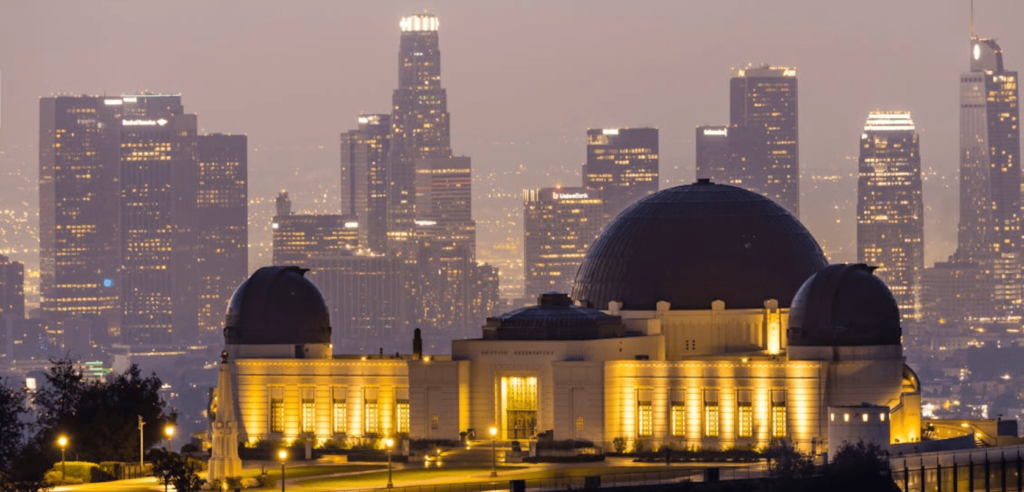
Griffith Observatory — The One View That Explains Everything
There is a moment, if you time it right, when you’re standing on the south terrace of Griffith Observatory and the entire Los Angeles basin is spread below you like a circuit board someone left running. Downtown to the left, the Hollywood sign above and behind you, the Pacific glinting somewhere in the haze thirty miles to the west. At dusk, the freeways light up orange. The city becomes, briefly and honestly, beautiful.
This is the single best free view in Los Angeles. It’s also, genuinely, one of the top things to do in Los Angeles regardless of age, budget, or how many times you’ve visited. The Art Deco building itself dates to 1935 and was James Dean’s backdrop in Rebel Without a Cause. The Samuel Oschin Planetarium inside runs shows throughout the day. The Tesla coil in the main hall has been drawing crowds since the Depression.
But the view. The view is why you come.
Pro-Tip: Don’t drive up on a weekend afternoon unless you enjoy parking in Los Feliz and hiking 20 minutes uphill. Instead, take the DASH Observatory bus from Vermont/Sunset station, or arrive before 10am on a weekday when the lot is actually accessible. Sunset is the magic hour — plan around it.
The Getty Center — High Art on a High Hill
The Getty sits above the 405 freeway in the Santa Monica Mountains like a Roman villa that somehow got dropped into West LA, and it is completely, unapologetically free to visit (parking is $25, but walk or bike up from Sepulveda if you want to feel virtuous). The permanent collection is world-class: Van Gogh’s Irises, Rembrandt portraits, Monet’s Still Life with Flowers. The architecture by Richard Meier is itself worth the trip — travertine marble catching the Southern California sun at angles that change every hour.
Most visitors spend two hours here and leave satisfied. The visitors who come back a second and third time are the ones who discovered the gardens.
Pro-Tip: The Central Garden, designed by artist Robert Irwin, is a living sculpture and genuinely one of the most underrated spots in the city. Walk it slowly. Then find a bench on the tram pavilion terrace, face west, and watch the marine layer roll in over Santa Monica Bay. You won’t find this moment in any standard los angeles tour itinerary — which is exactly why it’s worth finding.
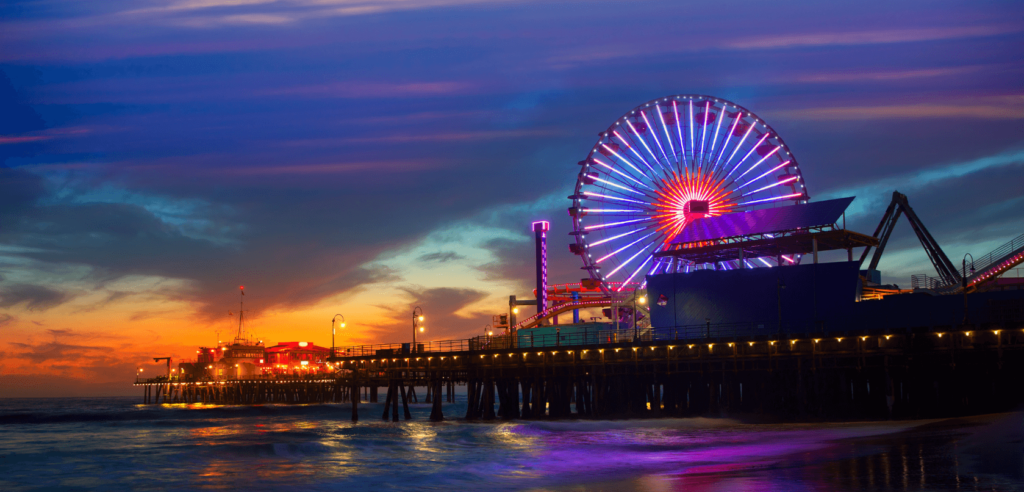
Santa Monica Pier — Do It Fast, Do It Right, Move On
Here’s the honest version: Santa Monica Pier is loud, crowded, expensive, and entirely worth visiting for exactly 45 minutes. The Pacific Wheel is the only solar-powered Ferris wheel on the planet and it’s genuinely photogenic at night when it cycles through colors over the dark water. The pier has been here in some form since 1909. Standing at its railing and looking back at the shore — the hotels, the palms, the joggers on the bike path — gives you one of those postcard moments that actually earns the title.
But don’t eat here. The food is aggressively mediocre at premium prices. Walk off the pier, head south toward Venice, and eat there instead.
Pro-Tip: Come at sunset on a clear December or January evening when the winter air has scrubbed the smog out. The light on the water during those months is a completely different animal from the flat summer glare. This is when Santa Monica Pier becomes one of the genuinely best places to visit in Los Angeles rather than just one of the most visited.
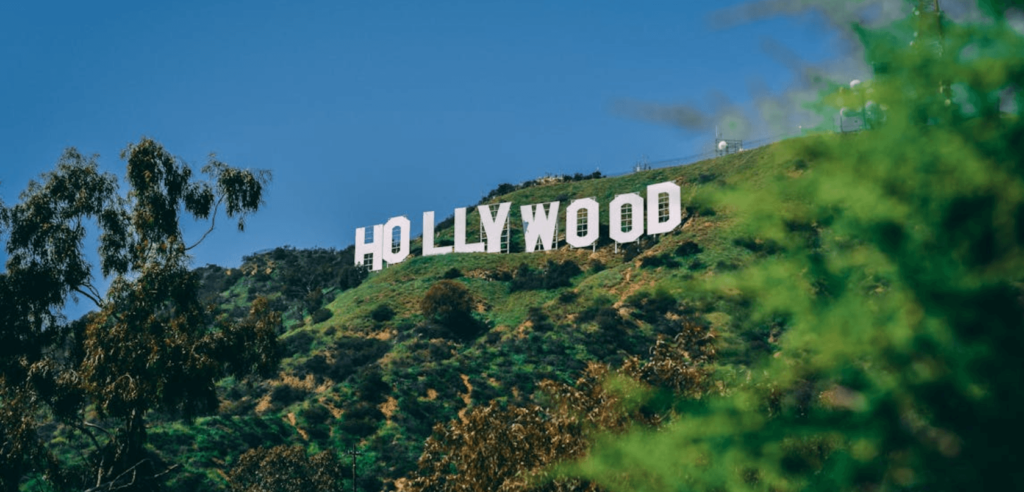
Hollywood Boulevard — Sacred Ground and Souvenir Shop
The Walk of Fame stretches for 1.3 miles along Hollywood Boulevard and contains 2,700+ stars embedded in terrazzo and brass. It is also, at almost any hour of the day, genuinely chaotic — street performers in elaborate costumes charging $20 for a photo, tour buses idling at corners, and enough Elmo and Spider-Man impersonators to staff a mid-sized theme park.
None of that means you should skip it.
The mythology of Hollywood is real, and it lives in the physical fabric of this street. Grauman’s Chinese Theatre, now TCL Chinese Theatre, has been hosting premieres since 1927 — put your hands in the concrete handprints of actors who defined American cinema and feel how strange time is. The Egyptian Theatre across the street, built in 1922 and now run by Netflix as an art house, is one of the most architecturally magnificent buildings in Los Angeles and most visitors walk right past it staring at their phones.
Pro-Tip: Do Hollywood Boulevard on foot, east to west, starting at Vine Street. See the Capitol Records Building (the round one that looks like a stack of records — it was designed that way intentionally), walk the stars, put your hands in the Chinese Theatre cement, then duck into the Musso & Frank Grill at 6667 Hollywood Blvd. It opened in 1919. Raymond Chandler drank martinis at the bar. Order the flannel cakes. This is the real los angeles tour — the one that connects the myth to the actual city underneath it.
Neighborhood Deep Dive: Three Cities, One Zip Code Away From Each Other
One of the defining experiences of any serious exploration of the best places to visit in Los Angeles is what locals call the vibe shift — that disorienting, delightful jolt you get when you cross from one neighborhood into another and the entire atmosphere of the city changes around you.
Beverly Hills does not apologize for itself. Rodeo Drive is exactly what you expect: polished to a mirror finish, architecturally impressive in a cold way, populated by people who either have extraordinary wealth or are performing it convincingly. The residential streets behind it are genuinely beautiful — wide, tree-lined, silent in the afternoons. It is a place worth walking through slowly once, just to understand what “money as urban design” actually looks like. It is not, however, a place where you’ll feel the pulse of the city.
Cross Laurel Canyon or take Sunset east through the curves past Sunset Strip, and eventually you’ll drop down into Silver Lake — and this is where Los Angeles starts to feel like it has a creative heartbeat. The reservoir trail is lined with dog walkers, musicians, and screenwriters who’ve given up on their screenplays but kept the lifestyle. Sunset Junction has coffee shops and wine bars stacked next to used record stores and taco stands. The energy is loose, self-conscious, and genuinely fun. This is one of the top things to do in Los Angeles for travelers who are less interested in monuments and more interested in how the city actually lives.
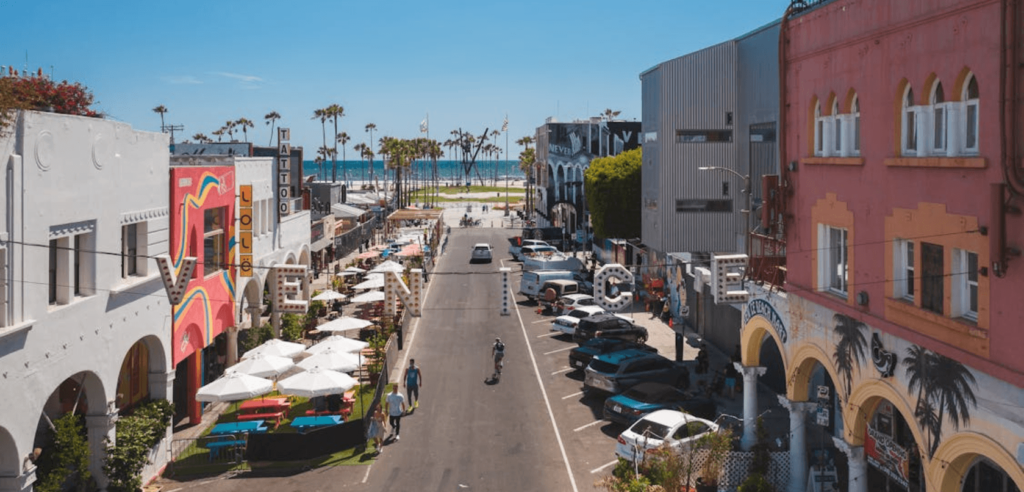
Then drive west — past Culver City, through Mar Vista — and you arrive at Venice Beach, which operates as a kind of controlled experiment in California mythology. The Boardwalk still has the weightlifters at Muscle Beach, the street artists, the palmistry booths. But walk one block inland to Abbot Kinney Boulevard and you’re in one of the best dining and shopping strips in the city, lined with independent boutiques and restaurants where a reservation two weeks out is considered fast. Venice holds both versions of itself without apology, which is very Los Angeles — the best places to visit in Los Angeles rarely offer you just one story. They offer you several, simultaneously, and let you choose which one you’re in.
Unique Activities and The Best Places to Visit in Los Angeles
- Universal Studios Hollywood: General Admission Tickets
- Petersen Automotive Museum Admission Ticket
- Warner Bros. Studio Tour Hollywood
- Natural History Museum of LA Entry Ticket
- LA VIP Tour : Beverly Hills, Sunset Strip, & Hollywood Sign!
- Long Beach: Whale and Dolphin Watching Cruise
- Hollywood Night Tour with Griffith Observatory
- 2-Hour Hollywood Trail Horseback Riding Tour
- Aquarium of the Pacific Skip-the-Line Entry
- Hollywood & Beverly Hills Celebrity Helicopter Tour
The Food That Runs This City: Tacos, Korean BBQ, and the Coffee Religion
Before you plan a single museum visit or book a single tour, understand this: eating in Los Angeles is not a side activity. It is, for many locals, the primary activity around which everything else is organized. And nowhere is this truer than at the intersection of taco culture, Korean barbecue, and the city’s near-pathological relationship with specialty coffee.
The Taco Truck Ritual
The taco truck is not a novelty in Los Angeles. It is infrastructure.
On any given weekday evening, somewhere on the east side of the city — on a corner in Boyle Heights, outside a car wash in East LA, parked beside a Home Depot in the Valley — a truck is open and there is a line. The line is not moving fast. Nobody cares. The smell drifting off the flat-top griddle is carnitas crisping in its own rendered fat, onion charring at the edges, corn tortillas warming in a stack under a cloth. You order at the window. You say the meat, the number, and whether you want everything. You step to the side. Someone hands you a plate of two tacos dressed in cilantro, diced white onion, and a salsa verde that will rearrange your understanding of what a condiment can do.
This is one of the best places to visit in Los Angeles that never shows up on a landmarks map — not a location exactly, but an experience embedded in the daily fabric of the city. The best trucks are found by asking a local, by following your nose at 9pm, by paying attention to which parking lots have the most pickup trucks parked outside them on a Tuesday. Guisados in Boyle Heights and East Hollywood has a brick-and-mortar now, but the spirit of the taco truck — fast, honest, cheap, extraordinary — is what it’s translating.
Koreatown After Dark
K-Town sits just west of Downtown, dense and layered and operating on a different clock than the rest of Los Angeles. The Korean BBQ ritual begins late — 8pm, 9pm, sometimes later — when you’re seated at a table with a gas grill set into its center, and the server brings out raw marinated short ribs, pork belly, and thinly sliced brisket, and you become both the cook and the diner. The ventilation hood descends from the ceiling. The fat hits the grill. The smoke curls upward carrying the smell of doenjang and sesame and caramelizing sugar, and the entire table leans in.
This is communal eating as performance and pleasure both. Order the banchan — the small dishes of kimchi, pickled radish, spinach, and fish cake that arrive without being asked for. Wrap the grilled meat in perilla leaves with a dab of fermented soybean paste. Drink soju from small glasses and refill everyone else’s before your own.
K-Town is among the top things to do in Los Angeles for anyone who wants to eat the way the city actually eats — not the Instagram version, but the real one.
Coffee as a Los Angeles Lifestyle
Coffee in Los Angeles is not caffeine delivery. It is identity expression, remote-work office, social ritual, and, occasionally, an almost religious practice. Cafés in Silver Lake open at 7am and are full of people with laptops who have nowhere to be and everywhere to be simultaneously. The cortado comes in a hand-thrown ceramic cup. The barista knows the origin farm of the single-origin pour-over. Nobody is in a hurry and everyone is running late.
Go to Cafécito Organico in Silver Lake for the horchata latte. Go to Go Get Em Tiger on Larchmont for the crowd and the beans. Go to any coffee shop with a line outside it, because in Los Angeles a line means the neighborhood has already decided.
Planning Your Los Angeles Tour: Practical Tips for the Best Places to Visit in Los Angeles
Surviving the 405 — And Every Other Freeway
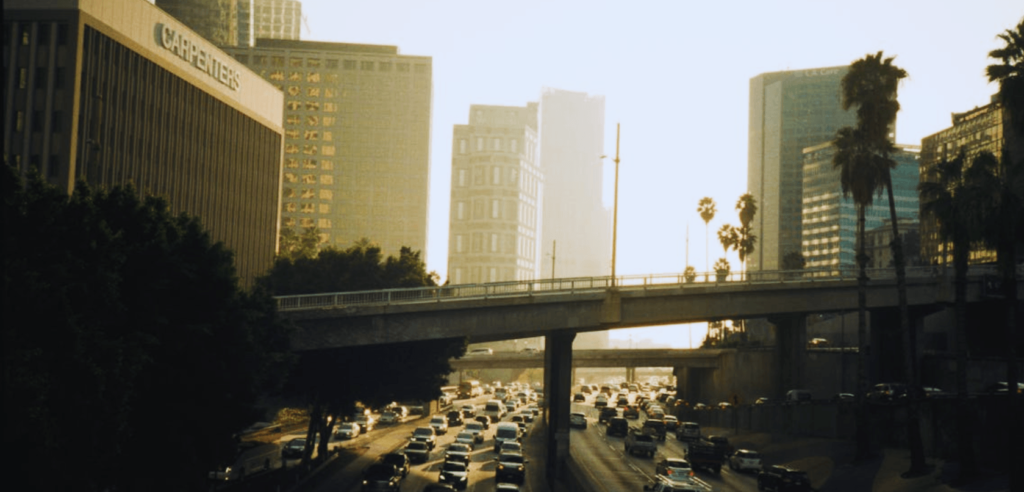
Let’s be direct: Los Angeles traffic is not a rumor. The 405 freeway between the Valley and the Westside regularly reduces ten miles of distance to a 40-minute ordeal during peak hours — which run, loosely, from 7 to 10am and 3:30 to 7:30pm on weekdays. During those windows, the city’s road network becomes a slow-moving meditation on patience and the nature of time.
Your strategies, in order of effectiveness:
Drive before 7am or after 8pm. The city at those hours is a different machine entirely — fluid, fast, almost pleasurable. Night driving in LA, windows down, on a freeway that’s actually moving, is one of the great urban experiences in America.
Use Waze, always. Not Google Maps — Waze. Locals use it reflexively, and it will route you through side streets and neighborhood cuts that no tourist would ever find on their own.
Build in time buffers everywhere. Whatever you think the drive will take, add thirty percent. This is not pessimism. This is experience.
Take the Metro strategically. The B Line (Red) runs from Union Station through Downtown to Hollywood and connects to the D Line (Purple) toward Koreatown and Wilshire. For specific corridors it’s genuinely faster than driving. For most of the city, it remains a supplement to car travel rather than a replacement.
You Must Rent a Car. This Is Not Negotiable.
This point is made clearly and without apology: if you are visiting Los Angeles for more than one day and you do not rent a car, you will see roughly 30% of what the city has to offer and spend twice as long getting there. The best places to visit in Los Angeles are spread across 503 square miles. They are not connected by walkable corridors. They are not, mostly, accessible by Metro. They require the specific freedom that only a car provides.
Rent something comfortable. Factor in parking costs ($15–35 per day in most areas, often more in Santa Monica and Hollywood). Download Waze. Accept the freeway as part of the los angeles tour experience rather than an obstacle to it. And drive the Pacific Coast Highway north from Santa Monica at least once, because that road — ocean on your left, cliffs on your right, the city falling away behind you — is its own argument for why this place endures.
The Secret Season: Why January and February Are the Best Months to Visit
Everyone comes to Los Angeles in summer. This is understandable and also, from a practical standpoint, a mistake.
June through August brings the “June Gloom” marine layer that keeps coastal areas overcast until noon, peak tourist crowds at every major site, and accommodation prices at their highest. The heat inland — in the Valley, in Pasadena, in Downtown — is dry and serious, regularly hitting 95°F or above.
Come in January or February instead. The winter rains clear the air so completely that you can stand at Griffith Observatory and see the individual buildings of Downtown from fifteen miles away. The Santa Monica Mountains turn briefly, startlingly green. Hotel rates drop. The crowds thin. And on a clear winter day, with the San Gabriel Mountains snow-capped in the distance and the Pacific glittering under cold sunshine, Los Angeles is at its most honest and most beautiful.
This is the secret that residents know and rarely share. Now you know it too.
The Perfect 48 Hours: A Cinematic Los Angeles Itinerary
Day One
7:00am — Coffee at Go Get Em Tiger on Larchmont, then breakfast at Sqirl in Silver Lake (arrive early; the line starts by 8am on weekends). Order the ricotta toast with jam and the kefir-marinated egg bowl. Eat outside if you can.
10:00am — Drive up to Griffith Observatory. Park at the Greek Theatre lot and walk the trail up through the chaparral. The city below is still in its morning haze. Spend an hour on the terrace.
12:30pm — Drive through Los Feliz and into Hollywood. Walk Hollywood Boulevard west from Vine Street, see the Chinese Theatre handprints, go inside the Egyptian Theatre if there’s a matinee showing something worth seeing. Take exactly as long as you need and not one minute more.
2:30pm — The Getty Center. Take the tram up, start in the West Pavilion with the Impressionists, then spend thirty minutes in the Central Garden. Find a bench facing west. Watch the light change.
6:30pm — Drive to Santa Monica. Walk the pier at sunset. Then walk south along the Boardwalk to Abbot Kinney in Venice and pick any restaurant with an open table — the street earns its reputation.
9:30pm — Koreatown. Late Korean BBQ at Park’s BBQ or Quarters Korean BBQ. Order the galbi. Stay as long as the table will have you.
Day Two
8:00am — Rent a bike or walk the Venice Beach Boardwalk before the crowds arrive. The early morning Boardwalk — pink light, the sound of waves, a few skaters doing their practice runs — is one of the best places to visit in Los Angeles that doesn’t cost a single dollar.
11:00am — Drive the Pacific Coast Highway north. Stop at El Matador State Beach (park on PCH and hike down the short trail to a beach with sea stacks and caves). Swim if the water allows. Eat a packed lunch on the rocks.
2:00pm — Continue north to Malibu. Stop at Malibu Farm on the pier for a late lunch if El Matador filled you up emotionally but not physically. Drive back along PCH at the golden hour.
5:30pm — The Arts District, Downtown. Park anywhere near 6th Street and walk. Find a mural. Find Bestia or Bavel for dinner, both on Alameda — reserve well in advance. This is the culmination of any serious los angeles tour: eating extraordinary food in an industrial building that used to be something else entirely, surrounded by a city in the slow, earnest process of becoming something new.
After dinner — Drive up the 110 to the South Pasadena exit and stop at the Vista del Arroyo overlook. The city lights below you. The San Gabriel Mountains black against the sky above. Los Angeles, finally, from a distance. The whole impossible thing, lit up and humming.
FAQ: Los Angeles Travel Questions Answered
Q1: What are the best places to visit in Los Angeles for first-time visitors?
For a first visit, focus on the experiences that give you the clearest picture of what makes Los Angeles distinct rather than simply famous. Griffith Observatory for the citywide view, the Getty Center for world-class art and architecture, Santa Monica and Venice for the coastline, the Arts District for the energy of contemporary LA, and at least one taco truck, found by asking a local. These five touchpoints — landmark, culture, coast, neighborhood, food — will give you a genuine sense of the city rather than a postcard version of it.
Q2: How many days do you need to see the best places to visit in Los Angeles?
Five days is the practical minimum for covering the city’s main districts without feeling rushed. Three days is possible if you’re strategic — pick a region (Westside, Central, Eastside) and go deep rather than trying to cross the entire city. Two days, done right with the itinerary above, gives you a real taste. A week gives you room to get productively lost, which is when Los Angeles actually starts to reveal itself.
Q3: Is a car truly necessary for a Los Angeles tour?
For most visitors, yes. The Metro system has improved considerably in recent years and covers Hollywood, Downtown, Koreatown, and parts of the Westside adequately. But Malibu, the Getty, Griffith Park, the taco trucks of East LA, and most of the neighborhoods worth exploring require either a car or a serious commitment to rideshare costs. Budget $40–65 per day for a rental and treat it as the essential infrastructure it is.
Q4: What is the best season to visit Los Angeles?
January through March is the answer most locals will give you if you ask honestly and they’re feeling generous. The air is clear after winter rains, the mountains are occasionally snow-capped, the crowds are thin, and hotel rates are at their annual low. September and October offer warm weather, genuinely clear skies, and the city at its most socially active as awards season begins to gather momentum. Summer is the most popular choice and, counterintuitively, often the most disappointing — coastal areas suffer from morning overcast, the heat inland is serious, and every attraction is at peak capacity.
Q5: What are the top things to do in Los Angeles that are completely free?
The Getty Center (free admission, $25 parking), Griffith Observatory, every beach in Los Angeles (parking fees apply but beach access is free by California law), the Huntington Library gardens on the first Thursday of each month, the LACMA outdoor sculptures, the Venice Beach Boardwalk, and every public mural in the Arts District — including the ones along the 6th Street Viaduct. Los Angeles will charge you for parking aggressively and relentlessly, but the city’s best experiences are more accessible than the reputation for expense suggests.
Conclusion: The City That Never Quite Lets You Go
You will leave Los Angeles slightly confused. Most people do.
You’ll have seen the landmarks, driven the freeways, eaten the tacos, watched the sun drop into the Pacific at least once. You’ll have felt the specific texture of the place — the dry heat, the long distances, the way the city rewards patience and punishes rigidity. And somewhere in that experience, without being able to pinpoint exactly where or when, you’ll have felt it: that particular atmospheric charge that keeps drawing people here across generations, across continents, across every reasonable argument against it.
Los Angeles is not the easiest city to love. It demands that you do the work — that you learn to navigate it, to read its neighborhoods, to find your own version of the best places to visit in Los Angeles rather than simply following someone else’s map. It will waste your time in traffic, overcharge you for parking, and occasionally make you feel like the only person in a city of four million people who doesn’t know exactly what they’re doing and where they’re going.
But then something happens. It always does. Maybe it’s that view from Griffith at dusk. Maybe it’s a bowl of ramen at midnight in Little Tokyo, or a swim at El Matador with nobody else on the beach, or the way a songwriter at a Silver Lake bar plays something she wrote last week and the room goes quietly, genuinely still.
And you think: Oh. That’s why.
The City of Angels doesn’t hand you that moment. You have to find it — in the space between the landmarks and the traffic and the mythology and the smog. But it’s there, waiting for you, patient as the palm trees and the Pacific.
Come with your eyes open. Drive the 405 at night when it’s moving. Ask a local where they eat. Stay longer than you planned.
The best places to visit in Los Angeles will still be here. And so, somehow, will the feeling that you haven’t quite seen all of it yet.
You haven’t. Nobody ever has. That’s the whole point.
Reviews
There are no reviews yet. Be the first one to write one.