
Montreal doesn’t ease you in gently. The moment you step off the plane, this city grabs you by the collar and pulls you into a world that feels like Paris, New York, and something entirely its own all at once. The things to do in Montreal are as layered and contradictory as the city itself — ancient stone churches rising beside rooftop terrasses buzzing with summer crowds, world-class museums tucked into neighborhoods where century-old delis serve smoked meat stacked higher than you’d think physics allows. Whether you’re a first-timer or a seasoned traveler, the montreal attractions here will surprise you, challenge your assumptions, and keep calling you back long after you’ve returned home.
This guide covers the very best activities in montreal — from iconic landmarks to hidden neighborhood gems — organized to help you make the most of every hour in one of North America’s most culturally rich cities. Consider this your definitive companion for things to do in Montreal, covering everything from grand montreal attractions to the kind of low-key local experiences that don’t make it onto postcards.
Table of Contents
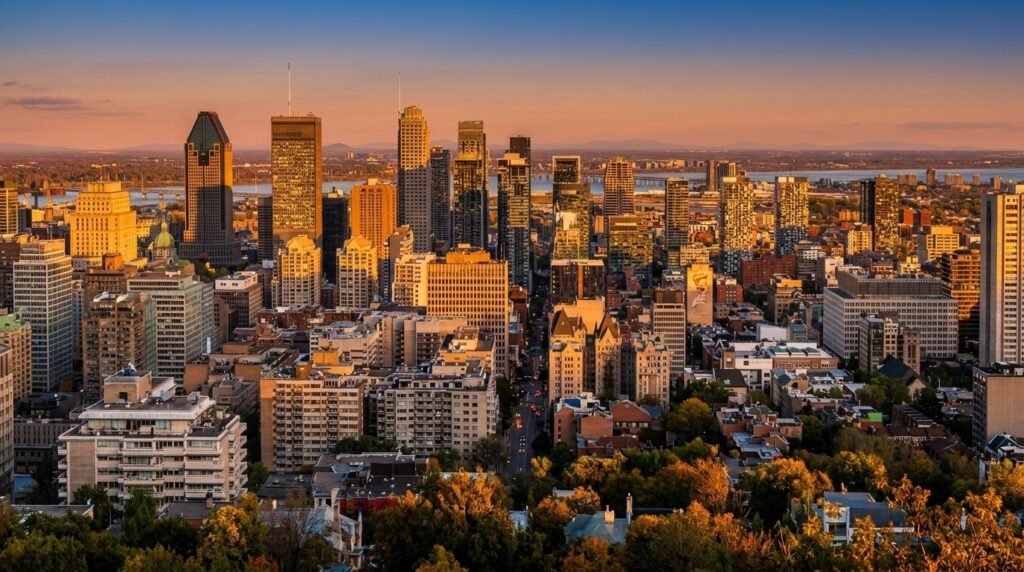
Why Montreal Belongs on Every Traveler’s Bucket List
Montreal sits in a category of its own. It’s the second-largest French-speaking city in the world after Paris, yet it operates in both French and English with a fluency and ease that feels effortless. The food scene is extraordinary. The arts culture is world-class. The festivals — there are over 100 of them annually — transform the city into a giant outdoor stage from May through October.
The things to visit in Montreal range from soaring basilicas and subterranean cities to island parks and legendary jazz clubs. Few cities on the continent pack this kind of cultural depth into such a walkable, bikeable, human-scaled urban grid.
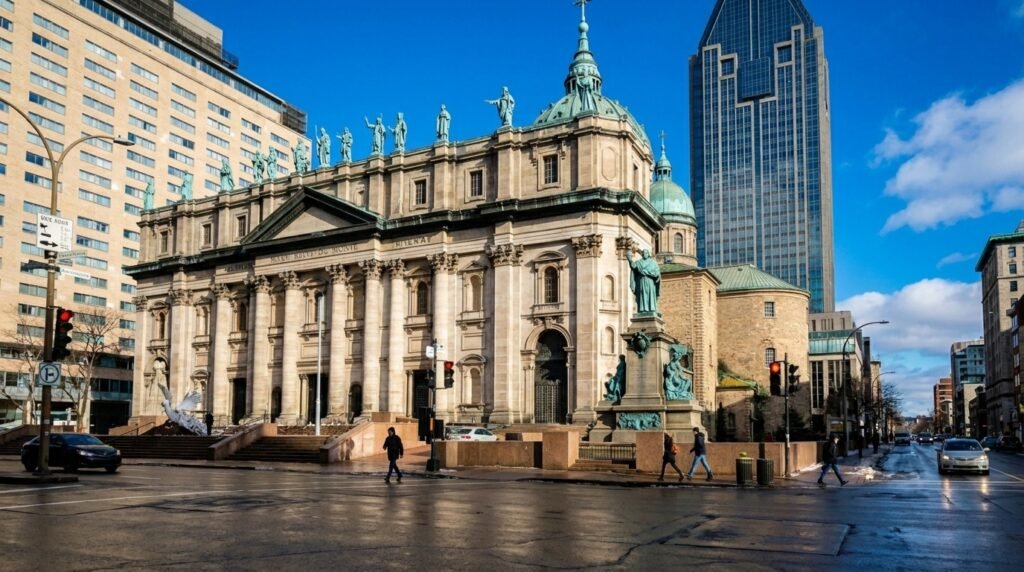
Old Montreal (Vieux-Montréal): Where History Breathes
If there’s one neighborhood that defines the things to visit in Montreal for first-time visitors, it’s Old Montreal. Cobblestone streets wind between 17th- and 18th-century stone buildings, some of them among the oldest in North America. The neighborhood sits on the banks of the St. Lawrence River, and on a clear summer evening, the light hits the limestone facades in a way that feels almost cinematic.
Notre-Dame Basilica
Among all the montreal attractions, Notre-Dame Basilica stands in a league of its own. Built between 1824 and 1829, this Gothic Revival masterpiece holds roughly 3,000 people beneath a ceiling of deep midnight blue, gold stars, and hand-carved wooden details that took artisans decades to complete. The sheer scale of it stops you cold at the entrance. Stained glass panels tell the story of Montreal’s colonial and religious history in vivid, saturated color. At night, the AURA immersive light show transforms the basilica into something otherworldly — a seamless fusion of sacred architecture and modern digital art.
This is easily one of the top things to visit in Montreal, and one of those rare experiences that lives up to its reputation.
Secure your spot and book your Notre-Dame Basilica AURA experience today.
The Old Port (Vieux-Port)
Running along the St. Lawrence, the Old Port is one of the most beloved montreal attractions and a centerpiece of activities in montreal across all four seasons. In summer, it fills with cyclists, kayakers, paddle boarders, and families enjoying the giant waterfront park. The Clock Tower Pier offers sweeping views of the river and the city skyline. Winter transforms it into an outdoor skating rink and snowshoeing trail.
The Bonsecours Market — a neoclassical silver-domed landmark built in 1847 — anchors the port district with boutiques selling Quebec-made crafts, fashion, and food products. It’s the kind of place you walk into for twenty minutes and emerge an hour later with gifts you didn’t plan on buying.
Secure your spot and book your Old Port Guided Walking Tour experience today.
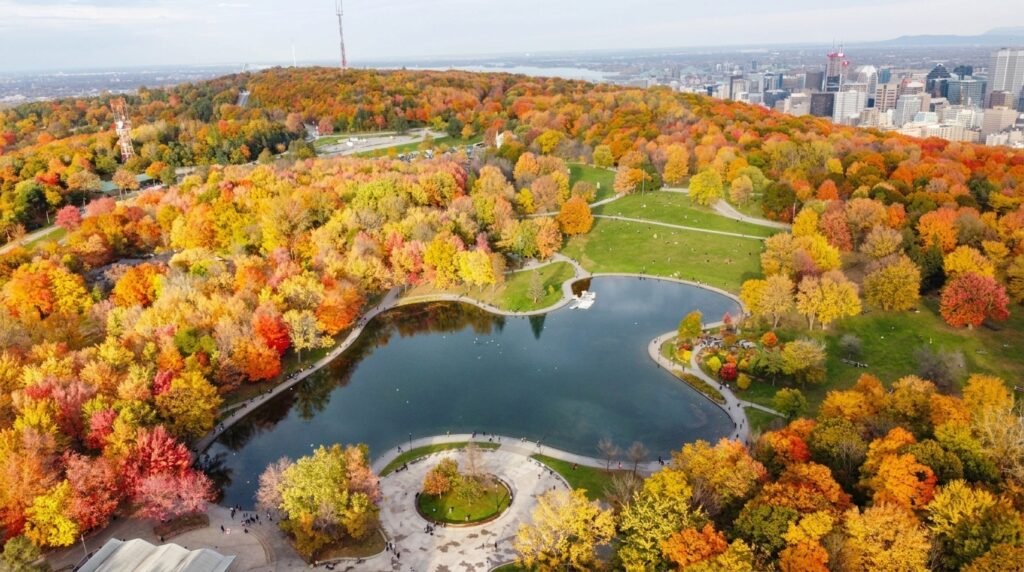
Mount Royal: The Heart and Lungs of the City
You cannot talk about the things to do in Montreal without talking about Mount Royal. Designed by Frederick Law Olmsted — the same landscape architect behind New York’s Central Park — this forested urban park rises 233 meters above the city and offers one of the most spectacular views in North America from its belvedere lookout.
On any given weekend, the mountain is alive. Families picnic on the slopes. Tam-tams drum circles gather on Sunday afternoons in summer. Cross-country skiers cut trails through fresh snow in January. The Beaver Lake (Lac des Castors) area is a gathering spot year-round, and the trails that thread through the park shift personality with each season in the most satisfying way.
The park is one of those montreal attractions that locals return to constantly — not as tourists, but as part of daily life. That’s the real sign of a great urban park.
Secure your spot and book your Mount Royal Park Guided Hike experience today.
The Underground City (RESO): Montreal’s Secret World Below
One of the most uniquely Montreal things to do is explore what locals call La Ville Souterraine — the Underground City. Stretching across 33 kilometers of tunnels and passages, RESO connects over 40 office towers, 7 metro stations, 2 universities, 2 bus terminals, 10 metro stations, and hundreds of shops and restaurants into one vast subterranean network.
It was built partly out of necessity — Montreal winters are genuinely brutal — but it has evolved into something far more interesting than mere weather protection. It’s a functioning city beneath a city, and navigating it without a map is both confusing and deeply satisfying. Among activities in montreal that feel genuinely one-of-a-kind, this is near the top.
Secure your spot and book your Underground City Exploration Tour experience today.
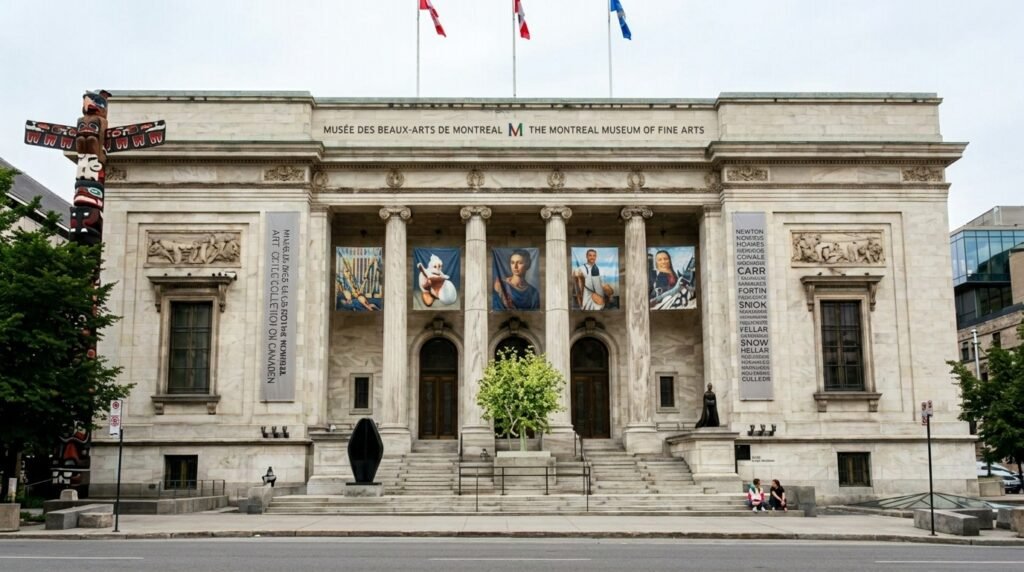
The Montreal Museum of Fine Arts (MMFA)
The Montreal Museum of Fine Arts is one of the premier montreal attractions for culture lovers, and one of Canada’s most comprehensive art institutions. Its permanent collection spans 41,000 works — from ancient Egyptian artifacts and Inuit sculpture to Picasso, Rembrandt, Basquiat, and contemporary Quebec artists.
What makes the MMFA special among activities in montreal is the way it integrates art with design, decorative arts, and even fashion into a single, coherent vision of culture. The museum regularly hosts blockbuster international exhibitions that draw visitors from across North America.
The Bourgie Concert Hall inside the museum — built within a historic church — hosts chamber music performances in an acoustically stunning space. It’s one of those montreal tours you didn’t know you needed until you’re sitting inside listening to a string quartet beneath vaulted ceilings.
Mile End and the Plateau: Bohemian, Brilliant, Unmissable
If Old Montreal is the city’s history, the Plateau-Mont-Royal and Mile End neighborhoods are its creative soul. These are the streets where Leonard Cohen grew up, where Arcade Fire wrote their early records, and where some of the best montreal attractions are found not in guidebooks but in stumbling down the right alley at the right moment.
Bagels on St-Viateur
Montreal bagels are not New York bagels. Locals will tell you this with some intensity, and they’re right. Hand-rolled, dipped in honey water, and baked in wood-fired ovens, Montreal bagels are smaller, denser, and sweeter. St-Viateur Bagel has been making them since 1957, and the bakery runs 24 hours a day, seven days a week. Getting one fresh from the oven at 2am is one of those things to do in Montreal that costs almost nothing and stays with you forever.
Secure your spot and book your Mile End Food Tour experience today.
Schwartz’s Deli
No list of activities in montreal is complete without mentioning Schwartz’s. Opened in 1928, this legendary deli on Boulevard Saint-Laurent has been serving Montreal smoked meat to everyone from traveling celebrities to the lunch-rush crowd for nearly a century. The line wraps around the block on weekends. You wait. It’s worth it.
The smoked meat sandwich — medium fat, on rye, with mustard — is one of the city’s defining culinary experiences. Simple. Transcendent.
Secure your spot and book your Montreal Food and History Tour experience today.
Jean-Talon Market: A Feast for Every Sense
Open year-round, the Marché Jean-Talon in Little Italy is consistently ranked among the best public markets in North America, and it earns that ranking. The outdoor market overflows with Quebec strawberries in June, heirloom tomatoes in August, and root vegetables and maple products in the fall and winter.
Among things to visit in Montreal that double as genuine local experiences, Jean-Talon is unmatched. Cheese vendors, spice merchants, butchers, bakers, and specialty food producers pack the stalls. Come hungry. Leave with your arms full.
Secure your spot and book your Jean-Talon Market Culinary Tour experience today.
Montreal’s Festival Culture: The City That Never Stops Celebrating
Any guide to the things to do in Montreal has to address the festival calendar, because it reshapes the entire character of the city for months at a time.
- Festival International de Jazz de Montréal (late June–early July) — One of the largest jazz festivals in the world, with over 500 concerts, many of them free outdoor performances that fill the streets of downtown.
- Just for Laughs (Juste pour rire) — The world’s largest international comedy festival, running in July, draws performers from every corner of the globe.
- Osheaga — Montreal’s premier outdoor music festival, held on Île Sainte-Hélène in late July or early August, with lineups that rival any festival on the continent.
- Montréal en Lumière — A winter light and arts festival that turns the February cold into something magical.
- Piknic Électronik — Weekly Sunday outdoor electronic music events on Île Sainte-Hélène from May through September, beloved by locals and visitors alike.
The festival season is one of the most compelling reasons the activities in montreal draw millions of visitors annually. There is almost always something happening, and the sheer variety of montreal attractions tied to the festival calendar is staggering — you could visit four times a year and have an entirely different experience each time.
Île Sainte-Hélène and La Ronde: Island Escapes in the City
Sitting in the middle of the St. Lawrence, Île Sainte-Hélène and the neighboring Île Notre-Dame offer some of the most underrated things to do in Montreal. These islands were the site of Expo 67, the 1967 World’s Fair, and traces of that international showcase remain in the form of architectural landmarks and wide open park spaces.
The Biosphere — Buckminster Fuller’s iconic geodesic dome — now houses an interactive environmental museum. La Ronde, the amusement park perched on the eastern edge of the island, offers thrill rides against a backdrop of the St. Lawrence River. The Formula 1 Canadian Grand Prix takes place on the Circuit Gilles Villeneuve, which runs through these islands every June, drawing 300,000+ racing fans.
For a quieter experience, the Jardins des Floralies on Île Notre-Dame offers peaceful garden walks, and the Casino de Montréal (housed in the former French pavilion from Expo 67) adds a dose of glamour after dark.
Montreal Tours Worth Booking in Advance
While you can explore Montreal beautifully on your own, the right guided experience can unlock layers of the city that would take years to discover independently. Here are the montreal tours that consistently earn rave reviews:
Food and Neighborhood Walking Tours
Some of the best montreal tours focus on the food — and for good reason. Operators like Spade & Palacio and Montreal Food Tours take small groups through neighborhoods like Old Montreal, Mile End, and the Plateau, weaving culinary history and cultural context into every stop. You’ll eat better and understand more. These montreal tours typically run 3–4 hours and include generous tastings at each stop — this is not a light-snack situation.
Guided Historical Tours of Old Montreal
Architecture and history buffs should look into the montreal tours offered through Guidatour and Heritage Montreal. These cover the history of New France, the fur trade, the colonial street grid, and the evolution of the city’s cultural identity over 400 years. Walking the cobblestones of Old Montreal with a knowledgeable guide is a completely different experience from wandering alone. These montreal tours typically run 90 minutes to two hours and represent some of the best value among the things to visit in Montreal on a structured schedule.
St. Lawrence River Boat Tours
Getting on the water is one of the most rewarding activities in montreal. The river views of the Old Port, the bridges, and the city skyline are stunning from the water. Several operators offer narrated cruises, sunset dinner cruises, and high-speed jet boat rides through the Lachine Rapids. These montreal tours sell out fast in summer — book ahead.
Bike Tours
Montreal is one of the most bike-friendly cities in North America, with an extensive network of dedicated cycling paths. Guided bike montreal tours cover the waterfront, the mountain, and the neighborhoods in a way that’s both efficient and genuinely fun. Ça Roule Montréal and Fitz & Follwell are two of the most established operators, and their montreal tours are consistently among the highest-rated activities in montreal for both solo travelers and groups. For anyone trying to cover multiple things to visit in Montreal in a single day, a bike tour is hard to beat.
The Latin Quarter and Gay Village: Culture, Color, and Community
The Quartier Latin, centered on Rue Saint-Denis, is Montreal’s bookish, café-heavy literary neighborhood — home to UQAM (Université du Québec à Montréal) and a dense concentration of independent bookshops, used record stores, and affordable restaurants serving everything from Ethiopian to classic Québécois cuisine.
Directly adjacent is the Village — one of the largest and most vibrant LGBTQ+ neighborhoods in North America. The Village comes alive in summer when Rue Sainte-Catherine is pedestrianized and strung with thousands of colorful balls suspended overhead, creating one of the city’s most visually spectacular streetscapes. The neighborhood hosts Fierté Montréal (Montreal Pride) in late summer, drawing hundreds of thousands of visitors and residents.
These neighborhoods represent some of the most authentic things to do in Montreal for travelers who want to experience the city as it actually lives.
Day Trips and Nearby Destinations from Montreal
Montreal’s location makes it a natural launch point for some incredible nearby destinations. If you’re spending a week or more in the region, consider these additions to your activities in montreal itinerary:
- Quebec City — 2.5 hours by car or bus, one of the most beautiful walled cities in North America
- Tremblant — 1.5 hours north, a four-season mountain resort with skiing in winter and hiking, cycling, and water sports in summer
- Eastern Townships (Cantons-de-l’Est) — 1–2 hours southeast, wine country, charming villages, and covered bridges
- Ottawa — 2 hours west, Canada’s capital and home to world-class national museums
For more inspiration on Canadian city travel, check out our guides to Things to Do in Toronto and Places to Visit in Vancouver.
Practical Tips for Visiting Montreal
Before you arrive, here are some insider notes to make the most of your trip:
- Language: Montreal is predominantly French-speaking, but most service workers in tourist areas speak English. Making the effort to say “Bonjour” before switching to English is genuinely appreciated.
- Getting Around: The STM metro system is clean, affordable, and covers the main tourist areas well. Bixi bikes (Montreal’s bike-share system) are excellent for summer and fall. Uber operates throughout the city.
- Best Times to Visit: June through September is peak season — warm, festival-packed, and vibrant. March and April can be gray and slushy. January and February are cold but authentic, with the locals’ winter culture on full display.
- Neighborhoods to Stay: Old Montreal for historic atmosphere and walkability; Plateau-Mont-Royal for local character; Downtown for convenience and access to everything.
- Tipping: Like the rest of Canada, tipping 15–20% is standard in restaurants and for tour guides.
- Montreal Tours Booking: Popular montreal tours — especially food tours, basilica experiences, and river cruises — book up weeks in advance during summer. Reserve early.
Frequently Asked Questions About Things to Do in Montreal
How many days do you need in Montreal? Most visitors spend 3–5 days to cover the major montreal attractions comfortably. A week allows you to explore neighborhoods at a more relaxed pace and take a day trip or two.
Is Montreal walkable? Yes — especially Old Montreal, the Plateau, Mile End, and Downtown. The montreal attractions in these areas are densely clustered and easy to reach on foot. The metro and Bixi bikes handle everything else.
What are the best free things to do in Montreal? Many of the finest things to do in Montreal cost nothing: exploring Old Montreal’s streets, hiking Mount Royal, visiting the Tam-Tams drum circles on Sundays in summer, watching street performers at the Old Port, and browsing Jean-Talon Market. The outdoor jazz festival performances are also largely free.
What food is Montreal famous for? Montreal is famous for smoked meat sandwiches, bagels (wood-fired, hand-rolled), poutine (fries, cheese curds, and gravy), maple syrup products, and a thriving restaurant scene spanning French, Québécois, Greek, Italian, Asian, and fusion cuisines.
Are Montreal tours available in English? Absolutely. The vast majority of montreal tours operate in both French and English, and many offer dedicated English-language departures.
What is the best neighborhood to explore first? Old Montreal. It concentrates the most iconic things to visit in Montreal into a compact, walkable area and gives first-timers an immediate sense of the city’s depth and personality.
Final Thoughts: Montreal Will Change How You Think About Cities
The things to do in Montreal are almost embarrassingly plentiful. This is a city that feeds you exceptionally, moves you culturally, challenges you linguistically, and surprises you around virtually every corner. The montreal attractions span centuries of history and a dozen different cultural traditions. The activities in montreal change with the seasons but never diminish. The montreal tours on offer are some of the best on the continent. And the things to visit in Montreal — from its storied basilica to its mountain park to its underground labyrinth — are worth every hour you can give them.
Spend any real time here and you’ll understand why so many travelers rank the things to do in Montreal among the best urban experiences in the entire world.
Whether you come for a long weekend or a full week, you’ll leave with the particular kind of restlessness that the best travel always produces — the feeling that you’ve barely scratched the surface, and that you absolutely have to come back.
Book your trip. Start planning now. Montreal is waiting.
Looking for more Canadian city inspiration? Don’t miss our guides to Things to Do in Toronto and Places to Visit in Vancouver.
Reviews
There are no reviews yet. Be the first one to write one.