
Things to do in guadalajara will surprise you in the best possible way — and I say that as someone who almost skipped the city entirely in favor of Mexico City. I had heard the pitch before: birthplace of mariachi, home of tequila, colonial architecture worth photographing. It all sounded beautiful but familiar, the kind of checklist travel that leaves you full of stamps but empty of real stories. Then a Mexican friend pulled me aside before my flight and said, “Give Guadalajara three days and it will rearrange something inside you.” She was right. What follows is not a polished brochure. It is an honest account of what this city actually delivers, combined with the practical intelligence you need to navigate it well in 2026.
Table of Contents
The Historic Heart: Where Stone Walls Tell the Story of a Nation
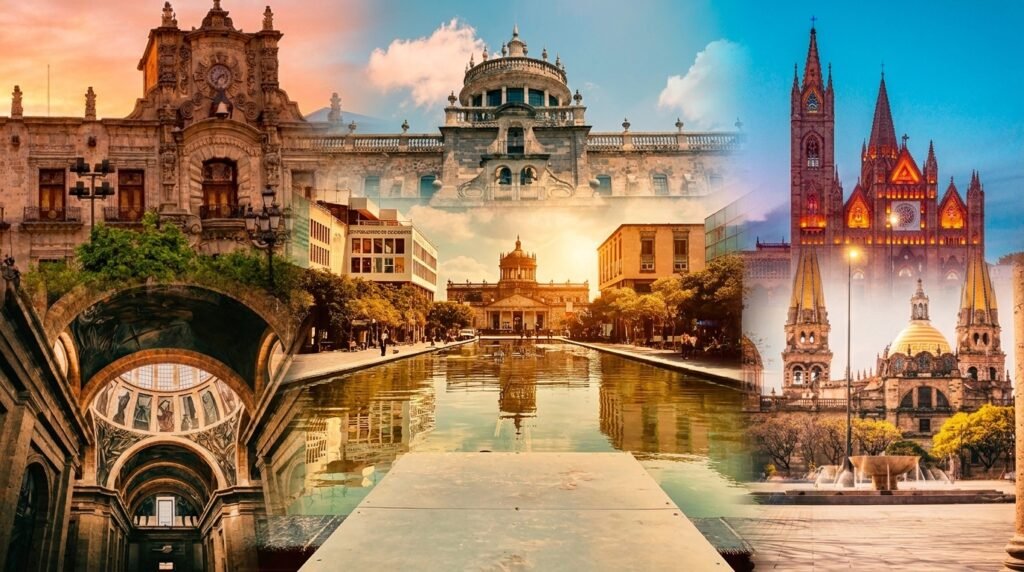
The Centro Histórico is where every first-time visitor should begin, not because it is the most photographed part of the city, but because it gives you the grammar you need to read everything else. Things to do in guadalajara start making sense once you understand the scale of what was built here. The Metropolitan Cathedral alone took more than two hundred and fifty years to complete, and the result is an architectural conversation between Gothic ambition, Baroque detail, and Renaissance restraint. The yellow-tiled neo-Gothic bell towers that define the skyline were rebuilt after the 1818 earthquake, which tells you something important about this city: it does not abandon what it loves.
Walk directly from the Cathedral into the Cabañas Cultural Institute and allow yourself at least ninety minutes. This is not optional. Museo Cabañas is a UNESCO World Heritage Site and genuinely one of the most affecting places I have encountered in any country. The building itself — designed by Manuel Tolsá in the early 19th century — is a neoclassical sanctuary, but it is what José Clemente Orozco painted on its vaulted ceilings that will stop you cold. El Hombre de Fuego, The Man of Fire, rises above you in violent, luminous color, a human figure consumed and liberated simultaneously by flame. Orozco was making a statement about the cost of revolution and the ambiguity of progress. Standing beneath it, you feel that weight without needing any explanation.
Guadalajara tours that skip the Palacio de Gobierno del Estado de Jalisco are missing a critical piece of the puzzle. Cross the plaza and walk upstairs. On the main staircase, Orozco painted a monumental figure of Miguel Hidalgo, torch raised, faces of oppression writhing beneath him. It is raw, confrontational, and deeply political — the opposite of decorative. For those interested in religious architecture, the Templo Expiatorio offers a different kind of experience: a neo-Gothic interior of extraordinary intricacy, and a musical clock where the twelve Apostles emerge at scheduled hours. The detail work on the stone facade rivals anything I have seen in Europe, and there is no admission fee.
The Neighborhoods That Define the City’s Contemporary Soul
Things to do in guadalajara expand dramatically once you move beyond the historic center and into the living, breathing neighborhoods that make locals proud. Colonia Americana earned its recent designation as one of the world’s coolest districts not through marketing but through organic evolution. Early 20th-century mansions converted into specialty coffee roasters. Art deco facades housing independent bookshops. Paseo Chapultepec operating as a slow, tree-lined invitation to wander without agenda.
The coffee culture here is genuinely serious. This is not the Americanized café experience transplanted into a foreign setting. These are roasters sourcing beans from Oaxaca, Chiapas, and Veracruz, served by baristas who can tell you the precise altitude of the farm. Spend a morning here with no particular destination in mind. MUSA, the Museo de las Artes de la Universidad de Guadalajara, anchors the neighborhood culturally and houses additional Orozco murals that receive far fewer visitors than Cabañas. The intimacy of the space makes the experience feel almost private.
Zapopan, which functions as its own municipality within greater Guadalajara, requires a different mental frame. Guadalajara tours that include Zapopan often present it as a shopping destination, which undersells it significantly. Yes, the Andares District is polished, upscale, and well-designed for high-end retail. But the Basilica of Our Lady of Zapopan is the deeper story. Every October, the statue of the Virgin makes a procession back to the Basilica after spending the summer months visiting parishes across the city. Hundreds of thousands of people line the streets. If your timing aligns, there are few experiences in mexico tours that rival it for sheer emotional intensity.
Tlaquepaque and Tonalá: Where Craft Becomes Identity
Among the most rewarding places to visit in mexico for design lovers and slow travelers alike, these two artisan towns sit just outside the city proper and represent a completely different register of the Jalisco experience. Things to do in guadalajara regional itineraries almost universally include both, and with good reason.
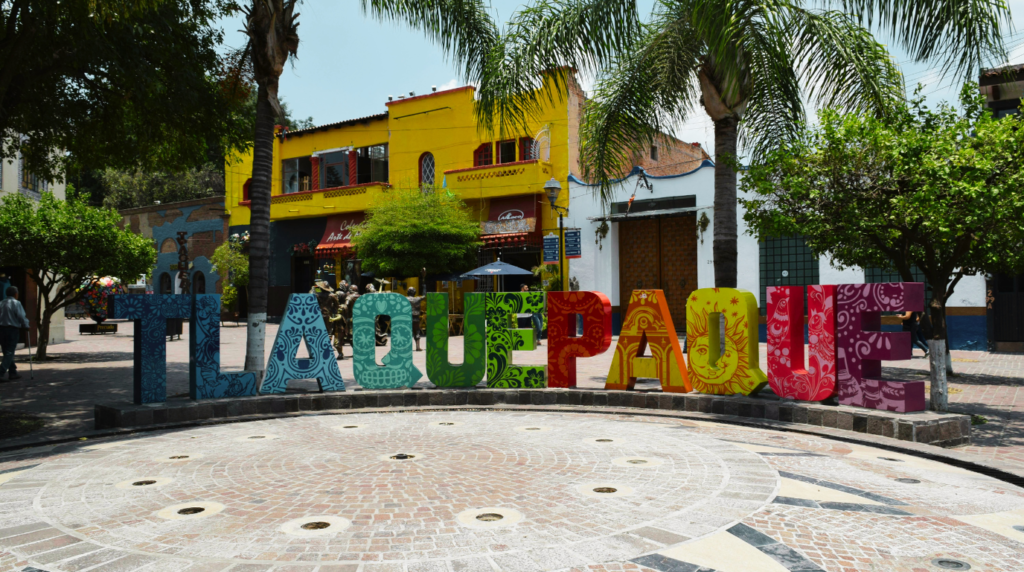
Tlaquepaque is designated a Pueblo Mágico, Mexico’s official recognition of towns with exceptional cultural heritage, and it earns that status without effort. The pedestrian Andador Independencia is the spine of the experience — a cobblestoned walkway lined with galleries, ceramic workshops, and restaurants sheltered beneath bougainvillea-draped archways. The Sergio Bustamante Gallery displays the surrealist bronze and mixed-media work of one of Mexico’s most internationally recognized artists. The Regional Ceramics Museum contextualizes the craft tradition with genuine scholarship. On a quiet weekday morning, Tlaquepaque feels like a town that has been doing this for centuries because it has.
Tonalá operates differently. Guadalajara tours that take you to Tonalá’s Thursday and Sunday markets are giving you access to one of the most authentic wholesale craft experiences in Latin America. Furniture makers, blown glass artists, burnished clay producers, and talavera painters all set up stalls alongside their actual factory workshops. You can walk into the workshop, watch the production process, and buy directly from the artisan. Prices reflect this directness. This is among the top places to visit in mexico for anyone who values the intersection of craft, commerce, and cultural honesty.
The Food: Eating Your Way Into Understanding Jalisco
Gastronomy is the fastest path into any culture’s psychology, and things to do in guadalajara absolutely must include eating the foods that the city considers its own. Not as a tourist exercise, but as a genuine act of participation.
The torta ahogada is the starting point. This “drowned sandwich” is built on birote salado bread, a dense, slightly sour roll that can only be produced correctly in Guadalajara because of the specific combination of local altitude, climate, and water. Bakers in other cities have tried. None have succeeded. The torta is filled with carnitas and then submerged in a chile de árbol salsa of varying ferocity. You eat it with a spoon and fork. You will make a mess. That is correct behavior.
Guadalajara tours focused on food should route through the Nueve Esquinas district for birria, the slow-cooked goat or beef stew that has become internationally fashionable but tastes entirely different at its origin. The collagen-rich consommé, served alongside, is the kind of restorative dish that makes you understand why people crave it when they are cold, tired, or homesick. Carne en su jugo — beef simmered in its own broth with bacon, tomatillos, and beans — is another local institution that deserves more international recognition than it receives.
For the unexpected pleasure: tejuino. A fermented corn drink served cold, with lime sorbet melting on top, and a pinch of salt. It sounds unusual. It tastes like Guadalajara in a cup — complex, slightly tart, deeply satisfying, and unlike anything you find in mexico tours elsewhere in the country.
Lucha Libre and Charrería: Spectacle With Substance
Some things to do in guadalajara are about participation in a living culture rather than observation of a historical one. Lucha libre at Arena Coliseo on a Tuesday or Sunday evening falls firmly into this category. The masks, the acrobatics, the theatrical villain-and-hero narratives — all of it is real in the sense that matters, which is that the audience believes completely and gives themselves to it. Children ride on their fathers’ shoulders. Couples share beer and shout with perfect conviction. The wrestlers — luchadores — perform feats of athleticism that professional sports rarely acknowledge. Budget around 150-200 pesos for a general admission ticket. Sit near the ring if you can.
Charrería is Mexico’s national sport and Jalisco is its spiritual home. A charreada involves teams of charros — traditional horsemen and horsewomen — performing precise, difficult maneuvers in a sequence of nine events. The horsewomanship of the escaramuzas, the female riders who perform synchronized side-saddle formations at full gallop, is breathtaking by any objective measure. These events connect directly to the hacienda culture that shaped Jalisco’s identity. As one of the most culturally specific places to visit in mexico, Guadalajara offers this experience in a context that feels genuinely rooted.
The Tequila Corridor: A UNESCO Landscape Worth the Journey
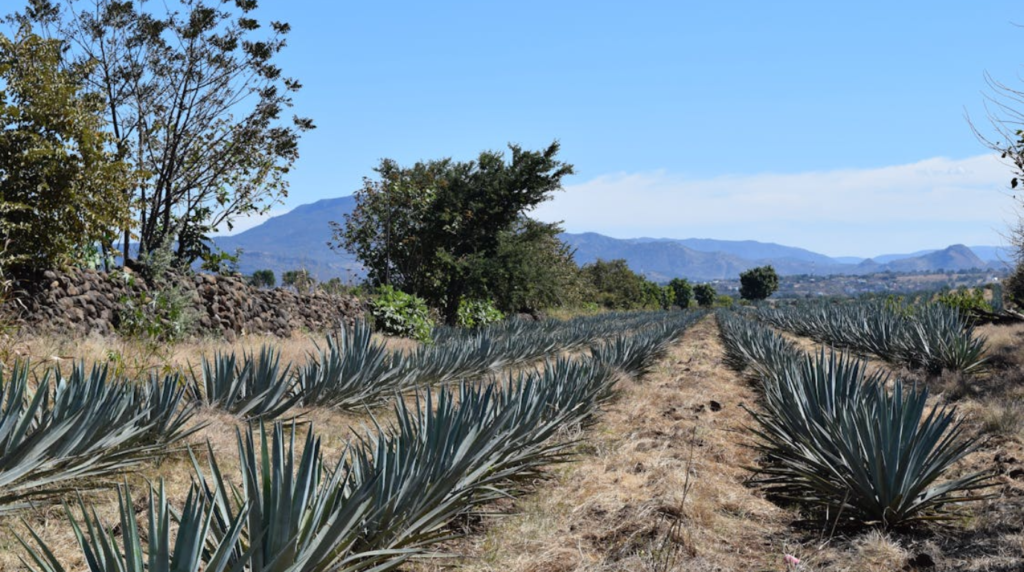
Things to do in guadalajara always lead eventually to the town of Tequila, forty-five minutes northwest by first-class bus. The agave landscape surrounding the town was designated a UNESCO World Heritage Site in 2006, recognizing both its ecological and cultural significance. The blue weber agave plants, some reaching a height of two meters, cover the volcanic hillsides in geometric waves. Volcán de Tequila, extinct and dramatic, rises behind the town as a permanent backdrop.
In 2026, Guadalajara tours to the region are expected to see increased demand due to World Cup tourism generating broader interest in Jalisco as a destination. Book distillery visits in advance. The Tequila Express, a luxury train service running from the historic Guadalajara station, costs approximately €110-140 and includes distillery access, food, and entertainment. It is theatrical and genuinely enjoyable, though the first-class bus option offers more flexibility for independent exploration at a fraction of the cost.
José Cuervo’s La Rojeña is the world’s oldest continuously operating tequila distillery and offers guided tours that walk you through the full production process, from the jimador harvesting the agave heart to the aging barrels. For a more intimate and artisanal perspective, Tequila Fortaleza maintains traditional production methods using a stone tahona wheel to crush the piñas. The difference in the final spirit is detectable and instructive. Mexico tours that include the tequila region almost always produce the most enthusiastic accounts from travelers who initially considered it optional.
Visit during the dry season — November through April — for clear views of the volcano and walkable agave fields. The rainy season turns the paths muddy and the vistas hazy.
Jalisco Beyond the City: Lakes, Mountains, and Mariachi’s Birthplace
The state of Jalisco is among the most geographically and culturally diverse places to visit in mexico, and Guadalajara functions as the ideal base for exploring it. Things to do in guadalajara extend naturally into the surrounding region, where the landscapes shift dramatically within an hour of the city.
Lake Chapala, Mexico’s largest natural lake, sits about fifty kilometers south and offers a completely different tempo. The malecón of Chapala town is a peaceful place to walk in the late afternoon, watching pelicans skim the water while the Sierra de San Juan Cosalá turns purple in the distance. The adjacent village of Ajijic has attracted a large community of North American expatriates and artists, resulting in a bohemian atmosphere with excellent gallery spaces and murals painted directly onto colonial walls. Mexico tours that include this area often find that travelers extend their stay unexpectedly.
For mountain escapes, Mazamitla and Tapalpa — both designated Pueblos Mágicos — offer pine forests, cool temperatures, waterfalls, and adventure sports including paragliding and rappelling. Mazamitla’s similarity to a Swiss alpine village has earned it a nickname, but the food and culture are unmistakably Mexican. Tapalpa’s dramatic cliffs and surrounding oak forests make it a weekend destination beloved by tapatíos (as Guadalajara’s residents call themselves) seeking relief from the city’s warmth.
Cocula, a small town southwest of Guadalajara, is recognized as the cradle of mariachi. The music did not begin in Guadalajara itself but in the ranchos and towns of the surrounding Jalisco highlands. Guadalajara tours that include Cocula offer a genuine historical connection to a musical tradition that has shaped Mexican identity globally. If your interest in culture extends to cities further afield, the things to do in mexico city guide offers a complementary deep-dive into the capital’s equally rich landscape.
2026 Logistics: Practical Intelligence for a Smart Trip
Things to do in guadalajara require a logistical framework that many travel guides treat as an afterthought. In 2026, with the FIFA World Cup bringing international attention and crowds to the city, advance planning becomes more important than usual.
Guadalajara’s new Light Rail Line 3 is the infrastructure development that most directly benefits visitors. It connects Zapopan in the north through the Centro Histórico and continues south to Tlaquepaque, covering the primary visitor corridor cleanly and affordably. A single fare costs approximately twelve pesos. Use it as your default transport for any journey along this axis.
For shorter distances and neighborhood exploration, Uber operates reliably throughout the metropolitan area and remains the safest and most transparent option for visitors. Street taxis without meters carry unnecessary negotiation complexity. Guadalajara tours conducted independently benefit enormously from a working data plan before arrival — a Holafly eSIM or equivalent allows you to activate connectivity from the airport without hunting for a local SIM.
The 2026 World Cup match dates for Guadalajara’s Estadio Akron fall on June 11, 18, 23, and 26. During these windows, accommodation prices will be elevated, central areas will be significantly more crowded, and restaurant reservations will require advance booking. If your mexico tours are timed around these dates, book everything at least three months ahead. If your trip is not World Cup-focused, these windows are worth avoiding unless the football itself is the draw.
A Final Honest Assessment
Things to do in guadalajara will exceed your expectations if you arrive without a rigid agenda and with genuine curiosity about what makes this city different from the Mexican destinations that dominate international travel coverage. It is not as immediately cinematic as Mexico City. It does not have the beach-resort infrastructure of Los Cabos. What it has instead is coherence — a city that knows what it is, built on deep roots in craft, food, faith, music, and sport, now moving confidently into a future that includes a tech economy and World Cup infrastructure without losing the textures that make it worth visiting in the first place.
As one of the most layered places to visit in mexico, Guadalajara rewards the traveler who slows down. Book guadalajara tours through specialized local operators if you want structured access to experiences like charreadas and distillery visits. Explore independently if you prefer to find your own rhythm through the neighborhoods. Either approach works. What does not work is treating the city as a single day’s detour.
Give Guadalajara its three days. If your friend’s advice proved true for me, there is every reason to believe it will prove true for you as well.
Reviews
There are no reviews yet. Be the first one to write one.