
Things to do in Toronto Canada — three search words that somehow fail to capture the sheer scale of what awaits you in this city. I say that not as a cliché opener, but as someone who spent three weeks wandering Toronto’s neighbourhoods with a coffee in one hand and a transit card in the other, fully expecting a polite, slightly-boring North American metropolis and instead finding something altogether more surprising. Toronto is loud in the way only multicultural cities are loud — not with noise, but with competing smells, languages, and histories all occupying the same block.
This guide is built for the traveller who wants more than a bulleted list of attractions. It is structured around the city’s real geography and rhythms, written with the kind of frank assessment you would get from a friend who lives there. Whether you are booking toronto tours for the first time or you have visited before and want to go deeper, you will find something useful here. And if Toronto ends up being just one stop on a longer Canadian adventure, the Best Places to Visit in Canada guide is worth reading before you finalise your itinerary.
Table of Contents
Why Toronto Keeps Surprising First-Time Visitors
Most people arrive in Toronto expecting a cleaner, quieter version of an American city. They leave confused about why it felt so different. The answer is demographic density — Toronto is one of the most ethnically diverse urban centres on the planet, with over half its residents born outside Canada. That statistic shapes everything from what you eat for breakfast to the murals you walk past on Kensington Market’s walls.
The city sits on the northwestern shore of Lake Ontario, and that lakefront relationship matters more than most visitors realise. On a clear day, the lake looks more like a sea. The horizon disappears. The light shifts. Entire toronto city tour itineraries are built around the waterfront, and rightly so — the path from Humber Bay in the west to the Beaches neighbourhood in the east offers a completely different perspective on the skyline than you get looking up from downtown.
Toronto rewards the curious and slightly ignores the passive. If you join one of the well-structured canada tours that begin here before heading north to cottage country or east to Ottawa, you get the curated highlights. But if you have a few extra days and no agenda, allow yourself to get genuinely lost in one neighbourhood per day. That is when the city reveals itself.
The Neighbourhoods: Where the Real Toronto Lives
Kensington Market and Chinatown
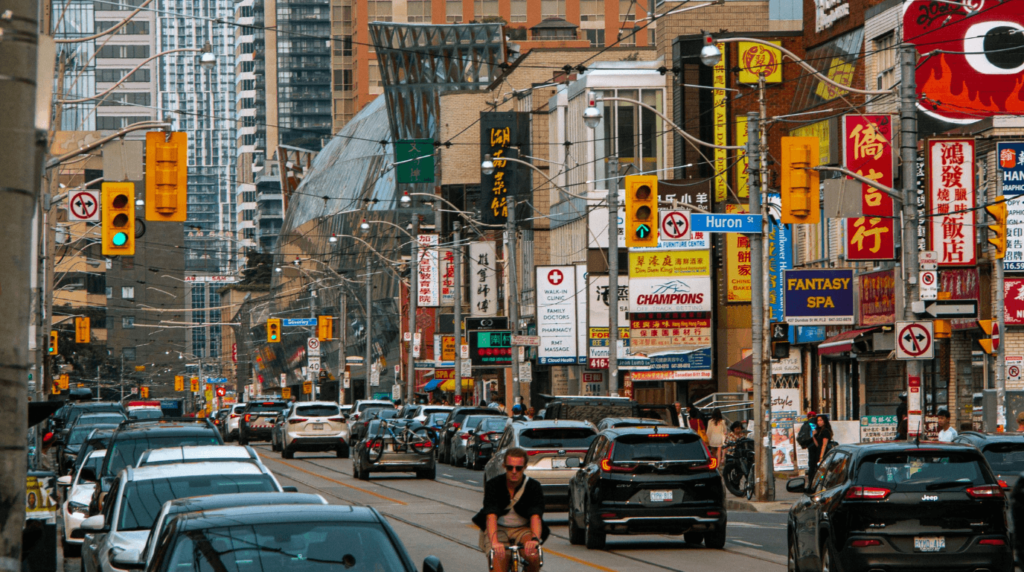
Start here and you start in a place that resists every attempt to be packaged for tourism. Kensington Market is a tangle of Victorian houses converted into vintage shops, Caribbean bakeries, Mexican taquerias, and cheese shops that smell like they have been operating since before you were born. It abuts Toronto’s Chinatown — one of the largest in North America — where the streets narrow and the produce spills onto sidewalks and the roast duck hangs in windows the way it should.
Walking between these two neighbourhoods takes twenty minutes if you go slowly and stop to eat, which you absolutely should. This pocket of the city is among the most talked-about things to do in toronto canada for independent travellers, and it earns that reputation without trying.
Distillery District
The Distillery District is the opposite of Kensington in temperament — intentionally curated, beautifully preserved, unapologetically Instagram-friendly. But I say that without criticism. The Victorian industrial architecture genuinely is stunning, and the cobblestone lanes genuinely do feel removed from the rest of the city. In summer there are outdoor concerts and art installations. In December the Christmas market draws enormous crowds. The toronto city tour operated by most guided companies includes this stop, and it is a reliable crowd pleaser regardless of the season.
Little Portugal and Dundas West
This stretch has quietly become one of the city’s most interesting dining and nightlife corridors. It sits just west of Kensington and carries a scruffier, younger energy — record stores, natural wine bars, Portuguese custard tarts from bakeries that have been there for forty years, and new ramen spots that opened last spring. Fewer toronto tours venture this far west, which means you are more likely to share the pavement with locals than with fellow tourists. book your tour
The Annex and Bloor Street
North of Kensington, the Annex is where academics, writers, and families share a neighbourhood that feels settled and literate. Bloor Street here is lined with independent bookshops, the kind of cinema that still shows subtitled films, and coffee shops with no Wi-Fi password because they want you to talk to the person across from you. This area does not appear on most canada tours itineraries, but it gives you a sense of what Toronto looks like when it is not performing for visitors.
Iconic Landmarks Worth the Visit
The CN Tower
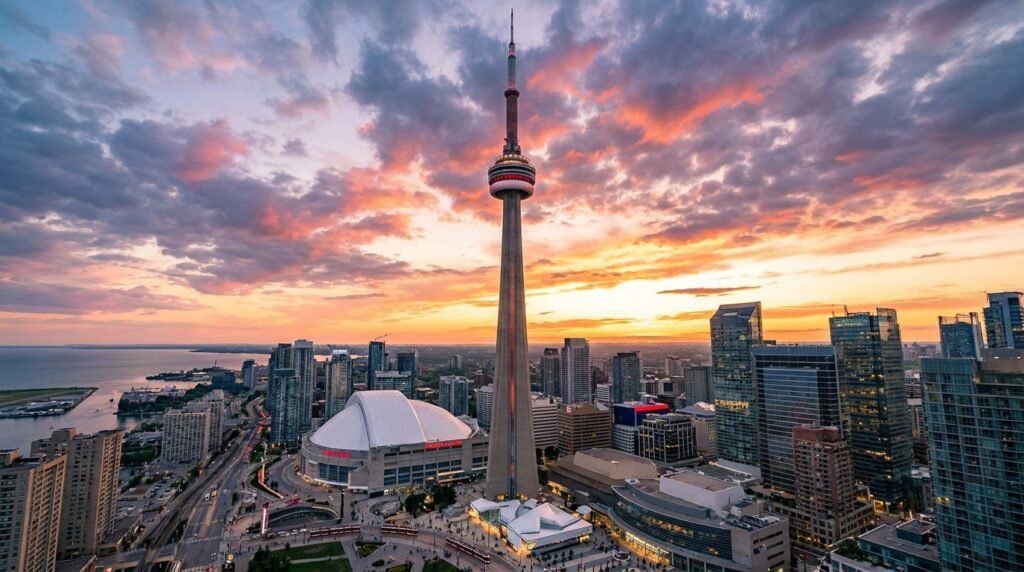
There is no honest guide to the things to do in toronto canada that skips the CN Tower, even if you’re the type who rolls their eyes at tourist attractions. At 553 metres, it held the record for the world’s tallest free-standing structure for over three decades, and the view from the observation deck on a clear day is genuinely disorienting in the best way. You can see the curve of the Earth across Lake Ontario. The glass floor panel is either exhilarating or paralysing depending on your relationship with heights.
Book tickets in advance. The queues are long without them, and the experience is better first thing in the morning before the main crowds arrive. Most toronto city tour packages include CN Tower access with skip-the-line entry, which is worth paying for in peak season.
Royal Ontario Museum
The ROM, as locals call it, is one of the finest natural history and world culture museums in North America. The architecture alone justifies a visit — Daniel Libeskind’s crystal addition crashes dramatically into the original Edwardian building in a way that divided opinion when it opened and still generates conversation today. Inside, the galleries covering ancient Egypt, East Asian ceramics, and Canadian Indigenous cultures are genuinely world-class.
If you are exploring the Best Places to Visit in Canada and have limited time in each city, the ROM is one of those places that rewards two hours of genuine engagement over a rushed ninety-minute walk-through. Slow down in the Indigenous galleries especially — there is context here that reframes everything else you see in Toronto.
Toronto Islands
A ten-minute ferry from the foot of Bay Street delivers you to a car-free archipelago of parks, beaches, and lagoons that feels impossibly removed from the downtown skyline you can still see across the water. The islands are where Toronto goes on summer weekends to breathe. Rent a bike, walk to the western tip at Hanlan’s Point Beach for the best skyline view in the city, and have a picnic with something you picked up from St. Lawrence Market before boarding.
For families, Centre Island has an amusement park that is small enough to feel manageable. For couples, Ward’s Island has quiet residential streets and a café that serves decent sandwiches. For everyone, the ferry ride itself — watching the skyline recede and then grow — is one of those simple, memorable things to do in toronto canada that costs almost nothing and delivers disproportionately.
Practical Guide to Toronto Tours and Getting Around
Toronto’s transit system — the TTC — covers the city comprehensively, though locals will be the first to admit it is showing its age on certain lines. The subway is efficient enough for getting between major areas. Street-level streetcars and buses fill in the gaps. A Presto card (the tap-to-pay transit card) is worth getting immediately if you plan to use transit more than twice.
For structured sightseeing, toronto tours range from hop-on-hop-off bus routes covering the major landmarks to specialised walking tours of specific neighbourhoods. The food tours that work through Kensington Market or St. Lawrence Market are among the most recommended — they combine history with eating, which is a sensible combination. Ghost tours operate on weekend evenings through the Distillery District and the old city hall area, and they are more entertaining than they have any right to be.
For those arriving as part of longer canada tours that include multiple cities, the Toronto segment is usually two to three days. That is enough to see the major landmarks but not enough to understand the city. If your itinerary allows flexibility, I would argue strongly for four full days minimum — the first two for the obvious things, the third for a deep dive into one or two neighbourhoods, and the fourth for whatever you missed or want to return to.
You can find a carefully curated list of the top experiences recommended for 2026 at the Best Things to Do in Toronto 2026 guide, which is updated regularly with new openings and seasonal events.
Food: The Most Reason to Visit
Toronto’s restaurant scene is the direct result of its immigration history, and it is one of the best arguments for the city as a food destination. This is not fusion cuisine — it is the real thing, cooked by communities that have been doing it for generations. The question is never what to eat in Toronto; it is where to start.
Chinatown offers dim sum that is genuinely competitive with what you find in Hong Kong, served in rooms that have not been renovated since 1987 and are better for it. Little India on Gerrard Street East has curry houses where the chicken tikka masala arrives at a heat level that respects you as an adult. The Ethiopian restaurants clustered around Bloor and Dovercourt serve injera with various wots that reward eating with your hands and abandoning pretence.
St. Lawrence Market is the anchor of the city’s food identity — a covered market that has operated on this site since 1803, selling peameal bacon sandwiches that are Toronto’s closest thing to a civic religion. Get there before eleven on a Saturday before the queues make the decision for you. Most toronto city tour operators who focus on food history begin here, and they are right to do so.
For a broader context of Canadian culinary geography, the Best Places to Visit in Canada resource covers how food culture shifts as you move between cities — from the seafood-dominated coasts to the Quebec bistro tradition to Toronto’s multicultural abundance.

Day Trips and Beyond: Extending Your Toronto Base
Niagara Falls
Niagara Falls is ninety minutes from downtown Toronto by road, and it draws more visitors than any other single destination on canada tours that originate in the city. The falls themselves require no description — they are exactly as thunderous and overwhelming as every photograph suggests, and photographs consistently undersell them. The Canadian side offers dramatically better views than the American side, which is one of the few times Canadian smugness on the matter is entirely justified.
Go early. Stay long enough to walk to Horseshoe Falls and feel the mist on your face. Take the boat tour (the Hornblower) if the queue allows. Skip the wax museums and touristy shops that surround the falls — they are a low-return investment of your time. Most toronto tours to Niagara include Niagara-on-the-Lake as a second stop, a small wine-country town with good Riesling and excellent butter tarts that is worth the extra hour.
Algonquin Provincial Park
Three hours northeast of Toronto, Algonquin Park is where the city goes to remember what Canada actually looks like beneath the buildings. Over 7,700 square kilometres of boreal forest, lakes, moose sightings, and hiking trails of varying ambition. In autumn the colour change is transcendent. In summer the canoe routes are among the most beautiful in the country.
Day trips from Toronto work but leave you wanting more time. If you are putting together canada tours that combine urban and wilderness experiences, building two nights in Algonquin into your Toronto segment transforms the trip entirely. The contrast between standing in Kensington Market on a Thursday and paddling a lake at dawn on a Saturday is the kind of travel juxtaposition that stays with you.
Stratford
Ninety minutes west of Toronto, Stratford is a small city that punches considerably above its weight culturally. The Stratford Festival — one of North America’s premier theatre events — runs from April through November and draws visitors from across the continent. Beyond the theatre, the town itself has excellent restaurants, a beautiful river walk, and the specific pleasant charm of a Canadian small city that has found its purpose and committed to it.
Seasonal Considerations: When to Go and What Changes
Toronto has four genuine seasons, and each one changes the character of the city significantly. Summer (July and August) brings outdoor festivals, packed patios, island weekends, and heat that occasionally turns oppressive. This is peak season for things to do in toronto canada outdoors, and the city obliges with events nearly every weekend.
Autumn is the most consistently beautiful season — September and October bring cooler temperatures, extraordinary foliage in the ravine system, and a cultural calendar that ramps up with the Toronto International Film Festival in September and the onset of hockey season. Many regular visitors argue this is the best time for toronto tours because the city is full of energy and not overwhelmed with summer crowds.
Winter is cold in a way that is not theatrical about it — it is just persistently, practically cold. The underground PATH system (a 30-kilometre network of tunnels connecting downtown buildings) becomes essential rather than novelty. The Distillery District’s Christmas Market is genuinely magical if you dress appropriately. And the ROM and Art Gallery of Ontario become primary rather than supplementary destinations.
Spring arrives tentatively in April and confidently by May, and the city responds with a collective relief that only makes sense after you have experienced a Toronto February. Patios open the moment temperatures allow. The markets fill up again. If you are researching things to do in toronto canada and have calendar flexibility, late May and early June offer warm weather without peak-season prices — arguably the sweet spot.
Practical Details: Money, Getting There, and Advice
Toronto is not a cheap city by Canadian standards, though it remains more affordable than comparable global cities. Budget travellers can manage on CAD $100–120 per day if they use transit, eat at markets and neighbourhood restaurants, and choose hostel or budget hotel accommodation. Mid-range travellers should plan for CAD $200–250 per day including a good hotel and a mix of dining experiences.
Pearson International Airport is the main entry point, connected to downtown by the Union Pearson Express train — a 25-minute journey that costs around CAD $12.35 and drops you at Union Station in the heart of the city. Taxis and rideshares take longer and cost more. The train is the right choice.
The honest advice about toronto city tour logistics is this: book accommodation close to the subway line rather than chasing a specific neighbourhood, and let the transit system move you around. The city is large and spread out, and walking between major areas is rarely practical. A centrally located hotel near Bloor-Yonge or King station gives you efficient access to almost everything.
For travellers visiting multiple Canadian cities, coordinating Toronto alongside Vancouver is one of the most popular canada tours structures — two weeks allows three or four days in each city with time for Niagara, Whistler, or Victoria in between. If that interests you, the Things to Do in Vancouver Canada guide covers the west coast counterpart in similar detail.
The Best Places to Visit in Canada resource helps with the broader national itinerary if you are trying to prioritise between competing destinations — Quebec City, Banff, Prince Edward Island, and the Maritime provinces all make legitimate claims on limited travel time.
Final Assessment
Toronto is not a city that gives itself up immediately. Unlike cities built around a single dominant attraction or identity, it asks something of you — a willingness to wander, to eat unfamiliar things, to sit with the complexity of a place that has been built by successive waves of people who came from somewhere else and made something new here.
The most rewarding things to do in toronto canada are not always the most obvious ones. Yes, the CN Tower. Yes, the ROM. Yes, Niagara on a day trip. But also: a Saturday morning at St. Lawrence Market before the crowds. An evening walking the Scarborough Bluffs as the light falls across Lake Ontario. A bowl of pho on a Tuesday at lunch in a restaurant that has no English on the menu because it does not need to. A toronto city tour that takes you off the well-worn path into the city’s living, eating, arguing present.
The city rewards the curious. It rewards patience. It rewards the traveller who shows up without a fixed idea of what Toronto is supposed to be — because whatever that fixed idea is, the city will almost certainly be something more interesting.
Whether you are arriving as part of extended canada tours or making Toronto the sole destination of a dedicated trip, give it time. The payoff is proportional to the investment. And if this guide has helped you plan even a piece of that, then the Best Things to Do in Toronto 2026 resource will give you the up-to-date operational details — hours, prices, new openings — that no evergreen guide can reliably provide.
Toronto is waiting. It is not going to make a fuss about it. It is going to keep being exactly what it is — layered, generous, complicated, and genuinely worth your time.