
Wake up early enough in Le Marais and you’ll smell it before you see it — that warm, buttery drift of fresh baguette curling through the cobblestones, pulling you out onto the street before your coffee’s even ready. That smell is basically an invitation. It’s the moment you realize your whole trip is an open canvas, and the list of things to do in France is so long you could spend a lifetime here and still leave things undone. From the first flash of the Eiffel Tower’s lights to a quiet, sun-baked afternoon haggling gently over lavender soap in a Provençal market, this is a country built on the tension between grandeur and simplicity. One day you’re paragliding over the turquoise water of Lake Annecy, the next you’re standing in the hush of a thousand-year-old abbey, listening to your own footsteps echo off stone that’s outlived empires. That contrast — sublime one minute, unpretentious the next — is what keeps people coming back.
Table of Contents
Paris: Where France Attractions Reach Their Highest Concentration
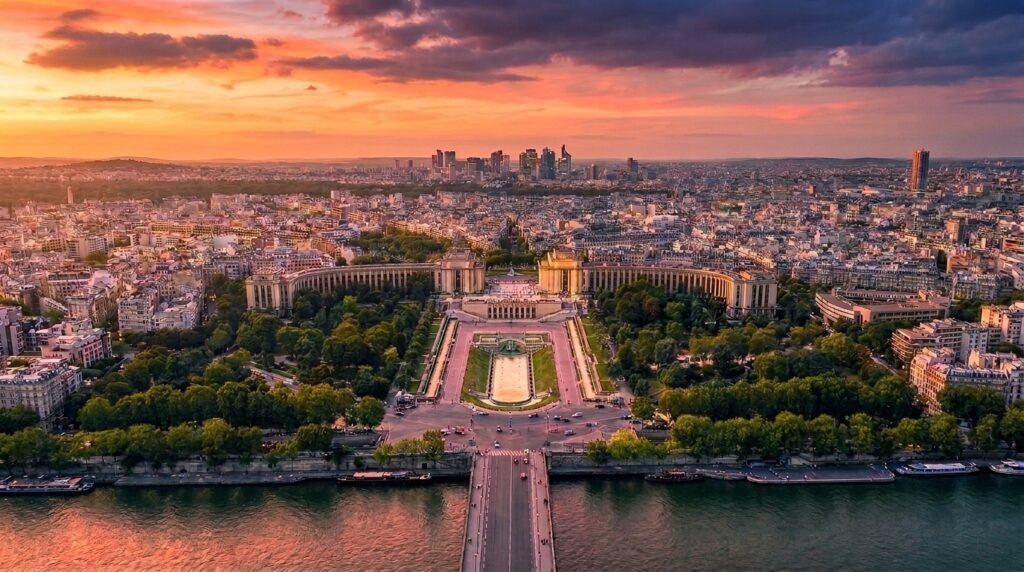
There’s a reason people fly halfway around the world just for a long weekend here. Paris packs more world-class france attractions into a few square miles than most countries manage in their entirety. Start at the Louvre — yes, it’s crowded, yes, everyone tells you to skip it, and yes, you should go anyway. Skip the long lines for the Mona Lisa if you can and focus instead on the Denon wing, where you’ll wander through what used to be a royal palace, its medieval moats still visible beneath glass floors. The building itself is arguably as impressive as anything hanging on its walls.
For travelers who want to dig deeper, the right tours france operators offer can get you inside Sainte-Chapelle, a 13th-century jewel box where stained glass rises in nearly unbroken sheets, glowing amber and blue on a sunny afternoon like something out of a dream. A short stroll away, the newly reopened Notre-Dame Cathedral has become a symbol of something bigger than architecture — proof that fire doesn’t get the final word. Walking its restored nave, you feel less like a tourist and more like a witness to history correcting itself.
Ask any local what tops their list of Best places to visit in France, and Paris usually comes up first — not despite the crowds, but because of what’s waiting past them. Climb the Eiffel Tower near sunset and watch the whole city shift color, the Seine catching gold light before the tower’s hourly sparkle kicks in, a slow shimmer that makes strangers stop mid-sentence to point upward. It’s touristy. It’s also completely worth it.
Once the city’s energy starts to feel like a bit much, the Île-de-France region has quieter activities in France for tourists waiting just outside the périphérique. Versailles is the obvious pick — walk the Hall of Mirrors, then rent a rowboat and paddle the geometric canals like a minor royal on a day off. For something gentler, Giverny offers Monet’s actual gardens, the same water lily ponds and Japanese footbridge that ended up immortalized on canvas in museums worldwide.
Normandy and Brittany: Rugged Coasts, Deep History
Head north and the mood shifts fast. The best tours france has to offer in Normandy tend to center on the D-Day landing beaches, and for good reason — standing on the sand at Omaha, looking up at the bluffs soldiers had to climb under fire, does something to you that no textbook can replicate. Walk the preserved bunkers at Pointe du Hoc, then spend a quiet hour among the white crosses at the American Cemetery. It’s heavy. It’s also one of the most important things to do in France if you want to understand the twentieth century, not just admire it.
A couple of hours further along the coast sits Mont Saint-Michel, arguably the single most photographed of all France attractions — a fortified abbey rising out of tidal flats like something dreamed up rather than built. Most people visit as a rushed day trip. Don’t. Stay until evening, after the tour buses pull away, and walk the narrow streets while dinner smells drift from tiny restaurants. That’s when the place actually feels like what it is: a thousand years of pilgrimage still humming under your feet.
Further along the Alabaster Coast, the white cliffs of Étretat rise straight out of the sea, carved into natural arches that once obsessed Monet enough to paint them over and over. A slow road trip here — through Honfleur’s harbor, past cider farms in the Pays d’Auge — is one of the more underrated activities in France for tourists who’ve already done Paris and want something wilder.
Brittany, just next door, has its own identity entirely — more Celtic than French in feel, with granite cliffs instead of chalk. In Saint-Malo, walk the old ramparts at high tide and you’ll swear you’re standing at the edge of the world. It regularly lands on lists of Best places to visit in France for travelers chasing something rougher around the edges, and the GR34 coastal trail, once patrolled by customs officers watching for smugglers, delivers some of the loneliest, most beautiful clifftop views in the country.
One of the more genuinely strange things to do in France is standing among the Carnac stones — over 3,000 menhirs arranged in silent rows stretching four kilometers, erected somewhere between 6,000 and 2,000 BC for reasons nobody has ever fully agreed on. No plaques explain it. No guide can tell you definitively why. You just stand there, dwarfed by rocks older than writing itself, and let the mystery sit with you.
The Loire Valley and Alsace: Fairytale Landscapes
Nowhere feels quite as storybook as the Loire Valley, home to over 300 châteaux and some of the most sought-after tours france offers for anyone chasing Renaissance grandeur. The best angle is literally from above — hot-air balloon rides at sunrise drift silently over Château de Chenonceau, arched gracefully across the River Cher, and over Chambord’s famous double-helix staircase, a piece of architectural sleight-of-hand attributed to Leonardo da Vinci himself.
If you’d rather stay grounded, the Loire à Vélo cycling route stretches 800 flat, scenic kilometers along the country’s last wild river — one of the most rewarding activities in France for tourists who want to move slowly through wine country. Stop in Vouvray for Chenin Blanc, in Sancerre for Sauvignon Blanc, and pair both with a wedge of Sainte-Maure de Touraine goat cheese you’ll think about for weeks afterward.
Further east, the Alsace Wine Route consistently ranks among the Best places to visit in France for sheer visual charm — 170 kilometers of half-timbered villages like Riquewihr and Eguisheim, where family-run cellars pour glasses of aromatic Riesling and Gewürztraminer without much ceremony. Come winter, Strasbourg transforms into the self-proclaimed “Capital of Christmas,” its markets among the oldest in Europe.
Lyon, meanwhile, quietly claims the title of France’s gastronomic capital, and joining a food tour there is one of the most flavor-forward activities in France for tourists anywhere in the country. Traditional “bouchon” restaurants treat food less like a meal and more like a philosophy. Wander Vieux Lyon’s cheese shops and chocolatiers, then lose an afternoon in Les Halles de Lyon Paul Bocuse — every stall a small, delicious education.
The Alps and Provence: Altitude, Lavender, and Light
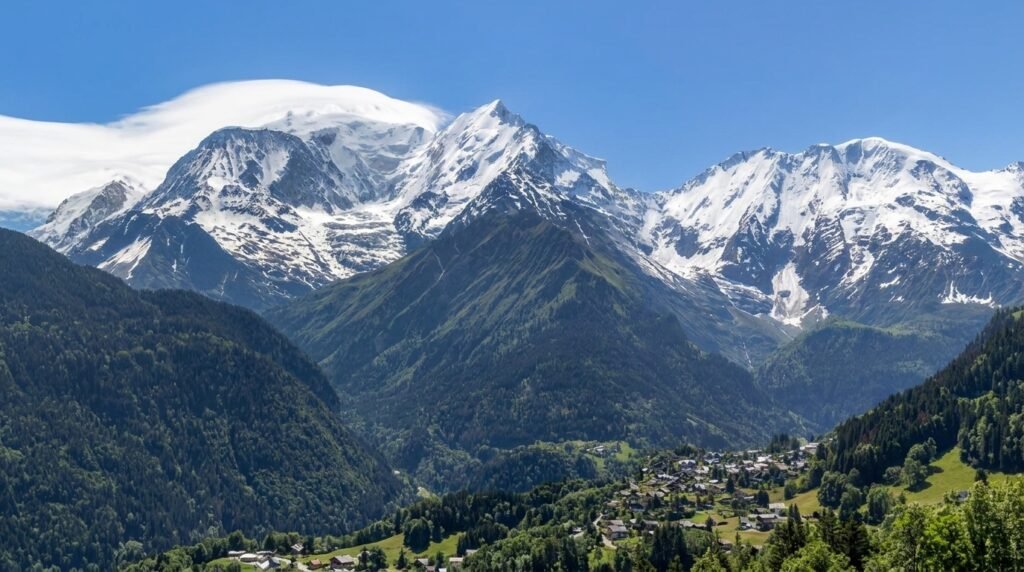
For altitude junkies, the tours france operators run through Chamonix-Mont Blanc are hard to beat. The Aiguille du Midi cable car hauls you up to 3,842 meters in twenty minutes flat, spitting you out onto terraces overlooking glaciers so vast they barely look real. If your nerves can handle it, step into the glass box suspended over a 1,000-meter drop — one of the more adrenaline-heavy things to do in France for anyone who considers a view worth a little vertigo.
Down at lake level, Annecy offers gentler France attractions: turquoise water so clear you can see your own shadow underneath, cyclists circling the shoreline, cafés spilling out onto sunlit terraces. Paragliding here gives you the postcard view — the “Venice of the Alps” laid out below in miniature — and it’s the kind of experience travelers end up repeating summer after summer, almost against their better judgment.
Come mid-June, Provence turns an almost unreal shade of purple, and the lavender fields of the Valensole Plateau become one of the most photographed Best places to visit in France for an entire six-week window. Sénanque Abbey, tucked into a valley and ringed by blooming rows, might be the single most iconic frame in all of southern France — monks going about quiet business while tourists quietly lose their minds over the color.
Nearby, the Gorges du Verdon delivers a genuinely different kind of things to do in France experience — Europe’s answer to the Grand Canyon, with turquoise water running 25 kilometers between cliffs plunging 700 meters down. Rent a kayak or an electric boat, paddle into the narrow canyon walls, and tie up wherever the water looks too inviting to resist a swim.
Provence also holds some of the best-preserved Roman France attractions anywhere outside Italy. Nîmes, nicknamed the “French Rome,” has a colosseum arguably in better shape than its Roman counterpart, and the Pont du Gard — a three-tiered aqueduct still standing after two thousand years — is a genuine jaw-dropper up close.
Further along the coast, the French Riviera delivers a different rhythm entirely. The best tours france offers here bounce between Nice, Antibes’ Picasso Museum, and Saint-Tropez, where chartering a small boat for the afternoon feels less like a splurge and more like a rite of passage. The coastal train makes hopping between towns absurdly easy — breakfast in Nice, dinner in Monaco, all in one day.
In Avignon, the Palais des Papes ranks among the more overlooked activities in France for tourists heading south — this was, briefly, the actual center of Western Christendom, home to six popes and the largest Gothic civil building on earth. Climb to the upper terraces and the Pont d’Avignon comes into view below, half-collapsed into the Rhône exactly as the old nursery rhyme describes.
Southwest France: Wine, Waves, and Ancient Art
Bordeaux deserves its reputation as one of the Best places to visit in France for anyone who takes wine even mildly seriously. As the largest wine-producing region on the planet, it rewards slow travel — cycling between vineyard-covered hills, meeting winemakers who’ll happily talk your ear off about soil composition, and finishing at the ultra-modern Cité du Vin museum for a crash course in wine culture worldwide.
Just south, one of the strangest things to do in France is climbing the Dune du Pilat — Europe’s tallest sand dune, three kilometers long and over 100 meters high, wedged improbably between pine forest and Atlantic Ocean. From the top, the Bassin d’Arcachon spreads out below; paragliders occasionally drift past at eye level, treating the dune like their own private launchpad.
Basque Country brings a completely different energy, and Biarritz’s surf scene ranks among the liveliest activities in France for tourists on the Atlantic coast. Beginners and seasoned surfers share the Grande Plage’s swells, while landlubbers wander 19th-century streets in search of fresh seafood. Nearby Bayonne adds cured ham, dark chocolate, and genuinely festive Basque culture into the mix.
Inland, Lascaux IV in the Dordogne offers one of the most humbling tours france can provide — a meticulous replica of prehistoric cave paintings dating back roughly 17,000 years, depicting horses, stags, and bulls with a confidence that feels startlingly modern. Standing before them in the Vézère Valley, surrounded by limestone cliffs and sleepy medieval villages, it’s hard not to feel a jolt of connection to whoever painted them by torchlight.
The Dordogne region as a whole is regularly named among the Best places to visit in France for combining river adventure with medieval scenery. Kayak from Carsac to Beynac and you’ll drift past four castles and the golden cliffside village of La Roque-Gageac. Afterward, Sarlat-la-Canéda’s Saturday market delivers walnuts, truffles, and foie gras that make the whole detour worthwhile.
Central France, the Alps in Winter, and Southern Coastlines
Auvergne, right in the country’s volcanic heart, offers some genuinely underrated France attractions for hikers craving something different — over 450 dormant volcanoes spread across a regional park built for slow exploration on foot. Afterward, the spa town of Vichy is the perfect place to soak sore legs in thermal springs surrounded by handsome Art-Deco architecture.
Summer in France means festivals everywhere, and chasing them is one of the more spontaneous things to do in France you can plan around. The Fête de la Musique fills entire cities with live performances every June 21st, while smaller towns run their own quirky celebrations — a Venetian-style carnival in Riquewihr, a medieval procession through Bayeux. These are the moments that turn a checklist trip into something that actually feels lived-in.
Understanding how the French eat is arguably one of the most useful activities in France for tourists to master early. Restaurants generally serve lunch from noon to 2pm and dinner from 7:30pm onward, with kitchens closed in between — plan accordingly. For a budget-friendly, delicious workaround, grab a fresh baguette traditionnelle and a selection from a fromagerie for an impromptu hotel-room picnic. It’s simple, and it’s genuinely one of the best meals you’ll have.
Wine tourism deserves its own mention among the country’s tours france experiences, particularly around Champagne near Reims or along Burgundy’s Route des Grands Crus. The trick locals swear by: drink regionally, skip the labels you already recognize, and seek out small family-run vineyards where the person pouring your glass might also be the one who planted the vines.
Winter flips the Alps into an entirely different playground, and Les Trois Vallées — the largest linked ski area on earth — is consistently ranked among the Best places to visit in France for snow lovers. Courchevel and Val d’Isère offer reliable powder and famously rowdy après-ski scenes, but even non-skiers will find the snow-draped peaks and wood-fired chalets worth the trip on their own.
For something entirely unexpected, Nantes’ Machines de l’Île ranks among the quirkiest France attractions in the country — a former shipyard turned home to enormous mechanical creatures straight out of Jules Verne. Ride the giant mechanical elephant (it sprays water, so dress accordingly) or climb aboard the Sea World Carousel’s strange marine contraptions. It’s proof that French creativity isn’t confined to museums.
Getting around efficiently is one of the more practical things to do in France well — and the TGV high-speed rail network, cruising at up to 200 mph, makes it easy. Bordeaux’s vineyards or Marseille’s sun-baked coast are just a few hours from Paris by train, with the countryside blurring past your window the whole way. Book tickets around four months out and fares drop noticeably.
Down on the southern coast, the Calanques between Marseille and Cassis rank among the most dramatic France attractions reachable only by boat or a genuinely tough coastal hike — limestone coves cutting into water so blue it looks digitally enhanced. It’s the kind of scenery that makes you understand, instantly, why people fall for the Mediterranean coastline.
Corsica, meanwhile, gets named among the Best places to visit in France by travelers craving mountains and beaches in the same afternoon. Rent a car, chase hidden trails through the Agriates Desert, and swim in the impossibly clear water off Lotu. Corsican culture — its own language, its own cuisine — feels distinct enough that you’ll forget you’re technically still in France.
Planning It Right: Practical Advice for Your Trip
Choosing the right tours france itinerary comes down to restraint more than ambition. The biggest mistake first-timers make is trying to cover the whole country in ten days. Pick two or three regions instead — Paris and Normandy, or Nice and Provence — and base yourself in one spot per region: Tours for the Loire Valley, Beaune for Burgundy. You’ll spend less time on trains and more time actually being somewhere.
Timing matters just as much as geography when narrowing down the Best places to visit in France for your specific trip. May, June, and September strike the best balance of good weather and manageable crowds, while July and August bring peak prices and the thickest crowds. If you’re chasing something seasonal — lavender in July, Christmas markets in December — book accommodations four to six months ahead, because everyone else has the same idea.
Some of the most memorable things to do in France happen off any official itinerary — wandering old quarters like Le Marais in Paris or Vieux Lyon, where medieval streets hide courtyards and markets most guidebooks never mention. Give yourself unstructured time to get a little lost; it’s usually where the best stories come from.
Among the more unusual activities in France for tourists, the Marathon du Médoc stands alone. Every September, 8,500 runners in costume wind through Bordeaux’s vineyards, skipping conventional water stations in favor of wine tastings and local snacks along the route. Locals half-jokingly call it the world’s longest marathon, and honestly, the nickname fits.
Gothic architecture fans will find some of the country’s finest tours france routes running through cathedral country north of Paris. The Basilica of Saint-Denis, burial site of French kings, was the first building to use the pointed arch and ribbed vault that later defined Gothic style everywhere. Further north, Amiens and Beauvais cathedrals rise to heights that still feel gravity-defying centuries later.
Architecture lovers with more modern tastes should track down Le Corbusier’s scattered masterpieces, some of the more thought-provoking France attractions for anyone interested in how buildings shape daily life. From the Villa Savoye outside Paris to the Ronchamp Chapel and Marseille’s Cité Radieuse, his use of raw concrete and natural light quietly rewired twentieth-century architecture.
Perhaps the single most underrated of all things to do in France costs nothing at all: learning a handful of French phrases and using them without embarrassment. Thanking a waiter properly, asking a market vendor what they’d recommend — these small gestures tend to open doors that no guidebook can. Travelers who show a little humility usually end up with the richer trip.
For travelers chasing quieter tours france experiences, the Jura region offers a genuine alternative to the crowded Alps — forests, lakes, and waterfalls strung together along empty roads. The Hérisson waterfalls and remote belvederes here see a fraction of the visitors that Chamonix does, which is exactly the point for hikers craving silence.
Out on the Brittany coast, the Gulf of Morbihan offers a slower, saltier finale — a “little sea” dotted with islands where locals sail catamarans between Île aux Moines and Île d’Arz. It’s a fitting place to wind down a trip through western France, matching your pace to the tides instead of a schedule.
Frequently Asked Questions About Visiting France
What are the best things to do in France for a first-time visitor? For a first trip, focus on Paris’s core landmarks — the Louvre, Eiffel Tower, and Notre-Dame — paired with one nearby region like Normandy or the Loire Valley. This mix of iconic sights and slower countryside travel gives a realistic sense of the range of things to do in France without spreading yourself too thin.
How many days do I need to see the best places to visit in France? Ten to fourteen days lets you comfortably cover two or three regions without rushing. If you’re short on time, a week focused on Paris plus a single day trip (Versailles, Giverny, or Mont Saint-Michel) still delivers a satisfying introduction to the best places to visit in France.
What activities in France for tourists are best for families? Families tend to gravitate toward Nantes’ Machines de l’Île, boat rides in Annecy or the Verdon Gorge, and gentle château visits in the Loire Valley. These activities in France for tourists combine hands-on fun with enough history to keep the trip educational without feeling like a lecture.
Are guided tours France operators offer worth the cost? For sites with deep historical context — Normandy’s D-Day beaches, the Palais des Papes, Lascaux’s cave paintings — a knowledgeable guide adds real value. For open landscapes like the Loire à Vélo route or the Calanques, self-guided exploration is often just as rewarding, and several tours France companies now offer flexible half-day formats for exactly this reason.
What’s the best season to explore France attractions outside Paris? Late spring (May–June) and early autumn (September) offer the best combination of mild weather, blooming or golden landscapes, and thinner crowds at major France attractions. Peak summer brings lavender fields and festival season but also the highest prices and busiest roads.
The Real Reason People Fall for France
By the end of a trip like this, you start to notice that the best activities in France for tourists were rarely the ones you planned most carefully. They were the sparkle of the tower catching you off guard, the crunch of a baguette eaten standing up on a street corner, a stranger’s unexpected kindness when your French gave out halfway through a sentence. Whether your days were spent gasping at Alpine views or wandering the salt marshes of the Camargue, you end up participating in something France has spent centuries perfecting — the quiet, unhurried art of being fully present.
And often, the truest Best places to visit in France aren’t the ones on any list at all — they’re the ones you stumble into after a local’s offhand suggestion, or a wrong turn down a country lane that turns out to be exactly right. From prehistoric caves in the Dordogne to glass towers in modern Paris, the sheer range guarantees no two trips ever look the same. So pack light, stay curious, and go find the version of France that’s waiting specifically for you.
Reviews
There are no reviews yet. Be the first one to write one.