
Best things to do in Toronto will surprise you — not because the city hides its charms, but because no list, no influencer reel, and no glossy travel brochure ever quite captures what it actually feels like to stand at the edge of Lake Ontario with a coffee in hand, watching the city skyline wake up behind you. Toronto is loud, warm, complicated, and deeply alive. It smells like jerk chicken in Kensington Market, sounds like seventeen languages on a single subway platform, and looks like a skyline that keeps quietly growing taller every time you visit. This is not a polished highlight reel. This is an honest account of what to do, where to go, and how to get the most out of one of North America’s most underrated cities.
Table of Contents
Why Toronto Deserves More Than a Weekend
Most travelers slot Toronto into a long Canada itinerary — a quick stop before heading to Niagara Falls or a layover before flying west. That is a mistake. Toronto is a destination all on its own, and the Best Places to Visit in Canada list consistently places it at the top for urban travelers who want culture, food, architecture, and waterfront access without sacrificing any one for another.
The city spans 43 distinct neighborhoods, each with its own personality. You could spend a week doing nothing but eating your way through them and still feel like you missed something. The best things to do in toronto reflect this diversity — from the high-gloss of the Financial District to the art-splattered walls of Graffiti Alley, from the Victorian row houses of Cabbagetown to the gleaming condos lining the waterfront.
Toronto tours exist on a spectrum from deeply informative to purely indulgent, and the good news is that the city supports both. Whether you book a structured toronto city tour on your first morning or spend three days simply wandering, you will find this is a place that rewards curiosity above all else.
The Waterfront: Where Every Toronto Visit Should Begin
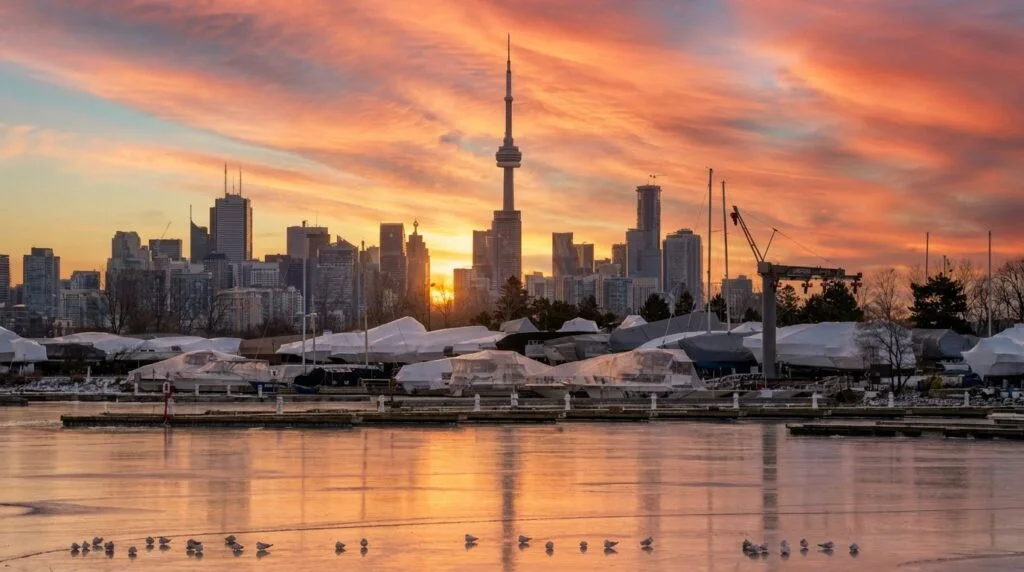
There is something grounding about starting at the lake. Lake Ontario is not a backdrop — it is a presence. The Harbourfront Centre stretches along Queens Quay West and functions as a kind of outdoor living room for the city: free in spirit, open to everyone, and almost always buzzing with something happening.
From here, toronto tours fan outward in every direction. Boat tours offer the most dramatic view of the skyline, but walking the Martin Goodman Trail eastward toward the Beaches neighborhood gives you a slower, more intimate sense of how Torontonians actually use their waterfront. Cyclists, joggers, families with strollers, solo walkers with headphones — this path is a cross-section of the city in motion.
The Toronto Islands, just a short ferry ride from the Jack Layton Ferry Terminal, are among the most essential places to visit in toronto. Centreville Amusement Park on Centre Island draws families, but Ward’s Island is where you want to go if you are seeking quiet. The residential community there feels almost impossible — small wooden houses with flower gardens, cats on porches, and the entire downtown skyline glinting in the distance like a mirage.
The CN Tower and the Question of Whether It’s Worth It
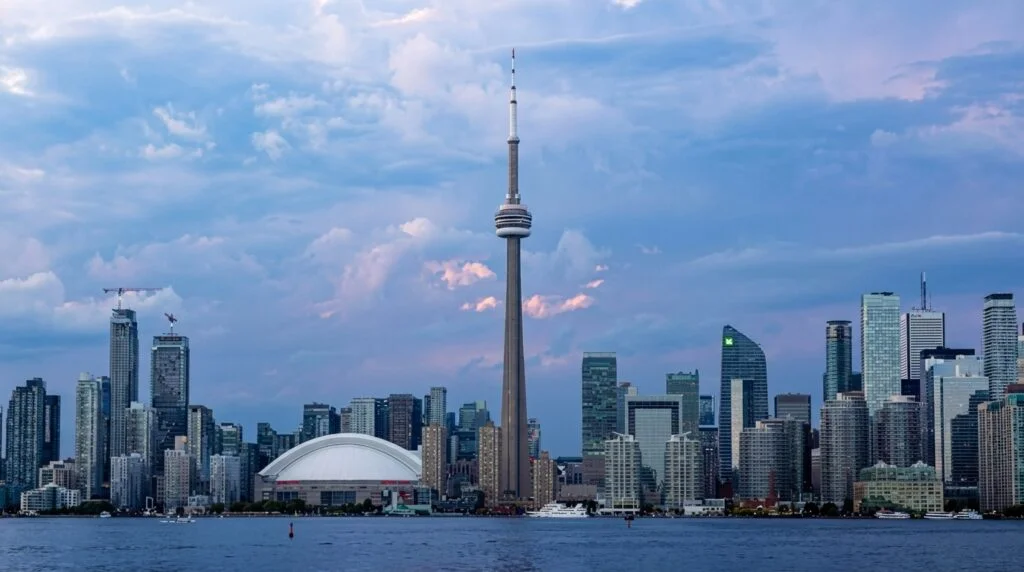
Yes, the CN Tower is worth it. Not because the view from the top will show you something you cannot see on a postcard, but because the experience of standing on the glass floor 447 meters above the ground does something to your body that photographs simply cannot replicate. Your brain knows you are safe. Your nervous system disagrees. That tension is oddly exhilarating.
The tower anchors one end of the Entertainment District, and a toronto city tour almost always begins or ends here. Book your tickets online in advance — the line in peak summer can swallow an entire afternoon. The EdgeWalk, which lets you walk hands-free along the outside rim of the main pod, is an optional upgrade that turns a great experience into an unforgettable one.
Nearby, Ripley’s Aquarium of Canada sits at the tower’s base and is genuinely one of the best aquariums in North America. The underwater tunnel through the shark tank is worth the price of admission alone, especially if you are traveling with children — or if you are an adult who still loves sharks, which is everyone.
Neighborhoods: The Real Toronto Is in the Streets
No toronto city tour can substitute for walking. The best things to do in toronto are almost always discovered on foot, between the designated stops, in the ten minutes you spend lingering outside a bakery or sitting on a stoop watching a street musician tune up.
Kensington Market is chaotic and glorious. It is vintage clothing and fresh cheese and someone selling hot sauce from a cart and a cat asleep in a store window. Go on a weekday morning when it is slightly quieter and the vendors are just setting up. Go on a Saturday afternoon when it is shoulder-to-shoulder and overwhelmingly alive. Both versions are worth experiencing.
Distillery District is the opposite in atmosphere — curated, beautiful, deliberately preserved. The Victorian-era industrial architecture has been transformed into galleries, restaurants, chocolate shops, and performance spaces. The cobblestone laneways make it feel slightly European, and in winter, the Christmas Market here is one of the most atmospheric events the city puts on.
Little Italy, Greektown, Chinatown, Little Portugal, Corso Italia — Toronto’s ethnic enclaves are not tourist constructs. They are living communities where the food is genuine, the signs are in multiple languages, and the cultural pride is palpable. A saturday afternoon bouncing between Chinatown and Kensington Market, separated by a ten-minute walk, is one of the best free afternoons you can spend in this city.
For travelers building a broader understanding of what Canadian cities offer, Best Places to Visit in Vancouver makes a compelling comparison — Vancouver leans on mountains and ocean; Toronto leans on urban texture and cultural multiplicity. Both are extraordinary, but in entirely different ways.
Arts, Culture, and the Museums You Actually Want to Visit
The Royal Ontario Museum — the ROM — is one of those institutions that surprises people. Expectations are modest; the reality is a world-class collection of natural history, world cultures, and art housed partly in a 1914 building and partly in Daniel Libeskind’s crystalline addition that juts out over Bloor Street like a geometric eruption. The Egyptian galleries are excellent. The bat cave is iconic. The dinosaur exhibits are extensive enough to satisfy even the most exacting ten-year-old.
The Art Gallery of Ontario — the AGO — underwent a Frank Gehry redesign in 2008 and emerged as one of Canada’s most important art museums. The collection spans Indigenous art, European masters, contemporary Canadian work, and the largest public collection of Henry Moore sculptures in the world. Toronto tours focused on architecture often stop outside both buildings just to discuss what happens when bold design meets an existing urban fabric.
The TIFF Bell Lightbox, home of the Toronto International Film Festival, screens films year-round and hosts retrospectives, Q&A screenings, and industry events. If your visit overlaps with TIFF in September, you are in the middle of one of the world’s great film festivals — stars on the streets, screenings at midnight, that particular electric feeling of a city hosting something it genuinely loves.
Best Things to Do in Toronto for Food Lovers
Best things to do in toronto, if you are honest about it, inevitably circle back to eating. This is a city that takes food seriously without taking itself too seriously about food. You will find Michelin-starred tasting menus and $4 banh mi within a few blocks of each other, and both will be excellent.
St. Lawrence Market has been operating since 1803 and still functions as one of the finest food markets in North America. The peameal bacon sandwich — pork loin rolled in cornmeal, served on a soft bun — is the definitive Toronto food experience. Do not leave without one. The south building operates Tuesday through Saturday; the north building hosts the Saturday farmer’s market, which is worth arriving early for.
Chinatown on Spadina Avenue is dense, affordable, and authentically great. Dim sum on a Sunday morning at one of the large banquet halls is a Toronto institution — arrive early, embrace the chaos of the cart service, and order more than you think you can eat.
The best places to visit in toronto for food also include the Junction Triangle, a formerly industrial neighborhood now home to natural wine bars, ramen shops, and independent cafés that feel like they were designed specifically to be someone’s favorite place.
Toronto Tours: How to Actually Use Them
Toronto tours work best when you use them strategically rather than comprehensively. Here is the honest breakdown:
Walking tours are genuinely worth your time, particularly in neighborhoods where context matters. The free AGO neighborhood tours and the various Kensington Market and Graffiti Alley tours give you historical and cultural depth that solo wandering cannot. A good tour guide in Toronto will tell you which buildings are about to be demolished, which murals were painted over last year, and why the city looks the way it does.
Boat tours are the correct way to see the skyline, full stop. Toronto tours by water give you the perspective that no building or park in the city can replicate. Several operators run 90-minute tours of the harbor; others combine the Islands with a cruise. Sunset departures are the best choice in summer.
Food tours in Kensington, Chinatown, and the St. Lawrence Market area are excellent value and double as cultural immersion. You eat things you might not have ordered on your own and you understand why they matter.
Bike tours are underrated. Toronto has made significant investments in cycling infrastructure, and a toronto city tour by bike lets you cover significantly more ground than walking while maintaining the intimacy that a bus tour sacrifices. Several rental operators cluster near the Waterfront.
A toronto city tour of the underground PATH system — 30 kilometers of connected shopping, food, and transit beneath the Financial District — is oddly fascinating, particularly in winter when Torontonians descend into this subterranean network and emerge blocks away without ever touching the cold.
Practical Matters: Getting Around and Getting It Right
Toronto’s transit system — the TTC — is functional and affordable. The subway has four lines; streetcars cover much of the downtown core; buses fill in the gaps. A Presto card (the reloadable transit card) makes travel seamless. Taxis and rideshares are plentiful, but the downtown core is small enough that walking between many major attractions is entirely reasonable.
The best things to do in toronto shift significantly by season. Summer brings the waterfront, outdoor festivals, and the full energy of a city that has been waiting out a long winter. Fall is arguably the most beautiful time to visit — the colors in High Park and along the ravines are extraordinary, the TIFF crowds thin after the first week, and the temperatures are ideal for walking. Winter is cold but not impassable: the PATH, the museums, the markets, and the restaurant scene are all fully alive. Spring arrives hesitantly but brings the Cherry Blossoms in High Park, which draw significant crowds and justify every minute of waiting.
Travelers heading further west should consider pairing this visit with a look at Things to Do in Vancouver Canada — a city that offers a completely different Canadian experience, heavier on outdoor adventure and natural drama.
High Park and the Ravines: Toronto’s Secret Nature
One of the things that catches first-time visitors off guard is how much green space Toronto contains. High Park, at 161 hectares in the city’s west end, has forests, a zoo, sports fields, a swimming pool, historic Colborne Lodge, and Grenadier Pond. In late April and early May, the park’s Japanese cherry trees bloom in a pink spectacle that stops the city cold.
But the ravines are the real secret. Toronto sits on a series of river valleys — the Don, the Humber, Garrison Creek — and these have been preserved as a network of trails and green corridors that snake through the city in ways that feel genuinely surprising. You can be standing on a busy commercial street and step down an embankment into a quiet forest path within thirty seconds. Toronto tours rarely include the ravines, which is exactly why you should go.
The Honest Verdict
The best things to do in toronto are rarely found in a single definitive list, because the city itself resists reduction. It is too layered, too contradictory, and too constantly changing to be pinned down neatly. The CN Tower is great. The ROM is great. St. Lawrence Market is great. But so is sitting on the rocks at the western gap of the Toronto Islands as the ferry churns past. So is stumbling into a gallery opening in the Distillery District on a Friday evening. So is finding a table at a restaurant where the menu is handwritten and the chef comes out to ask if you liked the food.
Toronto tours will give you the skeleton. The city itself will fill in everything else — if you let it. The places to visit in toronto that matter most are often the ones nobody sent you to. That is not a romantic cliché. It is the honest mechanics of how a city this size actually works: it rewards the curious, the patient, and the willing.
Go hungry. Walk until your feet argue with you. Take a toronto city tour on your first day and then spend the rest of your time ignoring the itinerary. Come back. You will want to.
Planning a broader Canadian adventure? Start with the Best Places to Visit in Canada guide for a national overview, and explore Things to Do in Vancouver Canada and Best Places to Visit in Vancouver to round out your west-coast research.
Reviews
There are no reviews yet. Be the first one to write one.