
The best time to visit Morocco is not a single date on a calendar — it is a feeling, a rhythm, a moment when the light falls perfectly across the tiled rooftops of Fes, or when the desert air finally cools enough to breathe deeply at dusk. Morocco is a country that shifts and transforms with every passing month, and knowing when to arrive can mean the difference between a good trip and a life-changing one. Whether you are drawn to the rose-colored walls of Marrakech, the ancient salt flats of the south, or the crashing Atlantic swells of the surf coast, timing shapes everything. This guide breaks down every season, every cultural moment, and every hidden opportunity — so you can plan your journey with the confidence of someone who has already been.
Table of Contents
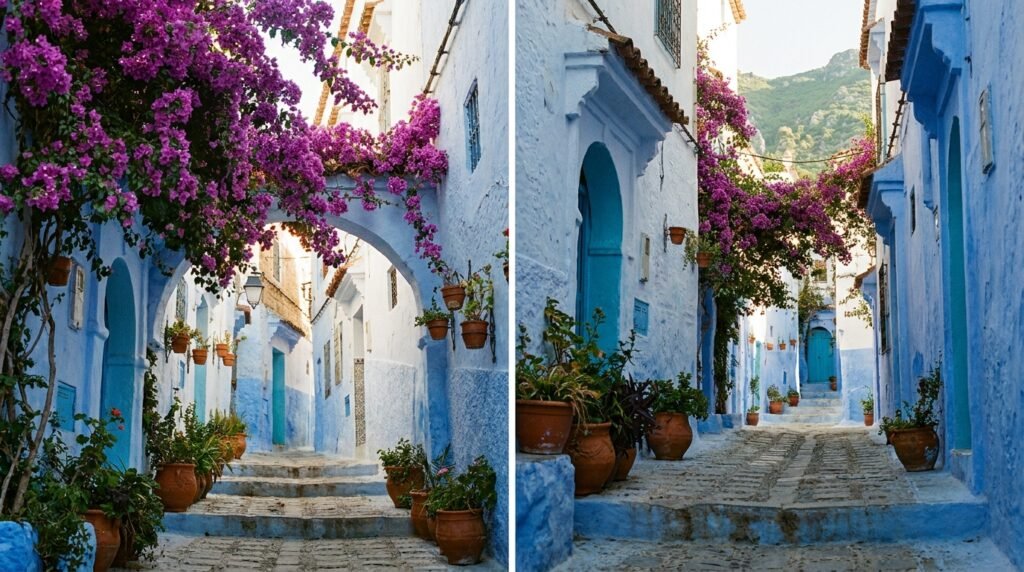
Spring in Morocco: The Golden Window (March – May)
Ask any seasoned traveler, and they will tell you the same thing without hesitation: spring is the best time to visit Morocco. From early March through the end of May, the country undergoes a quiet transformation that is nothing short of extraordinary. The winter rains have done their work, and every valley — from the Drâa to the Ziz — is draped in green and threaded with wildflowers. The sky is a deep, clear blue that makes every photograph feel effortless.
Temperatures during these months sit comfortably between 18°C and 25°C in most regions, which makes walking the labyrinthine streets of the medinas genuinely pleasant rather than an endurance test. The oppressive heat of July and August is still months away, and the crowds of peak summer have not yet descended.
Spring morocco tours typically sweep through the Imperial Cities — Fes, Meknes, Rabat, and Marrakech — where the architecture glows warmly in the soft seasonal light. But the real revelation of spring is in the mountains. The Rif, the Middle Atlas, and the High Atlas are all lush and navigable, offering some of the most rewarding trekking routes on the African continent.
Top spring experiences include:
- Wandering the blue-washed streets of Chefchaouen, draped in purple bougainvillea
- Photographing the Majorelle Garden in Marrakech when the cacti are in bloom
- Hiking the trails above Imlil village with snow still visible on the Atlas peaks
- Watching migratory birds return to Souss-Massa National Park along the coast
Morocco is home to extraordinary birdlife, and spring is when it truly sings. The Souss-Massa estuary south of Agadir hosts one of the world’s last remaining colonies of the Northern Bald Ibis — a prehistoric-looking creature that would seem more at home in a Jurassic Park film than in North Africa. Joining one of the specialist morocco tours that focus on birding along the coastal wetlands is one of the most quietly thrilling activities to do in morocco that most visitors never discover. Beyond birdwatching, the activities to do in morocco during spring are almost limitless — from cooking classes in Fes to wild swimming in mountain rivers above Azilal.
The morocco attractions of spring are not limited to landscapes. The Almond Blossom Festival in Tafraoute, typically held in February but with its afterglow lasting into March, fills the Anti-Atlas valleys with white and pink flowers. By April, the rose harvest in the Dadès Valley near Kalaat M’gouna begins, and the air in that part of the world smells, quite genuinely, like a perfume counter. These seasonal morocco attractions are the kind of detail that separates a great trip from a truly unforgettable one — and they rarely appear on the standard morocco tours itineraries, which makes arriving at them feel like a genuine discovery.
The Cultural Pulse: Festivals and Ramadan 2026
If your reason to visit morocco goes beyond landscapes — if you want to understand the people, the faith, the music, and the memory of this place — then the cultural calendar matters as much as the weather forecast.
Ramadan 2026 is expected to run from approximately February 17 to March 18. For many travelers, this period is approached with uncertainty. Restaurants are closed during the day. The streets are quieter in the hours before sunset. But to dismiss Ramadan as an inconvenience is to miss something profound. As the day ends and the call to prayer rings out across the medina, the entire city exhales. Families gather. Lanterns are lit. The smell of harira soup and chebakia pastries drifts through every alley. If you time it right, you can be invited to an Iftar meal — the breaking of the fast — with a local family, and that single evening will outweigh every other memory from your trip.
Many morocco tours during Ramadan now offer curated Iftar experiences, cooking classes in private riads, and evening walks through illuminated medinas that feel like stepping into another century.
For music lovers, the best time to visit Morocco is June. The Mawazine Festival in Rabat is one of the largest music festivals on the planet, drawing international headliners alongside masters of Andalusian, Gnaoua, and Sufi musical traditions. Down the Atlantic coast in Essaouira, the Gnaoua World Music Festival transforms that already-magical whitewashed port town into a four-day celebration of trance rhythms and spiritual percussion. These are not tourist events — they are celebrations that Moroccans themselves travel across the country to attend, and joining the crowd makes you feel the heartbeat of this culture in a way that no museum can replicate.
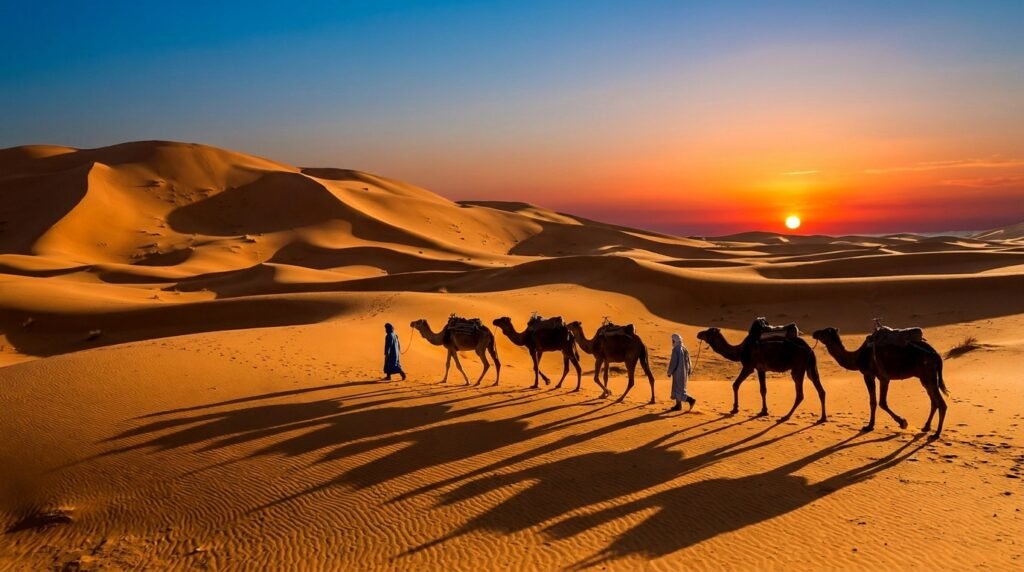
Autumn in Morocco: Desert Gold and Mountain Clarity (September – November)
When September arrives and the summer heat begins to release its grip, Morocco enters its second golden season. Autumn is arguably the best time to visit Morocco for those whose bucket list includes the Sahara Desert — and it absolutely should be on your list.
The logic is simple: the days are warm but not brutal, the nights are cool enough to sleep comfortably under the stars, and the desert light at sunrise and sunset reaches a quality that photographers describe as otherworldly. The great orange dunes of Merzouga — known as Erg Chebbi — glow like amber in the late afternoon, and a camel trek across them at dusk is one of those experiences that permanently re-wires how you see the world. These morocco attractions draw visitors from every corner of the globe, and for good reason.
Activities to do in morocco during autumn in the south include:
- Camel trekking at Erg Chebbi or Erg Chigaga, with an overnight camp under the stars
- Visiting the ancient ksar of Aït Benhaddou, a UNESCO World Heritage site used in dozens of Hollywood productions
- Driving the Route of a Thousand Kasbahs — a spectacularly scenic road through the Dadès and Todra Gorges
- Attending the Date Festival in Erfoud, held every October, celebrating the Medjool and Majhoul harvest
- Exploring the Morocco attractions of the Drâa Valley, where ancient mud-brick villages rise from palm oases
For more ideas on planning your southern route, explore this guide to Places to Visit in Morocco — it covers the full sweep of the country’s most compelling destinations.
Autumn is also ideal for morocco tours in the High Atlas. The summit of Mount Toubkal — North Africa’s highest peak at 4,167 metres — is most safely and comfortably attempted in September and October, when the weather is stable and the views of the surrounding ranges are at their most spectacular. Trekking between Berber villages, sleeping in family-run gîtes, and eating tagines slow-cooked over wood fires is one of the most deeply human activities to do in morocco that exists. No five-star resort comes close. Specialist morocco tours for High Atlas trekking can also incorporate visits to the Wednesday souk in Imilchil, one of the most authentic rural markets in the country — an activities to do in morocco experience that few tourists ever reach.
The morocco attractions of the Atlantic coast also come alive again in autumn. Essaouira, with its 18th-century Portuguese-influenced ramparts and perpetual ocean wind, is at its best when the summer crowds thin out. The medina there is a UNESCO World Heritage Site and one of the most relaxed, artistically rich towns in the entire country. Among all the morocco attractions in the north-west, Essaouira’s combination of music, craft studios, and fresh grilled sardines eaten at the port makes it one of the most complete experiences Morocco offers.
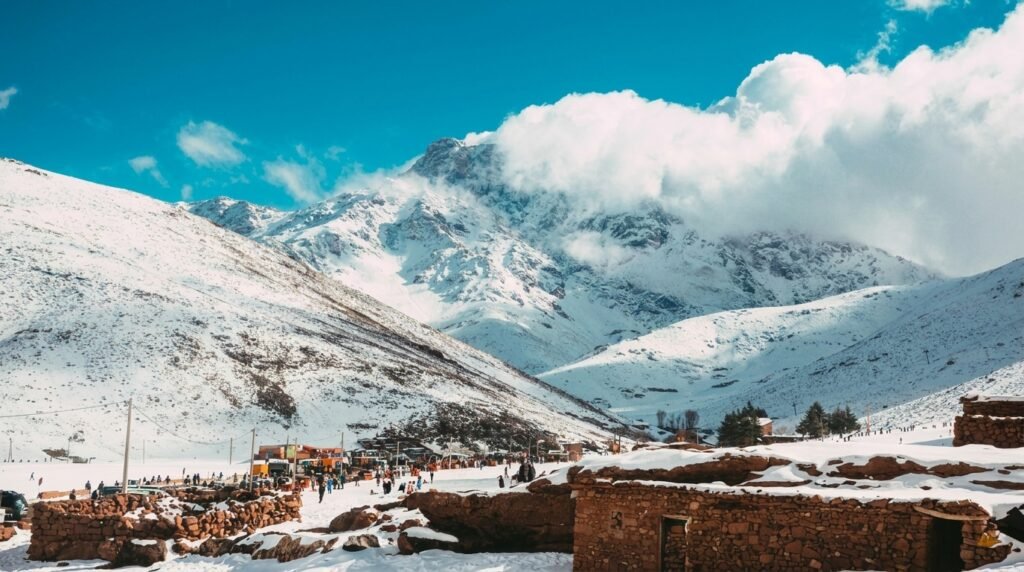
Winter in Morocco: The Budget Traveler’s Best-Kept Secret (December – February)
Here is a truth that budget-conscious travelers have quietly known for years: winter is, financially speaking, the best time to visit Morocco. Flight prices and accommodation rates drop by anywhere from 30 to 50 percent compared to the spring and autumn peaks. Boutique riads that cost €200 per night in April can be found for under €100 in January. The Marrakech souks are browsable without being crushed. The museums, palaces, and gardens — the morocco attractions that draw millions per year — are navigable at a genuinely leisurely pace.
Daytime temperatures in the cities remain mild and often sunny. Marrakech in January regularly sees 18°C afternoons. Agadir, sheltered from the Atlantic by the Anti-Atlas mountains, is warm enough for coastal walks year-round. What does change in winter is the desert and the mountains at night — temperatures plunge, and the Sahara in December can reach sub-zero after midnight. Pack accordingly, and this becomes an adventure rather than a hardship.
Morocco tours in winter tend to focus on:
- The surf-battered coastline north of Agadir, particularly around Taghazout and Tamraght
- City breaks in Marrakech and Fes, with shorter queues and better prices
- Snow experiences in the Oukaïmeden ski resort — yes, Morocco has skiing
- Photography of the High Atlas peaks under winter snow
- The morocco attractions of the south Saharan edge, from Zagora to Mhamid, where winter days are warm and clear
For surfers, winter is arguably the best time to visit Morocco. The North Atlantic delivers powerful, consistent swells to the points and beach breaks around Taghazout, making spots like Anchor Point and Panoramas genuinely world-class for experienced riders. The surf community that has grown up around this stretch of coast is international, warm, and deeply committed to the lifestyle. Many morocco tours in this area combine morning surf sessions with yoga, hammam evenings, and fresh fish tagines eaten on rooftops overlooking the ocean. These morocco tours have become so well-developed in recent years that you can now find packages tailored to solo female travelers, families with older children, and even corporate retreat groups looking for something far beyond the conventional.
Beginners need not feel excluded. Summer months bring softer, smaller waves that are perfect for learning. But winter’s energy has its own appeal for those who want to visit morocco and feel the raw power of the Atlantic.
Regional Diversity: Matching the Season to the Destination
One of Morocco’s most underappreciated qualities is the sheer geographic variety packed into its borders. In a single day, you can travel from a Mediterranean-influenced northern coast, through cedar forests full of Barbary macaques, across semi-arid plains, and into the edges of the Sahara. This means that the best time to visit Morocco genuinely depends on which Morocco you are planning to visit morocco for.
Here is a simple regional breakdown:
Marrakech and the interior plains: Avoid July and August if possible. Temperatures regularly exceed 40°C and the heat is genuinely oppressive by midday. March through May, and September through November, are the ideal windows.
Fes and Meknes: Similar logic applies. The medina of Fes is a UNESCO World Heritage Site and a place you want to wander slowly, getting comfortably lost. That is impossible when you are wilting in summer heat. Spring and autumn are the sweet spots.
Chefchaouen and the Rif: This highland town is blessed with a cooler microclimate and is enjoyable for much of the year, though spring turns the surrounding mountains green and gorgeous.
Agadir and the southern Atlantic coast: Year-round destination. The morocco attractions here — beaches, fresh seafood, a relaxed atmosphere — are accessible in every season, though the water is warmest in summer.
The Sahara Desert (Merzouga, M’hamid): Spring and autumn. Avoid midsummer heat (50°C+) and deep winter nights (sub-zero). October and April are particularly magical.
The High Atlas: Late spring through October for trekking. Winter brings snowfall and skiing.
For a comprehensive breakdown of where to go, this resource on Things to Do in Morocco is an excellent companion to your planning — covering activities across every region with practical detail.
Specialized Interests: Surfing, Birding, and Beyond
Morocco rewards travelers who arrive with a specific passion. The country’s geography and biodiversity make it one of the most versatile destinations in the world for specialist interests.
For surfers: The best time to visit Morocco depends on skill level. Beginners should come between June and August, when the Atlantic swell is gentle and instructors are plentiful along the Taghazout coast. Experienced surfers should target October through March, when the swells are powerful, the crowds are thinner, and the entire experience feels more raw and authentic. morocco tours focused on surfing have exploded in popularity over the past decade, with dozens of professionally run camps now operating between Agadir and Sidi Ifni.
For birders: Morocco sits on one of the world’s great migratory flyways, and the activities to do in morocco available to birdwatchers are genuinely world-class. Souss-Massa National Park, just south of Agadir, is one of only two places on earth where you can see the critically endangered Northern Bald Ibis nesting in the wild. Spring (March–May) and autumn (September–November) are the peak migration seasons, and specialist morocco tours that focus on the wetlands of Oued Massa and the scrublands of the Anti-Atlas can yield extraordinary sightings — from Eleonora’s Falcon to Moussier’s Redstart.
For food lovers: Moroccan cuisine is one of the most complex and layered in the world, and the best time to visit Morocco for food experiences is arguably linked to the harvest seasons. Visit the Dadès Valley in spring for the rose water harvest. Come to Erfoud in October for the date festival. Spend a morning in any medina’s spice market on a cool winter day, when the vendors are less hurried and more willing to let you smell and taste. The activities to do in morocco around food alone could fill a week — from taking a hands-on cooking class in a riad kitchen to learning the art of msemen flatbread with a Berber family in the mountains. These culinary activities to do in morocco are increasingly available through specialist morocco tours focused entirely on food, souks, and local producers.
For photographers: Spring and autumn offer the best light, the greenest landscapes, and the most atmospheric conditions. But Morocco’s medinas and desert landscapes are photogenic in every season — it is simply a matter of managing the crowds and the midday glare. Photography-focused morocco tours now operate across the country, taking small groups to the tanneries of Fes at dawn, the Saharan dunes at golden hour, and the mountain villages of the Anti-Atlas where faces tell stories that words simply cannot. These photo morocco tours are among the most rewarding activities to do in morocco for creatively minded travelers, and they operate year-round with itineraries tailored to each season’s particular magic.
Essential Planning Tips Before You Go
A few practical realities that every traveler should know before they visit morocco — regardless of when they go.
The “land of cold with a hot sun”: Moroccans have an expression — biled al berd wa-sh-shems as-skhun — the land of cold with a hot sun. It means that even on a bright, warm afternoon, the temperature can plunge dramatically once the sun disappears. This is especially true in the desert and mountains. Always pack a warm layer, even when the forecast looks sunny.
Book ahead for peak seasons: The morocco attractions that draw the most visitors — Ait Benhaddou, the Fes tanneries, the Majorelle Garden — can be genuinely crowded during March-May and September-November. Boutique riads and luxury desert camps fill up months in advance. The earlier you secure your accommodation, the better your experience will be.
Dress code considerations: Morocco is a predominantly Muslim country, and dressing respectfully — particularly in medinas, mosques, and rural areas — is not just polite, it will also earn you warmer interactions with locals. Cover shoulders and knees in religious spaces. During Ramadan, be especially mindful of eating or drinking in public during daylight hours.
Currency and connectivity: The Moroccan dirham (MAD) is non-convertible outside the country, so exchange money on arrival. Mobile connectivity is good in cities and improving in rural areas, but carry a downloaded offline map if you are heading into the mountains or desert.
Getting around: morocco tours that include private transfers or guided vehicles will save you significant planning stress, particularly for the desert routes. Inter-city trains connect Casablanca, Rabat, Fes, and Marrakech efficiently. The high-speed Al Boraq train between Casablanca and Tangier is a genuine pleasure.
Frequently Asked Questions
What is the best time to visit Morocco for good weather? March to May and September to November offer the most consistently pleasant temperatures across the country — warm but not extreme, clear but not dusty.
Is Morocco good to visit in winter? Yes — particularly for budget travelers, surfers, and those wanting to visit morocco without the crowds. Cities like Marrakech and Agadir remain mild and sunny. Just prepare for cold desert nights.
Can you visit Morocco during Ramadan? Absolutely. In 2026, Ramadan runs from approximately February 17 to March 18. Daytime logistics require some adjustment, but the evening atmosphere is one of the most culturally rich experiences Morocco offers. Many morocco tours include curated Iftar dinner experiences.
What are the best Morocco attractions to see year-round? The medinas of Fes and Marrakech, Chefchaouen, the Aït Benhaddou kasbah, and the coastal city of Essaouira are spectacular in every season. The Sahara Desert is best visited in spring or autumn.
How many days do you need to visit Morocco? Ten to fourteen days is ideal for a comprehensive trip covering the Imperial Cities and the desert. Seven days works for a focused itinerary — either the north or the south. Extended morocco tours of three weeks can cover the full country in depth.
Final Recommendations: A Season for Every Traveler
The honest answer to the question of the best time to visit Morocco is that it depends entirely on what you are chasing. This country does not have an off-season so much as a shifting cast of characters — each month brings a different light, a different crowd, a different version of the same extraordinary place.
Here is the short version:
- For perfect weather and landscapes: Spring (March–May) or Autumn (September–November)
- For budget travel: Winter (January–February)
- For cultural immersion: Ramadan (February–March 2026) or June for the music festivals
- For surfing: Winter for experts, Summer for beginners
- For birding and wildlife: Spring and Autumn migrations
- For the Sahara Desert: April or October
Whatever draws you to this part of the world — the architecture, the food, the music, the silence of the desert, the chaos of the souks, the scent of orange blossom in a riad courtyard — Morocco will meet you there. The activities to do in morocco are as varied as the country’s landscapes, and the morocco attractions stretch from one coast to the other with barely room to breathe between wonders.
The only mistake you can make is waiting too long to go.
Book your morocco tours early, choose your season wisely, and prepare yourself for a country that does not simply show you beautiful things — it changes the way you see the world.
Reviews
There are no reviews yet. Be the first one to write one.