
There is a particular kind of pride that Philadelphia wears differently from every other American city.
It is not the loud, neon-lit pride of Las Vegas. It is not the self-conscious cool of Brooklyn or the polished ambition of Chicago. Philadelphia’s pride is quieter, older, and a little bit stubborn — the kind that comes from knowing exactly who you are, having been that way for three hundred years, and not especially caring whether anyone else approves.
I have been visiting the places to visit in Philadelphia for the better part of a decade, and I still find myself genuinely surprised by the city every single time. Not because it keeps reinventing itself — though in 2026, with the U.S. Semiquincentennial and the FIFA World Cup both arriving at once, there is undeniably something new crackling in the air. What surprises me is how consistently, stubbornly itself Philadelphia remains.
This guide is built from that understanding. It is not a listicle. It is not a brochure. It is the honest account of someone who has walked these cobblestones in the rain, argued cheerfully with a vendor at the Italian Market, and eaten both the famous cheesesteaks and the quietly legendary ones that nobody writes about.
Every time I revisit the places to visit in Philadelphia, I find something I missed the last time — a mural on a block I thought I knew, a restaurant that opened in a former laundromat, a conversation with someone who has lived here their whole life and still gets animated about a neighborhood I have barely heard of. That depth is rare. It is what separates cities that reward a single visit from cities that reward a lifetime of them.
And the philadelphia tours that understand this — the ones that move slowly, that build context, that let you stand still and actually feel a place — are the ones that will change how you think about American cities altogether.
Let us start at the beginning — which, in Philadelphia, means starting at the very birth of the country.
Table of Contents
Where the Country Was Born: The Historic Core
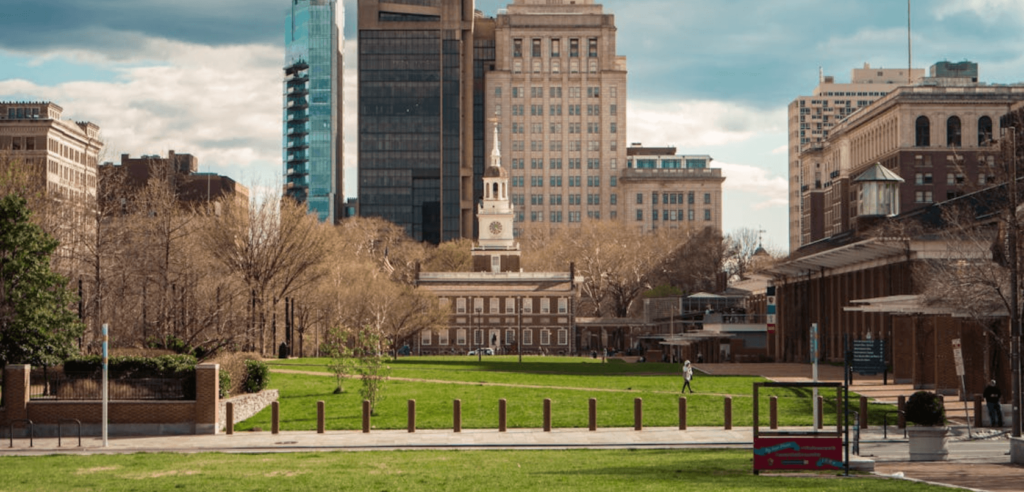
You cannot visit the places to visit in Philadelphia without reckoning with Old City first. Not because it is the most exciting neighborhood — it is not, at least not after dark on a Tuesday — but because it is the moral and historical center of gravity around which everything else orbits.
Independence Hall sits on Chestnut Street like it has always known it mattered. And it has. This is the room where the Declaration of Independence was debated, line by careful line, by a group of men who were simultaneously visionaries and deeply flawed human beings. The space itself is smaller than most people expect. The chairs are plain. The windows are tall and let in a pale, colonial light that feels almost theatrical in its appropriateness.
Morning is the right time to be here. Join one of the Philadelphia tours that depart near the Hall early in the day — the National Park Service guides are excellent, knowledgeable without being dry, and the crowds are thin enough before 9 a.m. that you can actually stand still and feel the weight of the place without being jostled by a school group from New Jersey.
Just across the plaza, the Liberty Bell waits in its glass pavilion. The crack is more dramatic in person. There is something about standing in front of an object that has been a symbol of freedom for so long that it has transcended itself — it is no longer just a bell, it is a philosophical statement made of bronze.
Honest note for 2026: Independence Hall now requires a $1 reservation fee, and it fills up fast during the Semiquincentennial celebrations. Book before you travel. The Liberty Bell remains free, but the queues on summer weekends can stretch forty minutes. Go early, go on a weekday, or go in January when the light through those pavilion windows is genuinely beautiful and the crowds have gone elsewhere.
Elfreth’s Alley, a narrow lane of thirty-three houses dating to around 1702, is one of the most overlooked places to visit in Philadelphia in this entire neighborhood. Walk down it on a quiet morning and you will feel, just briefly, like time has done something strange.
Reading Terminal Market: A Cathedral Built for Hunger
Every great city has a market that tells its story better than any museum can. In Philadelphia, that place is Reading Terminal Market — and it has been telling the city’s story since 1893.
Walking through the aisles of Reading Terminal is an experience that operates on several frequencies simultaneously. There is the visual chaos of it — hundreds of stalls, dozens of cuisines, Amish merchants from Lancaster County stationed beside Caribbean food counters beside Pennsylvania Dutch breakfast spots. There is the smell — roasting meat, fresh bread, something spiced and sweet coming from a direction you cannot quite identify. And then there is the sound: the negotiations, the sizzle, the unhurried rhythms of people who have been doing this same work for generations.
DiNic’s roast pork sandwich — with sharp provolone and bright green broccoli rabe — is the most important thing you can eat in this building. Many food-focused philadelphia tours begin here, and the logic is sound. You cannot understand this city without first understanding its relationship to hunger.
Spend at least an hour here. Buy something from a vendor who does not look like they need your business. Eat standing up. Then come back the next morning for the Amish breakfast.
Eastern State Penitentiary: Beautiful, Haunting, and Completely Unforgettable
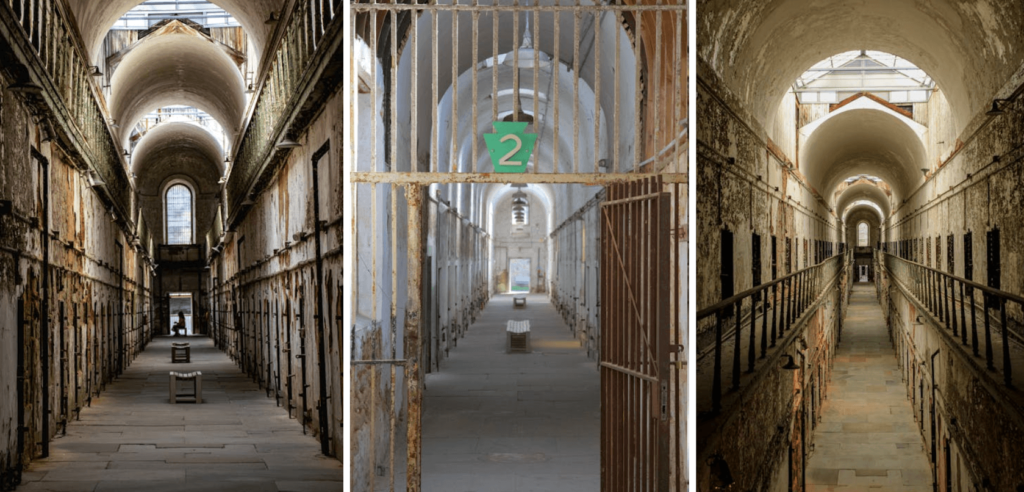
If you want a single experience that captures the full complexity of Philadelphia — the grandeur, the darkness, the ambition, the failure — walk through Eastern State Penitentiary on a gray afternoon.
When it opened in 1829, this was the most expensive building in the United States. Its “wagon wheel” floor plan, designed to allow a single guard to see down all seven cellblocks from a central rotunda, became the blueprint for over three hundred prisons across four continents. The architects believed that solitary confinement — genuine, total isolation — could reform the human soul. They were wrong in ways that are still being reckoned with in American criminal justice today.
Walking the crumbling cellblocks with the Steve Buscemi audio guide is one of the more genuinely eerie things you can do among all the places to visit in Philadelphia. Al Capone’s restored cell is here, incongruously furnished with oriental rugs and framed oil paintings. The rest of the complex is a preserved ruin — vines growing through broken skylights, cell doors hanging off their hinges, the light falling in ways that a film director would be afraid to invent for fear of being accused of overselling it.
This is not a comfortable place. It is an honest one. And in a city that prides itself on honesty, that counts for a great deal.
For visitors managing their time across multiple neighborhoods, hop-on-hop-off philadelphia tours provide a reliable link between the Historic Core, Eastern State, and the Museum District on the Parkway. They are not glamorous, but they are practical, and in a city this dense with things to see, practical has real value.
The Benjamin Franklin Parkway: Where Art Lives at Scale
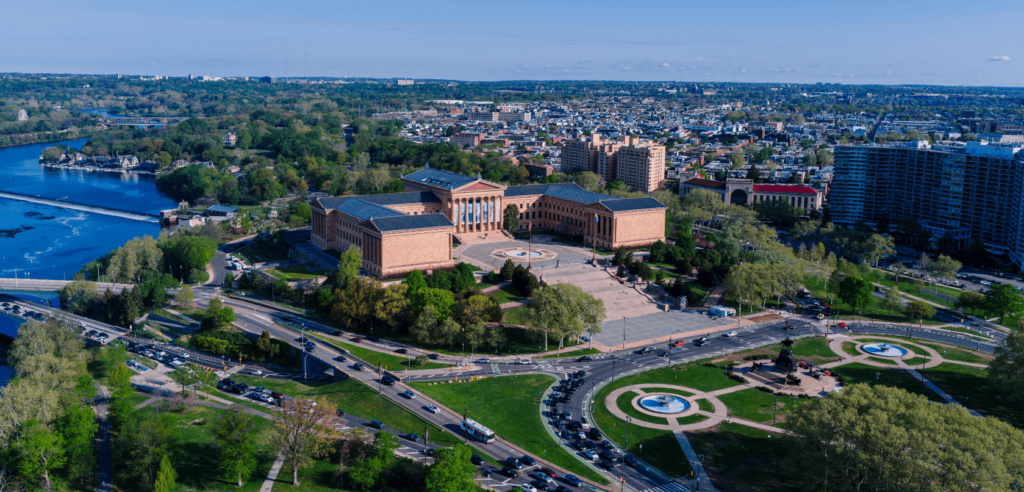
The Benjamin Franklin Parkway was designed to be Philadelphia’s version of the Champs-Élysées — a grand civic boulevard lined with cultural institutions, international flags, and the kind of deliberately imposed beauty that says this city takes itself seriously.
It works.
The Philadelphia Museum of Art stands at the top of the Parkway like a Greek temple placed there by a city that understood what it wanted to communicate about itself. The collection — over 240,000 works spanning two millennia — is one of the great art museum holdings in the world, and it receives about half the attention it deserves because the building is most famous for a scene in a film about a boxer.
Run up the 72 steps if you need to. Strike the pose. Take the photograph. It is a genuinely joyful thing to do, and the view of the Parkway from the top is legitimately worth the climb. Then go inside, where the real experience begins.
Down the Parkway, the Barnes Foundation is one of the great secrets among places to visit in Philadelphia — though it grows less secret every year. Albert C. Barnes assembled more Cézannes than all of France, more Renoirs than you knew existed, and arranged them alongside antique ironwork, African masks, and folk art in a system of “ensembles” that makes no chronological sense and perfect aesthetic sense. It is unlike any museum you have visited. It rewards slowness and punishes rushing.
2026 addition: Calder Gardens opens this year on the Parkway — a new sanctuary devoted to the mobiles and stabiles of Alexander Calder, set within landscapes designed by the legendary garden designer Piet Oudolf. It is already one of the most anticipated cultural openings in the city’s recent history, and it makes the Parkway an even stronger argument for why Philadelphia’s places to visit are world-class.
The Mütter Museum, slightly off the main Parkway drag at the College of Physicians, is the kind of place that either confirms or redefines your understanding of what a museum can be. Twenty-two thousand medical oddities, including a slice of Albert Einstein’s brain, the skeleton of the “American Giant,” and President Grover Cleveland’s jaw tumor, preserved in the name of medical education and, if we are honest, profound human curiosity. It is not for everyone. For the right person, it is unforgettable.
If the density of great things to see in Philadelphia makes you think about other major American cities, consider planning a multi-city trip. The things to do in Philadelphia guide goes even deeper into local neighborhood gems if you want a full immersion itinerary. And whether you are comparing with things to do in New York just a few hours north by train, or contrasting the West Coast experience with things to do in Los Angeles and things to do in San Francisco, the places to visit in Philadelphia hold their own against every one of them — with considerably less attitude and considerably lower prices.
South Street and the Magic Gardens: The City’s Weird, Wonderful Heart
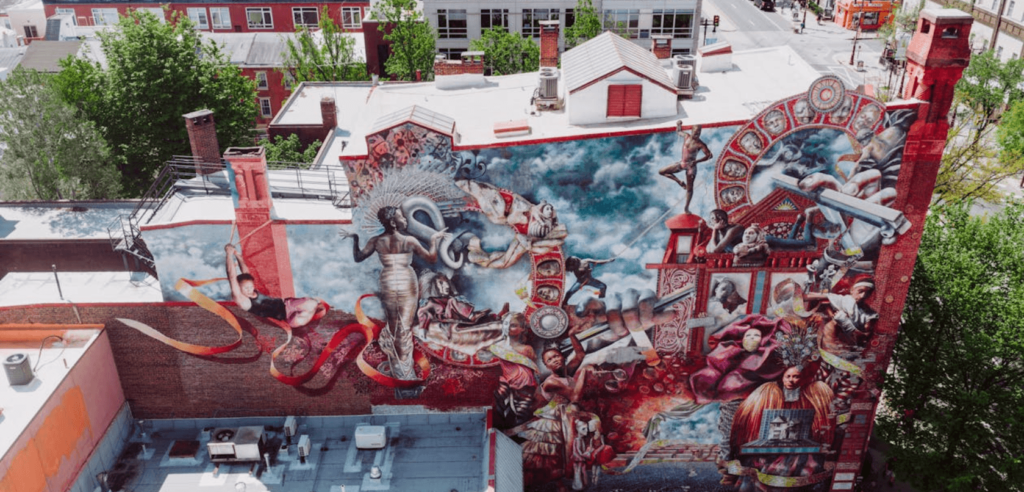
Isaiah Zagar has been covering Philadelphia in mosaics since the 1960s.
Walk through the Magic Gardens on South Street and you are inside his life’s work — a labyrinthine indoor-outdoor space covering multiple lots, every inch encrusted with ceramic shards, bicycle wheels, broken mirrors, handmade tiles, and the kind of accumulated personal mythology that only decades of obsessive creation can produce. It is overwhelming. It is joyful. It is one of the most distinctly Philadelphia things you can experience.
Zagar’s mosaics don’t stay contained to the Magic Gardens. They appear on walls all over South Philly — unexpected flashes of color and narrative on the sides of buildings, beneath highway underpasses, on staircase walls in alleys that no map would ever send you down. The neighborhood itself becomes one of the best places to visit in Philadelphia if you are willing to walk slowly and look at the walls.
South Street has been Philadelphia’s counterculture corridor for decades. It is eclectic in ways that feel genuine rather than performed — tattoo parlors beside independent bookshops beside dive bars beside genuinely excellent Vietnamese restaurants. The crowds on a Friday night are young and loud and happy in a way that some travelers find energizing and others find exhausting. Plan accordingly.
The Food Scene in 2026: Philadelphia Has Arrived
There has always been an argument that Philadelphia deserved more serious culinary recognition than it received.
That argument is over.
With Michelin stars now gracing establishments like Friday Saturday Sunday and the intimate Her Place Supper Club, Philadelphia has officially joined the ranks of America’s elite dining cities. The fact that a reservation here is still attainable — unlike the multi-month waitlists you will navigate for comparable tables in New York or San Francisco — makes this the right moment to eat seriously in Philadelphia.
But the places to visit in Philadelphia for food are not only the destination restaurants. The city’s culinary identity runs much deeper.
The Italian Market on 9th Street is the oldest continuously operating open-air market in America. It has been feeding South Philly since the 1880s, when Italian immigrants established a corridor of vendors that their grandchildren and great-grandchildren still operate today. Di Bruno Bros., the legendary cheese shop anchoring the southern end of the market, is alone worth the trip. Food-focused philadelphia tours that run through this neighborhood tend to be the most emotionally resonant, because the stories here are generational in a way that feels increasingly rare.
On the cheesesteak question: Pat’s and Geno’s are fine. They are the famous ones, they operate at 24-hour neon intensity, and the experience of ordering at one of them — the aggressive efficiency, the unspoken protocol — is genuinely Philadelphia. But locals know that the transcendent cheesesteak is more likely to come from Leo’s Steak Shop or Dalessandro’s, where the ribeye portion is generous and the bread still has that particular chew that mass production has drained out of most hoagie rolls.
For those who travel partly to eat and want to compare Philadelphia’s food culture against other American cities, the comparison is illuminating. things to do in Houston will take you into one of the most diverse food cities in the world. things to do in Atlanta opens up an entirely different chapter of Southern cuisine and culture. And things to do in New Jersey — Philadelphia’s immediate neighbor — offers a surprisingly distinct food identity just across the Delaware River. All of them are worth your time. But Philadelphia, in 2026, is the one with momentum.
Neighborhoods: The Real Philadelphia, Block by Block
Rittenhouse Square is where Philadelphia wears its quiet confidence most visibly. The square itself — one of the five original green spaces laid out by William Penn in 1682 — is one of the great urban parks in America, full of dog walkers and lunching professionals and students reading on benches with the unhurried ease of people who know they are in the right place. The surrounding streets are lined with independent boutiques, serious restaurants, and coffee shops where people stay for hours without apologizing for it.
Fishtown has undergone a decade of transformation that has made it, for better or worse, one of the most talked-about neighborhoods in American urban culture. The tension between its working-class roots and its current identity as a haven for natural wine bars and creative agencies is visible and real. But the food — Suraya’s Lebanese garden patio, Laser Wolf’s charcoal-grilled Israeli menu, the pizza that has ruined other pizza for anyone who has tried it — is legitimately extraordinary. Among all the places to visit in Philadelphia for an evening, Fishtown at its best is hard to beat.
Society Hill is the neighborhood where the founding generation would have felt most at home, and where the twenty-first century has been most carefully kept at a respectful distance. Brick row houses from the 1700s line streets where modern life intrudes only gently. It is quiet in a way that Center City never is, and beautiful in a way that requires no artifice.
The evening brings its own geography. Spruce Street Harbor Park along the Delaware River fills with hammocks and colored lights and the sound of local craft beers being opened. The Bok Bar, perched on the rooftop of a former South Philly vocational school, offers the best skyline view in the city over a menu of drinks that rewards arriving before sunset. These are the places to visit in Philadelphia after the museums close and the cobblestones begin to glow.
Getting Around, Staying Put, and Thinking Ahead for 2026
Philadelphia is more walkable than most people expect. The Center City grid is flat, logical, and dense with interest — you can cover the Historic Core, Reading Terminal, and Rittenhouse Square entirely on foot without once wishing for a car.
For neighborhoods farther afield, the Market-Frankford Line (the El) connects Center City to Fishtown quickly and cheaply. In 2026, SEPTA fares sit at $2.90 per ride — affordable, though the system draws fair criticism for cleanliness and schedule reliability. The Phlash bus, covering the main tourist corridor for $5 a day, is worth knowing about. Driving and parking in Center City — where overnight hotel parking can run $45 — is not recommended unless you enjoy that kind of punishment.
Where to stay: Center City and Rittenhouse Square put you within walking distance of the greatest concentration of places to visit in Philadelphia. The Bourse Hotel, a new Hilton Tapestry property opening just in time for the anniversary celebrations, is a strong option in the heart of the Historic Core. The Four Seasons at the Comcast Center offers genuinely jaw-dropping views from the 60th floor. Budget-conscious travelers who want to be inside the action should look at Apple Hostels in Old City — clean, well-located, and with the kind of common areas where you will meet other travelers who have found the same things you have found and want to talk about them.
Day trips: Valley Forge, where Washington’s army endured the winter of 1777, is thirty minutes by car and best visited with a guide who can animate the logistics of that particular survival story. Longwood Gardens in Kennett Square — 1,077 acres of one of the world’s great botanical collections — is worth an entire day in any season. Regional philadelphia tours handle both excursions and are worth using, since both are difficult to reach by public transit.
The 2026 factor: The convergence of the U.S. Semiquincentennial, the FIFA World Cup, and the city’s own “52 Weeks of Firsts” programming means that the places to visit in Philadelphia will be more crowded this year than at any point in recent memory. The Barnes Foundation recommends booking weeks in advance. Major Philadelphia tours will fill up. The CityPASS — which covers multiple institutions at up to 54% off combined admission prices — is worth purchasing before you arrive.
Those planning a broader American journey and comparing East and West Coast experiences will find useful context in things to do in Seattle, which offers a dramatically different urban character while sharing Philadelphia’s commitment to neighborhood identity and serious food culture. Each city tells a different story about what America can be. Philadelphia’s story is the original.
Why 2026 Is the Year to Come — And What You Will Carry Home
Philadelphia does not need the Semiquincentennial to make it worth visiting. It has been worth visiting for three centuries, and it will be worth visiting long after the anniversary banners come down and the World Cup moves on.
But there is something about this particular moment that concentrates the city’s best qualities. The pride is higher. The energy is kinetic. The places to visit in Philadelphia are presenting themselves with a confidence that feels earned rather than performed.
When you begin mapping out the places to visit in Philadelphia for your own trip, resist the urge to overschedule. The city rewards wandering. It rewards sitting on a bench in Rittenhouse Square long enough for the afternoon light to change. It rewards taking a wrong turn in Society Hill and discovering a courtyard that no tour map has ever flagged. The philadelphia tours that will stay with you longest are the ones that left enough space for the city to surprise you.
The philadelphia tours built around the 2026 celebrations — the Semiquincentennial events, the World Cup fan zones, the Calder Gardens opening — are worth booking early. But leave at least one full day without a plan. That is always the day that produces the story you will actually tell when you get home.
You will walk into Independence Hall and think about what it means for a room that small to have changed the world that completely. You will eat a roast pork sandwich at DiNic’s and understand, finally, why food can be a form of love. You will turn a corner in South Philly and find yourself standing in front of a Zagar mosaic on a wall nobody told you about, and you will take a photograph that will not capture it, and you will stand there a little longer anyway.
The best philadelphia tours — whether guided, self-directed, food-focused, or purely spontaneous — all end the same way: with the feeling that you have been somewhere real.
Philadelphia is as real as cities get.
Come hungry. Come curious. Come ready to be told a story that started before the country did.
And if this trip sparks a broader American adventure — and it should — know that the road from Philadelphia runs in every direction. North toward things to do in New York, where the scale changes but the energy rhymes. South and west toward things to do in Houston and things to do in Atlanta, where different chapters of the American story are being written in real time. Across the continent to things to do in Los Angeles, things to do in San Francisco, and things to do in Seattle. And right next door, across the river, to things to do in New Jersey, which deserves far more credit than it typically receives.
Among all the places to visit in Philadelphia, none will feel quite like the first morning you walk through Old City before the crowds arrive — the cobblestones still damp, the light still low, the weight of three centuries pressing gently on everything around you.
But start here. Start in Philadelphia. The country did, after all.
Questions about visiting Philadelphia in 2026? Planning a multi-city trip? Drop your questions in the comments — every single one gets a real reply.
Reviews
There are no reviews yet. Be the first one to write one.