
Philadelphia Tours are everywhere online — polished itineraries, listicles of “hidden gems,” and stock photos of cheesesteaks that look nothing like what you will actually be handed. This is not that kind of guide. This is the version written by someone who walked the cobblestones without a plan, argued with a vendor at the Italian Market, ate a mediocre cheesesteak at the wrong place before finding a transcendent one at the right one, and came away with a deep, slightly bewildered affection for one of the most authentic cities in America.
If you are searching for Philadelphia tours that actually tell you what the city feels like — not just what it looks like in a brochure — you are in the right place.
They will hand you a map to the Liberty Bell. What they will not hand you is the truth.
I arrived in Philadelphia on a Tuesday morning in October, dragging a carry-on with a broken wheel across cobblestones that were older than the country itself. A man in a hooded sweatshirt — Eagles green, naturally — held a door open for me without looking up from his phone. No fanfare. No tourist smile. Just a city going about its business.
That, I later learned, is the most Philadelphia thing that could have happened to me.
Before I booked my Philadelphia tours, I had read every “things to do in Philadelphia” list the internet had to offer. I had screenshots of restaurant recommendations and a color-coded map and a spreadsheet that I abandoned by noon on day one. The city, it turns out, does not reward rigid planning. It rewards curiosity.
So let me tell you what Philadelphia is really like — what the best places to visit in Philadelphia actually feel like when you are standing inside them, not looking at them through a screen.
Table of Contents
First Impressions: A City That Doesn’t Perform for Visitors
Most great cities perform for tourists. Paris puts on a show. New York dares you to keep up. Nashville turns up the volume.
Philadelphia, on the other hand, does not seem particularly interested in what you think of it.
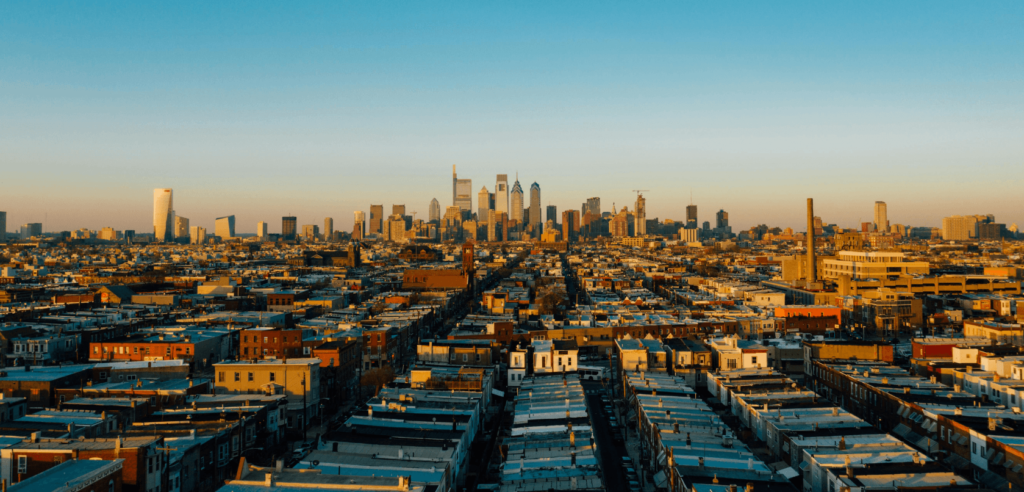
Walking from 30th Street Station toward Center City for the first time, you pass through streets that feel neither tourist-ready nor especially grim. Laundromats beside Thai restaurants beside century-old row houses. Graffiti that is art and graffiti that is just graffiti, and you will decide which is which on your own.
By my second day, I had stopped looking for the “right” Philadelphia tours and started just walking. That is when the city began to open up.
The Neighborhoods: An Honest Breakdown
Understanding the neighborhoods is the foundation of any good Philadelphia tours experience. The city is compact but deeply varied — each block tells a slightly different story, and the things to do in Philadelphia change dramatically depending on which part of town you are standing in.
Old City: Beautiful, Touristy, and Worth It Anyway
Old City is where most Philadelphia tours begin, and for good reason. This is the neighborhood where the country was born — literally. Independence Hall, the Liberty Bell, Elfreth’s Alley (the oldest continuously inhabited residential street in the United States), and Christ Church all sit within a few walkable blocks.
Standing inside Independence Hall — where both the Declaration of Independence and the Constitution were debated and signed — does something to you that no photograph can replicate. The room is smaller than you expect. The chairs are plain wood. The windows let in pale light. And you stand there, thinking about a group of flawed, self-interested, arguing men who somehow produced documents that changed the course of human history.
It is the smallness of it that gets you.
The Liberty Bell, housed in its glass pavilion across the street, is free to visit and takes about twenty minutes. The crack is more dramatic in person. Go before 9 a.m. on a weekday and you will have a genuinely peaceful experience — a rare thing in one of the most visited places to visit in Philadelphia.
The honest part: Old City restaurants range from excellent to mediocre, and it can feel a little hollow on weekday evenings. Fork on Market Street is reliably good. For something livelier, walk west to Reading Terminal Market — one of the great indoor food markets in the United States and one of the most beloved places to visit in Philadelphia for any first-time visitor.
Fishtown: The Neighborhood That Grew Up Fast
A decade ago, Fishtown was a working-class enclave of Polish and Irish families who had lived there for generations. Today it is where a natural wine bar opens beside a shop selling $90 candles. The tension is visible — and, depending on your perspective, uncomfortable or energizing.
But here is what Fishtown actually is, beyond the gentrification discourse: one of the most concentrated pockets of excellent food and interesting bars in any American city of Philadelphia’s size. Within about six walkable blocks — which makes it ideal for self-guided Philadelphia tours — you can eat dumplings at a counter stool, drink a perfect Negroni at a bartender’s-choice bar, catch a live band in a room that holds 150 people, and end the night with a slice of pizza that will ruin you for other pizza.
Among the best things to do in Philadelphia for food lovers, a Fishtown evening ranks near the top.
Don’t miss: Suraya (Lebanese, beautiful garden patio, the kind of meal you will still be thinking about three weeks later), Laser Wolf (Israeli charcoal grill, book well in advance), and Wm. Mulherin’s Sons for whiskey in a converted factory with floors worn smooth by a hundred years of use.
The honest part: Parking is a nightmare. Take the El or a rideshare. On summer weekends, Fishtown feels more like a bar district than a neighborhood. Which is fine, if that is what you want.
South Philly: Where the City Actually Lives
If Old City is Philadelphia’s face for visitors, South Philly is its heart — the part that beats whether or not anyone is watching.
The Italian Market on 9th Street is the oldest continuously operating open-air market in the United States. Vendors selling live fish, dry-aged meats, imported cheeses, fresh pasta, and produce stretch for several blocks. The smell — fish and coffee and roasting meat — hits you from a block away.
This is also where you will find the most passionate cheesesteak debate in America. Pat’s and Geno’s, the famous rival shops on the corner of 9th and Passyunk, are fine. They are touristy and slightly overpriced. The cheesesteak you will actually remember comes from John’s Roast Pork on Snyder Avenue (cash only, arrives early, closes when they run out) or from Jim’s South Street, making cheesesteaks since 1939.
South Philly does not appear on many curated Philadelphia tours, which is exactly why you should go. It is one of the most honest places to visit in Philadelphia — a neighborhood that exists for the people who live in it, not for the people visiting it.
The honest part: Walk slowly here. Stop when something smells good. Buy something from a vendor who has been standing outside since 6 a.m. Do not treat it like a museum exhibit.
Rittenhouse Square: Calm, Leafy, and Unapologetically Expensive
Rittenhouse Square is Philadelphia’s most elegant neighborhood — a small, gorgeous park surrounded by independent boutiques, serious restaurants, and coffee shops where people actually read books.
The square itself is one of the five original squares planned by William Penn in 1682. Today it is one of the most pleasant places to visit in Philadelphia on any afternoon when the weather is decent. Dog walkers, students, retirees, and lunching professionals all coexist in the kind of easy, democratic harmony that only a really good park can produce.
Among the things to do in Philadelphia for those who appreciate serious food, this neighborhood delivers perhaps the highest concentration of exceptional restaurants in the city. Vernick Food & Drink — by many credible accounts, one of the best restaurants in the country — is here. Book well in advance. The menu changes often, the room is warm without being loud, and the cooking is the kind that makes you put your phone away and pay attention.
For something more casual, Parc on Rittenhouse Square is a French brasserie with sidewalk seating that perfectly captures the neighborhood’s unhurried confidence.
The Best Philadelphia Tours by Category
Not all Philadelphia tours are created equal. Here is a breakdown of the best ways to experience the city, depending on what matters most to you.
Historical Walking Tours: Where the Country Began
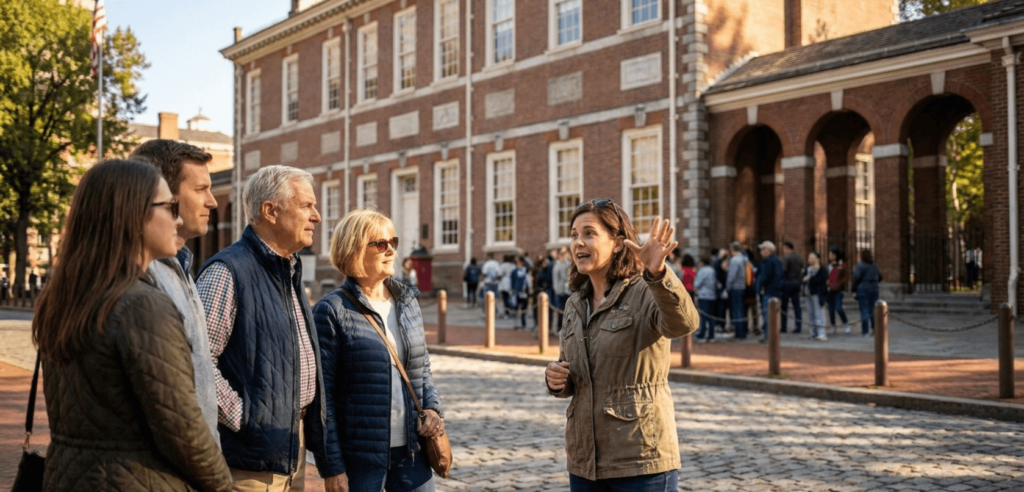
The most important things to do in Philadelphia for history lovers all live within a relatively small footprint in Old City and Society Hill. A guided walking tour of this area — there are several excellent options, including the tours offered by the National Park Service, which are free — is one of the best ways to understand the sheer density of historical significance packed into these few blocks.
The Congress Hall, the Second Bank of the United States, the Declaration House, and dozens of other sites are clustered here. The best Philadelphia tours in this category move slowly and ask you to linger, because the meaning is in the details.
Insider tip: The National Constitution Center, just north of Independence Mall, is criminally undervisited. It is one of the most thoughtful and engaging places to visit in Philadelphia for anyone interested in American political history, and it rarely has the lines that Independence Hall draws.
Food Tours: Eating Your Way Through the City
Among the things to do in Philadelphia that will leave the most lasting impression, eating ranks first. This is, without exaggeration, one of the great food cities in the United States — and it receives far less attention than it deserves, which means the restaurants are better and the reservations are easier than in cities with bigger culinary reputations.
Organized Philadelphia tours focused on food are widely available and worth considering for first-time visitors. The Reading Terminal Market tour is one of the most popular, and for good reason — the market is a legitimate Philadelphia institution, operating since 1893, and a single walk-through will introduce you to Amish baked goods, Pennsylvania Dutch cooking, Caribbean food, cheesesteaks, and more varieties of prepared food than you could eat in a week.
The Italian Market in South Philly offers a different but equally compelling food tour experience. This one is best done self-guided, on a Saturday morning, with no particular agenda beyond wandering and eating.
For high-end dining, Zahav (Israeli, Society Hill, multiple James Beard Awards) is the anchor. The hummus alone is worth the reservation. The lamb shoulder for the table is one of those dishes that makes a group of strangers feel like old friends by the end of the meal.
Mural Arts Tours: 4,000 Walls and Counting
Philadelphia has more outdoor murals than any other city in the world — over 4,000 of them, covering freeway underpasses, the sides of six-story buildings, school walls, and underpasses. The Mural Arts Program, founded in 1984, has turned what began as a graffiti-abatement initiative into one of the most significant public art programs anywhere in the world.
The Mural Arts Program’s own Philadelphia tours — offered by trolley, by foot, and even by train — are among the best organized and most informative in the city. Even if guided tours are not usually your preference, this is one of the things to do in Philadelphia where the guided format genuinely earns its keep. The context about each work, its neighborhood, and the communities involved in creating it transforms the murals from interesting walls into something much more resonant.
You will run into murals constantly as you walk the city. But the tour gives you the language to understand what you are seeing.
Museum Tours: A World-Class Collection in an Overlooked City
The places to visit in Philadelphia for art and culture are routinely ranked among the best in the country — and routinely overlooked by national media, which tends to focus its cultural attention on New York and Los Angeles. This is their loss and your gain.
The Philadelphia Museum of Art is the anchor — the building with the famous steps, the Rocky statue (which is on the side of the steps, not the top — this surprises everyone), and one of the great collections of Impressionist, Post-Impressionist, and American art anywhere. The museum’s permanent collection alone justifies a full day.
The Barnes Foundation, down the road on the Benjamin Franklin Parkway, is something else entirely. Albert C. Barnes assembled over 800 Renoirs, 69 Cézannes, 59 Matisses, and thousands of other works, then arranged them in a radically personal way — grouped by form, color, and line rather than period or style. It is one of the most distinctive and thought-provoking places to visit in Philadelphia, and it rewards multiple visits.
Among the things to do in Philadelphia for families, the Franklin Institute — a science museum with a strong engineering focus and a famous giant heart walk-through exhibit — is one of the most engaging in the country.
Practical Notes for Planning Your Philadelphia Tours
Getting Around
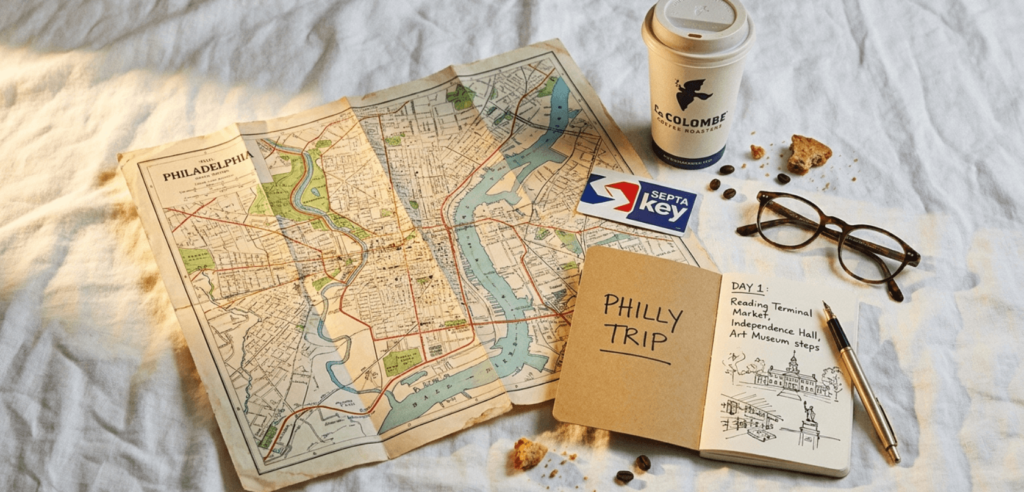
Philadelphia is a remarkably walkable city. Center City, Old City, Society Hill, and Rittenhouse Square are compact, flat, and built on a logical grid that makes navigation genuinely easy. Most of the best places to visit in Philadelphia are reachable on foot from a centrally located hotel.
The Market-Frankford Line (the El) connects Center City to Fishtown quickly and cheaply. SEPTA regional rail reaches the airport and suburbs. Rideshares work well throughout the city. Driving in Center City is not recommended — parking is expensive and the streets are often congested.
When to Go
Fall (September through November) is the best season for Philadelphia tours, full stop. The light is golden, the temperatures are ideal for walking, and the city’s energy during Eagles season is its own kind of spectacle.
Spring (April through early June) is beautiful — the cherry blossoms along the Benjamin Franklin Parkway are legitimately stunning. Summer can be hot and humid in July and August, though the outdoor dining scene makes it livable. Winter is cold but often peaceful — one of the underrated times to visit for things to do in Philadelphia without the crowds.
Where to Stay
The Logan Hotel, on the Parkway, is well-positioned for museum access and has a rooftop bar with views that reward arriving early. The Rittenhouse Hotel faces the square and has been one of the city’s finest addresses for decades. Budget travelers will find solid options in the Graduate Hotel near the University of Pennsylvania.
How Long to Spend
Two full days is the minimum to feel like you have scratched the surface of what Philadelphia tours can offer. Three to four days is ideal — enough time to cover the historical core, eat seriously in Fishtown and South Philly, visit at least one major museum, and spend an afternoon in Rittenhouse Square without feeling rushed. A week sounds like too long until you are here and realize you have barely left a five-block radius.
The Places to Visit in Philadelphia That Most Guides Miss
Every “places to visit in Philadelphia” list covers Independence Hall and the cheesesteak shops. Here are a few worth adding to your itinerary that rarely make the top ten.
Eastern State Penitentiary — A former prison, now a preserved ruin and museum, that opened in 1829 and once housed Al Capone. The architecture is genuinely extraordinary, the history is dark and important, and the audio tour narrated by Steve Buscemi is better than it has any right to be.
The Magic Gardens — Isaiah Zagar’s mosaic labyrinth on South Street, covering multiple buildings and an indoor-outdoor maze with thousands of pieces of embedded tile, mirror, and folk art. One of the most visually overwhelming and joyful things to do in Philadelphia.
Elfreth’s Alley — Tucked into the edge of Old City, this is the oldest continuously inhabited residential street in the United States, dating to around 1702. It is thirty-three houses on one narrow block. Walking down it feels like a small, quiet miracle.
Longwood Gardens — Technically in Kennett Square, about forty minutes outside the city, Longwood is one of the great botanical gardens in the world. Among Philadelphia tours that venture beyond the city limits, this is the one most worth the effort.
Why Philadelphia Gets Under Your Skin
I came to Philadelphia expecting history — the Liberty Bell, the cobblestones, the founding documents. I found all of that. But what I did not expect was the feeling of being in a city that stopped performing for anyone’s approval sometime around 1790 and never quite started again.
No amount of Philadelphia tours can fully prepare you for this feeling. You have to experience it in the small moments: the man at Reading Terminal Market who argues cheerfully with the vendor he has been buying coffee from for twenty years. The mural you turn a corner and suddenly find yourself standing in front of, four stories tall, painted on the side of a building on a block where no guidebook told you to go. The softness of the light in Old City on a fall afternoon when the crowds have thinned and the cobblestones are catching the last of the sun.
The things to do in Philadelphia are many. The places to visit in Philadelphia are extraordinary. But the thing Philadelphia tours cannot sell you — the thing the city gives away for free, if you pay attention — is a sense that you are in a place that has been real for a very long time, and intends to stay that way.
That man who held the door open for me on my first morning — Eagles sweatshirt, phone in hand, zero interest in performing hospitality — I saw him again two days later at Reading Terminal Market. He caught my eye, nodded once, and went back to his argument.
That nod. That is Philadelphia.
Go. Eat the cheesesteak from John’s. Stand quietly in Independence Hall. Walk the Italian Market on a Saturday morning when the vendors are loud and the fish is fresh and the whole street smells like something your grandmother might have cooked once, in another life.
Let the city be exactly what it is. It will be enough.
Planning your own Philadelphia tours? Drop your questions in the comments — every one gets a reply.
Reviews
There are no reviews yet. Be the first one to write one.