
best Things to do in New York begin the moment the city decides to notice you — and it always does, eventually, on its own terms. Maybe it’s the subway exhaling a warm metallic breath up through a sidewalk grate as you pass, or the way Midtown’s glass towers catch the April light and throw it back at you like a challenge. This city doesn’t ease you in. It grabs you by the collar somewhere around the corner of 42nd and Vanderbilt and says: keep up. In 2026, New York has evolved — quieter in some ways, louder in others, and more visually spectacular than at any point in its recent history. What follows is not a list. It’s a dispatch from street level, written for travelers who want the real thing.
Table of Contents
The Modern Frontier: Altitude, Illusion, and Digital Dreamscapes
Summit One Vanderbilt: Where the Sky Becomes a Mirror
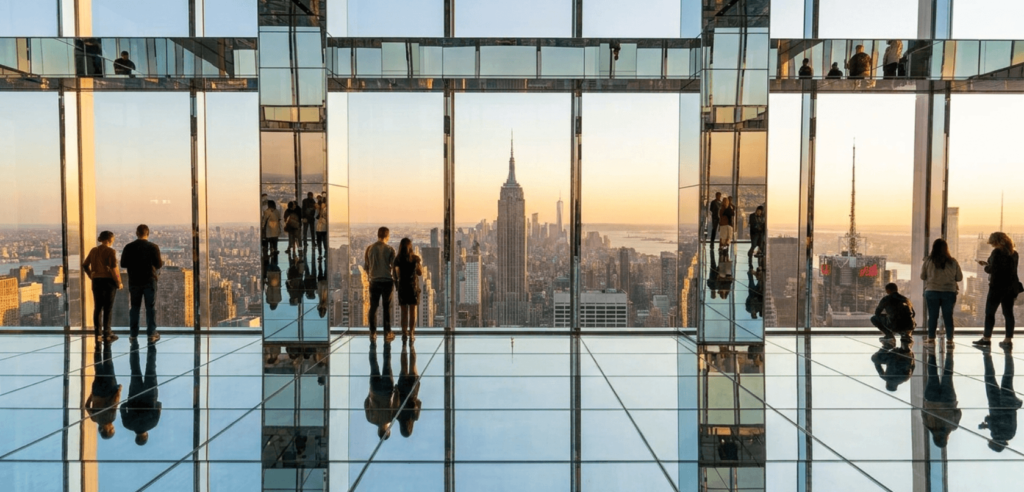
There is a particular moment at Summit One Vanderbilt that nobody adequately warns you about. You’ve taken the elevator — fast, almost aggressive in its speed — to 1,100 feet above Midtown, and then you step into a room made entirely of reflective glass, and the city multiplies. The skyline isn’t just below you or around you; it’s everywhere, fractured and reassembled in every direction like a kaleidoscope designed by someone who loved New York a little too much.
This is one of the best things to do in New York if you want to understand what the city thinks of itself. Summit isn’t merely an observation deck. It’s an architectural argument — a statement that the view of New York is itself an art form worthy of a frame. The LEVITATION experience suspends you in a glass-floored cube that extends beyond the building’s edge, and the TRANSCENDENCE gondola lift carries you even higher above the rooftop terrace. At sunset, when the light goes copper and the shadows stretch long across the grid below, the whole installation feels like standing inside a Turner painting that somehow got wired for electricity.
Practical tips for Summit One Vanderbilt:
- Book the SummitAIRE experience for rooftop access — separate ticket, absolutely worth it
- Visit between 5:30 PM and 7:00 PM in April for peak golden-hour light through the glass rooms
- Combine with Grand Central Terminal directly below — the Beaux-Arts ceiling is one of the best things to do in New York at street level, and it costs nothing
- Several new york tours operators include Summit as part of a Midtown architecture walk — the added context makes the experience richer
Mercer Labs: The Underground Counterpoint
If Summit One Vanderbilt is New York looking outward at itself, Mercer Labs in SoHo is New York looking inward. This underground museum of immersive digital art opened to considerable buzz and has delivered on nearly every promise. Fourteen interconnected rooms, each running a different large-scale audiovisual installation, create an experience that feels less like a museum visit and more like walking through someone’s fever dream — in the best possible way.
The contrast between these two experiences captures something essential about what the best things to do in New York actually represent in 2026: the city is simultaneously reaching for the sky and tunneling into new dimensions underground. Both impulses are worth following.
A Culinary Pilgrimage: From the White Tablecloth to the Paper Plate
Tatiana by Kwame Onwuachi: Heritage on a Plate
The elevator opens directly into the restaurant, and the first thing you notice is the sound — not the kitchen, not the silverware, but the music. At Tatiana by Kwame Onwuachi at Lincoln Center, the playlist is a deliberate act of cultural curation, as considered as every dish that follows. Chef Onwuachi’s cooking is rooted in the African diaspora — Nigerian, Caribbean, Southern American — and it arrives at the table with the confidence of food that knows exactly where it comes from.
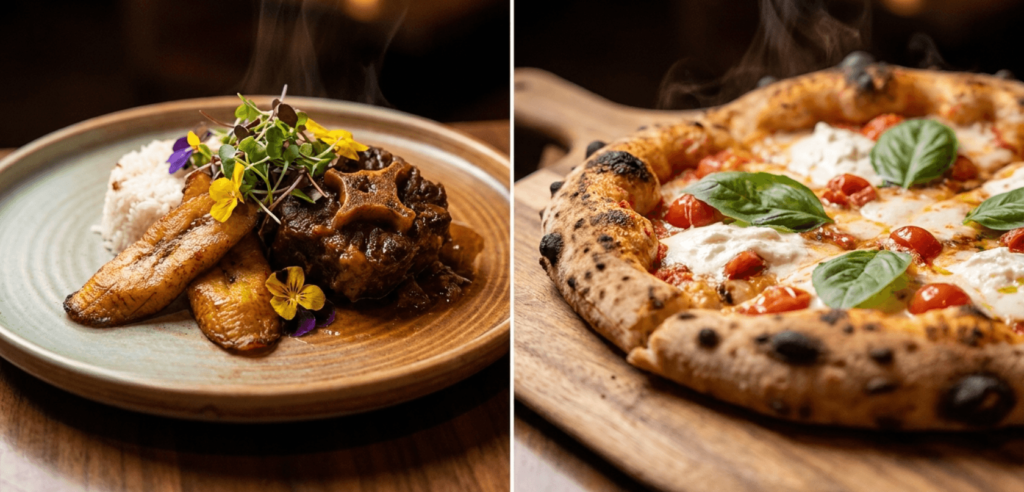
The jerk lamb chop has been written about enough that ordering it feels almost obligatory, but the dish earns every word. The flavor is layered in a way that makes you eat slowly, which is not something Midtown normally encourages. This is among the best things to do in New York for travelers who believe that a single extraordinary meal can teach you more about a city’s soul than three days of sightseeing.
Tatiana requires reservations made weeks in advance. Non-negotiable. Book through Resy the moment your travel dates are confirmed.
L’Industrie Pizzeria: The Holy Slice
Forty blocks downtown and a universe away in atmosphere, L’Industrie Pizzeria in the West Village operates on a different philosophy entirely: perfection through simplicity. The burrata slice — a thin, blistered crust draped in fresh burrata and finished with olive oil — has developed the kind of cult following that requires lining up before the shop opens.
This is the other half of what makes food culture one of the best things to do in New York: the democracy of it. The $6 slice and the $42 entrée are both pursuing the same thing — the moment when flavor silences every other thought. L’Industrie achieves it with flour, water, and heat.
A practical culinary framework for your visit:
- Morning: Russ & Daughters on Houston Street — bagel with lox, eaten standing up, non-negotiable
- Midday: L’Industrie for the burrata slice — arrive before noon on weekends
- Evening: Tatiana at Lincoln Center, or walk the new Michelin additions in Brooklyn
- For food-focused new york tours, look into operators running Brooklyn culinary walks through Williamsburg and Crown Heights — these are among the most context-rich new york tours available and pair neighborhood history with the food
While New York’s food scene is singular, travelers building a wider American culinary itinerary should know that the things to do in Houston include one of the most genuinely diverse and underrated food landscapes in the entire country — a worthy detour on any serious food trip.
Spring’s Fleeting Magic: The Cherry Blossom Windows
Central Park Reservoir: The Manhattan Frame
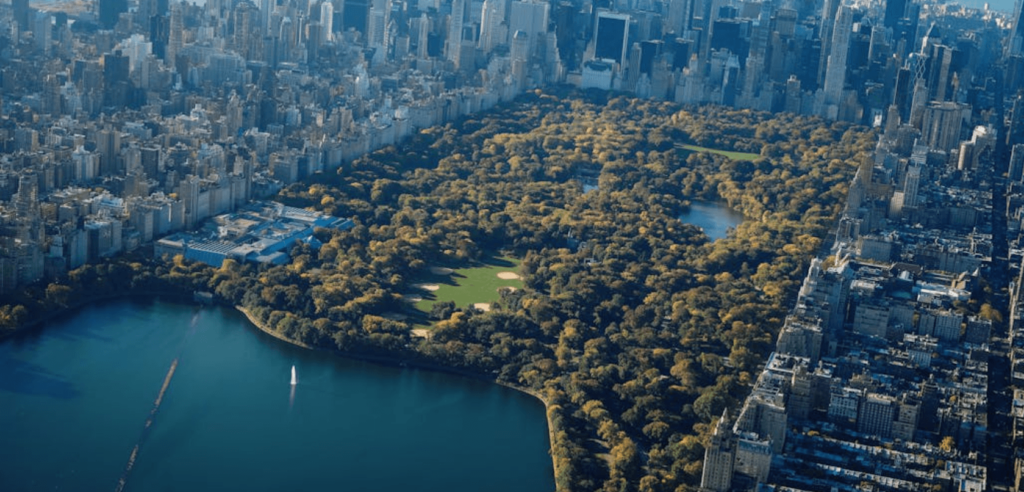
There is a specific quality of April light in New York that cinematographers understand intuitively — soft, slightly golden, filtered through the first leaves of spring trees that haven’t fully committed to being green yet. At the Jacqueline Kennedy Onassis Reservoir in Central Park, this light arrives each morning and falls on thousands of pale Yoshino cherry blossoms reflected in still water, and the resulting image is so beautiful it feels almost manipulative.
In 2026, the Yoshino peak runs approximately April 10th through April 22nd, depending on temperature. This window is one of the most photographed best things to do in New York every spring, and for good reason — the combination of blossom, water, and the surrounding Manhattan skyline creates a frame that no filter can improve.
Go early. Before 8 AM, the reservoir path is occupied mostly by runners and dog walkers. By 10 AM, the crowds arrive with cameras extended. The difference in experience between those two hours is significant.
Flushing Meadows Corona Park: The Insider’s Sakura
Most new york tours focused on cherry blossoms stick to Manhattan and Brooklyn. The travelers who make it to Flushing Meadows Corona Park in Queens are rewarded with something the guidebooks underserve: the Unisphere — a 140-foot stainless steel globe built for the 1964 World’s Fair — encircled by blooming Yoshino trees.
The visual is genuinely science-fictional. A massive chrome sphere rising out of a ring of pink clouds, against an April sky. It is one of the best things to do in New York for photographers specifically because almost no one is there. The tourist infrastructure of Manhattan hasn’t reached it, which means the shot is clean, the atmosphere is calm, and the experience feels discovered rather than consumed.
For visitors traveling the northeast corridor, the things to do in New Jersey across the river include their own significant green spaces and spring bloom events — a natural extension of an April itinerary built around seasonal beauty.
Broadway’s 2026 Renaissance: The Theater District in Full Bloom
The Electric Current of the District
Walk through the Theater District on any April evening around 7:45 PM and you’ll feel it — a specific electricity that exists nowhere else in the world. The marquees are lit, the sidewalks are full of people in good coats moving with purpose, and somewhere in the middle of it all, someone is about to experience something live and unrepeatable for the first time.
Broadway in spring 2026 is operating at full creative throttle. The Tony nomination window drives new productions to open with ambition and urgency, and the resulting season is one of the richest in recent memory. Experiencing this energy live is one of the best things to do in New York, full stop — not as a cultural obligation but as a genuine event.
The 2026 Season Highlights
The returning titans — Hamilton, The Lion King, Wicked — continue selling out with the consistency of institutions rather than shows. But the 2026 season’s real conversation is happening around newer productions:
- Cats: The Jellicle Ball — A reimagined, Afrofuturist reframing of the divisive musical that has divided critics and sold out audiences simultaneously
- The Rocky Horror Show at Studio 54 — Luke Evans leading a production that leans fully into the venue’s legendary history, creating a late-night theatrical event that feels genuinely transgressive
- The Fear of 13 — Adrien Brody in a new drama that has generated the kind of word-of-mouth that makes a show impossible to get into by week three
Broadway practical guide:
- TKTS booth in Times Square and at Lincoln Center: same-day discounts up to 50% on major productions
- Rush tickets: most productions release digital rush tickets at 10 AM day-of through their official apps
- Dress code: smart casual is fine everywhere — this is New York, not London’s West End
- Several new york tours offer theater district walking experiences with historical context before evening performances — pairing one of these with a show ticket makes for a complete evening
For travelers whose itinerary extends south, the Things to Do in Atlanta include a thriving arts and theater scene that offers a compelling regional counterpoint to Broadway’s scale — different in scope, but equally alive.
The Soul of the Boroughs: Beyond the Manhattan Grid
DUMBO: Where the Bridge Lives in Every Frame
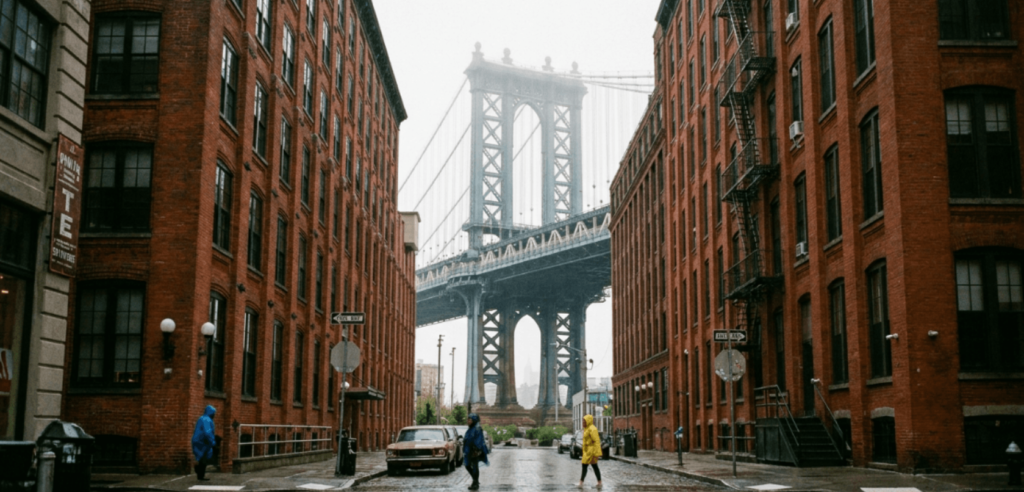
There is a photograph that exists in approximately eleven million phones worldwide. You know it without having seen the specific copy — the Manhattan Bridge, perfectly centered between two red-brick warehouse buildings on Washington Street in DUMBO, Brooklyn, the perspective so geometrically precise it feels engineered by a filmmaker rather than discovered by a wanderer. In person, standing on that cobblestone street with the bridge filling the gap between buildings, the image earns its reputation completely.
But DUMBO is more than its most famous angle. The waterfront here — Empire Fulton Ferry Park, the pebbled shore beneath the Brooklyn Bridge — offers a ground-level view of Lower Manhattan that no observation deck can replicate. You’re not above the city; you’re across from it, watching it from a human distance, and something about that perspective makes the skyline feel more real rather than less. Jane’s Carousel, a meticulously restored 1922 merry-go-round housed in a Jean Nouvel glass pavilion on the water’s edge, offers $2 rides with the Manhattan skyline as backdrop. That combination — a century-old carousel, a glass box, and the East River — is one of the best things to do in New York for anyone who wants beauty without effort.
Bushwick: The Open-Air Gallery That Rewrites Itself
Take the L train to Jefferson Street and walk. That’s the entire instruction for experiencing Bushwick, Brooklyn’s outdoor mural district, and it’s sufficient. The Bushwick Collective — a sprawling, constantly evolving series of large-scale street murals covering warehouses, loading docks, and corner buildings across a dozen blocks — operates as a living gallery with no fixed collection. Artists paint over other artists. New works appear overnight. The neighborhood refuses to be permanently documented, which makes visiting it in person the only way to actually see it.
This restless reinvention is one of the best things to do in New York for travelers who consume art seriously. No ticket, no opening hours, no gift shop. Just paint on brick and the sound of the neighborhood happening around you.
Arthur Avenue, The Bronx: The Italy That Stayed
While Manhattan’s Little Italy has largely become a theme-park version of itself — a few red-checkered tablecloths on Mulberry Street surrounded by tourist menus — the Bronx’s Arthur Avenue has refused to perform. This is a working Italian-American neighborhood, where the butcher has been cutting the same primal cuts for three decades, where the bread at Terranova Bakery comes out of ovens that predate your parents, and where the conversation at the deli counter is conducted in a mix of English, Italian, and something particular to this specific twelve-block universe.
Eating here is one of the best things to do in New York for the traveler who understands that authenticity is found at the intersection of history and necessity — places that survived not because they were discovered by food media but because the neighborhood needed them. The contrast with the sprawling, car-dependent food culture found in the things to do in los angeles is stark and instructive: Los Angeles spreads its greatness across fifty miles of freeway; New York concentrates it into a single block in the Bronx that most tourists never find.
The Art of the Free: High-Value, Zero-Dollar New York
The Staten Island Ferry: The Greatest Scam That Isn’t One
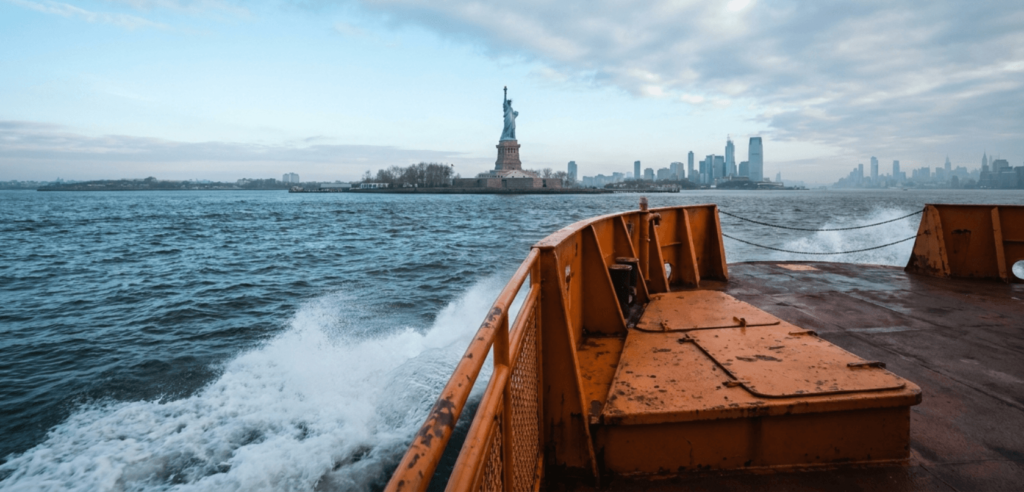
The Staten Island Ferry terminal at Whitehall Street is worth finding for one reason that guidebooks have been repeating for twenty years without diminishing its truth: the ride is completely, unconditionally, always free, and it passes within 500 yards of the Statue of Liberty. The harbor views of Lower Manhattan from the boat’s bow — especially at dusk, when the office tower windows catch the dying light — are legitimately among the best things to do in New York at any price point. At zero dollars, they’re almost offensive in their generosity.
The scam awareness is practical and simple: if anyone approaches you near the terminal offering to sell a “faster” ferry, a “VIP ticket,” or any other paid variation of this free service, keep walking without making eye contact. The ferry has one speed and one price. The hustle around it is a reliable constant.
San Francisco has its own version of this fog-draped harbor magic — the things to do in san francisco include ferry rides to Sausalito and views of Alcatraz that carry their own cinematic weight — but New York’s version arrives free, on schedule, every thirty minutes, day and night.
The High Line at 8 AM: Before the City Remembers It Exists
The High Line at midday in April is a beautiful, genuinely crowded urban park. The High Line at 8 AM is something else — a long, quiet garden suspended above the Chelsea streetscape, where the plantings are still wet with dew and the only other people present are runners, dog owners, and the occasional photographer who figured out the same thing you did. This is one of the best things to do in New York not because the High Line is better empty, but because experiencing it before the crowd arrives gives you a relationship with the space rather than a transaction with it.
MoMA PS1 in Long Island City has moved to permanently free admission for all visitors, making one of the country’s most important contemporary art institutions accessible without planning or budget. The building itself — a converted 1890s public school — is as interesting as what hangs inside it.
The Practical Blueprint: An Honest Guide to Surviving and Thriving
Transportation: The Subway Is Not Optional
New York’s subway system in 2026 runs on OMNY — tap your phone, tap a contactless card, and you’re through. The old MetroCard is gone. The system itself, with all its century-old infrastructure and occasional inexplicable delays, remains the only honest way to move through this city. A crosstown taxi in April traffic can turn a twelve-minute subway ride into a forty-minute lesson in poor decision-making.
Download the MTA app before landing. Set real-time alerts for your lines. Accept that service changes on weekends are a permanent feature of New York life rather than an anomaly. The subway is loud, occasionally smells like something you’d rather not identify, and is also the single most democratic institution in the five boroughs — every income level, every language, every borough, same car.
The car-dependent reality of the things to do in seattle — where driving is often the practical necessity — makes New York’s subway feel like a philosophical counterargument. Here, not owning a car is not a lifestyle choice; it’s the pragmatic default.
Transportation quick rules:
- Never take a car from JFK during peak hours — the AirTrain to Jamaica and the E train costs $10 and takes the same time as a $70 Uber in traffic
- The 7 train through Queens is a moving ethnographic study and entirely worth riding end-to-end once
- Walking remains the superior option for any trip under a mile — the street-level detail you accumulate on foot is irreplaceable
Budgeting: The Honest 2026 Price Reality
New York will cost exactly as much as you let it. Here is what things actually cost in April 2026, without the optimistic rounding:
- Street food tier: $4–8 (a slice, a halal cart plate, a knish from a corner vendor)
- Casual sit-down: $18–35 per person before tip
- Mid-range dinner: $55–90 per person with one drink
- Fine dining (Tatiana, Hwaro, Le Chêne): $120–200+ per person
- A cocktail in SoHo: $22–28, plus the 20% tip that is not optional
- Broadway tickets: $89 (rush/TKTS) to $350+ (premium orchestra)
- Observation decks: $38–52 depending on experience tier
The good news is that the free tier in New York is extraordinarily rich. A full day built around the Staten Island Ferry, the High Line, Central Park’s Reservoir during blossom season, the New York Public Library interior, and a $5 slice from L’Industrie costs under $20 and constitutes some of the best things to do in New York available at any budget.
Many new york tours offer structured experiences that bundle transportation and entry fees at a fixed cost — for first-time visitors especially, a single well-designed tour day can orient you to the geography and save money on individual admissions.
Timing: The Secret of January and the Truth About April Rain
April is the right month for blossoms, mild temperatures, and Broadway’s most competitive season. It is also the month that produces sudden, cold, sideways rain with approximately ninety seconds of warning. Pack a compact umbrella and one layer more than you think you need. The weather here doesn’t apologize.
January is the city’s kept secret. Hotel rates drop significantly, the holiday crowds have evaporated, the museums are uncrowded, and New York in winter light — gray, dramatic, smoke rising from every grate — is cinematically extraordinary. New york tours in January run at reduced rates and with smaller groups. If blossoms aren’t your priority, January rewards the budget-conscious traveler substantially.
Safety & Street Smarts: The Real Talk
New York in 2026 is a safe city by any major urban metric, and it is also a city that rewards awareness. These are not contradictory facts.
- Walk with intention and pace — hesitation reads as unfamiliarity, which attracts exactly the attention you don’t want
- Keep your phone in your pocket on the subway platform, not in your hand
- Times Square’s costumed characters operate on aggressive tip extraction — the “free photo” is never free
- Trust the density: the blocks that feel empty at 11 PM are the ones worth reconsidering
Immersive Dining & Nightlife: When Food Becomes Theater
Candlelight Concerts and Nona’s Supper Club
The city’s most interesting nightlife in 2026 isn’t happening in clubs — it’s happening in candlelit spaces where music and food arrive simultaneously. Candlelight Concerts run immersive classical performances in locations ranging from historic churches to art galleries, all lit entirely by hundreds of candles. The effect is disorienting in the best possible way — Vivaldi in near-darkness, surrounded by strangers who are completely still.
Nona’s Supper Club operates on a different frequency: an intimate, ticketed dining experience where the meal and the live performance are designed as a single evening rather than parallel events. This kind of immersive format represents one of the best things to do in New York for travelers who’ve seen the standard version of everything and want something that leaves a specific, unrepeatable memory.
The things to do in los angeles have their own version of this immersive dining culture — elaborate, production-heavy, Hollywood-adjacent. New York’s version tends toward the intimate and the literary, reflecting a city that still believes the most interesting room is the one with the fewest people in it.
The Defiant City: A Final Dispatch
New York doesn’t need your validation. This is the thing you eventually understand, usually somewhere around day three, when your feet ache and you’ve eaten better than you have all year and you’ve stood at the top of something tall and felt briefly, overwhelmingly, like the city was performing specifically for you. It wasn’t. It never is. New York performs for itself, continuously and without intermission, and you are welcome to watch from whatever vantage point you can reach.
The best things to do in New York in April 2026 are ultimately not a fixed list. They’re a disposition — a willingness to move at the city’s pace, to eat what the neighborhood eats, to stand on a cobblestone street in DUMBO at 7 AM when the light comes sideways off the East River and the city hasn’t fully decided to be loud yet. To take the free ferry. To sit in the park and let the cherry petals come down on their own schedule.
For travelers who want the American city experience in its most concentrated, most vertical, most relentlessly alive form — this is it. The things to do in san francisco offer coastal beauty and a certain fog-wrapped melancholy. The things to do in seattle deliver mountains, water, and a quieter urban dignity. All of it is worth your time.
But New York remains the defiant one. The city that survived every reinvention it was forced to make and came out the other side still recognizably, almost aggressively, itself. That quality — that refusal to be finished — is the realest thing about it. And it is, without qualification, the greatest of the best things to do in New York: simply being present inside a city that treats its own existence as a daily act of ambition.
Come in April. Walk until your legs disagree. Eat the slice. See the show. Miss the last train and walk home through streets that are still, somehow, fully awake.
You will come back. They always come back.
Reviews
There are no reviews yet. Be the first one to write one.