
The places to visit in Seattle announce themselves slowly — in the cool, damp mist that settles on your face the moment you step off a Washington State Ferry, in the rhythmic chant of fishmongers hurling silver salmon through the cold morning air, in the deep, roasted perfume of coffee that drifts up from every corner of the waterfront like incense. This city does not rush its first impression. It lets the gray sky settle over Elliott Bay, and then — when you are least expecting it — the clouds part, and the white shoulders of Mount Rainier materialize above the skyline like something dreamed. That is the Seattle reveal. That is the moment that turns visitors into believers.
This guide was written to be honest. It will tell you which iconic stops are worth every minute of the line and which can be skipped in favor of something quieter, stranger, and more memorable. It was written for the traveler who wants to understand a place, not simply photograph it. Whether you are planning your first visit ahead of the 2026 FIFA World Cup, mapping out a long weekend of seattle tours through the city’s layered neighborhoods, or simply trying to understand why people who live here rarely leave — this is the guide for you.
For those who’ve explored the things to do in New York or spent weekends navigating the things to do in Los Angeles, Seattle offers something refreshingly different: a major city that still feels like it belongs to the people who built it, where the mountains are close enough to touch and the coffee is never a cliché.
“To truly know Seattle, you must get lost in it at least once — preferably in the rain, definitely with a warm cup in your hand.”
Table of Contents
Things to Do in Seattle You Can’t Afford to Miss
Seattle arrives before you’re ready for it. Fog sitting low on Elliott Bay. Espresso before the city wakes up. Mountains that appear out of nowhere on a clear afternoon and disappear for weeks at a time. This isn’t a city that performs for visitors — it just lives, loudly and honestly, and lets you find your place inside it. What follows is the short list of experiences that actually stay with you.👇
- Space Needle & Chihuly Garden and Glass Ticket
- Seattle: Guided Underground Walking Tour
- Harbor Cruise with Local Guide
- Snoqualmie, Twin Falls & Ancient Forest (Transport Included)
- Pike Place Market Chef-Guided Food Tour
- Glassblowing Workshop – Create Your Own Art
- Half-Day Wildlife and Whale Watching Cruise
- Pacific Northwest Waterfalls & Hiking Tour
- Sinister Sins, Scandal, and Shadows: Seattle Ghost Tour
- City Highlights Tour
- Chihuly Garden and Glass Entry Ticket
- Boeing Factory and Future of Flight Tour
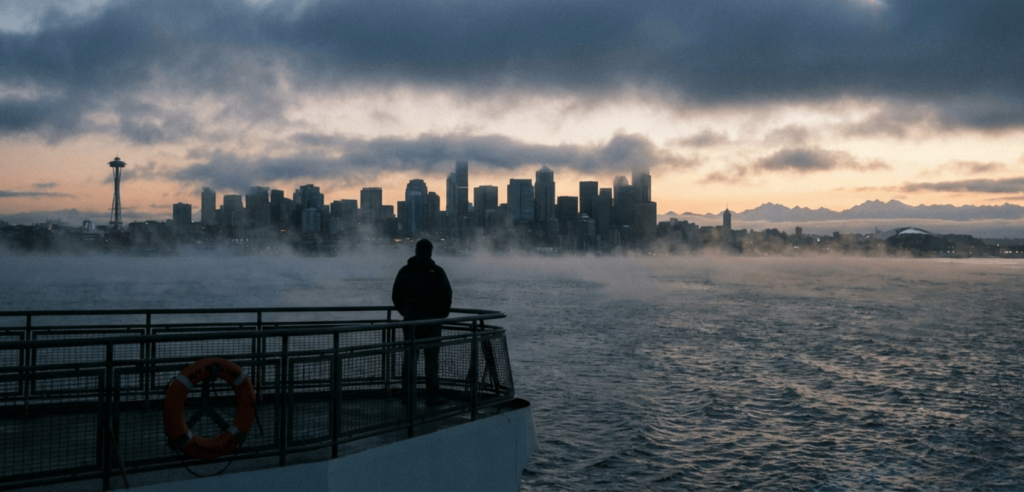
The Pulse of the Waterfront & the 2026 Vision
Every great city has a spine. In Seattle, that spine is water. The places to visit in Seattle begin at the edge of Elliott Bay, where the newly redesigned waterfront — years in the making — finally opened its most ambitious feature: the Overlook Walk. This landscaped elevated promenade connects the historic Pike Place Market directly to the shore, threading together the old and the new with the easy grace of something that was always meant to exist. Walking it at golden hour, with the ferries cutting slow wakes across the Sound and the Olympic Mountains glowing amber on the horizon, you understand precisely why people have been making their way to this corner of the world for centuries.
The waterfront now anchors the Seattle Aquarium’s Ocean Pavilion, one of the most visually stunning new cultural spaces in the Pacific Northwest. The Indo-Pacific Coral Sea exhibit alone — a luminous, cathedral-like chamber of living reef — justifies the price of admission. This is not the kind of attraction you move through quickly. You sit with it. You let it work on you.
For visitors arriving during the 2026 World Cup, the Unity Loop will serve as the official fan circuit connecting Seattle Center, Waterfront Park, and Victory Hall in SODO. It is the thread that stitches the festivities together. But even before the tournament transforms the city’s energy, the waterfront offers its own essential ritual: the Washington State Ferry to Bainbridge Island. At $10 for a round trip, this 35-minute crossing is, without question, the single best deal in American urban travel. Stand on the open deck. Watch the skyline shrink. Watch the mountains grow. It is a meditation that costs almost nothing and gives back everything.
Local Insight
Skip the tourist ferries with their amplified commentary. The standard commuter ferry to Bainbridge offers the same jaw-dropping views with none of the narration — and locals who’ll gladly point out which peak is which if you ask.
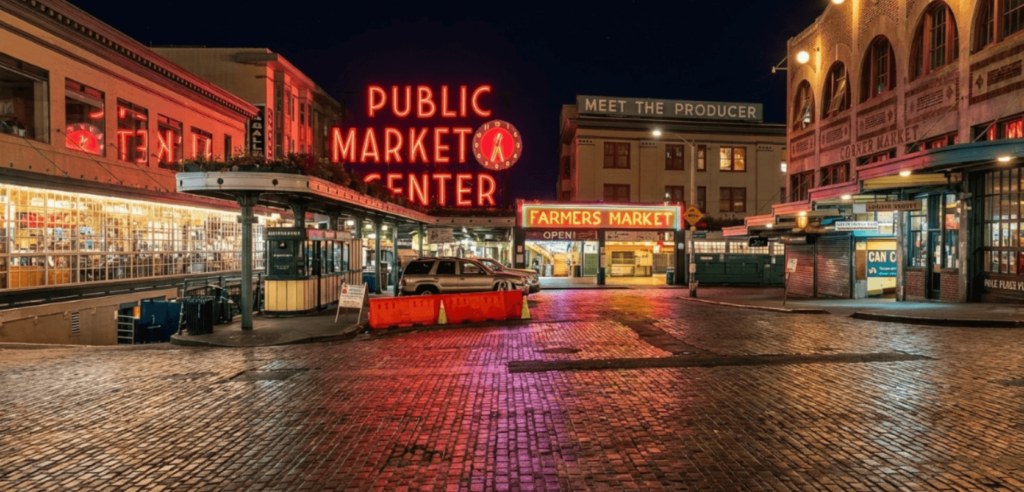
Pike Place Market: Ten Ways to Do It Right
Nine acres. A hundred years of history. On a busy summer Saturday, somewhere north of thirty thousand visitors. Pike Place Market is one of the most visited places to visit in Seattle, and it is also — if you are not careful — one of the most exhausting. The trick is arriving with a plan, a loose grip on your schedule, and no particular destination in mind beyond the sensory experience of wandering a place that has been feeding and sheltering and inspiring this city since 1907.
- Arrive before 9 a.m. The market at dawn belongs to chefs, fishermen, and the kind of traveler who understands that the best experiences happen before the crowd. The light is soft, the cobblestones are slick with rain, and the original Starbucks at 1912 Pike Place has a line you can actually manage.
- Find the Gum Wall first. Tucked into Post Alley, this 50-foot stretch of layered, community-contributed chewing gum is technically disgusting and genuinely unforgettable. Go before the afternoon heat turns up the ambient fragrance.
- Say hello to Rachel. The bronze piggy bank at the market’s entrance has been collecting donations for social services since 1986. Rub her snout. Drop something in. It matters to more people than you know.
- Build your own picnic. The cafes are fine, but the market’s real genius is in its raw ingredients. A charcuterie cone from DeLaurenti, a puff pastry from Piroshky Piroshky, a fat bunch of local tulips — take it all to Victor Steinbrueck Park and eat while watching the ferries.
- Watch the fish fly. Yes, it is touristy. Yes, it belongs on every list of places to visit in Seattle. The fishmongers’ choreographed toss-and-catch routine, performed against a backdrop of mountain air and maritime history, is one of those things that earns its cliché status through sheer, theatrical joy.
- Don’t open your umbrella. Most of the market and its connecting sidewalks are covered. Nothing announces “first-timer” quite like an umbrella at Pike Place. A good rain jacket with a hood is the uniform. Embrace it.
- Explore the Down Under. The floors below street level are a different market entirely — quieter, stranger, and filled with the kinds of shops that have been there forever. Lion Heart Bookstore and the Market Magic Shop both deserve unhurried attention.
- Time the flower stalls. The women who run the flower stalls here wrap stems with a speed and artistry that borders on performance. A bouquet of peonies or dahlias — seasonal, local, inexpensive — will survive a full day of city-walking in your hands.
- Stand in the Piroshky Piroshky line. The queue looks long. It moves fast, smells extraordinary, and ends with a hot, doughy Eastern European hand pie that will change your understanding of what street food can be.
- Come back in the afternoon. The market shifts character as the day progresses. The morning belongs to commerce; the late afternoon belongs to musicians, lingering locals, and the specific, golden-lit beauty of a Pacific Northwest day in its final hours.
If you’re the kind of traveler who has already mapped out things to do in Houston or compiled your list of things to do in Atlanta, you already understand that a city’s market is its living autobiography. Pike Place is Seattle’s most honest paragraph.
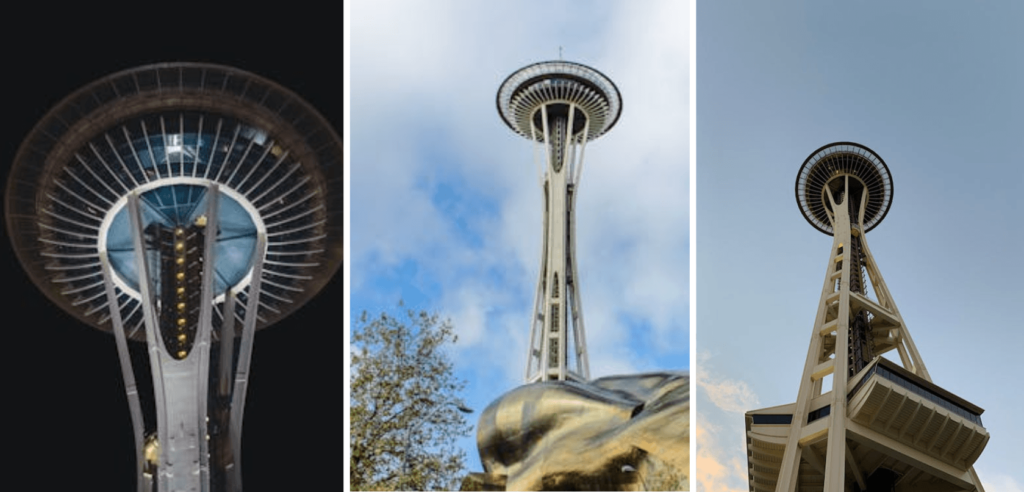
The Architectural Icons: Seattle Center & Beyond
In 1962, Seattle hosted a World’s Fair on the theme of “Century 21.” What it left behind was a 74-acre civic campus — Seattle Center — that continues, more than sixty years later, to serve as the city’s great gathering place. Among all the places to visit in Seattle, this is the one that demands an entire afternoon and rewards every minute of it.
The Space Needle, at 605 feet, remains the city’s defining silhouette. Locals will tell you to skip it. They are half-right. The tourist scrum at peak hours is genuinely unpleasant, but an early-morning visit — the observation deck opens at 9 a.m. — offers a 360-degree panorama that includes the Olympic Mountains to the west, the Cascades to the east, Mount Rainier to the south, and the blue-gray sprawl of Puget Sound below. The glass-floored rotating deck, added in a recent renovation, is the kind of thing that makes sensible adults suddenly remember what it feels like to be eight years old.
Immediately below the Needle, Chihuly Garden and Glass offers one of the most transportive indoor experiences in the Pacific Northwest. Dale Chihuly’s enormous glass sculptures — asymmetric, wildly colored, organic as coral — seem to grow from the floor of the gallery like something summoned from the depths of the Sound. The greenhouse installation, where translucent blooms hang over a real garden, is particularly extraordinary on a gray afternoon when the light is diffuse and everything glows.
The Museum of Pop Culture (MoPOP), housed in a Frank Gehry building that looks like a guitar smashed and reassembled by a fever dream, anchors the campus’s cultural identity. The permanent Nirvana and Jimi Hendrix galleries are mandatory stops — Seattle’s grunge and rock lineage deserves this kind of shrine. The science fiction exhibition, which rotates regularly, tends to be imaginative and immersive in ways that justify the admission price on its own. These experiences, layered together, are why seattle tours through Seattle Center consistently rank among the city’s highest-rated visitor experiences.
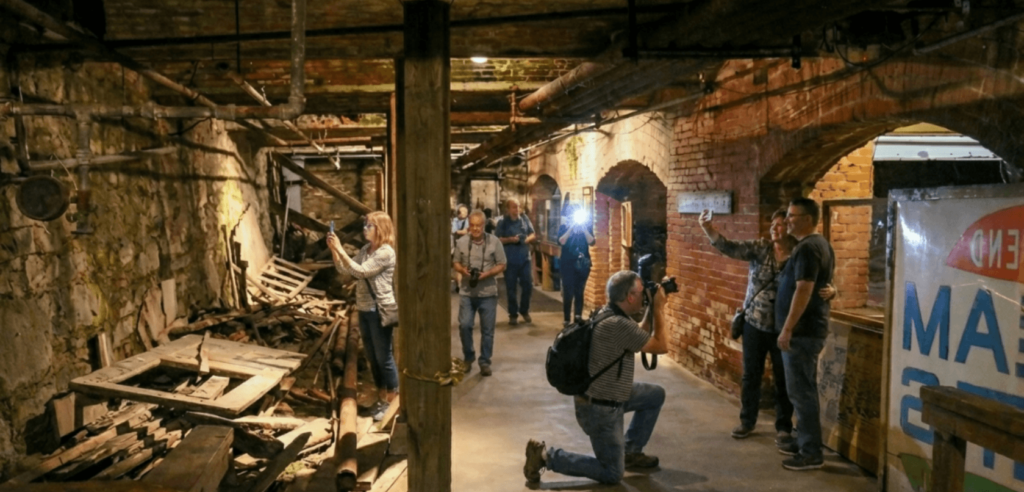
Famous Landmarks & Their Secret Counterparts
The best seattle tours are the ones that take you off the expected path — not in opposition to the famous landmarks, but as a complement to them. For every celebrated spot in this city, there is a quieter, less-trafficked version that rewards the traveler willing to walk a few extra blocks.
Kerry Park vs. Parson’s Garden
Kerry Park delivers the postcard. The Space Needle, the skyline, Mount Rainier on a clear day — it’s genuinely beautiful and worth the short climb up Queen Anne Hill. But two blocks away, Parson’s Garden is a small, hidden public park where the same view opens between old trees without a single tour group in sight. On a weekday morning, you may have it entirely to yourself.
Space Needle vs. Sky View Observatory
For the highest public viewing point in the entire Pacific Northwest, skip the Needle and take the elevator to the 73rd floor of the Columbia Center. At 1,000 feet, the Sky View Observatory puts the Space Needle below you in the frame — which means your photos include it rather than being taken from it. The admission price is a fraction of the Needle’s.
Seattle Underground Tour
While the Duck Tours offer a boisterous introduction to the city’s surface, the Seattle Underground Tour in Pioneer Square descends into the original city — the subterranean streets and storefronts that were buried when Seattle was rebuilt after the catastrophic Great Fire of 1889. It is odd, genuinely historical, and deeply funny in a way that makes the city’s origin story feel freshly strange. If you do only one guided experience on your seattle tours itinerary, make it this one.
Waterfall Garden Park
Tucked between buildings in Pioneer Square, this small, privately maintained garden contains a 22-foot artificial waterfall loud enough to drown out the city entirely. Built on the site where United Parcel Service was founded in 1907, it is one of the most genuinely peaceful places to visit in Seattle — a pocket of wilderness inside the urban grid.
The Neighborhood Mosaic: Where Seattle Actually Lives
The places to visit in Seattle that stay with you longest are rarely the ones printed on souvenir mugs. They are the neighborhoods — the distinct villages within the city, each with its own history, its own economy of coffee shops and bookstores and dive bars, its own relationship with the water and the hills. To understand Seattle, you must walk through it sideways.
Ballard: The Maritime Soul
This was once a Scandinavian fishing settlement — you can still feel it in the architecture, in the names of the bakeries, in the way the fog settles over the boats at the marina. The Hiram M. Chittenden Locks are one of the most quietly spectacular places to visit in Seattle: an engineering marvel where boats are lifted and lowered between the fresh water of Lake Union and the salt water of Puget Sound, while salmon fight their way through the adjacent fish ladder on their upstream migration. Afterward, the Ballard Brewery District — more than a dozen independent craft breweries within walking distance of each other — makes for one of the better saturday afternoons this city has to offer.
Capitol Hill: Coffee, Culture, Community
Capitol Hill is loud, proud, historically LGBTQ+, and almost entirely powered by espresso. The neighborhood is home to the Starbucks Reserve Roastery — a vast, cathedral-like coffee palace that is simultaneously the most corporate and most impressive coffee destination in the city — as well as dozens of independent cafes that are doing genuinely original things with single-origin beans. The Elliott Bay Book Company, one of the last great independent bookstores in the Pacific Northwest, is the kind of place you enter intending to spend twenty minutes and leave three hours later having spent far too much money. The Jimi Hendrix statue, a block away, is small and understated and absolutely correct.
Pioneer Square: The Romanesque Heart
Seattle’s original downtown is a neighborhood of heavy stone buildings draped in ivy, of galleries and studios and bars operating in spaces that have housed commerce since the 1890s. The Smith Tower, built in 1914, was the tallest building west of the Mississippi at its completion — and its observation deck still offers one of the most intimate views of the city’s older skyline. This is also where you’ll find the Klondike Gold Rush National Historical Park, which tells the story of Seattle’s role as the gateway to the Alaskan gold rush of 1897 — a history that shaped the city’s commercial identity in ways still visible today.
Chinatown-International District
Enter through the ornate 45-foot ceremonial gate and you enter one of Seattle’s oldest and most layered communities. The food here — dim sum at Harbor City, pho at Pho Bac, boba at any number of small, excellent shops — is among the best in the city and among the most honest about what it is. The Wing Luke Museum offers a deeply humanizing portrait of the Asian Pacific American experience in the Pacific Northwest, with oral histories and personal archives that make the neighborhood’s history feel immediate and alive.
If you have experience navigating the diverse neighborhoods of things to do in New Jersey, you’ll recognize in Seattle the same principle: the real character of a city lives outside its postcard radius, in the places where people actually shop and eat and argue and fall in love.
Nature Within City Limits: The Emerald Oasis
Seattle’s civic parks system covers nearly 500 distinct green spaces, and the best of them rank among the most meaningful places to visit in Seattle — not despite the urban context, but because of it. The proximity of raw, undeveloped nature to the city’s glass towers is not an accident. It is the product of decades of intentional preservation, and it is one of the things that makes Seattle genuinely unlike any other American city of its size.
Discovery Park, at 534 acres, is the city’s largest green space and one of its most powerful. The Lighthouse Loop — a 4.5-mile trail through old-growth forest and along marine bluffs — is one of the essential seattle tours you can take on foot, free of charge, at any time of year. The lighthouse itself, a decommissioned Coast Guard station, stands at the edge of a bluff overlooking the Sound with the kind of quiet authority that reminds you how recently all of this was wilderness.
The Washington Park Arboretum is where Seattle goes in spring to watch the cherry blossoms and in autumn to watch the maples turn. The Japanese Garden within it — a formal stroll garden designed in the 1960s in collaboration with Japanese landscape architects — is one of the most serene places to visit in Seattle in any season. The teahouse, open on selected afternoons, serves matcha with a formality and care that feels like a small ceremony.
“Green Lake is Seattle’s backyard — three miles of paved path where the entire city seems to slow down and remember it has a body.”
And then there is Lake Union, the freshwater lake at the city’s heart, surrounded by houseboats (yes, including the one from Sleepless in Seattle), float plane terminals, and kayak rental docks. A Hot Tub Boat rental — a small, heated vessel you pilot yourself around the lake — is one of the most ridiculous and delightful things you can do in this city, and it offers a perspective on Seattle’s skyline and shoreline that no land-based seattle tours can replicate.
Family Adventures: The City Through a Child’s Eyes
Some of the most joyful places to visit in Seattle reveal themselves differently when experienced with children. The city’s family-oriented institutions are, without exception, thoughtfully designed — built on the understanding that wonder is not something reserved for adults.
The Woodland Park Zoo is a 92-acre naturalistic sanctuary where the animal habitats are designed to feel like genuine ecosystems rather than enclosures. The Northwest Trail, featuring grizzly bears and river otters in settings that approximate their actual habitats, is the standard by which modern zoo design should be measured. The butterfly house is small, warm, and absolutely magical.
The Museum of Flight, located near Boeing Field, houses one of the largest air and space collections in the world — including a retired Air Force One and a British Airways Concorde that visitors can walk through. For a child with any interest in aviation, this is among the most genuinely thrilling places to visit in Seattle. For the adults, it is a reminder of how extraordinary it is that humans decided to fill the sky with machines.
The Pacific Science Center at Seattle Center offers a tropical butterfly house, a digital planetarium, and rotating science exhibitions that engage children of every age. The Artists at Play Playground, adjacent to the Center, features a 30-foot climbing tower and a design sensibility — bright, strange, beautiful — that makes it unlike any other playground in the city.
These experiences, combined, make Seattle an exceptional destination for families. If you are comparing notes with friends who have mapped out things to do in Seattle for a family trip, the consensus tends to be that the city rewards kids not with manufactured thrills but with genuine encounters — with animals, with science, with history, with the peculiar beauty of the natural world.
Beyond the City: Essential PNW Day Trips
Some of the most spectacular places to visit in Seattle are not, technically, in Seattle. The city sits at the center of a radius of extraordinary natural and cultural destinations, most of them reachable within three hours by car or ferry. These are the places that local seattle tours guides will point to when you ask where they take their own visiting family.
Mount Rainier National Park
Three hours south, the 14,411-foot glaciated volcano dominates the horizon on clear days from the city itself. At Paradise — the alpine meadow visitor center at 5,400 feet — wildflower fields in July and August are among the most beautiful natural landscapes in North America. The Skyline Loop and Naches Peak Loop are the finest introductory hikes in the state.
Snoqualmie Falls
Only 35 minutes from downtown, this 268-foot waterfall is one of the most powerful natural landmarks in Washington State. The upper observation deck, adjacent to the historic Salish Lodge, provides the classic view. The lower trail, when it’s open, puts you close enough to feel the spray and understand why the Snoqualmie people considered this place sacred.
Leavenworth
A 2.5-hour drive through the Cascades delivers you to a town that reinvented itself as a Bavarian village in the 1960s to survive economic collapse. The bratwurst is excellent. The mountains are genuine. The cognitive dissonance of German architecture in a Pacific Northwest forest is precisely as charming as it sounds.
The Ferry Islands
Vashon, Whidbey, and Bainbridge each offer a different experience of island life in Puget Sound. Whidbey’s Ebey’s Landing is one of the finest coastal hikes in the state, with views that stretch to the San Juans. Bainbridge’s main street, a 10-minute walk from the ferry dock, contains galleries and restaurants worth the trip alone.
Honest Logistics: What You Actually Need to Know
The best preparation for the places to visit in Seattle is an honest understanding of how the city works — not the polished version, but the practical one. Here is what locals would tell you if you asked.
- The Umbrella Rule Don’t. A waterproof jacket with a hood is the uniform of the Pacific Northwest. Umbrellas mark you immediately as a visitor, and more practically, the rain here is usually more mist than downpour — light enough to be managed by a hood, constant enough to make an umbrella more trouble than it’s worth.
- Getting Around The Link Light Rail connects Sea-Tac Airport to Capitol Hill and the University District efficiently. The Seattle Center Monorail — a relic of the 1962 World’s Fair — runs from downtown to Seattle Center in 90 seconds and is, in its own retro way, one of the more pleasurable seattle tours you can take for two dollars. The Water Taxi from Pier 50 to West Seattle is the most scenic commute in the city.
- Best Season July through September offers reliable sunshine, warm evenings, and the full opening of mountain trails. The crowds are at their peak, but the city earns them. Winter brings gray skies, world-class skiing at Crystal Mountain, and a coffee culture that feels more like a way of life than a consumer habit. Spring is underrated — fewer crowds, cherry blossoms, and the particular beauty of rain on new leaves.
- The 2026 Factor The World Cup will transform the city’s energy in ways that are still unfolding. The Unity Loop will anchor the fan experience. The SeattleFWC26 community calendar is the most reliable source for event updates, temporary installations, and the constantly evolving list of places to visit in Seattle during the tournament period.
- Coffee Protocol Order black or with milk. Oat milk is available everywhere. A double shot Americano is the local default. Nobody orders a frappuccino without some self-awareness about it.
- Budget Benchmarks The ferry to Bainbridge is the best value in the city. The Sky View Observatory costs a fraction of the Space Needle. Discovery Park, Green Lake, and the Arboretum are free. The most memorable seattle tours are often the ones you design yourself, on foot, with a map and a coffee.
Pro Tip for 2026 Visitors
Book accommodation at least six months in advance for the World Cup period. The neighborhoods of Capitol Hill, Ballard, and Fremont offer excellent independent hotel and short-term rental options within easy Light Rail or bike-share distance of all major venues.
The Heart of the Emerald City
Seattle is a city that requires you to look closely. Its most important things are not always the most visible ones. You find it in the faces of the fishmongers at Pike Place at 6 a.m., in the salmon pushing upstream through the locks at Ballard, in the way a clear October morning turns the Space Needle into a mirror for the mountains. The places to visit in Seattle that stay with you longest are the ones that asked something of you — patience, attention, willingness to get a little wet.
This is a city built on the traditional lands of the Coast Salish Peoples, a city that has always been more interested in what comes next than what came before — and that has, in its best moments, managed to honor both at once. From the underground streets of Pioneer Square to the wildflower fields below Mount Rainier, from the ferry deck at dawn to the glass cathedral of Chihuly, the places to visit in Seattle offer a specific and irreplaceable thing: the feeling of being somewhere that actually means something, to the people who call it home and the people who simply came to pass through and found they couldn’t quite leave.
Plan your route. Wear a rain jacket. Get lost on purpose. Seattle will meet you where you are.
Reviews
There are no reviews yet. Be the first one to write one.