
The salt air hits you before the city does.
You step off the plane, and somewhere between baggage claim and the cab ride downtown, Seattle begins its quiet seduction. The clouds hang low like a held breath. The freeways carve through dark evergreens. And then — there it is — the skyline rising above Elliott Bay like a promise the Pacific Northwest has been keeping for a hundred years.
I’ve wandered the streets of cities that wear their personalities on their sleeves. I’ve written about things to do in New York, where ambition is the weather. I’ve chased sunsets writing about things to do in Los Angeles, where every corner feels like a film set. But Seattle? Seattle is the city that earns you. It doesn’t dazzle immediately. It reveals itself — in layers, in moods, in the particular gray-green light of a Tuesday morning when the mist lifts off the water and you suddenly understand why people come here and never leave.
This is not a listicle. This is the honest, full-bodied story of what it actually feels like to be here, move through this city, and fall under its spell. These are the things to do in Seattle that matter — the ones that will rearrange something inside you.
Table of Contents
Things to Do in Seattle You Can’t Afford to Miss
Seattle doesn’t do ordinary. Whether you’re visiting for the first time or returning for another unforgettable chapter, the best things to do in Seattle stretch far beyond what any single itinerary can hold. From misty waterfront walks and underground history tours to alpine meadows and island ferry crossings — every day in this city hands you something worth remembering. We’ve done the hard work of finding them all, so you don’t have to.👇
- Space Needle & Chihuly Garden and Glass Ticket
- Seattle: Guided Underground Walking Tour
- Harbor Cruise with Local Guide
- Snoqualmie, Twin Falls & Ancient Forest (Transport Included)
- Pike Place Market Chef-Guided Food Tour
- Glassblowing Workshop – Create Your Own Art
- Half-Day Wildlife and Whale Watching Cruise
- Pacific Northwest Waterfalls & Hiking Tour
- Sinister Sins, Scandal, and Shadows: Seattle Ghost Tour
- City Highlights Tour
- Chihuly Garden and Glass Entry Ticket
- Boeing Factory and Future of Flight Tour
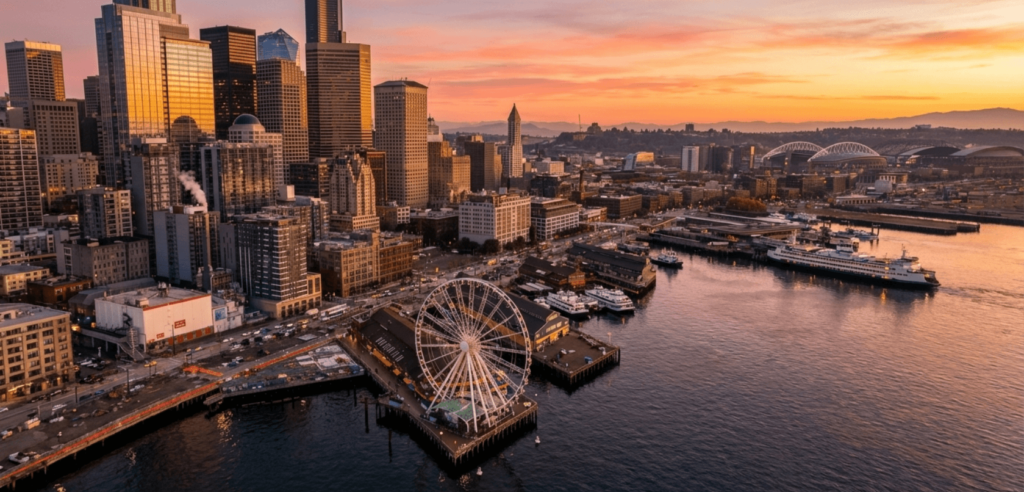
The Reborn Edge: Reconnecting at the Waterfront Park
There is a before and an after in Seattle’s relationship with its own coastline.
For decades, the city was cut off from Elliott Bay by the thundering elevated lanes of the Alaskan Way Viaduct — a brutal slab of highway that prioritized movement over meaning. Then, in one of the most ambitious urban transformations in modern American history, they tore it down. What emerged from that wound is the new 20-acre Waterfront Park, and walking through it for the first time ranks among the most emotional things to do in Seattle — it feels like watching a city exhale after holding its breath for fifty years.
Start at Pike Place Market and follow the Overlook Walk down toward the water. This is not just a stroll — it is a cinematic descent. The Olympic Mountains frame the western horizon. The ferries cut slow white lines across the gunmetal bay. On a clear day, the scene feels almost fraudulently beautiful, the kind of view that makes you stop mid-step and reach instinctively for your phone before deciding, no — just look. Just be here.
Pier 62 has been reimagined as a living public space, hosting outdoor concerts and community gatherings against the backdrop of the open Sound. On summer evenings, local musicians play as the sky bleeds from gold to deep violet, and strangers share benches with the easy familiarity of people who all chose the right moment to be somewhere.
Pier 58 belongs to the children — and to anyone willing to be a child again. The marine-themed playground is genuinely inventive, built around the ecosystem of Puget Sound, with climbing structures shaped like sea creatures rising from the waterfront planks.
But the detail that will stay with you — the one that tells you everything about what Seattle is trying to be — is the Pioneer Square Habitat Beach, a man-made stretch of shoreline engineered specifically to support salmon migration. A city that builds a beach not for tourists but for fish. That is the kind of place Seattle is, and that is exactly why the waterfront belongs on every list of meaningful things to do in Seattle.
Honest Tip: Visit the Waterfront on a weekday morning. On weekends, it draws significant crowds. Early on a Tuesday, with the morning fog still burning off the water, it borders on transcendent.
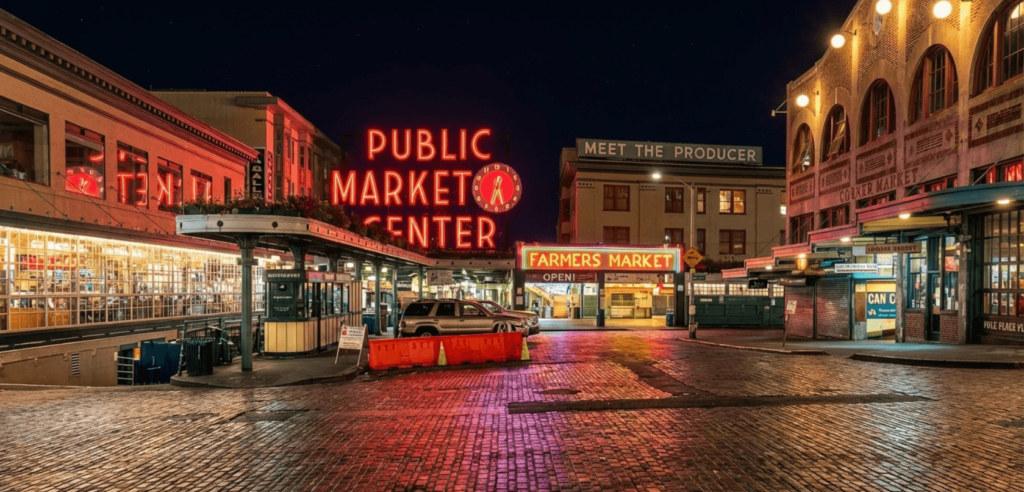
The Market’s Secret Pulse: Pike Place Like a Local
Every city has that one landmark that tourists flood and locals quietly navigate around. In Seattle, it’s Pike Place Market — and yet, unlike so many over-touristed destinations, Pike Place actually rewards the patient visitor with something genuine, something that resists commodification even after a hundred years of foot traffic.
The secret is arrival time and direction of travel.
Come before 9 a.m. The fish are being unloaded. The flower vendors are unwrapping their buckets. The bakers are pulling bread from ovens. The market breathes in a different rhythm at this hour — purposeful, unhurried, honest. The famous fish throwers are just the opening act. The most rewarding things to do in Seattle here are found by turning down the back corridors, pushing through the low-ceilinged lower levels, and discovering the warren of small businesses that have survived here for decades.
Skip the tchotchke shops near the main entrance selling mass-produced Seattle keychains. Instead, hunt for the vendors who make things by hand — the glassblower, the printmaker, the woman who has been selling the same dried lavender and honey combination since the nineties because she has perfected it and sees no reason to change.
The self-guided food tour approach works brilliantly here. Build it yourself: a cup of chowder from Pike Place Chowder, followed by a wedge of aged cheese, a small paper bag of warm donuts from Daily Dozen Doughnut Co., and a flat white from one of the independent coffee stalls tucked into the lower market. Eat standing up. Watch the water below. Eavesdrop on the conversations of people who work here.
This is not performance. This is one of the most deeply lived American markets still functioning as intended — and experiencing it without a guide, on your own terms, is one of the most authentic things to do in Seattle you will find at any price point.
Honest Tip: The flying fish happens at the main fish stall roughly when a sale is made. Don’t position yourself to watch it like a show. Buy something, let it happen naturally, and the experience is entirely different.
The City Below: Excavating History with the Underground Tour
On a rainy Seattle afternoon — and there will be rainy Seattle afternoons, embrace them — walk into the offices of Bill Speidel’s Underground Tour and prepare to be educated, entertained, and mildly unsettled in the best possible way.
Here is what most visitors do not know: the Seattle you walk through today is not the original Seattle. The city was rebuilt on top of itself.
In 1889, a pot of glue boiling in a cabinet shop ignited, and within hours, the entire downtown district was ash. Twenty-five blocks. Gone. The city chose to rebuild higher — literally raising the street grade by one to two stories to solve the chronic flooding that had plagued the original settlement, which sat barely above the tide line.
The result? A buried city. Original storefronts, sidewalks, and doorways now exist beneath the modern street level, sealed away in the dark like a forgotten photograph. Exploring this buried world is among the most fascinating historical things to do in Seattle, and one that permanently changes how you see the streets above.
Walking through this underground space on the guided tour, you hear stories that feel almost too strange to be true — and are, in fact, completely true. The “sewing tax“ era, a city-wide euphemism for the licensing of vice. The purple glass windows, originally clear but turned violet over decades by the manganese in the glass reacting to sunlight, now visible from below, casting an eerie, otherworldly glow into the tunnels.
The guides here are performers as much as historians. They deliver the city’s darkest chapters with the timing of veteran comedians, and you leave feeling like you understand Seattle — its grit, its pragmatism, its stubborn insistence on reinvention — far better than any museum exhibit could have taught you.
Honest Tip: Book in advance, especially in summer. The tours fill quickly, and the underground space has capacity limits. The 75-minute standard tour is the right length — just enough immersion without becoming claustrophobic.
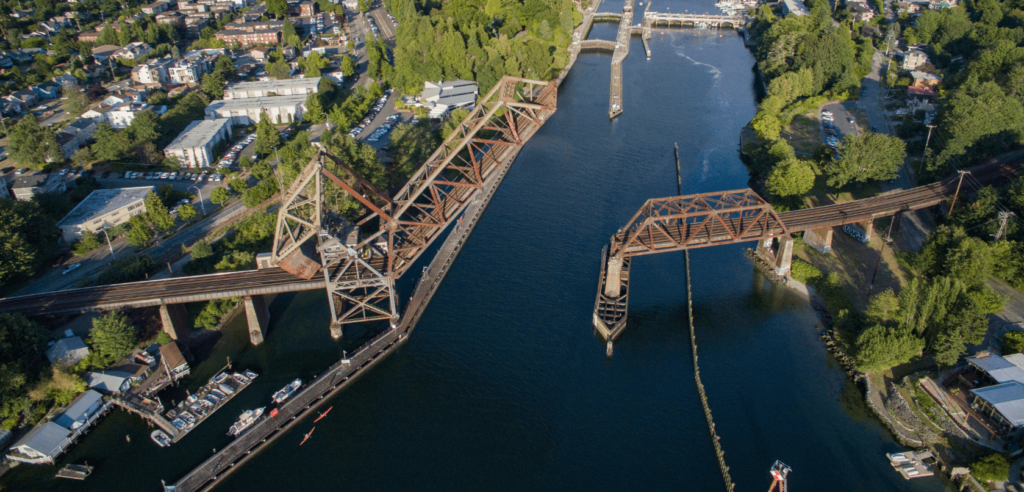
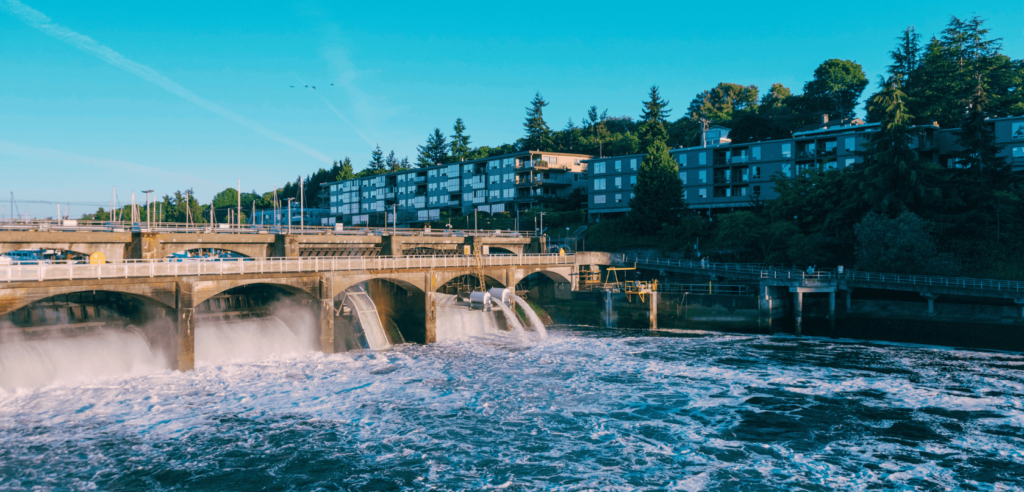
Engineering & Nature: The Ballard Locks
Free. Fascinating. Frequently overlooked.
The Hiram M. Chittenden Locks in the Ballard neighborhood represent one of those civic engineering achievements that has been so seamlessly woven into the fabric of daily life that many visitors drive right past it. Do not drive past it. Among all the free things to do in Seattle, this one delivers the most unexpected emotional punch.
The Locks connect the freshwater of Lake Union and Lake Washington to the saltwater of Puget Sound, allowing boats to travel between the two systems through a controlled series of chambers. On summer weekends, sailboats, fishing vessels, kayakers, and the occasional massive yacht queue up patiently and ride the water up or down like slow-motion elevators. It is hypnotic. You could stand here for an hour and not feel the time pass.
But the true revelation of the Locks is the fish ladder.
Between June and November, depending on the species, you can press your face to the underwater viewing windows and watch King Salmon, Sockeye, and Coho moving through the ladder — muscular, scarred, driven by an ancient biological imperative that no amount of concrete and engineering has fully managed to interrupt. There is something profoundly moving about watching a wild creature refuse to be stopped. Something quietly instructive. It is among the most memorable things to do in Seattle for anyone who has ever felt, even briefly, like the current was working against them.
After the fish ladder, cross into the Carl S. English Jr. Botanical Garden, which wraps around the Locks in a way that feels entirely accidental until you realize it was designed with meticulous care. Over 1,500 species of plants from around the world have been collected here, and in April, the garden is almost comically beautiful — magnolias, cherry blossoms, and rhododendrons competing for your attention in every direction.
Honest Tip: The salmon run peaks in July–August for Chinook (King) Salmon. If your visit falls outside the run season, the Locks remain worth the trip — but plan around the run if you can.
Urban Wilds: Spring Hikes and Coastal Vistas
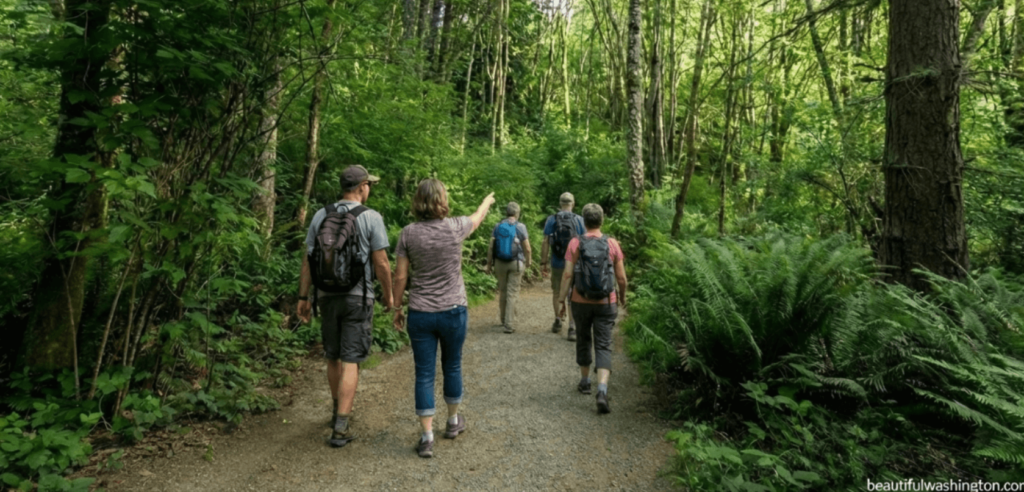
Seattle makes an unusual promise to the urban hiker: real wilderness, within city limits, reachable without a car.
Discovery Park, at over 500 acres, is the largest park in Seattle and contains multitudes. Old-growth forest. Meadows with panoramic views of the Cascades and the Olympics. Bluffs that drop sharply toward Puget Sound. And at the far end of the main loop trail, the West Point Lighthouse — squat, red-capped, standing at the point where Lake Washington Ship Canal meets the open Sound. Standing beside it as the tide runs past feels genuinely remote, not like a city park at all. This coastal loop is one of the best low-effort things to do in Seattle for anyone who wants nature without the drive.
The loop is approximately 2.8 miles, mostly shaded, and is one of the most rewarding light-effort hikes available without leaving the city.
For those willing to drive 30–45 minutes east into the Cascade foothills, Rattlesnake Ledge delivers the kind of payoff that makes the effort feel almost unfair. A 4-mile round-trip through Douglas fir forest leads to an exposed rocky ledge with staggering views of Rattlesnake Lake and the Snoqualmie Valley below. This is where Seattle comes on Sunday mornings.
For the more adventurous, Poo Poo Point near Issaquah is Washington’s premier paragliding launch site. You don’t need to jump off a mountain to appreciate it — watching the colored canopies lift silently from the ridge against the backdrop of the valley is one of those spontaneous, completely free experiences that no travel itinerary could have planned for you.
Honest Tip: Rattlesnake Ledge requires a Discover Pass for parking ($30/year or $10/day). Arrive before 9 a.m. on weekends. The lot fills completely by mid-morning.
Cultural Heartbeat: The Cherry Blossom Festival
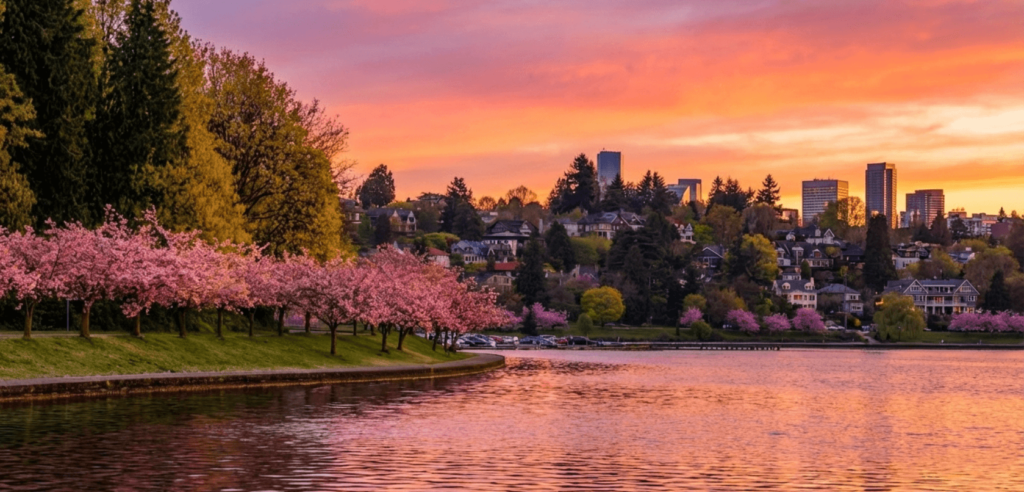
Every April, Seattle becomes briefly, magnificently Japanese.
The Seattle Cherry Blossom & Japanese Cultural Festival at Seattle Center is less a festival than a full immersion — a multi-day celebration of Japanese arts, tradition, martial philosophy, and culinary culture that feels genuine precisely because it has been organized in large part by Seattle’s Japanese American community, one of the oldest and most deeply rooted in the American West. For culture seekers, it stands as one of the most unforgettable things to do in Seattle all year.
The Sumo tournament stops every conversation in the room. These athletes — vast, deliberate, possessed of a physical authority that doesn’t translate through screens — move with surprising speed in the ring, and the crowd reacts with the specific delighted shock of people who thought they understood the sport from television and now realize they understood nothing.
The Aikido and Taiko demonstrations build a different kind of appreciation — slower, more meditative. Watching a master demonstrate Aikido’s use of an opponent’s energy is quietly philosophical, the kind of thing that plants a seed of thought you find yourself returning to days later.
The Omotesenke tea ceremony is available on a limited basis and requires patience to access — arrive early, queue with sincere intention, and enter the ceremonial space prepared to slow down completely. The ceremony itself lasts perhaps twenty minutes. What it does to your relationship with time is harder to measure.
One hundred and twenty pieces of Japanese and Japanese-inspired art fill the exhibition hall, ranging from traditional ikebana flower arrangements to contemporary mixed-media works that wrestle productively with questions of identity, belonging, and cultural inheritance.
This is one of the most soulful cultural things to do in Seattle, arriving at exactly the right moment — when the cherry blossoms are at their peak and the city seems to be celebrating the fact of its own beauty.
The Call of the Islands: Short Escapes
There is a particular Seattle ritual that visitors often miss entirely.
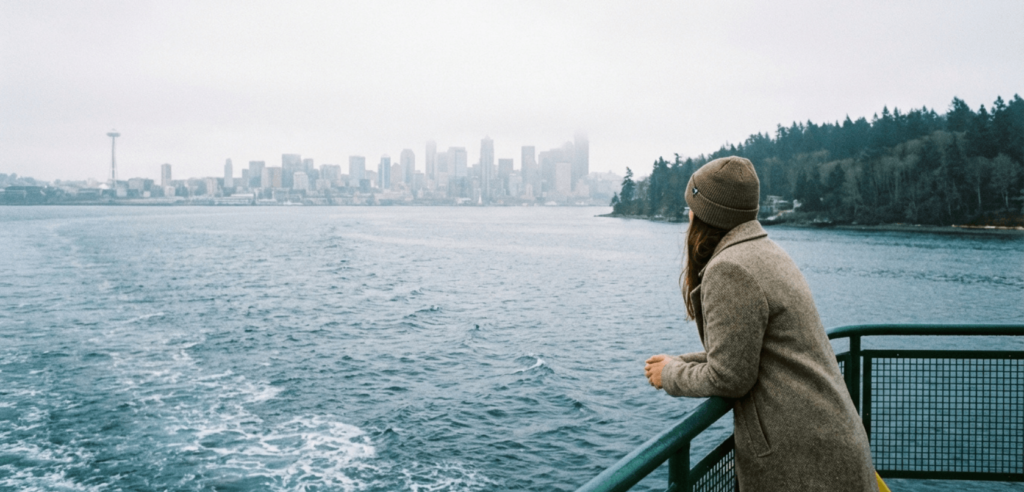
It involves nothing more than walking to the ferry terminal, buying a ticket, and sitting on the open upper deck as the city recedes behind you and the cold, clear air of Puget Sound fills your lungs. The ferry is not transportation here. It is the destination — and riding it is one of the most quietly cinematic things to do in Seattle regardless of which island you choose.
Bainbridge Island is 35 minutes across the water and feels like a different world — quieter, slower, organized around walking streets and independent shops and a deep, cultivated appreciation for the outdoors. The Bloedel Reserve, 150 acres of formal gardens, meadow, and ancient forest, is one of the most serene places in the entire Pacific Northwest. The bamboo garden and the reflection pool are places where time genuinely stops.
Vashon Island is rougher-edged, more agricultural, beloved by artists and farmers in roughly equal measure. The farm stands sell produce that was in the ground that morning. Cycling between farms and viewpoints on a clear afternoon is one of the most quietly joyful things to do in Seattle’s surrounding waters.
Whidbey Island, a longer ferry journey, carries you past the historic gun batteries of Fort Casey — massive concrete emplacements from the early twentieth century, built to protect Puget Sound from naval attack that never came, now sun-bleached and photogenic, standing above the water like ruins from a war no one remembers.
Honest Tip: The Bainbridge ferry departs from Colman Dock, steps from the Waterfront Park. No car needed. Walk on, walk off, explore on foot. The round-trip costs roughly $9 and is, measure for measure, the best-value experience in Seattle.
Alpine Ambitions: The Grand Day Trips
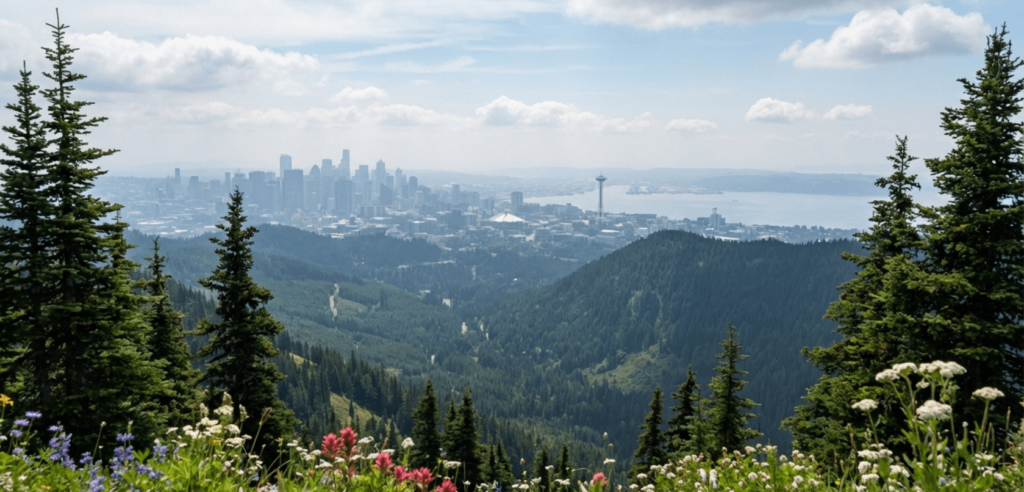
Everything described above takes place at sea level, more or less. But Seattle’s greatest privilege — its most outrageous geographic gift — is what surrounds it at elevation. And no list of epic things to do in Seattle is complete without pointing your windshield toward the mountains.
Drive 2.5 hours southeast on a clear morning and Mount Rainier fills your entire windshield. At 14,411 feet, it is the most glaciated peak in the contiguous United States, a dormant stratovolcano of such scale that it creates its own weather. The Paradise visitor area, perched at 5,400 feet in the subalpine zone, is ringed by wildflower meadows so dense and colorful in July and August that they look like the product of a landscape painter who has abandoned all restraint.
Hiking the Skyline Trail at Paradise — surrounded by the silence of altitude, the mountain rising above you, glaciers visible on every flank — is not simply one of the most epic things to do in Seattle’s surrounding region. It is one of the defining American outdoor experiences, full stop.
For pure visual drama on a different register, the North Cascades along Highway 20 are unmatched. The road climbs through increasingly vertical terrain until it reaches Diablo Lake, whose water is a color that doesn’t have a proper name. Turquoise is insufficient. The color comes from glacial flour suspended in the water, catching light differently at every hour, and standing at the overlook as a late-afternoon thunderstorm builds over the peaks behind it is the kind of scene you will attempt to describe for the rest of your life and never quite nail.
Honest Tip: For Rainier, the entry fee is $35 per vehicle. Arrive before 8 a.m. on summer weekends. For Highway 20 and Diablo Lake, no entry fee applies. The road typically closes October through spring due to snow.
The Honest Final Word on Seattle
Seattle will not perform for you. It won’t put on a show because you’ve arrived with a camera and high expectations. It is a city built on rain and pragmatism and a slightly defensive pride — the pride of a place that has been underestimated often enough to stop caring about your opinion.
But if you give it your full attention — if you walk the waterfront slowly, go underground willingly, stand at the fish ladder long enough for the salmon to appear, take the ferry for no reason except the crossing — it will give you something back. Something difficult to name and easy to recognize.
This is the city for people who appreciate depth over flash. And in that regard, it has a lot in common with the best travel writing about things to do in Atlanta — cities that reward curiosity over convenience. It shares that working-class creative DNA with the gritty, reinvented neighborhoods you’d find when exploring things to do in New Jersey, or the layered borough culture of things to do in New York. It carries the port-city restlessness you feel in things to do in Houston. But it is none of those places. It is entirely itself.
The mist will be there when you arrive. The mountains will be there, half-hidden, when you leave.
What happens in between is up to you.
Reviews
There are no reviews yet. Be the first one to write one.