
When you first step off the plane in this ancient North African kingdom, something shifts inside you — a quiet excitement that’s hard to name but impossible to ignore. The list of things to do in Morocco is as vast and layered as the shifting sands of the Sahara itself. One day you’re scaling the craggy, snow-dusted peaks of the High Atlas; the next, you’re utterly, blissfully lost inside the world’s largest living medieval medina. Morocco is a country that refuses to sit still, refuses to be neatly categorized. It will disorient you, seduce you, and leave you already planning your return before your flight home has landed. This guide is your honest companion through the chaos and the quiet — cutting through the glossy brochures to tell you what it’s really like to feel the spice markets burn your nostrils, to hear a muezzin’s call ricochet off centuries-old walls, and to watch the Sahara sky ignite with more stars than you’ve ever seen in your life.
Table of Contents
The Red City: Marrakech and the Art of Controlled Madness
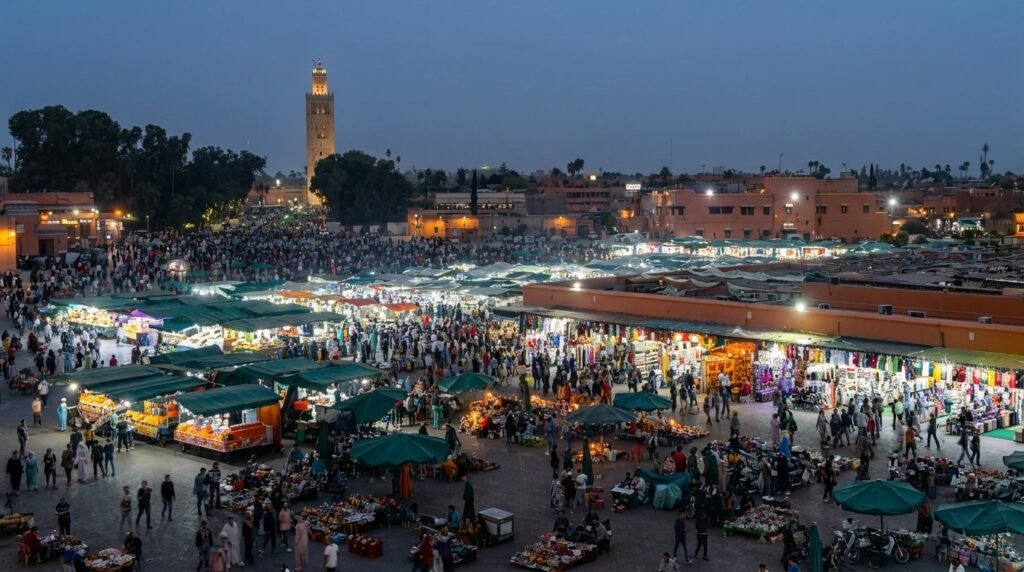
Marrakech is where most morocco tours begin, and there’s a reason for that. The city grabs you by the collar from the moment you arrive. At the center of it all is Djemaa El Fna — arguably Africa’s most electrifying public square — which transforms every single evening into a nightly carnival of storytellers, acrobats, gnaoua musicians, and snake charmers. Watch it from street level if you’re brave; retreat to a rooftop terrace with a glass of fresh orange juice if you need perspective. Both are equally valid choices.
The square is one of the most visited morocco attractions on the planet, and yes, it can be exhausting. Vendors are persistent. The energy is relentless. The trick is to stop fighting the flow and let yourself be swept along. Lean into the chaos rather than bracing against it, and suddenly, Djemaa El Fna becomes one of the most thrilling experiences you’ll have anywhere on earth.
Beyond the square, the Jardin Majorelle offers a cobalt-blue sanctuary of rare plants and cool pathways, once the private retreat of Yves Saint Laurent. It feels almost surreal — this pocket of cobalt and emerald calm tucked inside the ochre city. Nearby, the Bahia Palace and the Ben Youssef Madrasa showcase Moroccan artisanship at its finest: hand-carved stucco ceilings, geometric mosaic tilework, and cedar wood lattices that are the work of entire generations of master craftsmen. These are among the essential places to visit in Morocco for anyone who cares about sacred architecture, history, or simply beauty.
A word of practical wisdom: navigating the souks here is a skill you develop. Never begin negotiating unless you’re genuinely ready to buy. Stay courteous. Smile. Move at your own pace and don’t let the aggressive energy of vendors pull you into a transaction you didn’t intend.
Secure your spot and book your Marrakech experience today.
Fez: Stepping Through a Portal into the Middle Ages
If Marrakech is the beating heart of the country, Fez is its ancient, complicated soul. As the oldest of the four imperial cities, Fez El Bali is the world’s largest living medieval medina — a labyrinthine tangle of more than 9,000 narrow alleys where motorbikes are replaced by donkeys and wooden handcarts loaded with fresh-baked bread. It is one of those rare urban environments where you can genuinely lose yourself, not just metaphorically but literally, in the most wonderful way.
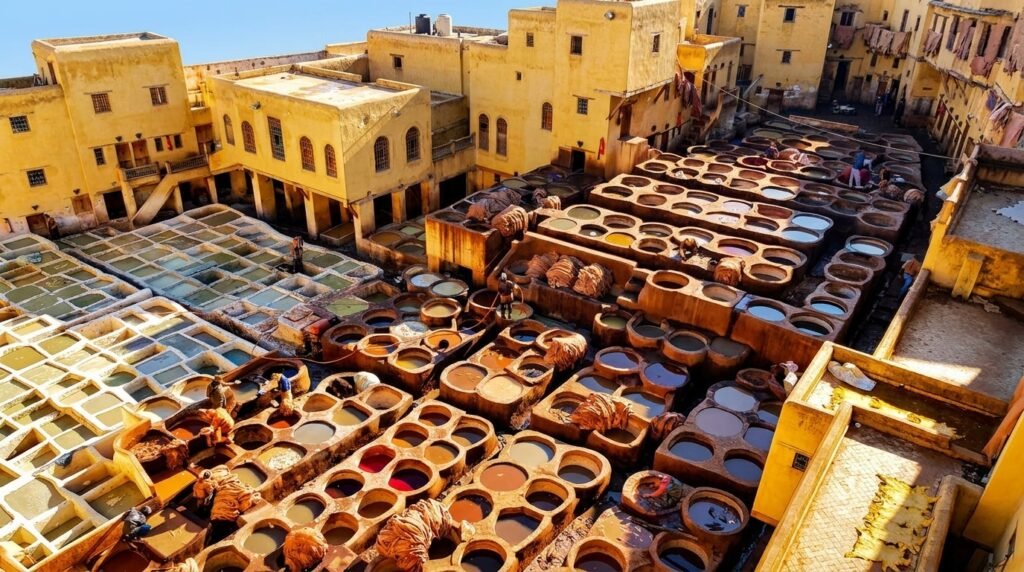
The things to do in Morocco don’t get more visceral than a morning in the tanneries of Fez. Peering down from a leather goods shop balcony onto the vast stone vats of dye — saffron yellow, indigo blue, blood red — is a scene unchanged in over a thousand years. The pungent smell hits you first (vendors will helpfully hand you sprigs of fresh mint), but once you acclimate, there’s something almost meditative about watching craftsmen work with their feet and hands in pools of natural pigment.
A food tour through the medina is one of the most rewarding activities to do in Morocco you can pursue in this city. Sample snail soup from a street vendor, tear into a msemen pancake still warm from the griddle, and track down a hole-in-the-wall bakery where you can slide your own pot of slow-cooked lamb into a communal clay oven. The Bou Inania Madrasa, with its breathtaking carved plasterwork, and the nearby artisan workshops where weavers and metalworkers practice centuries-old trades, add layers of cultural richness that few other morocco attractions can match.
Hire a local guide for your first few hours in Fez. This isn’t optional — it’s survival strategy. They’ll show you the hidden shortcuts, save you from dead ends, and introduce you to the city’s rhythms before you’re ready to wander alone.
Secure your spot and book your Fez experience today.
The Blue Pearl and the Windy Coast: Chefchaouen & Essaouira
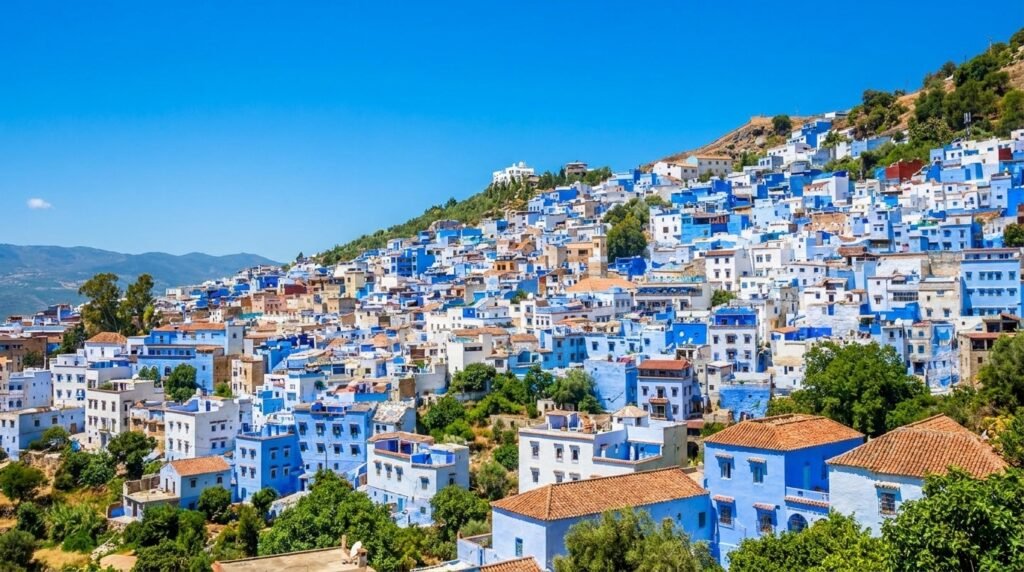
Tucked into the green, forested ridgelines of the Rif Mountains, Chefchaouen is unlike anywhere else in Morocco — or anywhere else in the world, for that matter. Its medina is painted almost entirely in shades of blue: powder blue doorways, cobalt staircases, sky-blue walls interrupted by terracotta flower pots and cascading bougainvillea. Wandering its cobbled streets in the early morning, before the day-trippers arrive and the light turns golden, is among the most quietly magical activities to do in Morocco.
Beyond the photogenic lanes, the hills around Chefchaouen hide genuine rewards. The trails of Talassemtane National Park — lush with Spanish fir forests and punctuated by luminous waterfalls — make this one of the top natural places to visit in Morocco for hikers and nature lovers. The pace of life here is slower, the vendors gentler, the mint tea poured with extra care.
Secure your spot and book your Chefchaouen experience today.
Then there’s Essaouira, the wind-battered, surf-blessed, genuinely cool Atlantic port that couldn’t be more different in feel from the mountain towns. Formerly known as Mogador, this walled city has whitewashed ramparts, vivid blue shutters, and a soundtrack of seagulls that never quite stops. It’s where Jimi Hendrix once wandered and where today’s surfers and kite-boarders treat the steady Atlantic winds as a gift. Catching waves or simply watching the pros work the break offshore is among the most exhilarating activities to do in Morocco on the coast.
The seafood at the port stalls is non-negotiable. Freshly grilled sardines, sea bass charred over charcoal, and calamari so fresh they barely need seasoning — this is Essaouira at its most honest and delicious.
Secure your spot and book your Essaouira experience today.
The Sahara Desert: Where Time Loses Its Grip
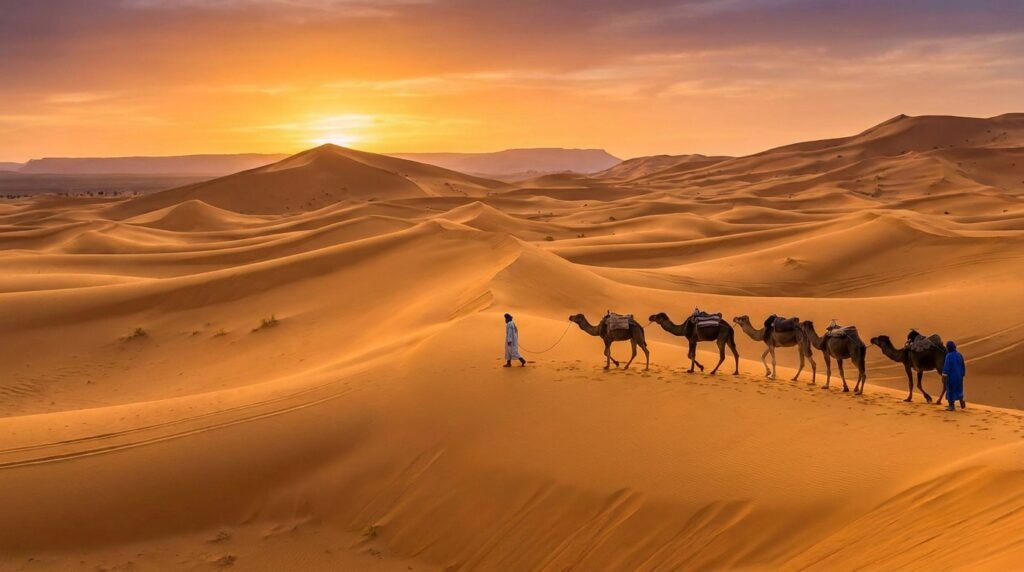
No honest account of the things to do in Morocco can skip the desert. It would be like writing about Paris and leaving out the Eiffel Tower — technically possible, entirely wrong. Whether you approach through Merzouga to reach the monumental dunes of Erg Chebbi, or push further off-route to the wilder, less-trampled Erg Chigaga via M’Hamid, what awaits you is a landscape so vast and so silent it can feel genuinely otherworldly.
The moment that tends to stay with people longest is the sunset. As the light drops low over the dunes, the sand shifts through shades of amber, burnt orange, dusty rose, and finally a deep violet-grey that feels almost mythological. Many morocco tours include overnight camps in the desert — traditional-style tents with warm Berber blankets and candlelit dinners of slow-cooked tagine — but the real payoff comes at 3am when you unzip the tent and the Milky Way stretches from horizon to horizon above you, unobstructed and overwhelming.
Practical note: go in spring or autumn. Summer in the Sahara is brutal — temperatures pushing 45°C — and deep winter nights can drop below freezing. Timing matters more here than almost anywhere else on the journey.
Along the route south, one of the most unmissable morocco attractions rises from the desert floor: Aït Benhaddou, the UNESCO World Heritage ksar (fortified village) whose ochre adobe towers have appeared in Gladiator, Game of Thrones, Lawrence of Arabia, and dozens of other productions. It’s easy to see why filmmakers keep returning — the place looks like a fever dream of ancient civilization, rising from a dry riverbed against a backdrop of stark desert hills. Most morocco tours passing through the High Atlas will stop here, but give it more than a quick hour. Climb to the top at golden hour and watch the light transform the walls.
Atlas Mountains and the Dramatic South: Trails, Gorges, and Villages
The High Atlas Mountains cut diagonally across the country like a spine, and for travelers seeking adventure, they represent some of the best activities to do in Morocco available anywhere in Africa. Climbing Mount Toubkal — North Africa’s highest peak at 4,167 meters — is a classic two-day ascent starting from the village of Imlil, less than two hours from Marrakech. You don’t need to be a technical climber; determined walkers in good fitness regularly summit. What you do need is proper layering, because the summit can be brutally cold even in summer.
Between the high-altitude trails, the remote Amazigh (Berber) villages of the Atlas offer a rare window into a way of life that has changed little across centuries. Sharing a pot of tea with a family in a mud-brick home, watching children walk to school along mule paths, listening to women sing while they work — these moments are what things to do in Morocco itineraries rarely capture on paper but always stay with you longest.
For something even less crowded, the Anti-Atlas region around Tafraoute delivers dramatic granite landscapes painted in rose and copper at sunrise, dotted with palm groves and almond orchards.
The Todra Gorge, meanwhile, is one of those places to visit in Morocco that stops you mid-step. Sheer cliffs soaring 150 meters straight up from a narrow mountain river, the gorge feels almost theatrical in its scale. Most organized morocco tours stop here for a few hours, but staying overnight in one of the small guesthouses along the gorge floor is where the real experience lives — when the day-visitors leave and the silence rushes back in, and the stars appear between the clifftops above you.
Casablanca and Rabat: Urban Icons Worth the Detour
Casablanca gets underestimated. Most visitors see it through a car window on the way somewhere else, which is a genuine mistake. The Hassan II Mosque — built partially over the Atlantic Ocean, with a retractable glass floor and a minaret that is the tallest in the world — is one of the most extraordinary pieces of religious architecture built in the 20th century. Unlike most mosques in Morocco, it welcomes non-Muslim visitors on guided morocco tours, making it one of the truly essential things to do in Morocco for architecture lovers. Downtown Casablanca is also a surprising open-air museum of Art Deco and neo-Moorish facades that reward slow, unhurried walking.
Rabat, the capital, is Morocco’s quiet achiever. Fewer tourists, more genuine day-to-day Moroccan city life, and a collection of sights that would be headline morocco attractions anywhere else. The Kasbah of the Udayas is a blue-and-white fortified neighborhood perched above the ocean, with Andalusian gardens so serene you’ll want to sit for an hour with a book. The Hassan Tower and the Mausoleum of Mohammed V together form one of the most elegant commemorative complexes on the African continent.
Because Rabat doesn’t get the tourist traffic of Marrakech or Fez, the interactions feel more natural, the streets less staged. It’s among the most rewarding places to visit in Morocco for travelers who want the authentic texture of modern Moroccan urban life.
Cultural Immersion: Hammams, Riads, and the Rhythm of Daily Life
To understand Morocco on any meaningful level, you have to participate in its rituals rather than just observe them. First among these: the hammam. These communal bathhouses — steaming, soapy, and deeply social — are part of the fabric of everyday life here, and booking yourself into one is among the most rejuvenating activities to do in Morocco you can schedule. You’ll emerge an hour later with baby-soft skin and a looseness in your muscles you didn’t know you’d been holding. Options range from neighborhood public baths (a few dirham, entirely local) to lavish spa versions in high-end riads. Try both if you can.
Then there is the question of where to sleep, and the answer, overwhelmingly, is a riad. These traditional courtyard homes — built inward around a central patio often featuring an indoor fountain, mosaic tilework, and sometimes a rooftop plunge pool — are among the best places to visit in Morocco to call home for a night. The contrast between the plain outer walls and the ornate interior is a metaphor for Morocco itself: reserved on the surface, endlessly rich within.
One experience that surprises almost every first-time visitor: the call to prayer. Echoing across the medina at dawn, the adhan is one of the defining sounds of travel in Morocco — haunting, melodic, and strangely comforting once you’ve heard it a few times. Don’t resist it. Let it become part of the texture of your trip.
History Deep-Dives: Volubilis, Meknes, and the Holy City of Moulay Idriss
Morocco’s history didn’t begin with the Arab conquest or even the Amazigh kingdoms. The country was once a province of Rome, and the ruins of Volubilis — a UNESCO World Heritage site near Meknès — are a startling reminder of that fact. Walking among its remarkably intact mosaic floors, triumphal arches, and open-air basilica, you can almost hear the clatter of sandals on stone from seventeen centuries ago. It’s one of the most historically compelling places to visit in Morocco and pairs beautifully with the nearby imperial city of Meknès.
Meknès is often described by those who’ve made it there as the most authentic of the four imperial cities — a place where the souks still function primarily for locals, not for tourists, and where you can buy a bag of freshly ground cumin without anyone trying to upsell you on a camel leather bag. It is increasingly recognized as one of the underrated morocco attractions on the northern circuit.
Perched on twin hilltops just a short drive away, the holy city of Moulay Idriss Zerhoun is where Morocco’s founding dynasty traces its origins — the tomb of Moulay Idriss I, the man who brought Islam to Morocco in the 8th century, is enshrined here. For a long time it was a place foreigners weren’t permitted to stay overnight; today it’s becoming part of many morocco tours thanks to its spiritual gravity and its sweeping panoramas over the Roman ruins below. Visiting on a Saturday, when the weekly market fills the town square, is a vivid, unfiltered look at rural Moroccan commerce.
Festivals, Literary Tangier, and Africa’s First High-Speed Rail
Timing your trip around one of Morocco’s major festivals transforms a great journey into an unforgettable one. The Gnaoua World Music Festival in Essaouira — held each June — turns the entire walled city into an open-air stage, with free concerts running from afternoon until the small hours, drawing musicians from across West Africa, Brazil, and beyond. The Mawazine festival in Rabat is one of the largest music events in the world by attendance, a sprawling multi-day celebration of global and Arabic music that floods the capital with energy.
Both are among the most culturally rich things to do in Morocco if your dates align, and both are almost entirely free of charge.
And then there’s Tangier — the cosmopolitan, slightly louche port city at the top of the country where the Mediterranean meets the Atlantic, where Paul Bowles wrote The Sheltering Sky and William S. Burroughs assembled Naked Lunch in a haze of creative frenzy. The city has a bohemian literary history unlike anywhere else in North Africa, and exploring its old cafés, bookstores, and the Kasbah museum is one of the most distinctive activities to do in Morocco for travelers with cultural appetites.
Getting there has never been easier: Al Boraq, Africa’s first high-speed train, connects Tangier to Casablanca in just over two hours at speeds up to 320km/h. That makes a Tangier day-trip genuinely viable, and the train ride itself — smooth, modern, speedy — is one of the more pleasantly surprising things to do in Morocco for infrastructure enthusiasts.
Essential Planning: When to Go, What to Pack, How to Get Around
Best time to visit: Spring (March to May) and autumn (September to October) are near-universally considered the ideal windows for exploring Morocco. Temperatures are comfortable for both city walking and desert trekking, the light is extraordinary for photography, and the crowds — while still present — haven’t yet reached their summer peak. Winter is cool to cold in the mountains and north, occasionally rainy in cities, but offers dramatically reduced crowds and some of the best deals on morocco tours and riad accommodations.
What to pack:
- Lightweight, loose-fitting clothing that covers shoulders and knees — practical for mosque visits and respectful in rural areas
- Comfortable, broken-in walking shoes (medinas are unforgiving on feet and ankles)
- European-style power adapter
- Sun protection: hat, SPF, and UV sunglasses
- Warm layers for desert nights and mountain stages — temperatures can drop sharply after sunset
Getting around: Renting a car is the best way to reach the most remote places to visit in Morocco — the Anti-Atlas, the southern oases, the unmarked mountain roads — but be mentally prepared for aggressive local driving conventions and narrow medina lanes that aren’t always on your GPS. For inter-city travel, the CTM and Supratours bus lines are clean, reliable, and affordable. Trains connect the major northern cities efficiently. Many travelers opt for organized morocco tours for the south specifically, handing off the logistics of Sahara navigation and High Atlas passes to experienced local guides.
Safety and Advice: What No One Tells You Before You Go
Is Morocco safe? Yes — resoundingly, for the vast majority of visitors. The country has invested heavily in tourism infrastructure and security, and serious crime against tourists is rare. That said, a few honest notes are worth hearing before you land.
The markets can feel overwhelming. Vendors in tourist-heavy areas — especially in Marrakech’s souks — can be aggressive in their approach. The golden rule is simple: stay friendly, say “la shukran” (no thank you), keep walking, and never allow frustration to become rudeness. The moment you engage with annoyance, the dynamic shifts against you.
Solo female travelers frequently report feeling comfortable and welcomed throughout Morocco, particularly in the imperial cities and coastal towns. Common-sense precautions apply — stick to well-lit streets after dark, dress modestly in conservative areas, and be clear and direct about boundaries when needed.
One more thing that guidebooks tend to leave out: Morocco rewards slowness. The travelers who rush through six cities in ten days miss what makes this country genuinely special. Pick fewer places to visit in Morocco and give them time. Sit in the same café two mornings in a row. Let the medina disorient you. Say yes to the tea invitation. The country reveals itself gradually, and what it reveals, when you give it the space to do so, is extraordinary.
Frequently Asked Questions About Things to Do in Morocco
How many days do you need to see Morocco properly? A minimum of 10 to 14 days covers the major highlights — Marrakech, Fez, the Sahara, and one coastal stop. Three weeks allows you to breathe and find the hidden corners. Budget travelers booking independent morocco tours often find two weeks the sweet spot between depth and affordability.
What are the best things to do in Morocco for first-timers? Explore the Djemaa El Fna in Marrakech, get lost in the Fez medina, watch a Sahara sunset at Erg Chebbi, visit Aït Benhaddou, and spend at least one night in a traditional riad. These five experiences give you the core of what Morocco offers.
Are organized morocco tours worth it? For the Sahara, the High Atlas, and the southern desert routes, absolutely. Local guides bring context, safety, and access that independent travelers struggle to replicate. For the imperial cities, independent exploration with a local guide booked for half a day is usually sufficient.
What is the currency and how much should I budget? Morocco uses the Moroccan Dirham (MAD). Mid-range travelers can comfortably spend between €50–€100 per day including accommodation, food, local transport, and entrance fees. Budget travelers can do it for less; those seeking luxury riads and private morocco tours should budget significantly more.
Is bargaining expected in Moroccan souks? Yes, in tourist markets. Starting prices are often two to four times the final sale price. In fixed-price shops and supermarkets, prices are non-negotiable. The process is meant to be friendly and conversational — enjoy it as a social ritual rather than a combat.
The sheer variety of things to do in Morocco means no two trips here are ever the same. From the medina maze of Fez to the silent grandeur of the Sahara, from the surf breaks of Essaouira to the Roman ghosts of Volubilis, this kingdom holds more layers than any single journey can fully unpack. Which is, of course, the whole point. Morocco doesn’t offer itself up all at once. It saves things for next time. And there will be a next time — almost everyone who goes makes sure of it.
Why Morocco Belongs on Every Traveler’s Bucket List
Among all the things to do in Morocco, perhaps the most underrated is simply wandering without a plan. The country’s medinas are designed to disorient — and once you accept that, they become endlessly generous. Every wrong turn produces something unexpected: a courtyard of painted tiles, a woodworker’s workshop, an elderly man selling hand-dipped candles by the basket.
The diversity of morocco attractions available to visitors is genuinely remarkable. Within a single two-week trip, you can go from desert dunes to Atlantic surf breaks, from Roman ruins to jazz festivals, from mountain villages to gleaming modern rail lines. Very few countries in the world offer this range across such a compact geography, and that’s exactly why morocco tours continue to grow in popularity year after year.
Activities to do in Morocco span every interest imaginable — culinary, historical, adventurous, spiritual, artistic. If you’re a food lover, the country is a master class in spice-driven, slow-cooked, lovingly assembled cuisine. If history is your lens, the layers here — Amazigh, Roman, Arab, Andalusian, French — are dense enough to fill a career of study. If you simply want beautiful landscapes and physical challenge, the activities to do in Morocco in the mountains and the desert will push you in all the best ways.
The morocco attractions that tend to be overlooked — Meknès, Saidia, the Draa Valley, the coastal town of Asilah with its mural-painted medina — reward travelers who do their research and book morocco tours that go beyond the standard circuit. These are the places to visit in Morocco that provide the stories you’ll tell for years.
When thinking through things to do in Morocco, let your curiosity lead. The country is generous to those who show up with open eyes and a willingness to be changed by what they find. Book a riad in an old medina. Hire a local cook for an afternoon. Take the slow road. The best morocco tours aren’t always the most efficient ones — they’re the ones that leave room for the unexpected.
The breadth of activities to do in Morocco is matched only by the warmth of the people you meet along the way. That warmth — genuine, unhurried, expressed through glasses of mint tea and elaborate hospitality rituals — is perhaps the most enduring morocco attraction of all. It’s not something you’ll find in a guidebook itinerary. It’s something that happens to you between the sights, in the spaces where real travel lives.
Hidden Gems and Insider Tips: Making the Most of Your Morocco Trip
Most travelers who book morocco tours default to the same five-city loop. That’s fine — the classics are classics for good reason. But if you have extra days and genuine curiosity, there are morocco attractions off the beaten path that will become the stories you tell at dinner parties for years.
The coastal town of Asilah, an hour south of Tangier, hosts an international mural festival every summer that transforms its medina walls into an open-air gallery. It’s one of the most visually striking morocco attractions in the north, and almost no mainstream morocco tours include it on their standard itinerary. The same goes for the Draa Valley — a long, lush corridor of palm groves, kasbahs, and desert light running south toward the Sahara — which is among the most extraordinary places to visit in Morocco for landscape photographers and slow travelers.
For travelers wanting activities to do in Morocco that go beyond sightseeing, consider a cooking class with a local family in Fez, a sunset camel trek that doesn’t require an overnight camp, or a half-day olive oil tasting in the groves around Meknès. These quieter, more intimate activities to do in Morocco often produce the most meaningful travel memories. They’re not on the highlights reel, but they’re what you’ll remember most clearly a decade from now.
The morocco tours industry has matured considerably — you can now find responsible, small-group operators who work directly with Amazigh guides, stay in family-run guesthouses, and route their itineraries to support local economies rather than drain them. Choosing these operators makes a real difference, both to your experience and to the communities that depend on thoughtful tourism.
Whatever shape your trip takes, the morocco attractions will exceed your expectations. They always do. This is a country built on the art of hospitality, on the pleasure of ceremony, and on a deep pride in a culture that has survived — and absorbed — thousands of years of history. It shows in every carved doorway, every pot of slow-simmered harira, every hand-knotted rug, every sunset over the Sahara.
Reviews
There are no reviews yet. Be the first one to write one.