
Things to do in Miami begin the moment the plane descends and you catch your first glimpse of that impossible skyline rising out of turquoise water — a fever dream of glass, palm trees, and salt air that smells like ambition and coconut oil baked together under a relentless subtropical sun. This city doesn’t ease you in. It grabs you by the collar and pulls you into its current, and the only sensible response is to let it.
Miami is not one city. It’s a dozen neighborhoods stitched together by causeways and contradictions — Latin soul fused with European glamour, gritty art scenes living next door to million-dollar yachts, century-old history hiding in plain sight behind neon-washed facades. Beyond the neon, the city offers a diverse map of the best places to visit in Miami, each with its own secret language and rhythm. The things to do in Miami stretch far beyond the postcard version of bronzed bodies on white sand.
Table of Contents
Best Things to Do in Miami You Can’t Afford to Miss
When it comes to the best things to do in Miami, ordinary simply isn’t in the vocabulary. Whether you’re stepping onto South Beach for the first time or returning to chase that electric feeling you never quite shook, the best things to do in Miami stretch far beyond what any single itinerary can hold. From neon-lit Art Deco boulevards and world-class museums to steaming Cuban coffee at a Calle Ocho ventanita and airboat rides through ancient Everglades wilderness — every day in this city hands you something worth remembering. We’ve done the hard work of finding the best things to do in Miami, so you don’t have to. 👇
- 3-Day Florida Getaway: Miami, Everglades & Key West Snorkel
- Guided Off-Road Buggy Tour with Photos & Videos
- South Beach Private 50-Minute Private Flight Tour
- Hop-on Hop-off Open-top Bus Tour with Optional Cruise
- Miami City Tour: 5 Sites, 4 Stops, One Epic Experience
- Everglades Airboat, Wildlife Exhibit & Roundtrip Bus
- Miami Skyline Cruise of Millionaire Homes
- Wynwood Walls, Galleries, and Murals Guided Tour
- ‘Superblue Miami’ Immersive Art Experience Ticket
- Museum of Ice Cream Entry Ticket
- 1-hour Jetcar Rental
- Frost Museum of Science and Planetarium Entry Ticket
- Biscayne Bay Millionaire’s Homes Sightseeing Cruise
- Guided Raccoon Island Walk & Sandbar Swim Experience
- Zoo Miami: General Admission Ticket
- Miami’s Best Slingshot Rental | Drive for 1–24 Hours
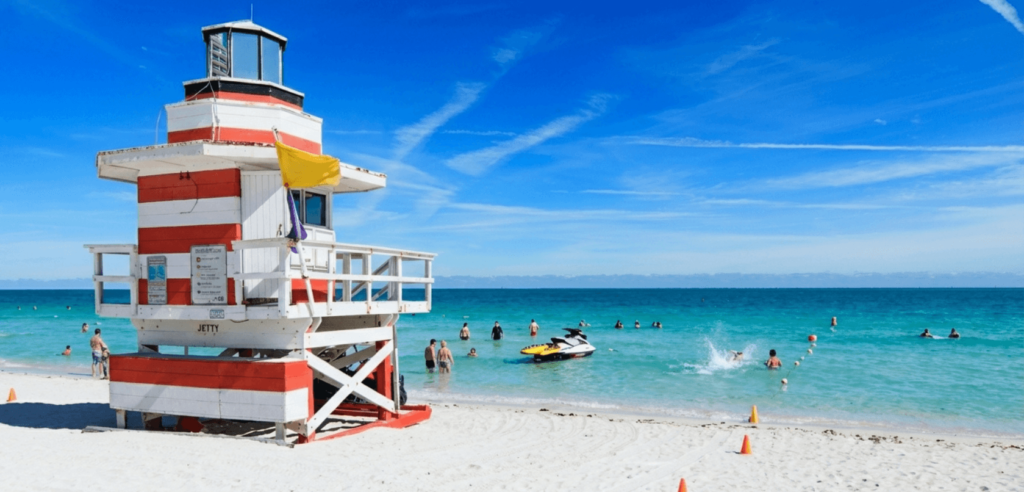
South Beach & the Art Deco District: Neon, History, and Ocean Drive After Dark
There is a moment on Ocean Drive, just after the sun drops behind the mainland and the sky turns that impossible bruised-violet color, when the Art Deco buildings light up and Miami becomes something out of a waking dream. The pastel facades — mint green, coral pink, powder blue — glow like lit aquariums. The air smells of salt water and grilled garlic. Somewhere a speaker is playing something with too much bass, and everyone on the sidewalk looks like they belong in a film that hasn’t been made yet.
South Beach sits at the top of every list of things to do in Miami, and justifiably so. But most visitors skim the surface — they rent a beach umbrella, drink an overpriced mojito, and call it done. The real reward comes from slowing down and actually reading the architecture.
The Hidden Stories Inside the Pastel Facades
The Art Deco Historic District, stretching roughly from 5th to 17th Street along Collins Avenue, Ocean Drive, and Washington Avenue, is the largest concentration of Art Deco architecture in the world. These buildings were constructed between the 1920s and 1940s, and they were radical for their time — streamlined curves inspired by ocean liners and locomotives, eyebrow awnings designed to shade windows from the brutal Florida sun, bas-relief details depicting flamingos, sunbursts, and nautical motifs.
Walk with the Miami Design Preservation League on one of their guided tours and you’ll learn that the Carlyle Hotel was used as a filming location for Scarface, that the Breakwater’s neon sign has been restored to its original 1939 spec, that the Colony Hotel is considered the most photographed building in the district. This is the kind of layered detail that transforms sightseeing into genuine understanding.
Practical tips for South Beach:
- Visit Ocean Drive before 10 AM to see the architecture without the crowds and heat
- The Art Deco Welcome Center on Ocean Drive offers self-guided audio tours
- Swim at 12th Street Beach — locals’ preference over the more crowded central stretch
- Book the Versace Mansion (now Casa Casuarina) for brunch if the budget allows — the mosaic pool alone is worth it
- Avoid restaurant traps on the main strip; walk one block west to Espanola Way for better food at half the price
The things to do in Miami that leave lasting impressions are rarely the loudest ones. Standing alone in front of the Cardozo Hotel at 7 AM, watching the light shift across its curved facade while the city still sleeps — that will stay with you longer than any rooftop party.
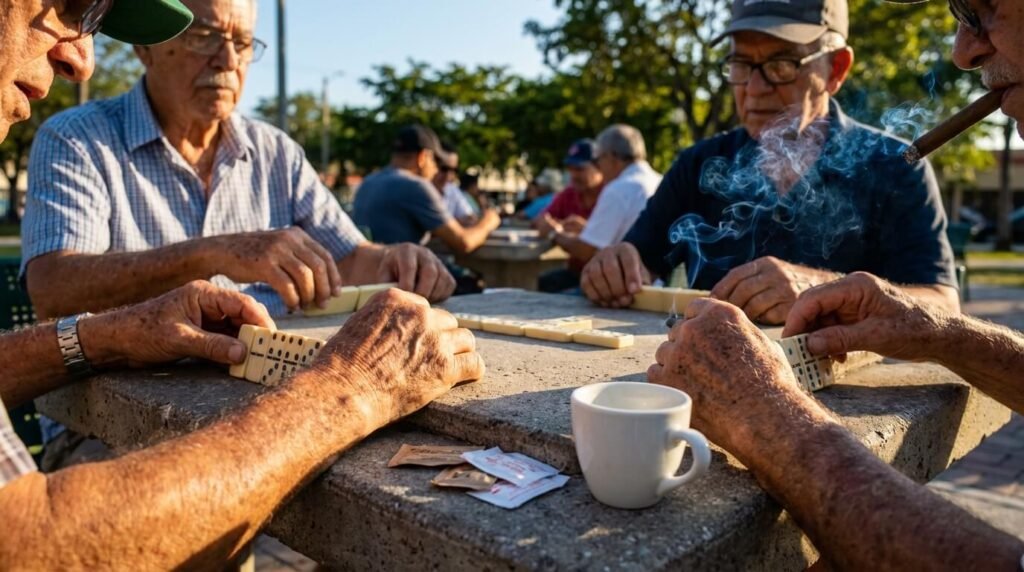
Little Havana (Calle Ocho): Dominoes, Cafecito, and the Soul of an Exile City
Turn left off the tourist trail and drive west on SW 8th Street, and Miami reveals a different kind of magic entirely. If you want to understand the city’s immigrant soul, Little Havana stands as one of the best places to visit in Miami for an authentic cultural immersion. It is the heartbeat of a community that rebuilt an entire culture in exile — Cuban families who arrived in the 1960s with almost nothing and proceeded to remake a piece of Miami in the image of the homeland they’d left behind.
The things to do in Miami’s Little Havana are sensory experiences first and foremost. You smell it before you see it — a thick, complex waft of dark-roasted coffee, fried plantains, and cigar smoke that hits you at the corner of Calle Ocho and 15th Avenue and doesn’t let go.
The Ventanita: Miami’s Most Important Coffee Window
Stop at Versailles Restaurant, the self-declared “World’s Most Famous Cuban Restaurant,” and order a colada — a small plastic cup of espresso so intensely sweet and strong it feels like a handshake from a stranger with a very firm grip. Stand at the ventanita (the walk-up window) like everyone else, don’t sit down, and drink it in three sips the way it’s meant to be consumed. This is not a coffee experience. It’s a cultural ritual, and it’s one of the most authentic things to do in Miami regardless of your travel style.
A few blocks down, at Maximo Gomez Park — “Domino Park” to everyone who actually goes there — old men gather every afternoon under the shade of a tin roof and play dominoes with a competitive intensity that suggests much more than a game is at stake. Generations of memory, displacement, and pride click across those tables. Visitors are welcome to watch. Some days, if you’re lucky and patient, someone will wave you over to play.
Calle Ocho’s Cultural Layers
Calle Ocho is also where you’ll find:
- Ball & Chain — a 1930s jazz club revived as a venue where salsa, jazz, and Afro-Cuban rhythms spill out onto the street on weekend nights
- Cubaocho Museum & Performing Arts Center — a genuine treasure, combining a bar, gallery, and rotating exhibitions of Cuban art and photography
- Azucar Ice Cream Company — try the abuela maria flavor (Maria cookie, cream cheese, guava) and understand immediately why things to do in Miami always circle back to food
- Tower Theater — a beautifully restored 1926 cinema that now screens international and Latin American films
The things to do in Miami that connect you to its immigrant soul are concentrated right here, within six walkable blocks. Don’t rush through it.
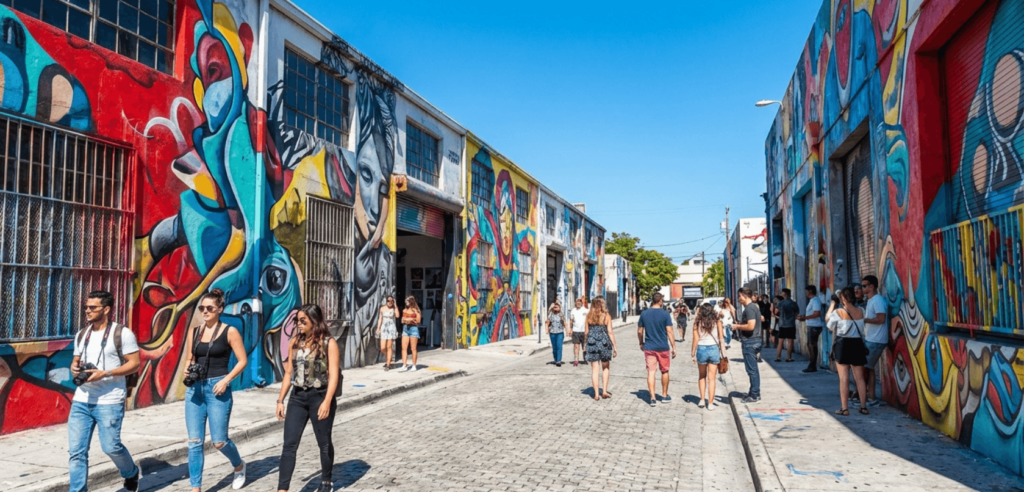
Wynwood Walls: Where a Warehouse District Became the World’s Outdoor Museum
Fifteen years ago, Wynwood was a forgotten industrial neighborhood — cracked concrete, shuttered warehouses, and the particular kind of silence that settles over places the city has stopped looking at. Then Tony Goldman had an idea: invite the world’s greatest street artists to transform the blank walls of those warehouses into a permanent outdoor gallery.
The result is one of the most visually overwhelming things to do in Miami, and one of the most significant developments in public art in recent American history. The Wynwood Walls now draw over a million visitors a year, and the neighborhood around them has exploded into a dense ecosystem of galleries, boutiques, breweries, and restaurants.
What to Know Before You Go
The walls themselves are best experienced on a weekday morning, when you can stand in front of a Shepard Fairey mural or a JR installation without a crowd pressing behind you. The main complex is curated — artists are invited, work is commissioned, and the result is a coherent collection rather than random tagging. Outside the walls, the surrounding streets offer a more spontaneous, layered experience of street art in various states of completion and decay.
Practical tips for Wynwood:
- The Wynwood Walls charge a small admission fee; surrounding street art is completely free
- Gramps bar on NW 24th is an unpretentious local spot worth stopping at
- The Margulies Collection and the de la Cruz Collection are serious private galleries nearby — free or low admission, world-class contemporary art
- Visit during Wynwood Art Walk (second Saturday of each month) for gallery openings and live events
things to do in Miami for art lovers begin and end in Wynwood, but the experience of watching a neighborhood resurrect itself through creativity is something available to any curious visitor willing to look past the Instagram hotspots.
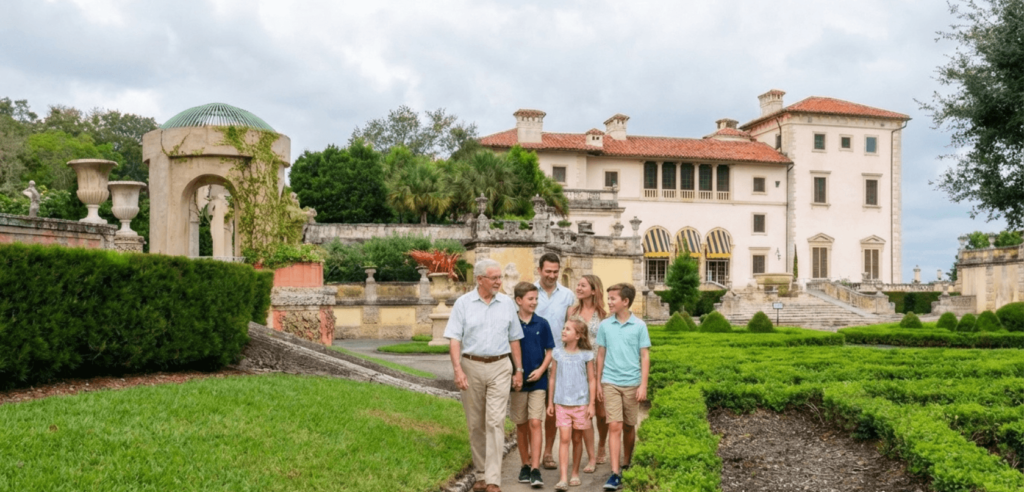
Vizcaya Museum & Gardens: An Italian Palace at the Edge of the Tropics
Nothing in Miami quite prepares you for Vizcaya. You turn off South Bayshore Drive, pass through an archway of banyan trees, and suddenly find yourself standing before a 70-room Italian Renaissance villa overlooking Biscayne Bay, its stone balustrades draped in tropical vines, its formal gardens pressing against the edge of a mangrove hammock.
James Deering, the International Harvester magnate, built Vizcaya between 1914 and 1922 as his winter retreat. He imported European antiques, Renaissance art, and Baroque furniture — then set them inside a structure designed to look as though it had been standing for centuries. The result is surreal in the most satisfying way: a European fantasy transplanted into subtropical wilderness.
The things to do in Miami rarely offer this kind of contemplative, unhurried beauty. Vizcaya rewards slow visitors — those willing to wander the garden’s secret grottos, stand at the edge of the bay and watch the stone barge breakwater (designed as an outdoor party platform), and sit quietly inside rooms that feel borrowed from another continent and another century entirely.
Practical tips for Vizcaya:
- Arrive early — the gardens are most beautiful in the morning light
- The house tour is self-guided; audio guides are available and genuinely informative
- The café on the grounds is decent; the gift shop carries reproductions of the estate’s historic photographs worth owning
- Vizcaya hosts occasional evening events — check the calendar before your visit
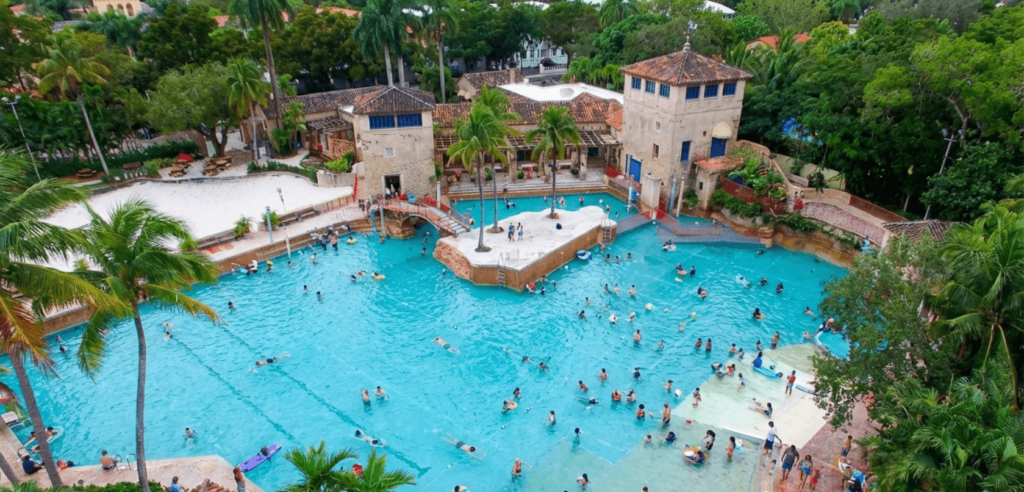
Coral Gables & The Venetian Pool: Beauty Carved from Coral Rock
Some cities build monuments. Coral Gables built an entire philosophy. George Merrick, the developer who conceived this planned community in the 1920s, called his vision the “City Beautiful” — and unlike most grandiose real estate promises, he actually delivered. Walking through Coral Gables today feels like stepping into a Mediterranean village that somehow drifted across the Atlantic and anchored itself in South Florida, surrounded by bougainvillea and banyan trees.
The things to do in Miami’s most elegant suburb begin with simply walking the streets. Merrick imported architectural influences from Spain, Italy, France, and China, creating a neighborhood of startling visual coherence where even the street signs are carved from coral rock. Miracle Mile — despite the tourist-trap name — has genuine charm, lined with independent restaurants and boutiques that have held their ground against chain sprawl.
But the crown jewel is the Venetian Pool, and nothing else in Miami is quite like it.
The Most Beautiful Swimming Hole in America
In 1923, workers finished quarrying coral rock from a site in the middle of Merrick’s new development, leaving behind a jagged, ugly pit. Merrick’s solution was characteristically audacious: fill it with water, line it with Venetian-style bridges and loggias, plant tropical vegetation along its banks, and open it as a public swimming pool. The result is a 820,000-gallon pool fed by artesian wells, its water so clear and turquoise that it looks digitally enhanced even in person.
things to do in Miami for families consistently point here — the Venetian Pool is genuinely suitable for all ages, the admission is modest, and the experience of swimming in a coral rock grotto draped in wisteria is irreplaceable. Johnny Weissmuller and Esther Williams both swam here during the golden era of aquatic performance. The water is drained and refilled each night during peak season, meaning you’re always swimming in something genuinely clean.
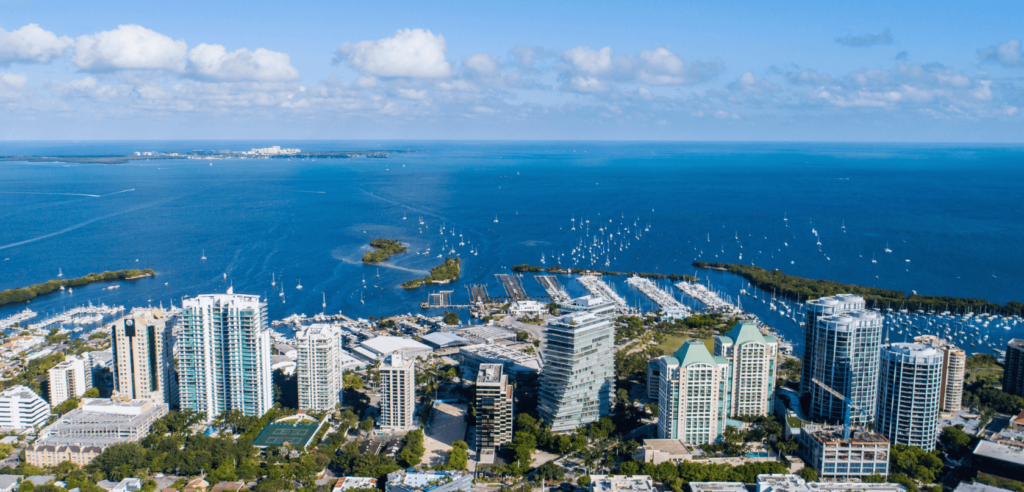
Coconut Grove: Where Miami Exhales
Drive south from Coral Gables and the urban density softens almost immediately. The canopy thickens, old banyan trees arch over the road, and the atmosphere shifts from polished to pleasantly rumpled. Coconut Grove is Miami’s oldest continuously inhabited neighborhood — Bahamian sailors and New England intellectuals settled here in the 1880s — and it carries its age with a certain bohemian ease.
The things to do in Miami’s Grove are quieter than elsewhere, and that’s the point. Brunch at GreenStreet Café under the trees. Browse the independent bookshops. Rent a kayak from the marina and paddle Biscayne Bay in the early morning when the water is glass-smooth and the only sounds are birds and the distant hum of the city waking up. The Peacock Park waterfront offers one of the most underrated sunset views in Miami — no cover charge, no velvet rope, just sky and water going pink together.
The CocoWalk redevelopment brought new energy to the village center without entirely erasing its character. things to do in Miami for those who find South Beach exhausting tend to end up here, in this shaded, unhurried pocket where the city’s original soul still breathes.
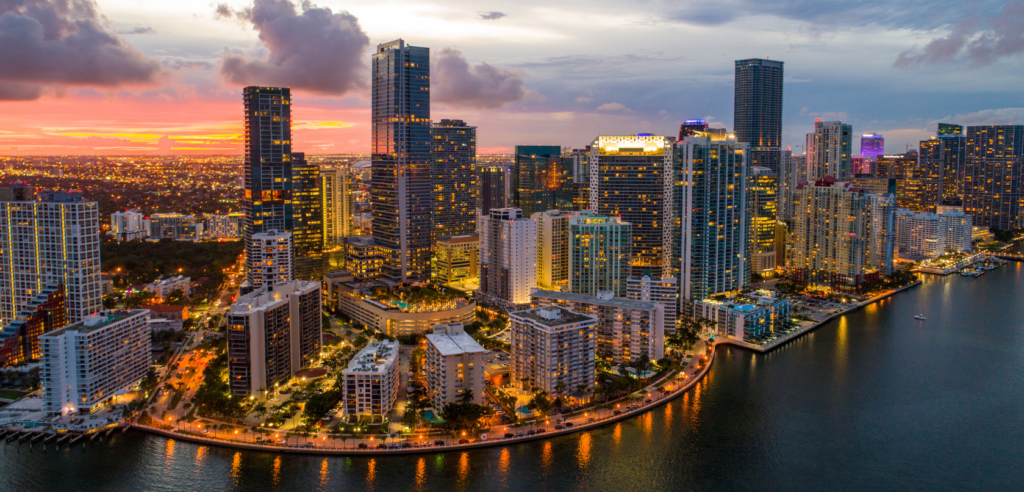
Brickell & Downtown: The Vertical City
Cross the Miami River heading north and the scale shifts dramatically. Brickell is Miami’s financial district — towers of glass and steel climbing straight up from the bay, restaurants on the ground floors of luxury condominiums, a Metromover train gliding silently overhead at second-story level connecting it all together. People call it the “Manhattan of the South,” which is both accurate and slightly misleading — Manhattan never had this light, this heat, this particular quality of salt air threading between the skyscrapers.
Things to do in Miami’s urban core have multiplied rapidly over the last decade. Brickell City Centre is a genuinely thoughtful mixed-use development — climate-controlled walkways connecting retail, dining, and hotel space in a way that acknowledges Miami’s brutal summer heat rather than ignoring it. The Pérez Art Museum Miami (PAMM) sits at the edge of Museum Park, its hanging gardens cascading down toward the bay, its permanent collection one of the strongest concentrations of contemporary Latin American and Caribbean art in the country.
Walk the Miami Riverwalk at dusk and watch the working waterfront operate alongside the pleasure boats — commercial barges, fishing vessels, water taxis — and you get a glimpse of the city’s actual economic machinery beneath the glamorous surface. things to do in Miami that reveal how the city actually functions, rather than how it presents itself, tend to happen along this river.

The Everglades Day Trip: Prehistoric Wilderness at the City’s Edge
No list of the best places to visit in Miami is complete without acknowledging the raw, prehistoric beauty of the Everglades just forty-five minutes west of the city center. At this point, the urban sprawl simply stops. The highway runs arrow-straight into a horizon of sawgrass prairie stretching in every direction, the sky enormous and unpunctuated, the silence absolute except for wind and birdsong.
Airboat tours are the accessible entry point: loud, exhilarating, and effective at covering ground across the shallow marsh. They deliver you close enough to American alligators, roseate spoonbills, and anhinga birds to understand that this ecosystem operates on entirely different terms than the city behind you. For something quieter and more immersive, rent a canoe or kayak and paddle the Nine Mile Pond loop through dwarf cypress forest — you’ll likely have it entirely to yourself.
The things to do in Miami’s Everglades fringe include excellent birding at Shark Valley (rent a bicycle and ride the loop road at dawn), ranger-led slough slogging through knee-deep water in Big Cypress, and simply sitting at the edge of the Anhinga Trail at Royal Palm and watching an ecosystem that has existed for 5,000 years conduct its slow, indifferent business.
The Practical Blueprint: How to Navigate Miami Like a Local
Transportation: The Honest Truth About Getting Around
Rent a car. That is the baseline reality for anyone wanting genuine freedom across Miami’s neighborhoods. The city sprawls across a geography that was designed around the automobile, and while public transit exists and works in specific corridors, relying on it exclusively will strand you.
That said, I-95 through Miami is a committed relationship requiring patience. Rush hour — which in Miami runs from roughly 7–9:30 AM and 4–7:30 PM — can turn a ten-mile journey into a 45-minute exercise in blood pressure management. The locals’ workaround: US-1 (South Dixie Highway) runs parallel to the expressway and moves more reliably during peak hours.
Within Brickell and downtown, the Metromover is free, efficient, and genuinely useful — a driverless elevated train connecting the core neighborhoods and the main transit hub at Government Center. Uber and Lyft operate reliably throughout Miami. Things to do in Miami’s South Beach are walkable once you’re there; the challenge is getting your car parked (garages on Collins and Washington are your best options).
Weather & Timing: The Secrets the Tourism Board Won’t Emphasize
Miami’s “Secret Winter” runs November through April — low humidity, temperatures in the low-to-mid 70s, no afternoon thunderstorms, and the tourist crowds concentrated at the manageable end of the spectrum rather than the overwhelming one. This is the best time to experience the things to do in Miami outdoors.
Hurricane season officially runs June through November, with peak risk in August and September. The realistic advice is to monitor forecasts rather than avoid the season entirely — most years pass without direct impact, and summer rates drop dramatically.
“June Gloom” is a local nickname for the early rainy season — afternoon storms that build fast and drop impressive rainfall, usually clearing by evening. Build outdoor activities into your mornings, and treat the afternoon storms as a signal to visit a museum or take a long lunch.
Budgeting: What Miami Actually Costs
Budget traveler (under $150/day): Stay in a Wynwood or Little Havana guesthouse, eat at ventanitas and local spots on Calle Ocho, use Metromover, and prioritize free attractions — the beach, Vizcaya’s gardens, Wynwood street art. Absolutely achievable.
Mid-range ($150–$400/day): A decent South Beach or Brickell hotel, one or two proper restaurant meals daily, museum admissions, and an Everglades tour lands comfortably here. things to do in Miami at this budget include nearly everything worth doing.
Luxury ($400+/day): The Edition, the Faena, or the COMO Metropolitan; dinner at Le Bouchon du Grove or KYU; private boat charters on the bay. Miami’s luxury ceiling is genuinely high — the city caters to this market with serious enthusiasm.
Safety & Local Etiquette: Blending In
Miami is a safe city for tourists who exercise standard urban awareness. Stay alert at night in areas around Overtown and parts of Liberty City. Keep valuables out of sight in parked cars — rental vehicles are recognizable targets. On South Beach, the main strip is heavily patrolled; the side streets deserve more attention.
Etiquette matters here. Speak some Spanish if you have it — in Little Havana, it’s appreciated rather than merely tolerated. Don’t rush the cafecito ritual. Tip generously in the service industry; Miami’s hospitality workforce depends on it. And understand that Miami runs on its own clock — dinner before 8 PM marks you immediately as a tourist, and the nightlife doesn’t achieve full momentum until midnight.
Why Miami Never Quite Lets You Go
There’s a specific quality of light in Miami late on a January afternoon — golden, angled, almost cinematic — that falls across a city going about its business in three languages simultaneously, the bay burning copper to the east and the Everglades going dark to the west. The things to do in Miami could fill a month without repetition. But the real reason people return isn’t the beaches, or the art, or the food, extraordinary as all of those are.
It’s the feeling of a city still becoming itself. Miami has always been a place where people arrive with nothing but nerve and proceed to build something improbable — Cuban exiles, Haitian immigrants, artists, architects, developers, musicians, chefs. The energy that produces is restless, combustible, and deeply alive. You can feel it walking Calle Ocho at noon, or standing at the edge of the Everglades at dawn, or watching the Art Deco buildings catch fire in the last light of an Ocean Drive evening.
The things to do in Miami are, at their core, invitations to witness a city that refuses to stay still. And that, more than any single attraction or neighborhood or meal, is what makes it genuinely unforgettable.