
Places to visit in Miami will redefine everything you thought you knew about American cities. This isn’t Vegas with its manufactured fantasy, and it isn’t New York with its relentless gray hustle. Miami is something rawer, stranger, and far more beautiful — a city that sweats, pulses, and glitters all at once. The salt air hits you the moment you step outside the airport. By the time you’ve had your first café cubano, you’re already half in love.
Table of Contents
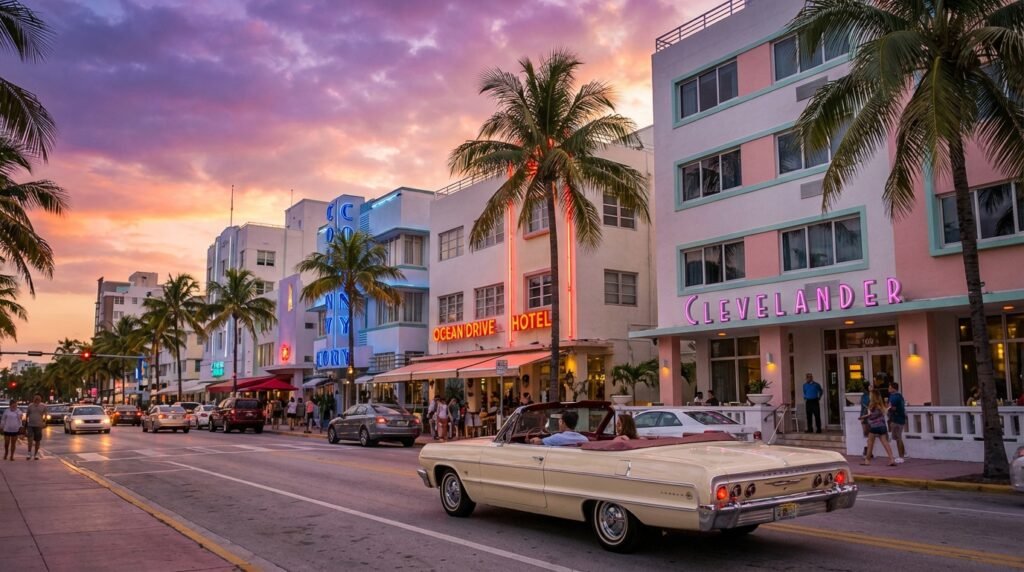
South Beach & Ocean Drive: Where the Atlantic Meets Art Deco Glamour
Walk Ocean Drive at golden hour and try — just try — not to stop every twenty feet. The light does something extraordinary here. It catches the pastel facades of the Art Deco buildings and turns them into something almost edible: mint green, flamingo pink, butter yellow. These aren’t replicas or theme park recreations. They’re the real thing — nearly 800 preserved historic structures that make South Beach one of the most architecturally significant places to visit in Miami, and arguably in the entire country.
The Art Deco Historic District stretches roughly from 5th to 15th Street along Ocean Drive and Collins Avenue. It was saved from demolition in the 1970s largely thanks to activist Barbara Capitman, and today it functions as an open-air museum that also happens to have rooftop bars and world-class restaurants inside it. That tension — history and hedonism sharing the same zip code — is quintessentially Miami.
The Sensory Experience of South Beach
You smell the ocean before you see it. Then you hear it — waves folding over themselves, the distant thump of bass from a hotel pool party, the percussion of rollerbladers on the boardwalk. South Beach engages all five senses simultaneously and without apology.
The beach itself is wider than most people expect. Lifeguard stands painted in bold primary colors punctuate the sand like modern sculptures. Rent a beach chair early (by 10 AM the good spots are gone) and spend a morning just watching Miami exist. The crowd is extraordinary — multilingual, multi-generational, dressed in everything from designer swimwear to nothing much at all.
Practical Tips for South Beach
- Best time to visit: October through May, before the brutal summer humidity peaks
- Parking: Use the 7th Street Garage or the 12th Street Garage — metered street parking on Ocean Drive is a trap
- Don’t miss: The Wolfsonian-FIU Museum on Washington Avenue — a world-class design museum hiding in plain sight
- Eat: Lunch at Puerto Sagua on Collins Avenue, a no-frills Cuban diner that’s been feeding South Beach since 1962
- Walk: The entire stretch of Ocean Drive from 5th to 15th Street takes about 25 minutes at a leisurely pace — do it twice, once in daylight and once after dark
After sunset, Ocean Drive transforms. The neon signs flicker on, the open-air restaurant terraces fill with a beautiful chaos of conversation in six languages, and the street takes on the quality of an old Hollywood film set — glamorous and slightly unreal. Among all the places to visit in Miami, South Beach at night carries an energy that’s genuinely difficult to replicate anywhere else on Earth.
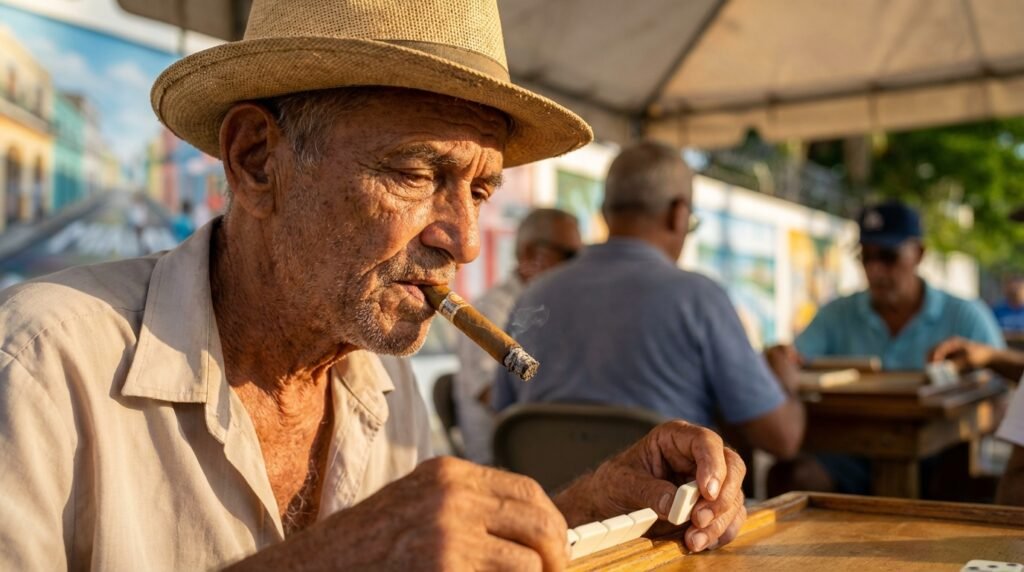
Little Havana & Calle Ocho: The Beating Cuban Heart of Miami
Drive west on 8th Street — Calle Ocho to everyone who matters — and the city shifts beneath you. The billboards switch to Spanish. The colors get louder. The smells change: roasting pork, cigar smoke drifting from a doorway, the dark sweetness of café cubano coming from a ventanita cut into a pastel-colored wall.
Little Havana is one of the most emotionally charged places to visit in Miami. It’s not a theme park version of Cuban culture — it’s a living, breathing community that has shaped Miami’s identity for over sixty years, since the first major wave of Cuban exiles arrived after 1959. The history is present everywhere, worn openly, proudly, and sometimes with a grief that hasn’t fully faded.
Domino Park: Where Time Slows Down
Maximo Gomez Park — universally called Domino Park — sits at the corner of SW 15th Avenue and Calle Ocho, and it’s one of the most quietly compelling places to visit in Miami. Pull up a chair at the low wall that borders the park and just watch. Men — mostly older, mostly Cuban — sit at concrete tables under the shade of tropical trees and play dominoes with the focused intensity of chess grandmasters.
The sound of tiles clicking on stone is rhythmic and hypnotic. Arguments flare and dissolve in rapid-fire Spanish. Hands gesture, coffee cups appear, cigars are lit. It’s a scene unchanged in its essentials for decades, and it has the quality of something both deeply local and universally human.
You can watch but approach respectfully — this is a genuine community space, not a tourist attraction. The men here aren’t performing. They’re living.
The Ventanita: Cuban Coffee Culture
If there is a single ritual that defines Little Havana, it’s the ventanita — literally “little window.” These small walk-up windows cut into the sides of cafés and restaurants are where Miami’s Cuban coffee culture plays out in real time, and they represent one of the most accessible and authentic experiences among all the places to visit in Miami.
Order a colada — a small, shared cup of potent espresso sweetened with sugar whipped directly into the first drops of the brew, creating a thick, caramel-colored foam called espumita. It costs about $2. Drink it standing at the window. Listen to the conversation around you. This is Miami stripped to its essence.
Practical Tips for Little Havana
- Best time to visit: Last Friday of the month for Viernes Culturales (Cultural Fridays) — a street festival with live music, art, and food
- Must try: A media noche sandwich at Versailles Restaurant — the iconic Cuban institution on Calle Ocho
- Do: Walk the Calle Ocho Walk of Fame, Miami’s answer to Hollywood’s — stars embedded in the sidewalk honor Latin music legends
- Buy: Hand-rolled cigars from El Titan de Bronze, where rollers work in a glass-fronted studio you can watch from the street
- Know: Most businesses are cash-friendly; having small bills makes everything smoother
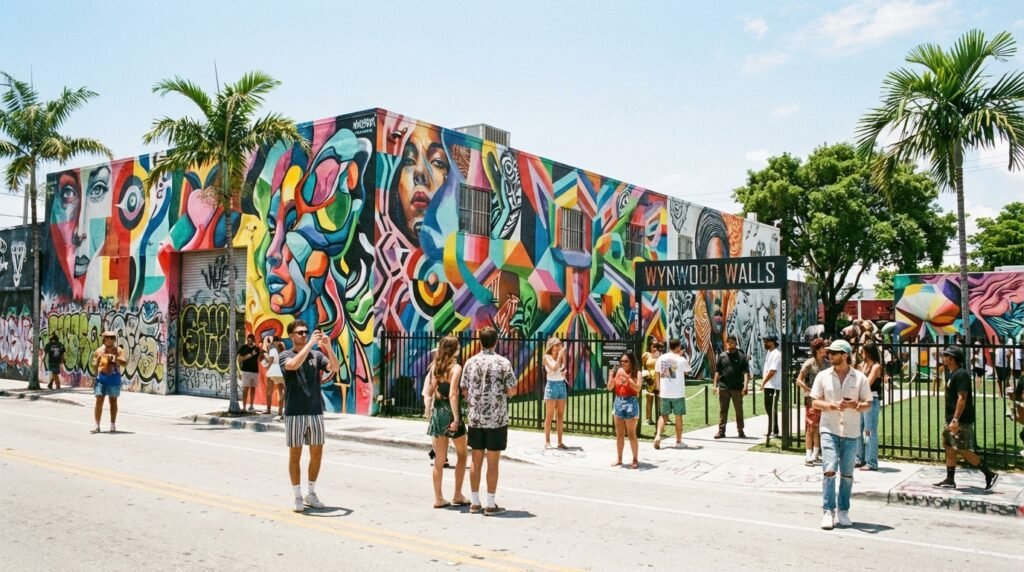
Wynwood Walls: Where Warehouse Grit Became Global Art
There’s a version of Wynwood that existed before 2009 — a forgotten stretch of garment district warehouses north of downtown, largely empty, largely ignored. Then Tony Goldman had an idea. He invited the world’s most respected street artists to transform the blank concrete walls of those buildings into something monumental. What followed was one of the most remarkable urban transformations in American cultural history, and today Wynwood Walls stands as one of the most visually explosive places to visit in Miami.
The Walls themselves occupy a curated outdoor museum space at NW 2nd Avenue and 26th Street. Murals by Shepard Fairey, Os Gemeos, Kenny Scharf, and dozens of others cover every surface. No two visits are identical — the collection rotates, new artists are commissioned, and the surrounding neighborhood has grown into a self-sustaining ecosystem of galleries, restaurants, breweries, and boutiques that amplify the creative energy of the original project.
Beyond the Walls
Wynwood rewards wandering. Step beyond the main Walls complex and you’ll find the entire neighborhood saturated with art. Alleys, loading docks, parking garage facades — nothing is too small or too utilitarian to paint. Among the places to visit in Miami that reward slow, aimless exploration, Wynwood stands alone.
Practical Tips for Wynwood
- Hours: The Wynwood Walls outdoor area is generally open daily; the indoor gallery space has ticketed entry
- Eat: Wynwood Kitchen & Bar for an elevated meal surrounded by murals; KYU for exceptional wood-fired Asian cuisine
- Drink: J. Wakefield Brewing for craft beer with serious Wynwood street-art credentials
- Go on: Saturday evenings, when the neighborhood is at its most vibrant and most galleries keep extended hours
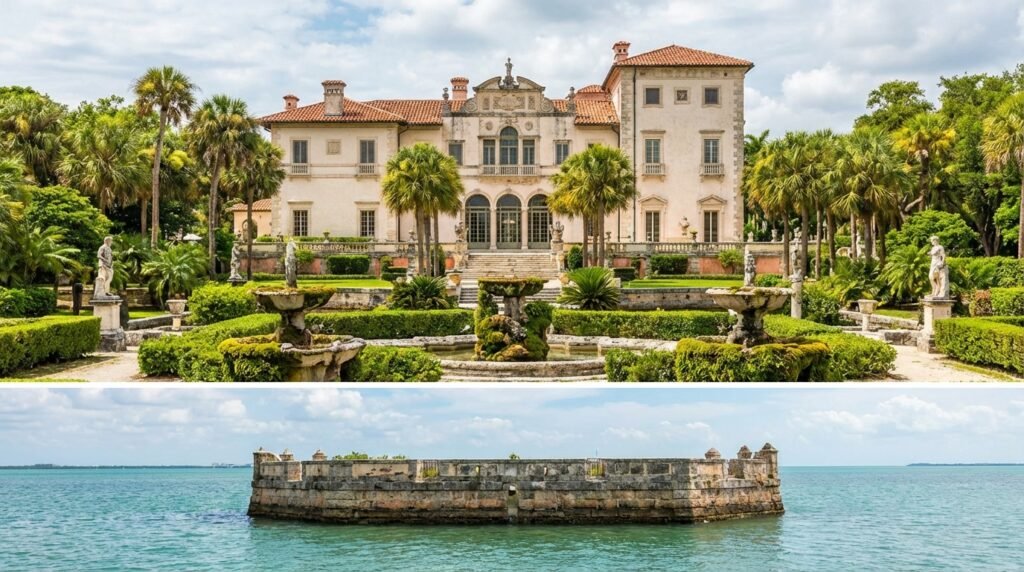
Vizcaya Museum & Gardens: European Grandeur in the Tropics
Most people don’t expect to find a 16th-century Italian Renaissance villa on the edge of Biscayne Bay. Vizcaya is the kind of discovery that stops you mid-sentence — one of those places to visit in Miami that genuinely requires you to recalibrate your understanding of what this city contains.
Built between 1914 and 1922 as the winter retreat of industrialist James Deering, the estate encompasses 34 rooms filled with European antiques and decorative arts, surrounded by 10 acres of formal gardens that somehow coexist with the encroaching subtropical jungle. Stand on the stone barge that juts into Biscayne Bay and look back at the villa’s facade — the visual contrast of old-world architecture framed by palm trees and tropical sky is startling and genuinely gorgeous.
The Gardens: A Dialogue Between Order and Wilderness
The formal gardens at Vizcaya are designed in the European tradition — geometric hedgerows, stone fountains, cascading terraces — but Miami’s climate refuses to be entirely tamed. Strangler figs have claimed stone walls. Orchids sprout from the mortar between centuries-old tiles. Iguanas sun themselves on baroque statues without irony.
Practical Tips for Vizcaya
- Tickets: Book online in advance, especially on weekends — entry is timed and capacity is limited
- Best for: Photography in the early morning when the light is soft and crowds are thin
- Hidden gem: The Casino — not a gambling house but a small ornamental building on the bay — offers sweeping views often missed by visitors who focus only on the main villa
- Allow: At least two to three hours to experience both the house and gardens properly
Among all the cultural places to visit in Miami, Vizcaya may be the one that lingers longest in memory — not because it’s the loudest or the most instagrammed, but because it asks something different of you: patience, attention, and a willingness to be genuinely surprised.
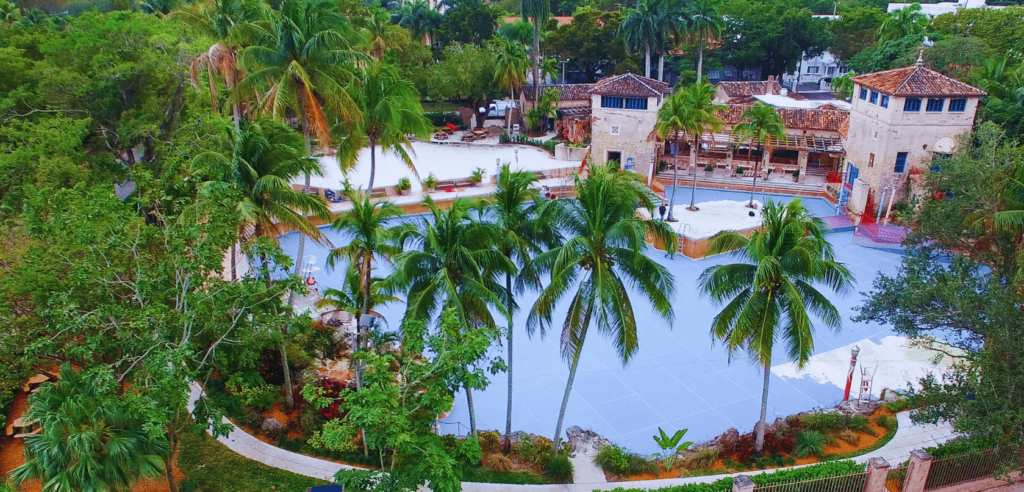
Coral Gables & The Venetian Pool: A City Built on a Dream
Some places to visit in Miami demand your attention through noise and spectacle. Coral Gables earns it through quiet, deliberate beauty. Developed in the 1920s by George Merrick, this planned city-within-a-city was one of America’s first master-planned communities, built on the ideals of the “City Beautiful” movement — the belief that elegant urban design could elevate daily life and civic pride simultaneously.
The streets here are named after Spanish and Mediterranean cities. The architecture follows strict Mediterranean Revival guidelines — red barrel-tile roofs, white stucco facades, wrought-iron details. Even the street signs are carved stone rather than metal poles. Walking through Coral Gables feels like someone pressed pause on a certain kind of 1920s optimism and forgot to press play again. It’s one of the most genuinely distinguished places to visit in Miami, and it moves at a pace the rest of the city rarely allows.
The Venetian Pool: Swimming Inside a Coral Rock Quarry
The Venetian Pool is the detail that stops people mid-scroll when they first encounter it online — and then stops them physically when they arrive in person. This is not a swimming pool in any conventional sense. It’s a spring-fed lagoon carved from a coral rock quarry in 1923, filled with 820,000 gallons of water that drains completely each night and refills naturally from underground springs each morning.
Venetian-style loggias flank the edges. Waterfalls cascade from coral rock caves. Palm trees lean over the turquoise water at angles that seem staged for a film set. It ranks among the most architecturally distinctive places to visit in Miami, and the fact that you can actually swim in it — not just photograph it — makes it something special in a city that often prioritizes spectacle over participation.
Practical Tips for Coral Gables & The Venetian Pool:
- Tickets: Reserve Venetian Pool entry online — walk-up availability disappears fast, especially June through August
- Pair with: Dinner on Miracle Mile, Coral Gables’ main dining corridor, particularly Frenchie’s Diner for a no-pretense meal with outsized charm
- Drive: The Coral Gables waterway and Biltmore Hotel grounds are free to walk and photograph — the hotel’s pool is one of the largest hotel pools in the continental US
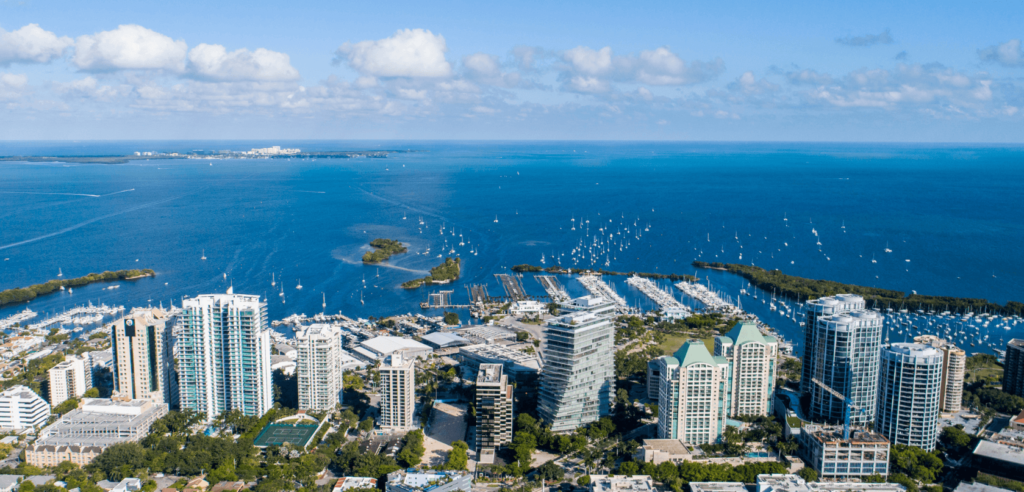
Coconut Grove: Miami’s Oldest Soul
Every city has a neighborhood that predates the city’s idea of itself. In Miami, that place is Coconut Grove — the oldest continuously inhabited neighborhood in the region, with roots stretching back to the 1870s. Where South Beach performs and Wynwood provokes, Coconut Grove simply exists, with the comfortable confidence of somewhere that doesn’t need to prove anything.
The tree canopy here is extraordinary. Banyan trees with root systems the size of small buildings arch over narrow streets. Bougainvillea spills off garden walls in shocking magenta. The air smells of rain and vegetation even on dry afternoons. Among the places to visit in Miami that offer genuine respite from sensory overload, the Grove is unmatched.
The neighborhood draws a crowd that skews toward the creative and the unhurried — artists, long-term residents, families, and the kind of traveler who prefers a paperback on a café terrace to a line outside a nightclub. CocoWalk, the open-air shopping center at the neighborhood’s heart, has been recently reimagined and now anchors a pedestrian-friendly stretch of boutiques and restaurants worth an afternoon.
Peacock Park, right on the waterfront, offers unobstructed views of Biscayne Bay and the distant silhouette of downtown’s towers — one of those effortless, almost accidental views that make these among the most rewarding places to visit in Miami for anyone traveling without a rigid itinerary.
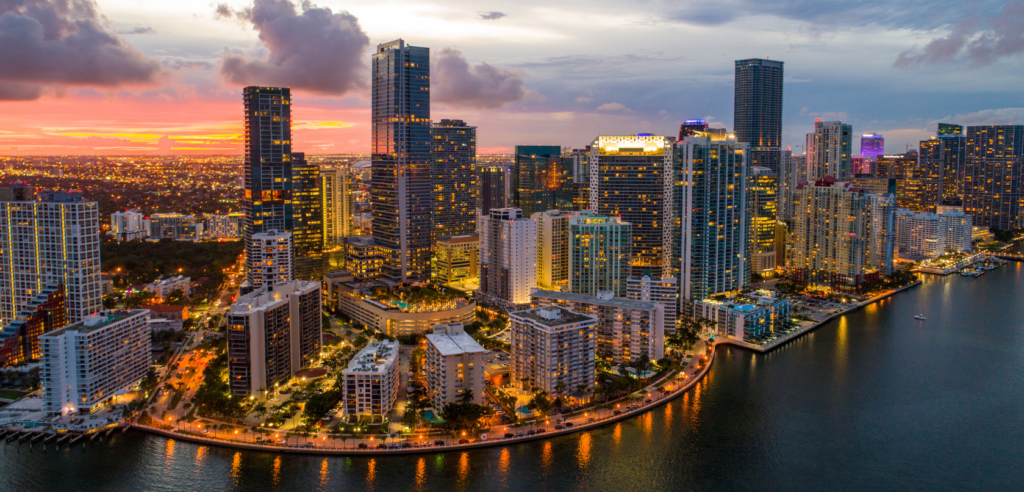
Brickell & Downtown Miami: The Manhattan of the South
Turn back toward the skyline and the city shifts register entirely. Brickell is Miami’s financial and residential high-rise corridor — a dense, vertical neighborhood that has transformed dramatically over the past fifteen years from a business district that emptied at 6 PM into a genuine 24-hour urban neighborhood. It represents a different category entirely among places to visit in Miami: less about history or culture, more about watching a city actively reinventing itself in real time.
The Brickell City Centre complex offers high-end retail and dining in a climate-controlled environment connected by sky bridges — practical genius in a city where August afternoons routinely exceed 95°F. Mary Brickell Village next door functions as the neighborhood’s social living room, with rooftop bars and street-level restaurants packed most evenings with the financial sector crowd unwinding with considerable enthusiasm.
The Miami Riverwalk, winding along the Miami River through downtown, offers a street-level perspective on the city that most visitors miss entirely. Tugboats move cargo. Old fishing boats sit alongside gleaming yachts. The contrast between the towers above and the working waterfront below captures something essential about Miami — a city that has never fully shed its rougher, more functional past, no matter how many glass towers it builds over it.

The Everglades Day Trip: Where Miami’s Edge Meets the Wild
Every list of places to visit in Miami worth its salt extends beyond the city limits at least once, because Miami exists on the edge of something ancient and irreplaceable. The Everglades — the largest subtropical wilderness in the United States — begins less than an hour’s drive from Brickell’s glass towers, and the transition is so abrupt it feels cinematic.
Book an airboat tour through any of the established operators near Everglades City or Shark Valley. The boats are loud — genuinely, thrillingly loud — and they move across the saw grass prairie at speeds that make the flat landscape feel dynamic and vast. Your guide will cut the engine periodically, and in the sudden silence you’ll hear the Everglades breathing: frogs, birds, the soft movement of water through grass.
Alligators are not a rarity here. They sun on banks with prehistoric indifference, entirely unimpressed by humans. Great blue herons stand in the shallows with the stillness of garden ornaments. Roseate spoonbills wade through stands of mangrove, their improbable pink color almost fluorescent against the green.
The Everglades reframes every other item on your list of places to visit in Miami. It’s a reminder that underneath the neon and the concrete and the Art Deco glamour, South Florida is fundamentally, stubbornly wild.
Best Activities in Miami You Can’t Afford to Miss
Miami doesn’t do ordinary. Whether you’re stepping onto South Beach for the first time or returning to chase that electric feeling you never quite shook, the best activities in Miami stretch far beyond what any single itinerary can hold. From neon-lit Art Deco boulevards and world-class museums to steaming Cuban coffee at a Calle Ocho ventanita and airboat rides through ancient Everglades wilderness — every day in this city hands you something worth remembering. We’ve done the hard work of finding them all, so you don’t have to. 👇
- Everglades Airboat, Wildlife Exhibit & Roundtrip Bus
- Miami Skyline Cruise of Millionaire Homes
- Wynwood Walls, Galleries, and Murals Guided Tour
- ‘Superblue Miami’ Immersive Art Experience Ticket
- Museum of Ice Cream Entry Ticket
- 1-hour Jetcar Rental
- Frost Museum of Science and Planetarium Entry Ticket
- Biscayne Bay Millionaire’s Homes Sightseeing Cruise
- Guided Raccoon Island Walk & Sandbar Swim Experience
- Zoo Miami: General Admission Ticket
- Miami’s Best Slingshot Rental | Drive for 1–24 Hours
- Miami City Tour: 5 Sites, 4 Stops, One Epic Experience
- Hop-on Hop-off Open-top Bus Tour with Optional Cruise
- South Beach Private 50-Minute Private Flight Tour
- 3-Day Florida Getaway: Miami, Everglades & Key West Snorkel
- Guided Off-Road Buggy Tour with Photos & Videos
The Practical Blueprint: Everything You Actually Need to Know
Getting Around Miami
Own this truth early: Miami is a car city. The public transit infrastructure exists but functions best as a supplementary option rather than a primary one. The Metrorail covers a useful north-south corridor, and the free Metromover loops through downtown Brickell efficiently. For everything else — and especially for reaching the places to visit in Miami spread across neighborhoods like Coral Gables, Little Havana, and Coconut Grove — you need wheels.
Ride-sharing works well and prices remain reasonable outside peak hours. Surge pricing during South Beach weekend evenings can be punishing — budget $25–$40 for cross-city trips on Friday and Saturday nights. Renting a car makes economic sense for stays of four days or longer, particularly if the Everglades is on your itinerary. Budget for parking: South Beach garages run $4–$8 per hour, and valet at restaurants often adds $15–$25 to your bill before tip.
Weather & When to Go
Miami has two seasons that matter for travelers: the dry season (November through April) and the wet season (May through October), with hurricane season technically running June through November. Winter is the open secret among seasoned visitors — temperatures hold between 68°F and 80°F, the humidity drops to manageable levels, and the city fills with an international crowd that gives it an energy distinct from summer’s more local, beach-focused pace.
Summer visits are entirely viable if you plan around the weather. Afternoons bring thunderstorms that are dramatic, brief, and actually refreshing. Hotel rates drop significantly — sometimes by 40–50% compared to January peak — making the sweaty tradeoff financially rational for budget-conscious travelers.
Budgeting for Miami
Miami can be approached from almost any budget, but it rewards honesty about what kind of trip you’re actually taking.
Mid-range traveler (per day, per person):
- Hotel: $150–$250 (boutique properties in Wynwood or Midtown offer strong value)
- Food: $60–$90 (one sit-down meal, two casual; Cuban spots keep lunch costs low)
- Activities: $30–$50 (museum entry, Venetian Pool, walking tours)
- Transport: $25–$40 (ride-sharing with one car rental day for Everglades)
Luxury traveler (per day, per person):
- Hotel: $450–$900+ (1 Hotel South Beach, The Setai, or COMO Metropolitan)
- Food: $200–$400 (a single dinner at Le Jardinier or Stubborn Seed can anchor an evening)
- Activities: $100–$300 (private boat charters, VIP gallery tours, spa)
- Transport: $80–$150 (private car service eliminates parking friction entirely)
The most reliable budget strategy across all spending levels: eat Cuban for breakfast and lunch. A full breakfast at a ventanita rarely exceeds $8. Save your serious money for dinner, where Miami’s restaurant scene genuinely earns it.
Safety & Local Etiquette
Miami is a safe city for tourists who exercise ordinary awareness. The places to visit in Miami most frequented by travelers — South Beach, Wynwood, Brickell, Coral Gables — are well-patrolled and genuinely low-risk during daylight hours. At night, standard urban sensibility applies: stay aware of your surroundings, don’t leave valuables visible in parked cars, and trust your instincts on unfamiliar streets north of downtown after midnight.
Tipping culture runs strong and expectations are clear: 20% at sit-down restaurants is the floor, not the ceiling. Valets, hotel housekeeping ($3–$5 per night), and ride-share drivers for longer trips all appreciate acknowledgment. At the ventanita, rounding up on a $1.50 coffee costs you nothing and earns you a warmer welcome next time.
One piece of local etiquette that matters: don’t rush people in Little Havana. Conversations at the domino tables, negotiations at the cigar shop, service at a family-run Cuban restaurant — these operate on their own clock, and impatience reads as disrespect. Slow down. Miami rewards it.
What Miami Leaves Behind
The honest truth about the places to visit in Miami is that they resist easy summary. This city doesn’t resolve into a single image the way Paris resolves into the Eiffel Tower or Rome into the Colosseum. Miami is the smell of gardenias outside a Coral Gables mansion at dusk. It’s the specific shade of turquoise the Venetian Pool turns at midday. It’s the way a colada hits your bloodstream at 8 AM on Calle Ocho, and the way the bass from a sound system two blocks away somehow makes the sensation better.
The places to visit in Miami will give you exactly as much as you’re willing to receive. Come with a rigid itinerary and you’ll check boxes efficiently. Come with a little looseness in your schedule — a willingness to follow a smell, a sound, a stranger’s restaurant recommendation — and Miami will do what it has always done to people who let it: pull you under completely, in the best possible way.
Pack light. Wear sunscreen. Learn two words of Spanish. Come back sooner than you planned.