
There is a particular kind of light that falls over Houston in the late afternoon of an April day — golden, thick as honey, and generous enough to make even the concrete overpasses look like something out of a Terrence Malick film. places to visit in Houston are more than just pinpoints on a map; they are chapters in a sprawling, humid, and deeply soulful Texas odyssey that demands more than just a passing glance. This is not a city that reveals itself in a weekend. Houston is a slow burn — the kind of destination that quietly rearranges your assumptions about American cities, about the South, about what a metropolis can be when it stops trying to be anything other than itself.
To plan a trip here is to sign a quiet contract with unpredictability. You might wake up to a sky so blue and clear that it looks digitally enhanced, only to find yourself drenched in an afternoon thunderstorm by 3 p.m. That is just Houston in conversation with you. The places to visit in Houston reflect this same duality — at once grand and intimate, world-class and wonderfully weird, internationally sophisticated and unapologetically Texan. As you shape your 2026 itinerary, know that you are not just assembling a checklist of attractions. You are building a relationship with one of the most genuinely diverse cities on the planet — a metropolitan area of 7 million people that functions less like a single city and more like a constellation of international villages, each one stitched to the next by bayous, boulevards, and the invisible threads of extraordinary food.
This guide is your cinematic lens. It is honest about the heat index in August. It is honest about the traffic on I-610 on a Friday evening. And it is equally honest about the profound, gut-level joy of standing beneath a Saturn V rocket, or watching a thousand Mexican free-tailed bats spiral into a burnt-orange Houston sunset. The places to visit in Houston will surprise you in ways that polished travel brochures never could. Let’s begin.
Table of Contents
Places to Visit in Houston You Can’t Afford to Miss
When it comes to the best places to visit in Houston, ordinary simply isn’t in the vocabulary. Whether you’re standing beneath a Saturn V rocket at Space Center Houston for the first time or wandering the surrealist corridors of the Menil Collection on a quiet Tuesday afternoon, the places to visit in Houston stretch far beyond what any single itinerary can hold. From the wildflower-lined trails of Hermann Park in April to the eerie, electric silence of the Rothko Chapel in Montrose — every corner of this city hands you something worth remembering. We’ve done the hard work of finding the best places to visit in Houston, so you don’t have to. 👇
- Space Center Houston Admission Ticket
- Guided City Tour by an Open-Top Double Decker Bus
- Downtown Aquarium All Day Pass
- Museum of Illusions Entry Ticket
- Balloon Museum – Pop Air – Entry Ticket
- Guided ATV Off-Roading Adventure
- Houston Botanic Garden Entry Ticket
- Houston Rockets NBA Basketball Game Ticket
- Houston Astros Baseball Game at Minute Maid Park
- Buffalo Bayou Park Cistern History Tour
- LED Night Light Bike Ride with Music
- Astroville Tunnel Tour of Downtown Houston
- Crocodile Encounter Entry Ticket
- Sunset Skyline Kayak Tour
- Best Street Food Tour With A Local Guide
- Driving Tour & NASA Space Center Ticket/Transport
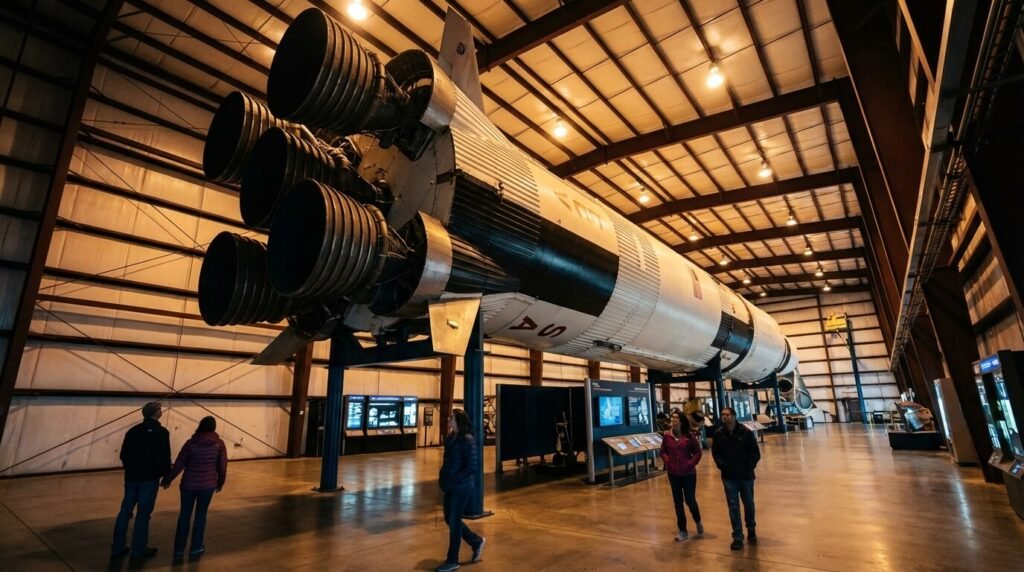
The Gravity of Discovery: Space Center Houston and the Museum District
Every great city has an anchor — that single place that captures its soul in one image. For Houston, that anchor hangs in the sky, quite literally. When considering the most iconic places to visit in Houston, your journey inevitably begins where humanity first looked toward the stars and said, we are going.
Space Center Houston is not a museum in the traditional, hushed-corridor sense. It is a declaration. The moment you walk into Rocket Park and find yourself standing beneath the Saturn V — all 363 feet of it laid on its side, the vehicle that carried human beings to the lunar surface — something shifts inside your chest. It is one of those rare travel experiences that transcends tourism entirely. In 2026, the Mission Mars exhibit has added a genuinely cinematic dimension to the experience, placing you inside the visual and logistical reality of future red planet exploration with the kind of immersive production design that would make a Hollywood set decorator envious. Walk through simulated Martian habitats, understand the communication delays, feel the isolation — and then walk outside into the Houston heat and realize the whole adventure begins right here, in this sprawling complex south of the city.
Independence Plaza deserves its own paragraph. The sight of a full-scale shuttle replica — Independence — mounted atop a 747 Shuttle Carrier Aircraft is one of those images that stops you mid-stride. It shouldn’t work. Logically, aesthetically, it shouldn’t work. And yet it is magnificent. Book your tram tour to the actual Mission Control facility in advance; availability is limited, and standing in the room where Gene Kranz said “Failure is not an option” is the kind of moment that justifies an entire trip.
From Space Center, shift north toward the Museum District, where fourteen institutions cluster within walking distance of each other — one of the most concentrated cultural landscapes in the American South. The Houston Museum of Natural Science is the crown jewel for most visitors, and the Morian Hall of Paleontology is the reason why. Unlike the static skeleton displays of museums past, this hall presents dinosaurs in active, narrative poses — predators mid-strike, herbivores in formation, the story of prehistoric life told with genuine dramatic flair. Budget two hours minimum, and do not skip the Cullen Hall of Gems and Minerals, which houses a collection so dazzling it feels almost hallucinatory.
For a more contemplative hour, the Menil Collection in Montrose operates on an entirely different emotional register. Free of charge, housed in a Renzo Piano-designed building that filters the Houston light through a diffused ceiling to create the most perfect gallery atmosphere you may ever experience, the Menil is where you go when you need to remember that beauty is quiet. Its permanent collection of surrealist and tribal art is world-class. Its pace is meditative. And on a city trip that can sometimes feel relentlessly stimulating, it functions as a necessary exhale.
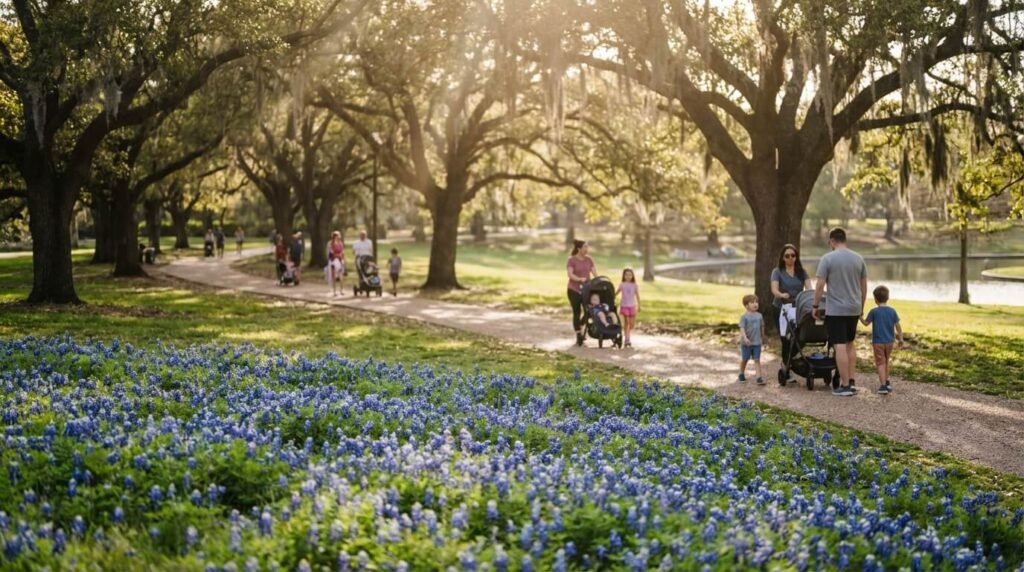
The Green Heart: Hermann Park and the 2026 Evolution
There is a version of Houston that exists only in the minds of people who have never been — flat, sprawling, devoid of green space, entirely given over to highways and strip malls. That Houston is a myth. The real Houston has Hermann Park, and in the years since the 2024 opening of The Commons, this 445-acre urban oasis has become one of the most compelling places to visit in Houston for families, couples, solo wanderers, and everyone in between.
The Commons is the most significant redesign of the Hermann Park experience in a generation. Twenty-six acres of reimagined public space — featuring a two-acre nature play garden, space-themed climbing structures that pay architectural tribute to Houston’s NASA heritage, and a bayou-inspired water garden that manages to feel both designed and wild at the same time. On a Saturday morning in April, when the temperature sits around a merciful 72 degrees and the light filters through the live oaks, the Commons is nothing short of cinematic. Families spread out across the lawns. Children shriek through the water features. Couples walk the new promenade paths that connect seamlessly to the McGovern Centennial Gardens, whose geometric rose beds and towering fountains provide a European formality that contrasts beautifully with the park’s wilder edges.
The Houston Zoo, sitting at the park’s southern boundary, has integrated its pathways with the new Commons walkways in a way that makes moving between attractions feel organic rather than logistical. The zoo’s conservation mission is taken seriously here — exhibits are spacious, educational programming is strong, and the African Forest section, featuring gorillas and chimpanzees in environments that approximate their natural habitats, is genuinely moving.
Come in April if you possibly can. The wildflowers along the park’s edges — bluebonnets, Indian paintbrush, evening primrose — create a visual saturation that makes the city’s summer humidity feel like a distant, theoretical concern. The park in April is Houston at its most generous, most beautiful, most willing to be loved.
The Seasonal Sagas: When to Seek Places to Visit in Houston
Here is where most travel guides fail you: they describe what exists, but not when it exists in its most extraordinary form. Timing is the single most consequential variable when choosing places to visit in Houston, because this city’s weather does not merely set the backdrop — it actively shapes the entire character of your experience.
March belongs to the rodeo, and the rodeo belongs to everyone. The Houston Livestock Show and Rodeo at NRG Stadium is legitimately the world’s largest event of its kind, and if you have never attended, no amount of description adequately prepares you for the sensory spectacle. The smell of funnel cake and livestock. The improbable combination of carnival rides and bull-riding. World-class musical acts — past performers have ranged from Beyoncé to Garth Brooks — performing for 70,000-person crowds in a stadium that vibrates with a particular kind of collective Texas joy. March transforms places to visit in Houston from cultural attractions into living theater. Add the Houston Rodeo to your itinerary and treat everything else as supporting programming.
April is the month that travel editors quietly keep for themselves. The temperature sits in a forgiving 70–78°F range, the humidity has not yet tightened its grip, and the Bayou City Art Festival in Memorial Park fills the air with the energy of emerging and established artists selling work beneath canvas tents while food vendors circulate through the crowd. April 2026 also brings the Fleet Week, running April 15 through 22, which introduces a genuinely novel dimension to the city’s public life — naval vessels docking along the Ship Channel, crew members integrating into Houston’s neighborhoods, and a maritime energy that feels both unexpected and completely at home in this port city that the Gulf built.
Summer is the season the honest guide must address without flinching. June through August in Houston is not for the faint of heart or the heat-averse. The humidity climbs to levels that make outdoor walking feel like negotiating with the atmosphere. And yet, the summer has its own logic. Hotel rates drop significantly — sometimes 30 to 40 percent below peak season pricing. Indoor attractions like Space Center Houston, the Museum District, and the Downtown Aquarium operate at full capacity with shorter wait times. August is, paradoxically, one of the best months to experience places to visit in Houston from a pure value perspective, provided you are willing to organize your days around the rhythm of the heat — mornings outside, afternoons indoors, evenings back out when the sun finally relents around 8 p.m.
The summer strategy: rent a car with excellent air conditioning, keep a list of your preferred indoor destinations, and chase the golden evening hours when the city cools and the bayou trails come back to life.
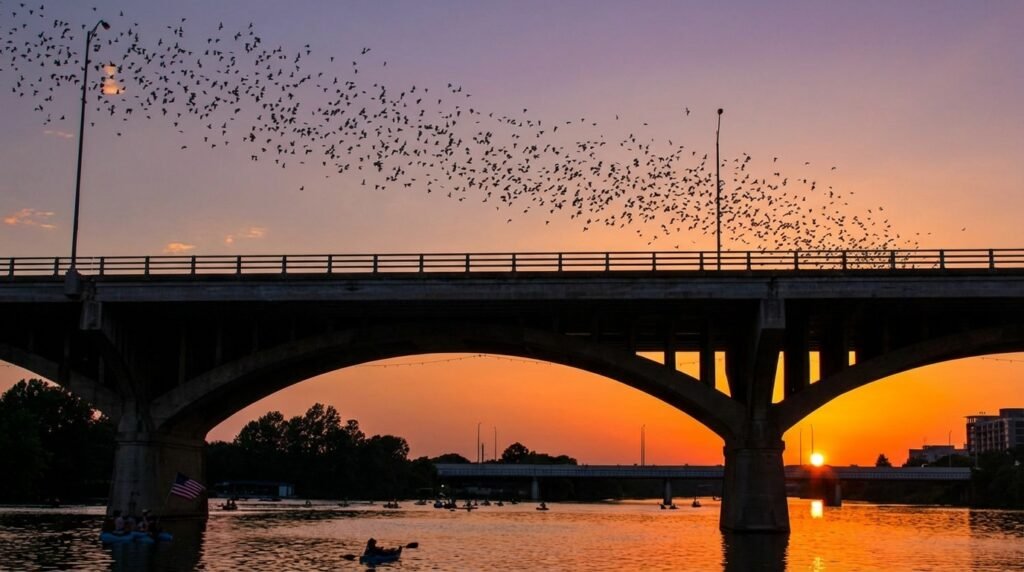
The Shadow City: Tunnels, Nightlife, and Hidden Gems
Every city worth knowing has a secret layer — the version of itself that does not appear in the official tourism materials, that locals reference casually and visitors discover only by accident or by reading the right guide. Houston’s secret layer is particularly rich, and the places to visit in Houston that belong to this category are often the ones that leave the deepest impressions.
Start underground. Houston’s Downtown Tunnel System is six and a half miles of air-conditioned underground pedestrian pathways connecting office towers, hotels, restaurants, and parking garages in the heart of the central business district. During summer, this is not a novelty — it is survival infrastructure. But at any time of year, wandering the tunnels provides a genuinely surreal experience: an entire commercial ecosystem operating beneath the streets, populated primarily by downtown workers who move through it with the casual efficiency of people who have long since stopped finding it remarkable. As a visitor, you will find it fascinating. Food stalls, barbershops, pharmacies — the tunnels are a city within a city.
Emerge from the tunnels at sunset and head toward Waugh Drive Bridge over Buffalo Bayou. This is one of those places to visit in Houston that appears on no official highlight reel but should appear on every honest list. Beneath the bridge lives a colony of 250,000 to 300,000 Mexican free-tailed bats — one of the largest urban bat colonies in the United States. Every evening around sunset, they emerge in a spiraling, living cloud that rises from beneath the bridge in waves. Locals bring lawn chairs. Dogs sit at attention. The whole scene is so unlikely and so Houston — massive, a little bit wild, completely unbothered by its own strangeness.
The Hobbit Cafe in Upper Kirby is the kind of place that sounds like it shouldn’t exist and exists more fully than almost anywhere else in the city. Tucked beneath an ancient, canopied oak tree that makes the entrance feel like the mouth of a fairy tale, this Tolkien-inspired restaurant has been serving Houston since 1972. The vegetarian menu is exceptional, the atmosphere is genuinely otherworldly, and the whole experience carries the warm, lived-in quality of a place that has earned its cult status over decades rather than marketing campaigns.
For a moment of pure cinematic reflection, no place in Houston is more quietly powerful than the Rothko Chapel in Montrose. Fourteen large-scale paintings by Mark Rothko hang in an octagonal, non-denominational chapel that welcomes visitors of every faith tradition — or none at all. There are no guided tours here, no audio guides, no explanatory plaques. Just you, the paintings, and whatever silence you brought with you. It is one of the most unusual places to visit in Houston and, for many visitors, the most unforgettable.
Logistical Honesty: Navigating Your Houston Odyssey
Good travel writing is incomplete without a hard conversation about getting around. Understanding the places to visit in Houston requires an equally clear-eyed understanding of Houston’s infrastructure — its genuine limitations and its underappreciated strengths.
The primary truth: Houston is a car city. Unlike Chicago, New York, or even San Antonio, Houston’s major attractions are distributed across a geographic footprint roughly the size of Rhode Island. Reaching Space Center Houston from the Museum District without a car means a 45-minute Uber ride or a complicated multi-transfer public transit journey. Getting to Galveston Island — the historic barrier island and beach destination 50 miles south of the city center — is essentially impossible without personal or rented wheels. Budget for a rental car. It will pay for itself in time, comfort, and sanity within the first day.
That said, the METRORail Red Line is genuinely useful for the core cultural corridor. Running from the northern reaches of downtown through Midtown, the Museum District, Rice University, and out toward NRG Stadium, the light rail allows you to connect the Theater District, the Museum District, and Hermann Park in a single, low-stress journey. For visitors staying in Midtown or the Museum District who plan to focus their itinerary on the cultural corridor, the METRORail can reduce car dependency significantly during peak hours when parking in the Museum District is genuinely difficult.
The FIFA World Cup 2026 deserves specific mention here because it will reshape the logistical reality of visiting Houston this summer. Houston’s NRG Stadium is confirmed as a host venue, and the city is preparing infrastructure upgrades, fan festival zones, and increased public transit capacity for the tournament window. If your visit falls during the World Cup matches — which run through late July — plan for elevated prices, maximum crowd levels, and an electric citywide atmosphere that will make even the most mundane places to visit in Houston feel like part of a global celebration. Book accommodations at least six months in advance for this window. This is not a suggestion. It is a logistical necessity.
The Final Verdict: Why These Places to Visit in Houston Matter
At the end of the itinerary, after the rockets and the bats and the underground tunnels and the Rothko Chapel silence, what remains is something harder to quantify than a list of attractions. Houston leaves you with a feeling — a specific civic warmth that the locals call H-Town Pride and that visitors tend to describe, slightly bewildered, as the city being much more than they expected.
Part of that surprise is the food. No honest account of places to visit in Houston can ignore the culinary landscape, which is arguably the most diverse and the most underrated in the country. The Vietnamese-Cajun crawfish fusion that emerged from Southwest Houston’s immigrant communities — boiled with lemongrass, garlic, butter, and Cajun spices — is a specific delicacy that exists nowhere else on Earth in quite this form. The Tex-Mex in Houston hits differently than in Dallas or Austin, closer to its border origins, less performative, more generous. The Nigerian restaurants along Harwin Drive, the Indian grocery markets of Hillcroft, the dim sum palaces of Chinatown — eating in Houston is an education in what American food actually looks like when it reflects the full spectrum of American people.
The places to visit in Houston that will stay with you longest are rarely the ones that appear on the first page of a Google search. They tend to be the ones that reveal the city’s authentic soul — a Sunday morning walking the Buffalo Bayou trails when the egrets are fishing in the shallows and the downtown skyline rises in the distance like a hallucination; an evening at Discovery Green downtown when a free outdoor concert draws a crowd so demographically diverse it looks like a casting director’s dream; a spontaneous conversation with a cab driver who has lived in six countries and chose Houston because, as he puts it, “Houston lets you be exactly who you are.”
Choose your season with intention. Come in April if beauty and comfort are your priority. Come in March for the rodeo’s operatic energy. Come in summer if budget is the binding constraint, and make peace with the heat as a part of the experience rather than an obstacle to it. Whatever window you choose, the places to visit in Houston will meet you where you are and offer something genuine in return.
Houston is not a city that performs for visitors. It does not have the self-conscious charm of New Orleans or the polished sheen of Miami. It is too big, too sprawling, too genuinely preoccupied with its own life to bother putting on a show. And that, paradoxically, is exactly what makes it worth the trip. The places to visit in Houston reward the curious, the patient, and the heat-tolerant with an authenticity that more celebrated destinations have long since traded away.
Pack light clothing. Download the METRORail app. Reserve your Mission Control tram tour in advance. And leave at least one afternoon completely unscheduled, because the best version of any Houston day is usually the one you didn’t plan.
The Bayou City is waiting. It has been here all along — building rockets, boiling crawfish, sheltering the world under its enormous, complicated, generous sky. In 2026, it is ready to show you everything.
Reviews
There are no reviews yet. Be the first one to write one.