
Places to visit in Vancouver are almost always presented the same way — a glossy checklist of glass towers catching alpenglow, seaplanes cutting arcs over Burrard Inlet, and kayakers framed perfectly against a snowcapped backdrop. It looks incredible in the photos. And it is incredible, in moments. But somewhere between the curated highlight reel and your actual feet touching the pavement, a quiet gap opens up — a gap between what a city promises and what it actually delivers when you’re standing inside it, jet-lagged, underprepared, and slightly damp.
This guide closes that gap.
What you’re about to read isn’t another recycled itinerary copy-pasted from a tourism board. It’s a 3,000-word deep dive into the texture of Vancouver — the alleyways, the food carts, the debates, the contradictions, the cultural weight, and the logistical truths that most travel content is too polished to admit. Whether you’re booking one of the major canada tours that swing through British Columbia, planning a private vancouver city tour, or simply building your own path from scratch, this is the honest briefing you deserve before you arrive.
Vancouver is consistently ranked among the Best Places to Visit in Canada. But the reason it earns that ranking isn’t the mountains or the ocean — those are the backdrop. The reason is that Vancouver rewards slowness. It rewards the traveler who puts down the phone, steps off the scripted path, and lets the city find them.
Let’s start there.
Table of Contents
Beyond the Brochure: Seeing the Soul of the City
There’s a concept that travel writers rarely name but every experienced traveler knows: experiential physics. It’s the difference between reading that a suspension bridge bounces underfoot and feeling your knees go slightly weak on the first sway. It’s the difference between seeing a photo of Stanley Park’s old-growth canopy and smelling the wet cedar and dark soil after a November rain. You cannot outsource that feeling. You cannot schedule it. You have to show up for it.
Photographer and long-term Vancouver resident Lucas Wong describes it plainly: “The texture is already here. Most people walk past it looking for something Instagrammable. But the light in the Strathcona alleys at 7am, or the great blue heron standing still as a statue at Jericho Beach — that’s the real city. You don’t need a filter for it.”
That philosophy should govern your entire trip.
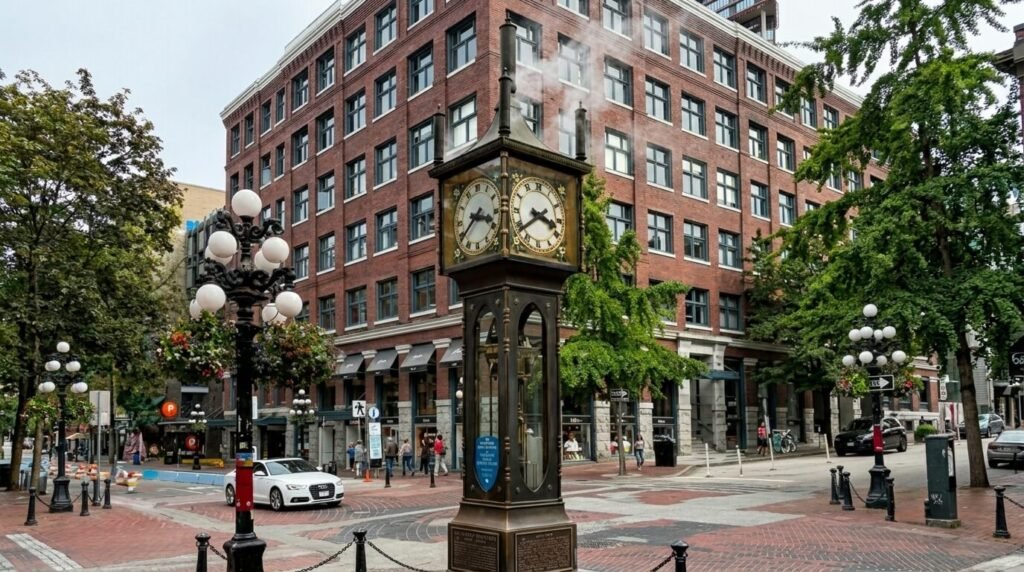
Too many canada tours are built around a “Top 10” checklist mentality — hit Granville Island, check; Capilano Bridge, check; Gastown steam clock, check. And while none of those experiences are bad, they represent a kind of surface skimming that leaves travelers with photographs but not memories. The best vancouver tours, by contrast, are the ones that build in breathing room. That leave space for the unexpected coffee shop, the unplanned conversation with a local fisherman, the rain shower that turns a walk into a story.
A real vancouver city tour should feel unscripted and flexible. It should have anchors — a few must-see moments — but the hours between those anchors are where the real city lives. For everything else you can do on the ground, check out this broader guide to Things to Do in Vancouver Canada to fill in the details once you’ve absorbed the spirit of this one.
Stanley Park: You’ve Seen 15%. Here’s the Other 85%.
Most tourists who visit Stanley Park never actually enter Stanley Park. They walk the Seawall. They photograph the Totem Poles. They eat an overpriced hot dog near the information center. Then they leave, satisfied, having experienced roughly 15% of a thousand-acre temperate rainforest that has been absorbing the stories of this coast for longer than the city around it has existed.
This is one of the most essential places to visit in Vancouver — and one of the most misunderstood.
The Seawall Strategy
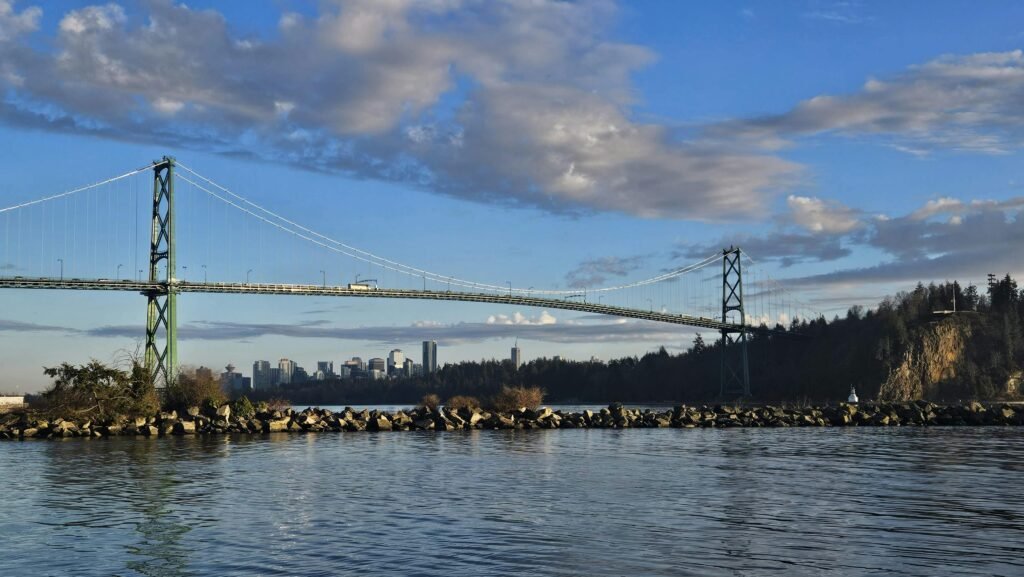
the Seawall itself is magnificent; the mistake is when most people walk it. Tour buses deposit visitors at Brockton Point mid-morning, which means the path between the totem poles and Prospect Point is crowded, sun-harsh, and completely stripped of atmosphere. Instead, start at Second Beach in the late afternoon. Walk north. By the time you reach Prospect Point — the dramatic cliff edge where Lions Gate Bridge launches itself over the narrows — you’ll arrive in golden hour. The light catches the suspension cables. The freighters below move in slow motion. The North Shore mountains go amber, then rose, then purple. It’s one of the great free spectacles in any North American city.
The Interior That Nobody Visits
Here is what almost no canada tours will tell you: the park’s interior trail network is largely empty on any given day. While thousands of cyclists and joggers orbit the Seawall, the old-growth heart of the park sits in near silence. Inside, you’ll find 800-year-old red cedars with trunks wider than most living rooms. You’ll find Douglas firs so tall that their upper canopies have developed their own micro-ecosystems — entire communities of mosses, ferns, and insects living in “canopy soil” sixty feet above the forest floor, soil that formed over centuries from decomposing bark and windblown organic matter.
These trees predate the city by eight centuries. They predate European contact by five. Walking among them resets something in your nervous system that no wellness app can replicate.
Any responsible vancouver city tour must also acknowledge what Stanley Park actually is: unceded territory of the Musqueam, Squamish, and Tsleil-Waututh Nations. The land was not ceded by treaty. It was not purchased. The city of Vancouver was built on a foundation of displacement that is still, actively, being reckoned with. Acknowledging that isn’t a political act — it’s an accurate one. The park is more powerful, not less, when you understand whose relationship with this land predates the Seawall by thousands of years.
Slow vancouver tours know this. Rushed ones skip it. The difference matters.
The Great Bridge Debate: Capilano vs. Lynn Canyon
This is the question that divides every group of Vancouver visitors, usually around day two: Do we pay for Capilano, or do we go to Lynn Canyon for free?
The honest answer is: it depends on who you are. But the honest full answer is more nuanced than the travel blogs usually admit.
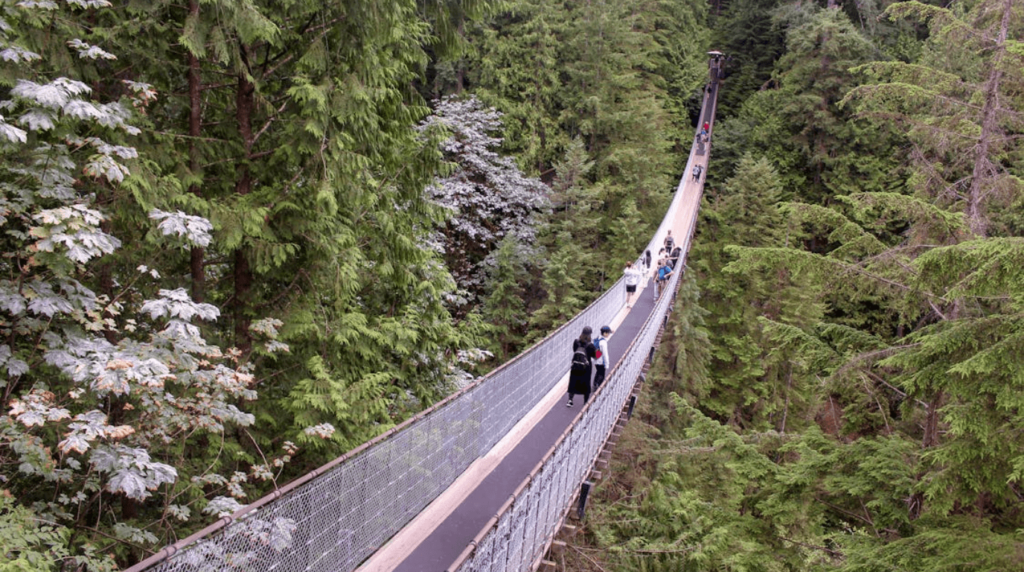
Capilano Suspension Bridge costs around $60–$70 CAD per adult (prices shift seasonally). For that, you get a meticulously maintained, highly engineered experience: the main bridge is 460 feet long and 230 feet above the Capilano River, and it has been carrying tourists safely since 1889 in various iterations. The Cliffwalk — a cantilevered series of walkways bolted directly into the granite cliff face — is genuinely thrilling, engineered to strict safety codes with a design that makes you feel suspended over the canyon while remaining completely secure. There are restaurants, washrooms, Indigenous cultural programming, and guides on staff. Many canada tours default here precisely because of these amenities — it’s predictable in the best sense for operators managing large groups or travelers with mobility considerations.
Lynn Canyon, ten minutes away by car or transit, charges nothing. The suspension bridge is shorter and bouncier — the trampoline-like flex underfoot is more visceral, more felt, than Capilano’s more stable sway. The trails around it are wilder, less curated, and significantly more beautiful for it. The 30 Foot Pool below the bridge is a legitimate natural wonder. On a weekday in spring, you may have entire sections of the canyon to yourself.
The North Shore as a whole — home to both bridges, Grouse Mountain, Mount Seymour, and Deep Cove — is a primary reason Vancouver is ranked among the Best Places to Visit in Canada. The wilderness is not a day trip away. It is a 25-minute drive from downtown. That proximity is extraordinary.
For families with young children or anyone wanting guaranteed comfort: Capilano. For solo travelers, couples, and anyone who prefers raw nature over infrastructure: Lynn Canyon. For a truly great day: consider doing Lynn Canyon in the morning, driving up to Grouse for lunch, and ending with a beer at a Deep Cove pub before the sunset ferry back. That is a vancouver city tour that no brochure has ever packaged.
The Gastronomic Audit: Hype, Honesty, and Hidden Gold
Food in Vancouver is extraordinary and also, occasionally, aggressively overpriced relative to quality. Distinguishing between the two requires some local intelligence.
The Japadog Legend
Start with the simplest truth: the best quick meal in the city may still be a Japadog. The cart at Burrard and Smithe has been a cultural institution for nearly two decades, and the Terimayo — a beef frank topped with teriyaki sauce, Japanese mayo, and seaweed — remains one of those rare foods that genuinely surprises you. The Oroshi (with daikon radish) is for the adventurous. Neither costs more than $8. Both will make you understand why Vancouver’s food culture is one of the reasons it’s considered one of the Best Places to Visit in Canada.
Gastown: What’s Worth It
Gastown is beautiful and often overrun. The Steam Clock is a Victorian-era tourist magnet (it’s actually pneumatic, not steam-powered — worth knowing before you explain it to someone). For food, apply a filter: most of the prix-fixe “elevated Canadian” restaurants charge tourist premiums that locals have largely stopped paying.
Two exceptions. Tekkaba, a wood-fired Japanese robata restaurant, practices what the culinary world calls “intentional eating” — smaller, more considered portions, ingredients with provenance, service that doesn’t rush. It’s not cheap, but it’s honest. L’abattoir, housed in the brick walls of what was once the city’s slaughterhouse district, serves West Coast refinement that feels genuinely earned — the charcuterie is excellent, the cocktails are inventive, and the atmosphere rewards lingering.
The Local’s Move: Go Fish
Ask any Vancouver local where to eat fish and chips and they will not send you to Granville Island Market. They will send you to Go Fish, the small shack on a dock just west of the Granville Bridge on the south side of False Creek. The halibut is wild-caught Pacific, the batter is greaseless, and the line moves fast. It has no website. It accepts cash. The views of the inlet and the city are free. This is the kind of place that curated vancouver tours never put on a map, but locals have been quietly protecting for a generation.
Culinary-focused canada tours are increasingly building itineraries around ethnic enclaves — Richmond‘s staggering Chinese and Southeast Asian food scene, the Punjabi Market on Main Street, the Vietnamese pho corridor on Kingsway. This is where Vancouver’s multicultural identity becomes edible. Don’t skip it in favour of another Gastown reservation.
The brewery crawl through Mount Pleasant has also become a vancouver city tour in its own right — the neighbourhood’s transition from industrial to creative has produced a cluster of craft breweries within walking distance of each other, including Brassneck, 33 Acres, and Main Street Brewing. An afternoon spent hopping between them, talking to brewers, is as authentic an experience of the city’s current character as anything in the guidebooks.
Deep Culture: Reconciliation in Action
A meaningful vancouver city tour does not treat Indigenous culture as an attraction. It treats it as a foundation.
Vancouver sits on the unceded traditional territories of the Musqueam, Squamish, and Tsleil-Waututh peoples — nations who have maintained a living relationship with this land and water for tens of thousands of years. That relationship did not end with colonization. It continued, survived, and is today actively reasserting itself in the city’s cultural and economic life.
Salmon n’ Bannock on Broadway is the city’s only Indigenous-owned fine-dining restaurant — and one of the most culturally meaningful places to visit in Vancouver for any traveler who wants their meals to carry context alongside flavor. The bannock — a traditional bread with roots across First Nations communities — is served alongside bison, wild salmon, and game prepared with both traditional knowledge and contemporary technique. Eating there is not a history lesson. It’s a meal. But it’s a meal with weight and meaning.
Takaya Tours offers paddling and cultural experiences led by members of the Tsleil-Waututh Nation on the waters their ancestors have navigated for millennia. These aren’t theatrical re-enactments. They are living cultural transmission — stories, ecology, and seamanship passed from one generation to the next.
When booking canada tours or specific vancouver tours, look for operators carrying the “Original Original” mark — an accreditation program designed to certify authentic, First Nations-led cultural experiences. It’s a signal that the operator is Indigenous-owned, that the storytelling comes from inside the community, and that your tourism dollars support rather than exploit.
Indigenous galleries and studios across the city — particularly in Gastown and the Downtown Eastside — represent some of the most vital places to visit in Vancouver for any traveler interested in art that carries genuine cultural weight. A modern vancouver city tour is not complete without at least one encounter with this living artistic tradition.
Hidden Gems and the 2026 Energy
Strathcona and Mount Pleasant
Strathcona is Vancouver’s oldest residential neighbourhood, and its laneways carry more honest history than any heritage plaque. The Victorian houses list slightly, gardens spill over fences, murals appear and disappear seasonally, and the cafés have the particular quality of places that have never tried to be discovered. Walk the alleys between Prior Street and Hastings on a quiet morning and you’ll understand what Lucas Wong means by texture.
Mount Pleasant, just to the south, has undergone a decade of creative transformation without losing its concrete bones. The neighbourhood’s coffee culture is serious, its independent bookshops are curated, and the weekend farmers’ market at Nat Bailey Stadium draws the kind of crowd that actually cooks at home. These are the next frontier of places to visit in Vancouver for travelers who’ve already done the obvious circuit — and the kinds of spots that the best independent vancouver tours are quietly building entire half-day walks around.
The FIFA World Cup 2026
June 2026 will transform Vancouver in ways that even longtime residents are still calculating. The city is one of the host venues for the FIFA World Cup 2026, with matches scheduled at BC Place, the downtown stadium whose retractable roof makes it one of the most technically sophisticated venues in North American football. The ripple effects will be city-wide: fan zones along the waterfront, international food markets, cultural programming from participating nations, and an energy that major cities generate perhaps once per generation.
Canada tours centered on sports and culture will surge through the city that summer, and vancouver tours with private guides will be in high demand as visitors navigate a metropolis that will be simultaneously familiar and electrified. The area around Rogers Arena — adjacent to BC Place and home to the Vancouver Canucks — will become a secondary cultural epicenter. Any vancouver city tour built for summer 2026 should factor in the World Cup’s gravitational pull while also identifying the quieter neighbourhoods that will retain their everyday character even during the event.
Book accommodation early. Like, now. Prices around the World Cup window have already moved significantly.
If you’re also planning a broader Canadian trip, the Best Things to Do in Toronto 2026 guide is essential reading — Toronto is another World Cup host city, and the two cities pair beautifully for a two-stop Canadian adventure.
Practical Logistics: How to Actually Survive Vancouver
The Footwear Truth
This isn’t a dramatic warning, but it is a practical one: smooth-soled shoes are genuinely hazardous on Vancouver’s wet wooden boardwalks, particularly around Granville Island and the False Creek seawall. The wood saturates in rain and becomes glass-slick. Locals have largely migrated to Vessi sneakers — a Vancouver-born brand built on completely waterproof knit construction — or to rubber-soled trail runners that grip wet surfaces reliably. Pack accordingly. Your elegant city shoes will spend most of the trip in the hotel.
Among all the places to visit in Vancouver, the waterfront boardwalks and seawall loop are where footwear makes the biggest practical difference — especially in the wet season between October and March.
Transit That Actually Works
Vancouver’s public transit system, TransLink, is one of the best-designed networks in North America and is consistently underused by tourists. A day pass costs around $11–$12 CAD and unlocks the entire network — buses, the SkyTrain, and crucially, the SeaBus.
The SeaBus deserves special mention: it’s a 12-minute ferry crossing between Waterfront Station downtown and Lonsdale Quay in North Vancouver, and it offers some of the best views of the downtown skyline, port, and mountains of any experience in the city — for the cost of a transit fare. Take it at dusk if you can. Take it in fog if the forecast allows. It’s one of those small, cheap moments that ends up in the permanent memory.
A self-guided vancouver city tour via day pass is, frankly, as good as many paid vancouver tours for travelers who are comfortable navigating independently. The SkyTrain’s Expo and Canada Lines connect the airport, downtown, Granville, and Richmond in a single, legible network. You don’t need a car. You may not need it even once.
Long-duration canada tours that swing through multiple provinces should factor in weather-appropriate gear for Vancouver specifically — the city’s famous rain isn’t dramatic (no thunderstorms, rarely cold), but it is persistent. A good waterproof layer is worth more than an umbrella on a city with this much walking.
For first-time visitors, hop-on-hop-off vancouver tours remain a legitimate option for Day One orientation — they cover the geography efficiently and give you a mental map to work from. Just don’t let them become the entire trip.
Getting Around the Neighbourhoods
The best vancouver city tour of each distinct neighbourhood — Kitsilano, Commercial Drive, Yaletown, Mount Pleasant, Strathcona — can be done entirely on foot and transit. Each area has its own personality, its own independent coffee shops, its own rhythm. Dedicated vancouver tours that specialize in neighbourhood walks (rather than landmark-to-landmark circuits) are increasingly popular among repeat visitors who’ve already done the standard route and want to go deeper.
Canada tours that include Vancouver in a broader west coast itinerary typically allocate three to four days in the city — which is the minimum to do it justice without feeling rushed. Five to seven days is the honest recommendation for travelers who want to move at the pace the city actually rewards.
The Vancouver Exhale
There’s a moment that almost every visitor eventually has in this city, usually somewhere between their second and fourth day. They’re standing somewhere ordinary — maybe waiting for a SeaBus, or eating a bowl of ramen in Richmond, or sitting on a driftwood log at Spanish Banks watching the tide move — and they exhale. Really exhale. The mountains are just there, like they always are. The water is just there. The city is alive and warm and going about its business around them, and they realize they’ve stopped looking for the next thing to photograph and started simply being somewhere.
That is the gift Vancouver gives you if you let it.
The best places to visit in Vancouver aren’t secrets. They’re just quiet spots, honest spots, spots that require a small amount of patience and a willingness to trade the highlight reel for the real experience. Whether you arrive via organized canada tours with pre-booked itineraries, through canada tours that pair the city with Whistler or Victoria, through boutique and specialized vancouver tours with local guides, through private vancouver tours of food, art, or history, through a self-navigated vancouver city tour with a TransLink day pass and no agenda, or through some combination of all three — the city will meet you where you are.
Vancouver is one of the Best Places to Visit in Canada not because it performs well for cameras, but because it holds something rarer: the capacity to make you feel both energized and settled in the same afternoon. The mountains do something to your perspective. The water does something to your pace. The food, the culture, the reconciliation work in progress, the creative neighbourhoods, the old-growth forests, the bridges bouncing underfoot — all of it adds up to a city that asks something real of you, and gives something real back.
Come prepared. Come curious. And when you find the heron standing still at Jericho Beach at first light — the one that always seems to be there, patient and ancient and completely unbothered — stay for a moment longer than you think you need to.
That’s the one you’ll remember.
For more on exploring British Columbia and the rest of the country, see our guides to the Best Places to Visit in Canada, Things to Do in Vancouver Canada, and Best Things to Do in Toronto 2026.
Reviews
There are no reviews yet. Be the first one to write one.